Off to Nanning for the Weekend!

             It’s time for me to get out of town.  Our weather has turned warmer, meaning that the pool water at the Nanyuan Hotel will be at about the right temperature for spring swimming.  As mentioned before, most pools in southern China aren’t heated with the pool water getting down to 55 degrees or colder, even though our winter temps are nothing like up north.  My indoor pool should be ready to go with the 80-degree hits we’ve been having this past week. 

            And there is DVD shopping to do as well.  I’m out of my favorite TV shows and newly released movies.  Most students ask me why I don’t just watch these online.  I would except that I like to donate DVDs to our English Center.  After I’ve finished with them, I can then let the students enjoy checking them out or entertaining themselves in our Center after stocking our DVD shelves with more of them. 

Big News on Campus

            Speaking of the English Center, my visits these past 2 weeks have been filled with the latest big topic that’s taken up everyone’s conversations:  the canceled move to the new campus in Chongzuo,  1 1/2 hours away.

           Last year and the beginning of this semester was all about our big move to Chongzuo.  This Longzhou campus was closing.  All students, teachers, their families and even some of the workers would be heading over to the new school during the summer.   Equipment would be cleared out.  The library bookshelves emptied. Desks and chairs loaded into trucks and off everything would go.

           In fact, a majority of the teachers had already settled into their Chongzuo campus faculty apartments, buying new furniture, decorating, cleaning and making sure things were ready by summer  for settling in.  Some teachers had already sent their children, spouses and aging parents (who often live with them) to live in their Chongzuo homes this semester.  They remained here, in single housing facilities, to continue with their on-campus teaching duties.  Quite a few teachers also rented out their school apartments here to the locals in order to make a little extra money.  

          Currently, a few of the staff are commuting the 1 1/2 hours by bus back and forth to Chongzuo as they have classes to teach on both campuses.  Liang Ling (my vice-dean) and Mr. Lan (a head English teacher) have been coming and going during the week between the two schools.  It’s been hard for me to catch them in the office as they haven’t been here 100% of the time.

           The students also have been eagerly awaiting the move.  Our campus now has only 600 students whereas the Chongzuo campus has 8,000 at present.   “Over there” is a bustling environment but not so in Longzhou.  Several dormitory buildings have remained empty all year, collecting dust in the rooms and giving this place a rather dreary feel.

             On the other campus,  everything is new, including the dorm rooms that are equipped with ceiling fans and hot water.  These are missing on our campus.  Just having more students to talk to, and being on a larger campus with fancy equipment was likewise a big selling point for the students here.  Not only that but Chongzuo isnearer to Nanning, where everyone goes to transfer for travel home. 

Chongzuo also has a train station, which we do not.  It’s only $1 US to get to the capital city by train whereas here, it’s a $10 bus ticket.   These students have so little money to begin with that  $9 is a big save when it comes to traveling home.  

          Never mind that the new campus was in the middle of nowhere, with no stores or restaurants in sight, not to mention a 20-minute ride to get to the town if you were lucky enough to catch the bus or taxi.  The Chongzuo school, compared to here, was a paradise in everyone’s eyes.  (Ah, the grass is always greener!)

           But all those excited, enthusiastic expectations of a move disappeared when the leaders announced we won’t be moving after all.  It was a big decision after heavy debate at the Chongzuo campus by all the education officials of the university.  The biggest problem had been that the Longzhou campus had not yet been sold.  The land belonged to the county government and it had already been mandated that the buildings couldn’t be left empty and in disuse.  They had to be used, not remain vacant for who knows how many years.   

         The Longzhou County government had also petitioned the school leaders to allow the campus to remain for economic reasons.  There is nothing in Longzhou of interest except this college.  When it goes, the town’s economy will definitely suffer due to the students no longer being here to spend their money or anyone having a reason to come to this area.  I heard that money had been offered by the local government to keep us here but I’m not sure how much.

            After all of this, it was decided we will remain for another 3-5 years before finally moving.  During the summer, a transfer of more students from the Chongzuo campus will begin to fill up our empty dormitory buildings.  Those students, however, will only be those in the 3-year education program.  4-year university students, who will receive college degrees, will all study on the new campus.  Those in the 3-year program (comparable to a junior college education) will come here.

So What About Me?  Moving or Staying?
            For myself, it’s all up in the air.  Originally, I was  to move to a new placement within the Amity Foundation.  Openings in Inner Mongolia were discussed by myself and my Chinese boss, Liu Ruhong.  But since the college is staying, there is also an offer for me to remain here.  I have until the beginning of May to decide and that is what I am contemplating at this time.

            But for this weekend, I’m putting all those difficult decisions and thoughts behind me.  It’s off to Nanning and some R&R this weekend before going back to classes Monday.

             Stay tuned for more updates!  As always, here’s Ping An (peace) for your day from rural China.

Posted in Along China's Li River: Longzhou, Guangxi, Uncategorized | Leave a comment

I’m Back! Unblocked in China

         Some of you already know that WordPress (my blog website host) has been blocked in China for a year now.  I was having my friend in my hometown do my postings, which is why there have been so few.

           After changing my Net server to China Telecom, instead of using the school’s network, I was able to apply for a private network connection which allows me to re-route through them from  China.  It’s a yearly fee of $100 and for that, I can access all the sites I want without any difficulty.

            So it’s back to reports from China on a more regular basis.  And please check previous posts.  I’ve added photos for International Women’s Day and Tomb Sweeping Festival.

Easter Sunday

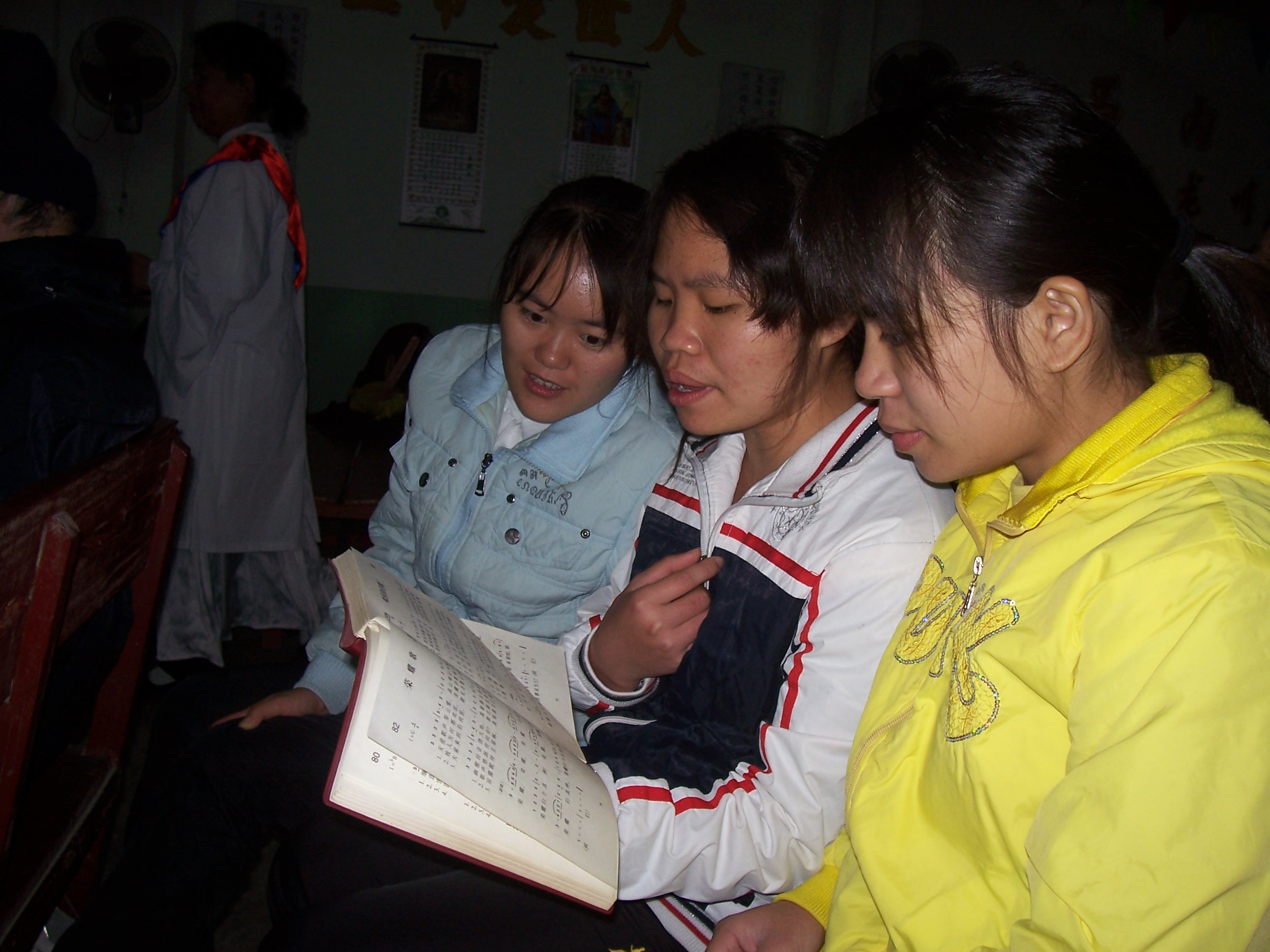
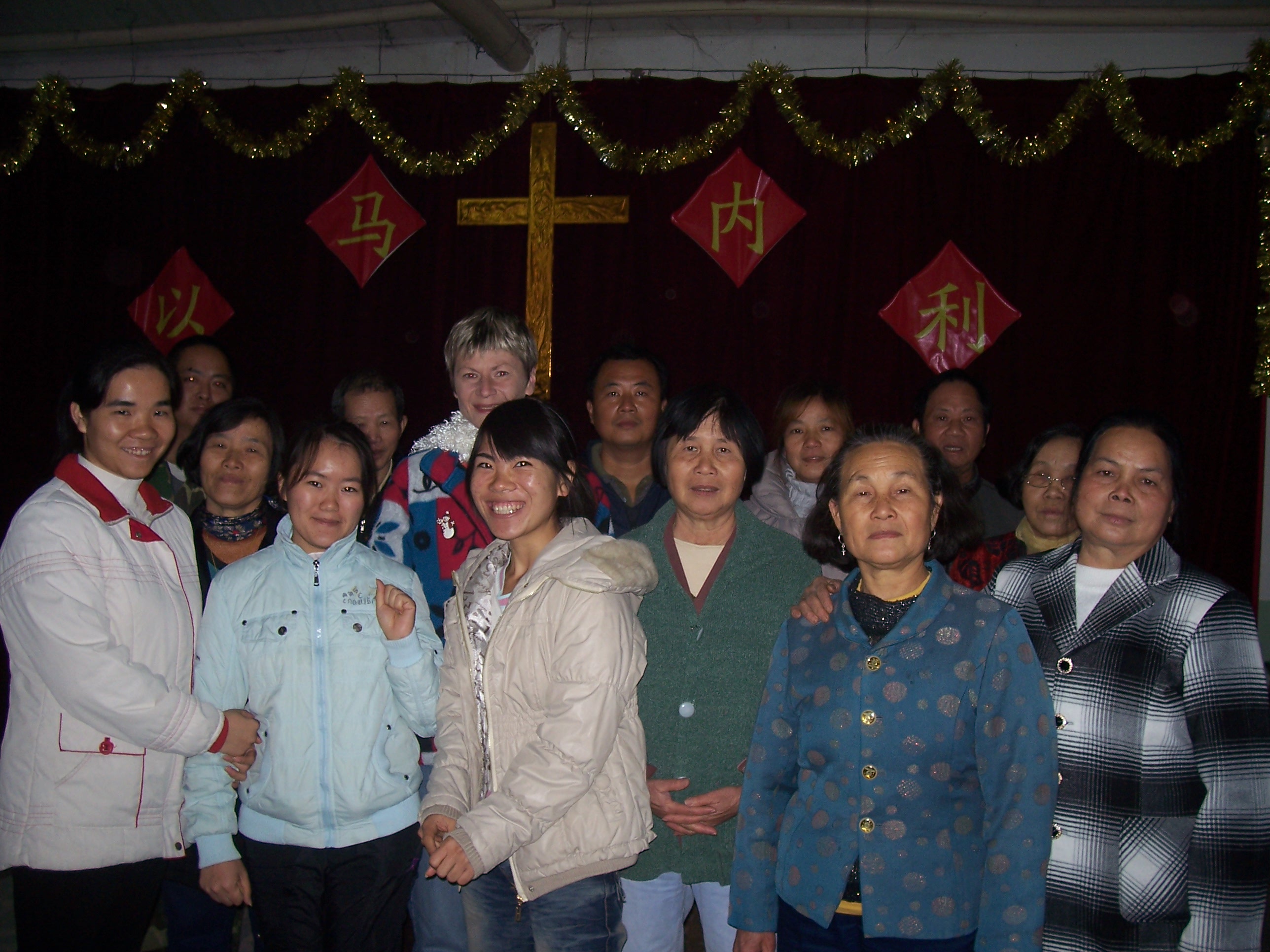
            Easter Sunday for our Longzhou Protestant church was nothing special.

            Cherry (Wei Fang, a dedicated Christian and my  student) and I met at 9 a.m.to walk to the service together.  This has been our Sunday morning routine since the beginning of the semester.   

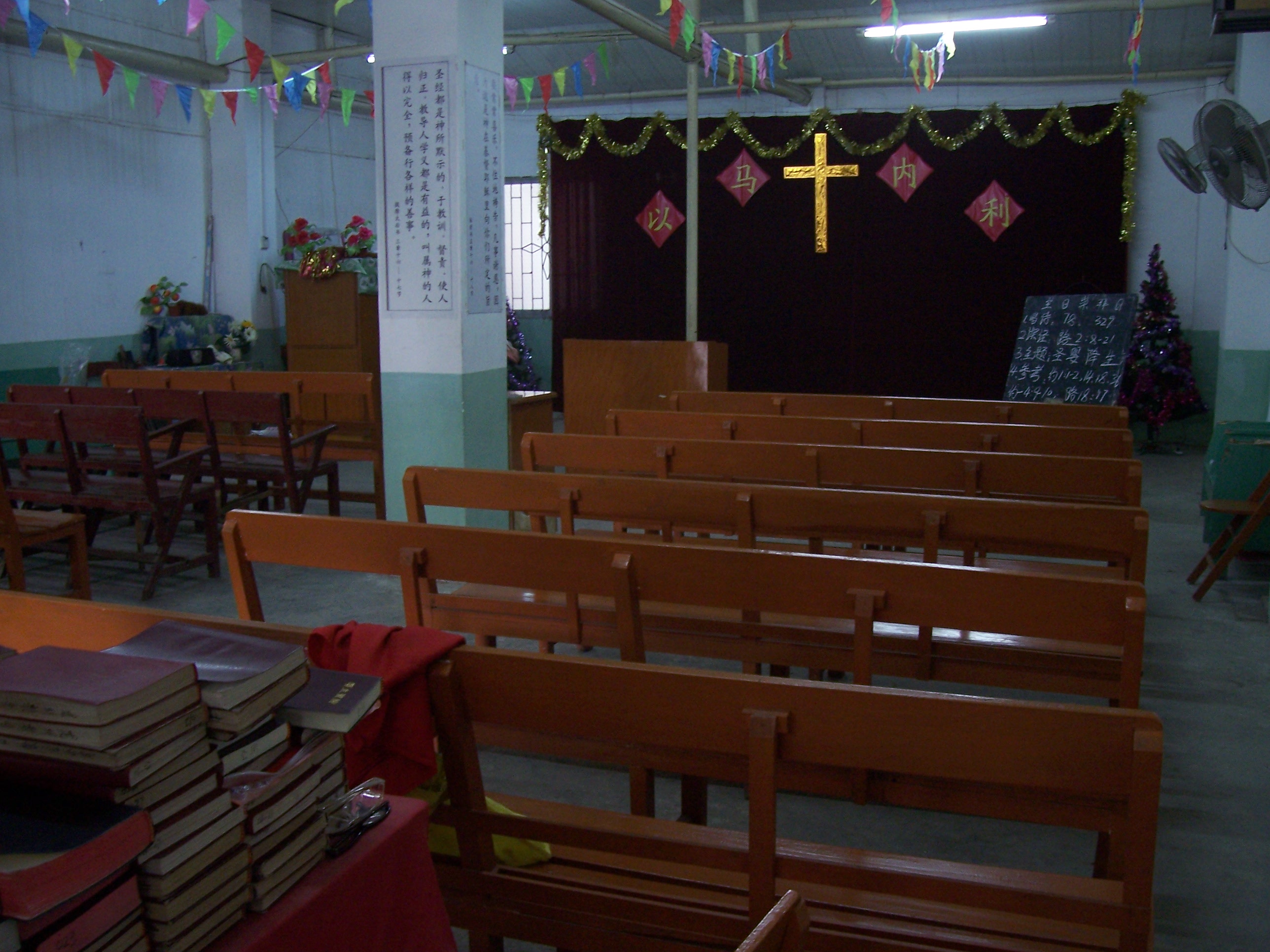
            Our congregation of 15 gathered  on the second floor of the 100-year-old sanctuary as usual.  Because there is no pastor, Zhou Ning (joe ning), our lay leader, is the one to lead prayers and hymn singing, then put on the DVD presenting the Nanning Protestant Church pastor’s message for the week. (Nanning is the capital city of this province, so this is the big city church we are getting to experience.)  

              These DVD’s are sent to all small churches in the area so that  Christians can hear a worthy sermon from an ordained pastor.  In the Longzhou church, many bring pencil and paper to write down the main points as Pastor Zhang speaks.  They huddle close to the TV set, very keen on hearing the word of God and explanation of the scriptures so that they can fully understand the meaning of Christianity.

            Cherry is the same and always has her notebook on hand to jot down key phrases or sentences that strike her as important.

            The sermon is usually 45 minutes long.  After hymns, prayers and scriptures, our service is over after 1 ½ hours.  Then everyone leaves.

            While I did mention that nothing special happened for our Easter service, it certainly was special for Zhou Ning.  For the first time, her boyfriend came to visit her family in Longzhou and to attend church with her.  Both of them met in Nanning at a 1-year theology training for Christians in Guangxi. 

            Finding a Christian husband or wife is always difficult for young people in China as there are so few Christians to choose from.  And finding someone who is dedicated  to work within the church is even more difficult as most young people want to enter the business world to make money.  Working for the church brings in very little money, if any at all.  Zhou Ning, in her late 20’s, was getting desperate pleas from her parents to find someone to spend her life with.  It seems she has done just that with her new boyfriend.

             Sad to say, the distance between the two has been great.  Her sweatheart comes originally from Jiangsu Province, which is far to the East of the country.   He has been there for the past 2 years. This is only his second trip to Guangxi in that time period. 

            With his arrival, the young couple was all smiles in church.  They were quite eager  to go shopping and catch up on news when we all departed.  

Easter Lilies a Must

            It’s not the custom in  China to have lilies for Easter.  For the larger churches in the big cities, the Western and European tradition of lilies has taken hold  so altar displays might have lilies.  But for the smaller churches, there are no such symbols to be found on Easter Sunday.

            For myself, I am always keen on keeping my cultural traditions alive.  After church, Cherry and I went walking back along our river road toward the college where we passed numerous little shops.  One of these is a tiny flower shop where plants and cut flowers can be purchased.

            Cherry already knew my US lily tradition because it was a part of our class lesson on Easter.  I told her that we really should get lilies for this special day, so in we went to take a look at our seller’s offerings.

            The woman had two huge containers of lilies:  pink  in one; solid white in the other.  Each stalk had between 3 to 5 blooms, some already fully flowered while others were in their early stages of opening.

            There was a great deal of discussion between the two of us and the flourist which would be the best ones.  Lilies aren’t cheap in China, being about $4.00 a stalk, so best to get the ones that will last the longest.

            We chose 1 white  and 1 pink stalk. I handed over my $8.00 and off we went carrying our precious load back to the school.

A Surprise Easter Gift for My Student

              My intention was to make sure Cherry received one of these, although she had no idea that’s what I was thinking. In this country,  $8.00 is a huge amount to pay for cut flowers.  I’m sure Cherry would never consider spending that on herself, nor would she be able to having so little money.  Her assumption was that these flowers were for me to enjoy, especially as it was my money and my cultural tradition.

            “Do you know how to prepare cut flowers to make them last longer?” I asked her when we arrived at the campus gate.

            “No.  I have no idea,” she replied.

            “Well, then, you really need to come back to my apartment and let me show you.”

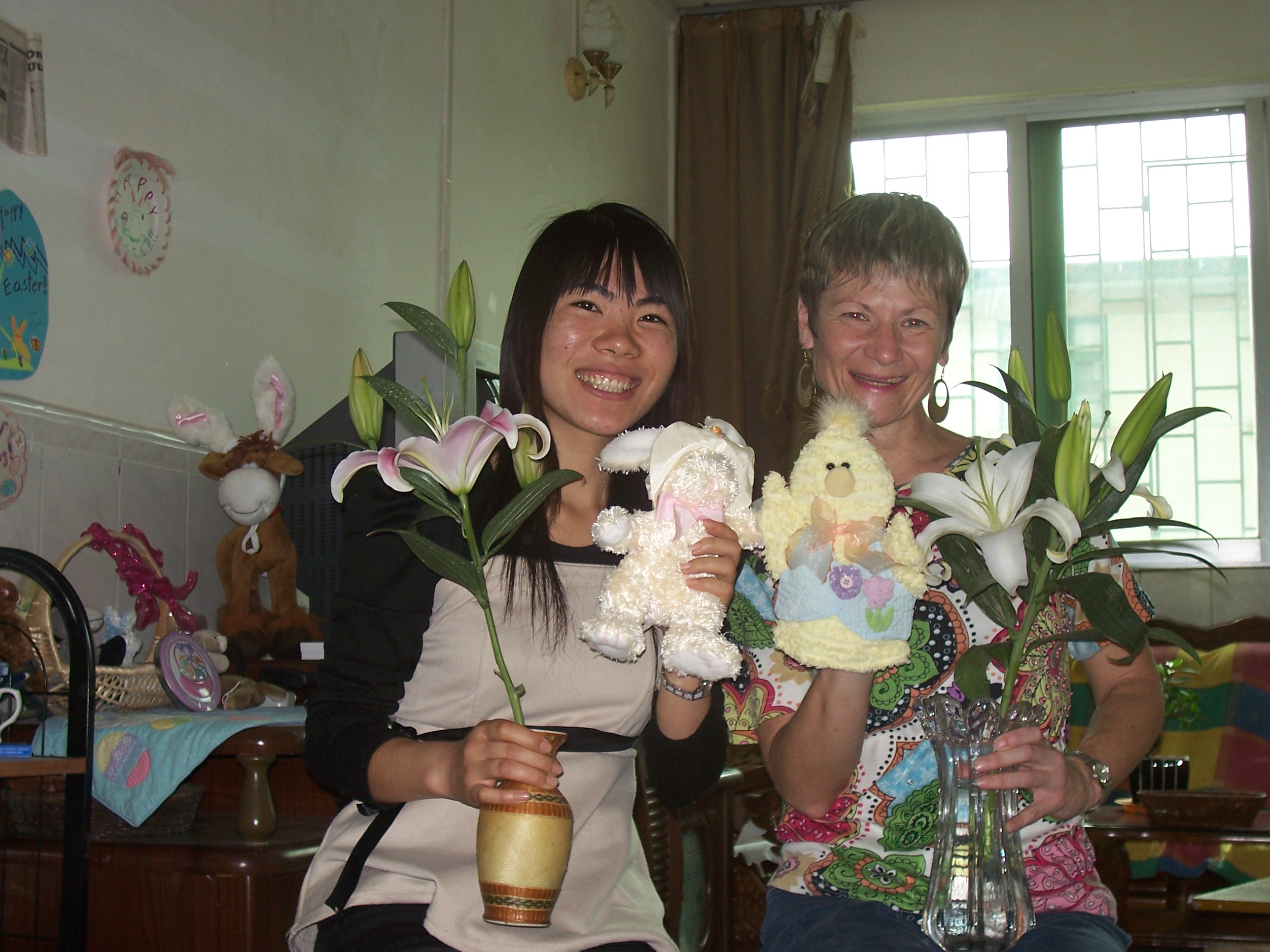
            Cherry followed me home where we laid our 2-foot-long lily stalks on the table.  I rooted around in the cupboard and found 2 big vases.  Next, I showed Cherry how to pull off the excess leaves, cut the stems shorter and immediately place them in cool water in the vases. 

            “Changing the water often, every day, is the best way to make sure all the other buds bloom and the flowers stay fresh,” I informed her.

            Cherry nodded, not quite sure why I was going into such detail about taking care of lilies.  After all, they weren’t hers.

            “So,” I said, “now we need to find them a place in my apartment.  Where shall I put the white ones?”

            She and I looked about, trying different areas of the room before finally settling on the Easter display of eggs, baskets and stuffed bunnies set up next to the TV.

            Cherry was holding the pink lilies, which she already said she liked more than the white ones.

            “And how about the pink ones?  Where should they go?” I asked.

            Cherry set them on the table. 

            “Here?” she asked

            “No.  The table is too crowded with things.”

            She put them on my empty bookcase.

            “This place?”

            “Naw.  No one can see them on the bookcase.”

            “What about next to the water machine?” She meant the water cooler dispenser which most of us have in China.
            “I don’t think so.  I’d probably knock it over.”

            After several minutes of this, it was time for me to stop teasing the poor girl and get to the point of my negativity about where to put those pink lilies.

            “You know, Cherry.  I think I have the perfect place.”

            “Where?” she asked.

            “Your dormitory room!”

            There was a pause and a confused look on her face before she finally got it. 

            She shook her head.

            “No, they are yours!  You bought them.”

            She tried to thrust the vase back into my hands but I refused to take it.

            “You’re right,” I said. “I bought them and I’m giving them to you.  Every Christian deserves to have lilies for Easter.  That’s my Easter present to you.  You and your dormitory roommates can enjoy them all week and remember why Christians celebrate Easter.”

            It didn’t take a second time to convince her to take her pink lilies.  Cherry was too excited with the gift to fight with me about accepting them and I was too determined to share with her my personal Easter tradition in America.

            Of course, we had to get pictures.  Cherry’s first lilies for Easter!  Such a special moment should be recorded and shared.

            Cherry will be getting her photos this Friday when we have class together.   These she can take back with her to show her hometown church members and her family.

             As for you all, I am including the photos at the end of this blog.

            I hope your Easter Sunday was just as lovely and meaningful as ours, with or without the lilies . . .or, as in Zhou Ning’s case, the long awaited boyfriend!

            Until next time, Ping An (Peace) from China

Cherry and I enjoy our Easter lilies.

Posted in Uncategorized | Leave a comment

Once Again, Tomb Sweeping Festival is Upon Us

In America, our store aisles are already overstocked with Easter items. Jelly beans, chocolate eggs, bunnies, and lilies are being sold by the millions all across the country.

But in China, a different kind of holiday celebration is overtaking us.

April 5 brings us Qing Ming Jie, literally translated as Clear-Bright Festival but more commonly known as Tomb Sweeping Festival.  This is one of China’s newer official holidays, having been declared as such only 3 years ago.

Last year, I reported on this day in a previous blog. While we are supposed to have a 1-day only holiday, we really have a block of 3 days off. That’s after we had Saturday and Sunday make-up working days. These make-up days took place all across China to give people 3 days of traveling to gravesites. Why we aren’t just given 3 days off to begin with is beyond me but that’s the way it goes.

My students have too far to go to return to their hometowns so they are stuck on campus with nothing to do except sleep, shop and play sports outdoors in our gorgeous weather.

Although I included Qing Ming Jie in last year’s updates, I’ll just refresh your memory a bit with some very fascinating added information.

The Reason

This Qing Dynasty, 300-year-old tradition focuses on remembrance of those who’ve passed before us.  It was set aside for families to honor their ancestors, visiting gravesites to clean the area of weeds, light special incense called joss sticks (“joss” means a Chinese image or house idol in a shrine) and burn paper money for their loved ones to spend in heaven.  Those with no gravesites to attend to, such as city residents, gather together and create small altars either outside their doorsteps or inside their homes. They then follow the usual customs celebrated in their hometown areas.

The Traditional Customs for Countryside Gravesites

Cremation was first strongly promoted by the Chinese government in 1956 as a means of cutting down on burial practices deemed undesireable and unsanitary by the new Communist China. But the choice of a body burial in the countryside is still the most used option in China today.

According to China’s director of the division of funeral and interment management, 2011 brought 4.3 million cremations, which was 48 % of all registered deaths. 52 % still followed the traditional burial practices with the person being laid to rest in countryside areas.

My good friend, Zhang Ou (Rebecca), shared with me her family’s annual pilgrimage to the countryside for Qing Ming Jie and what that entailed.

I thought it was interesting enough to warrant a blog entry, so here goes!

How Do Chinese Acquire A Burial Plot?

Rebecca first explained how Chinese manage getting a countryside burial plot for relatives. In her case, the site was acquired for her grandparents.

Her grandfather was a countryside doctor. He spent his life serving in a rural area so it was only befitting that he and his wife both be buried with the people they so loved.

After his death, Rebecca’s father went to the local villagers to ask permission for his father and his mother to be buried in their area. Land in China belongs to the government with farmers being allotted plots to grow vegetables or fruit. To bury someone who is from outside of the farming community, permission is needed from those who work the land.
After choosing a burial spot, Rebecca’s father went to the appropriate farmer to ask his permission. Due to the great respect held for his father, permission was given.

In appreciation, Rebecca’s father followed the Chinese custom of thanking the farmer and his neighbors for this honor. He hired a countryside catering family who prepared 3 days of meals to be served outside in the village community center. Such local catering services are common in China for weddings, funerals and special celebrations. A price is agreed upon and the caterers bring portable gas tanks and stovetops for cooking, woks, utensils, tables, chairs, tents and a massive supply of food for the big occasion. Cooking for crowds is their specialty and they do an impressive job.

Lunch and dinner, a total of 6 meals, were offered to the villagers. Rebecca’s parents stayed among the diners for 3 days to chat and show their appreciation for the kindness offered to their deceased family member.

 Visiting the Gravesite

For Rebecca’s family, the annual visit to her grandparents’ gravesite is a full day affair.

First, they must take the long-distance bus 2 hours to the countryside area. They bring with them snacks for the road, joss sticks and candles for the gravesite, fake paper money to burn for her grandparents to spend in heaven and a string of firecrackers.

After arriving at the destination, they walk 40 minutes through winding trails up into the hillsides where the gravesite is located.

When they arrive, they clean the area of weeds, leaves and sticks. Candles and joss sticks are placed directly into the ground and lit. Next, they let off firecrackers. This is to get the spirits’ attention that they have come, signaling for their deceased relatives to listen.

Together, the family bows three times. Then each person speaks in a low voice, telling the visiting spirits about their lives for the year. This is also accompanied by requests to bring them good luck in their ventures, such as finding a good job, passing important tests, making more money or watching over their well-being.

When the last person has spoken, it’s time to return.

For local villagers who live near the gravesite, other Tomb Sweeping practices might be followed. One of my students told me in his village, everyone had to kill a chicken and prepare noodles to offer to those who had died.  At the grave, a small table altar was prepared, on which was placed the lifeless, plucked chicken and pile of noodles in a huge bowl. The usual bows were made, candles lit, firecrackers set off and communal sharing of the year. After that, the family took away the offerings to cook for the family dinner.

Commercialism Taking Hold

In the past, the traditional items for this special day were all that was offered. But within recent years, commercialism has taken hold.

The most popular belief for honoring ancestors is that by burning images of things, the dead can enjoy these in heaven. Fake money has always been the traditional gift to send to heaven but now there’s a lot more to choose from.

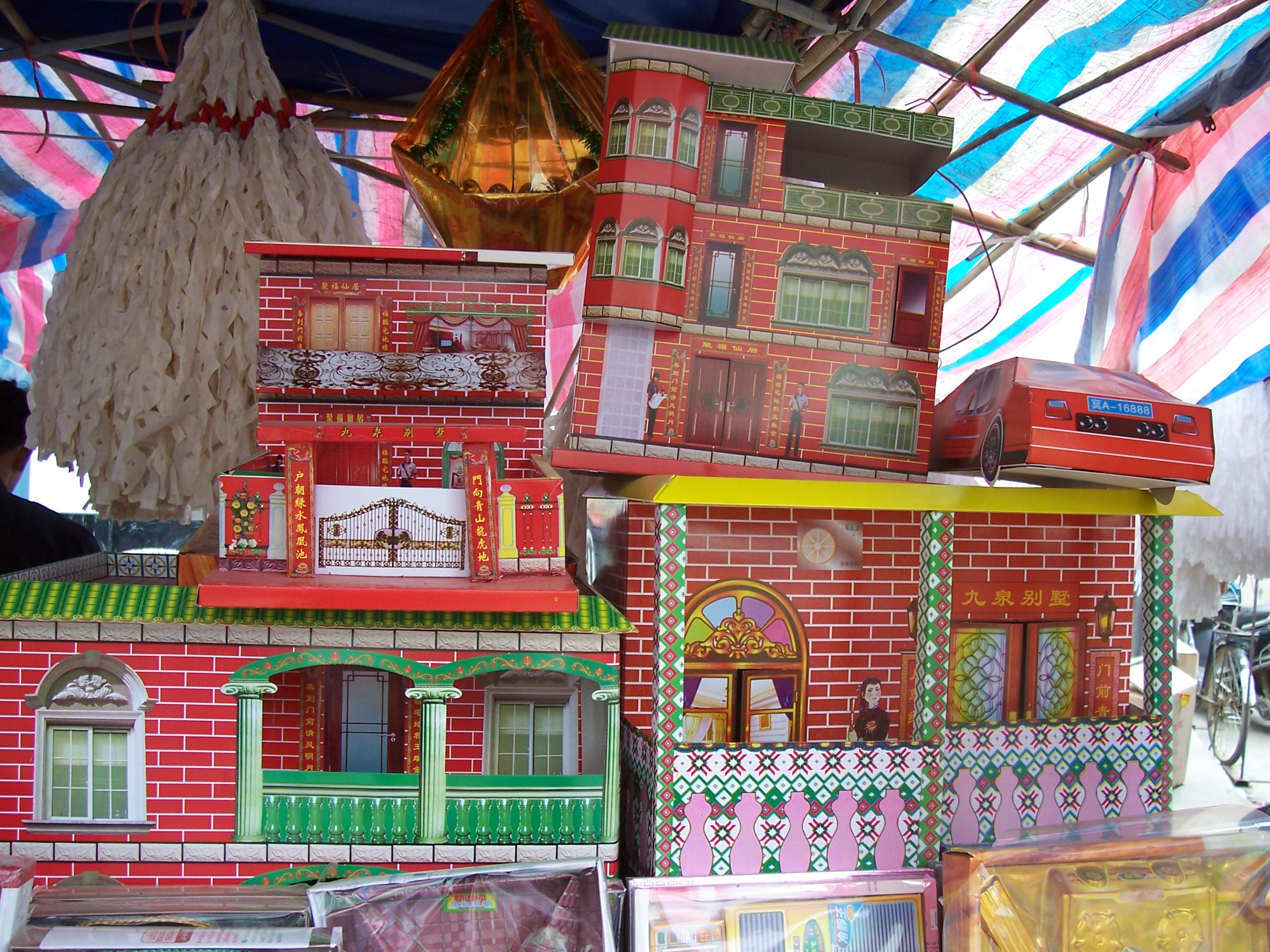
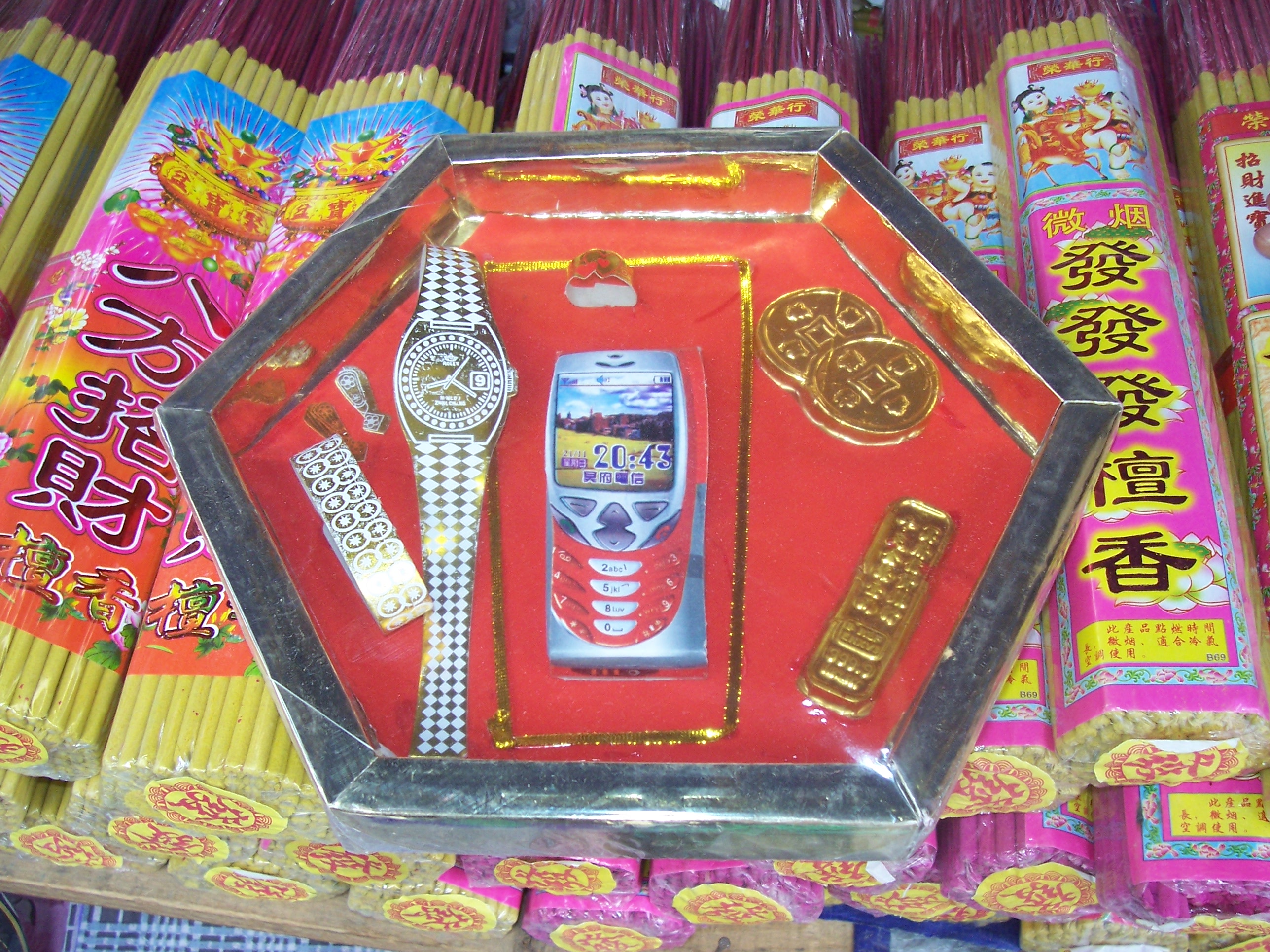
Paper-made houses, cars, watches, cell phones and clothes are to be had as well. These are ready to be ignited at the grave and whisked off into the hands of the deceased. 

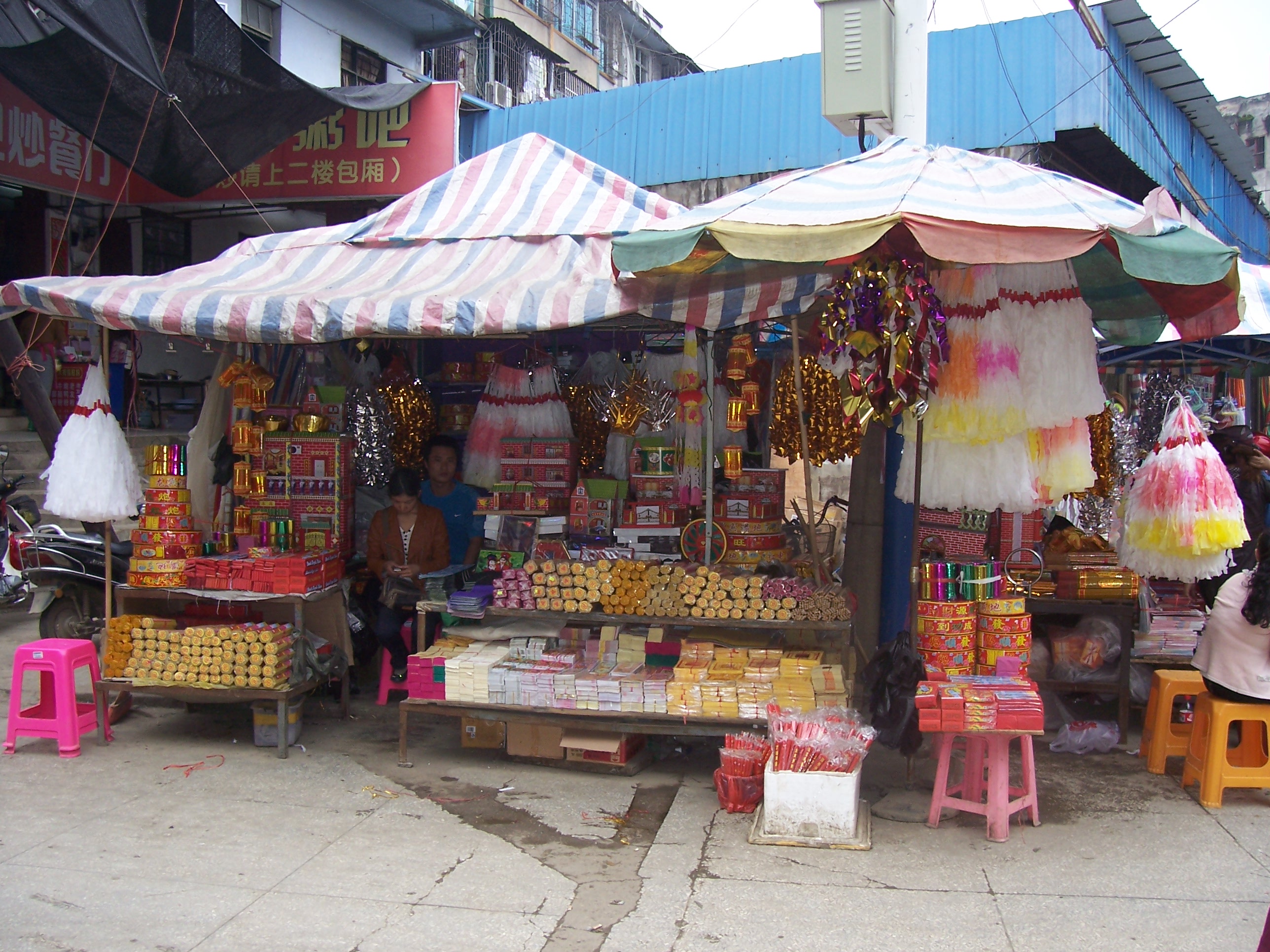
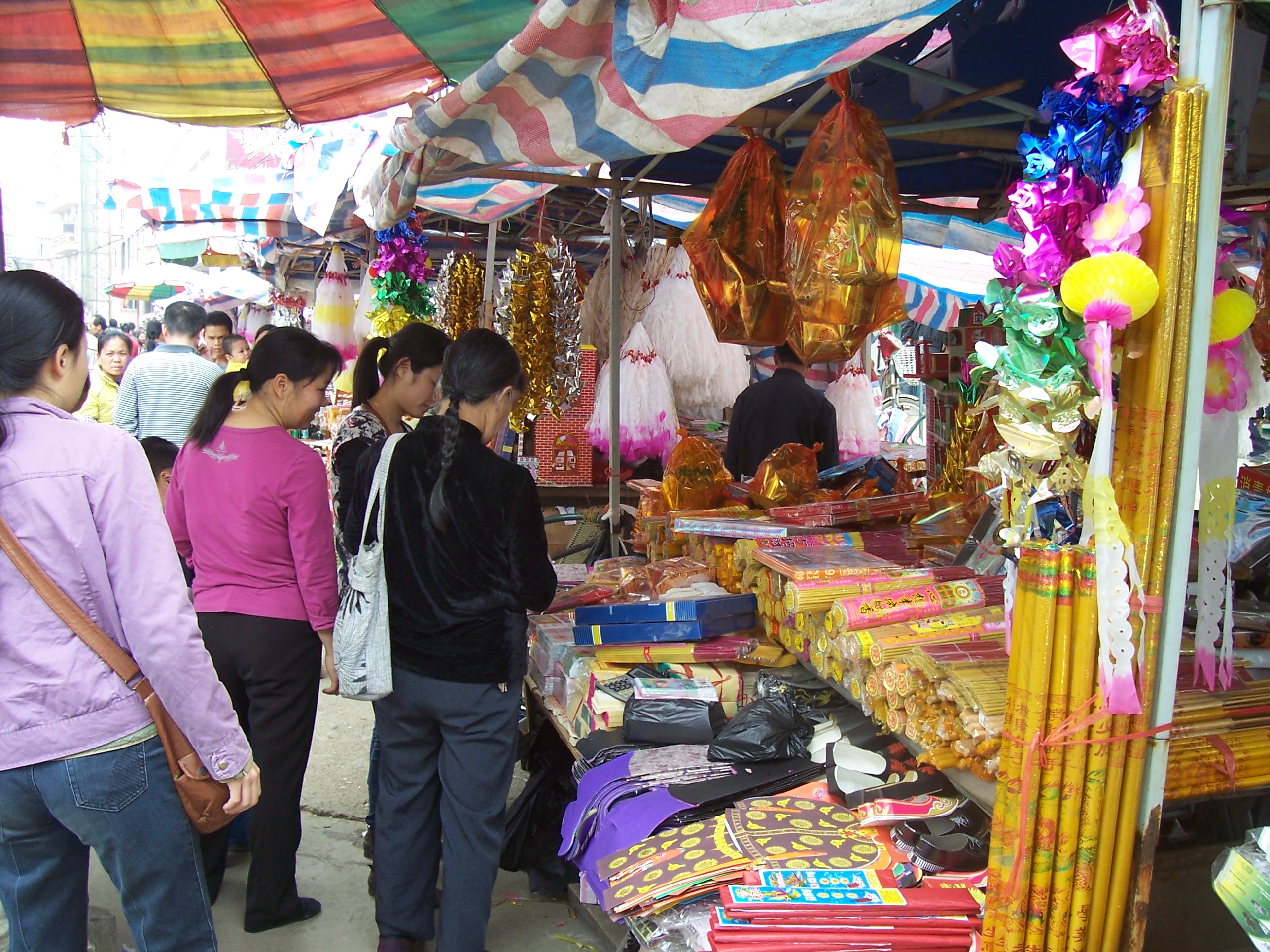
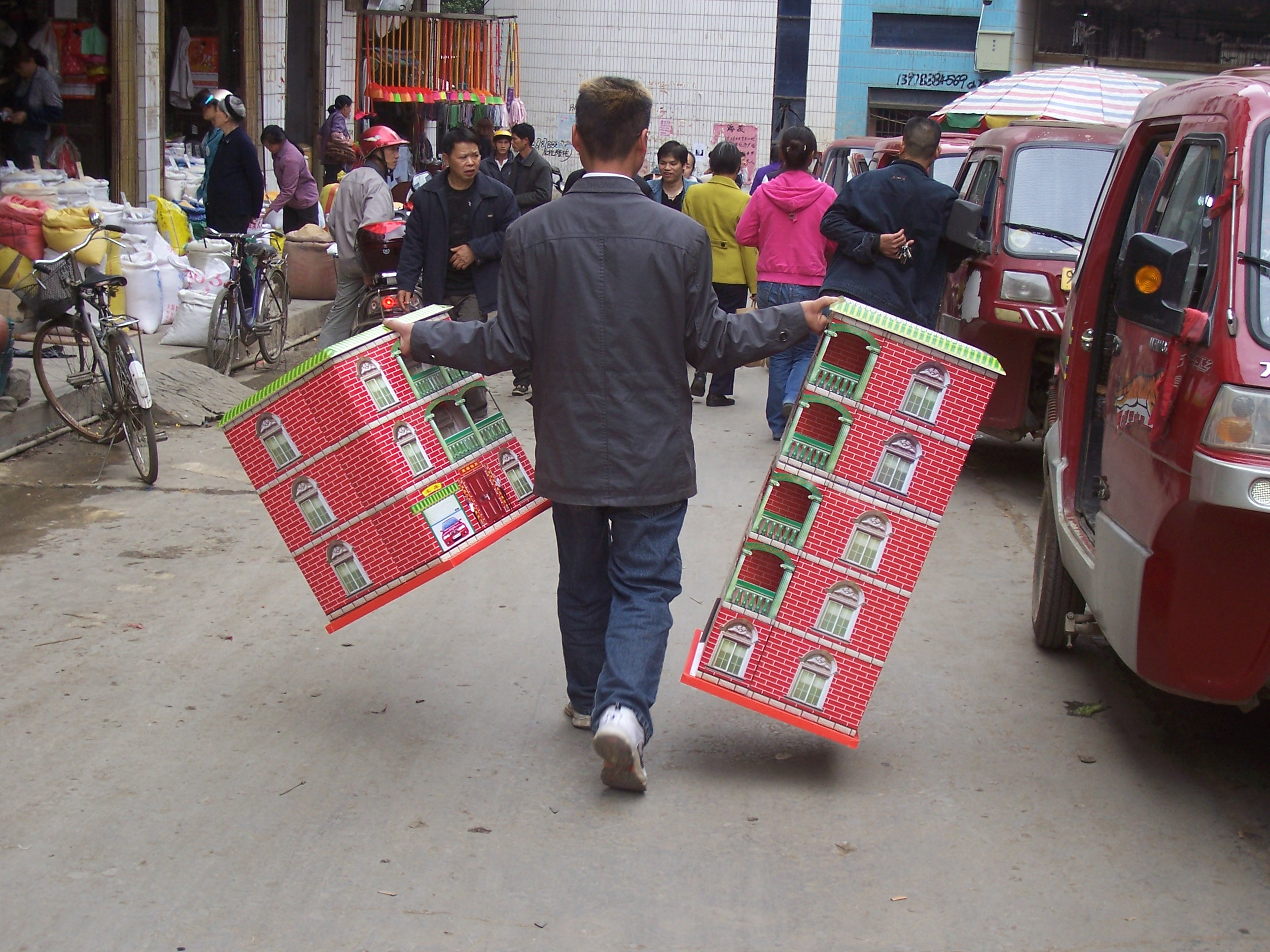
In my small market, the sellers are out in abundance with their Tomb Sweeping wares. Many of the paper items come with assembly required. It’s quite common to see the booth owners quickly putting these together with tape or cutting out doll-sized paper clothes for consumers to purchase.

A nicely-appointed, furnished house?  60 cents.  A lovely pair of traditional shoes, your choice of men’s or women’s?  45 cents.  Watch, cell phone, ring and necklace set?  40 cents.  Tissue-paper wardrobe, including appropriate colors for each sex?  30 cents.

It’s fascinating to see how a simple tradition has erupted into a full-blown spending spree by, and for, the living.  

Wealthy, sophisticated city folk can splurge on more luxury items to burn than your average countryside farmer.  One article I read out of Shanghai included such paper purchases as an 18 yuan ($3.00) cosmetic set (lotions, lipsticks, eye shadows, facial cleansers, and fancy bra). Even three-dimensional paper wine bottles and top name brand laptops graced the store aisles.      

In my little Chinese town, we have no such posh offerings by our sellers.  People here from the countryside mostly stick with basic needs of the average person, and that’s what’s currently filling our market tents in tiny Longzhou.

A Question of Tradition, Not Belief

Do people actually believe such things?  That by burning money or items, their ancestors and recently departed can enjoy them in the hereafter?

Perhaps hundreds of years ago, the answer was “yes” but in today’s modern society, not really.

“It’s just something we do,” my students and colleagues have told me.  “A tradition.  A way of remembering our family members who are no longer with us.”

Yet you have to admit, the idea itself is quite intriguing.  Who among us wouldn’t delight in the image of great Aunt Ruth or Grandpa Jim receiving our thoughtful items, smiling and waving to us in gratitude from the afterlife?

Even I, in all my faithful Christian upbringing, couldn’t help but buy a few Tomb Sweeping knick-knacks from one of the sellers.  Mostly, it was in appreciation for allowing me to take as many photographs of her wares as I wished.  However, I must admit that, in the back of my mind, I was thinking, “You know, Grandma Marie would really love to wear this flowery, purple tissue dress for her Easter Sunday in paradise.”


Tents with Tomb Sweeping wares fill our Longzhou marketplace.


Consumers decide which items to buy to honor their deceased loved ones.

A fully furnished, decroated house? 40 cents. A red Ferari? 25 cents.

His and Hers wardrobe with accessories? 65 cents each.

How about this cellphone gift package for Grandpa?

Assembly is required for most paper objects. This seller taped together these palatial palaces and is bringing them to his stall to be sold.

A happy Qing Ming Jie proudly seller displays one of her newly cut tissue outfits she did herself.

Even I, in all my Christian upbringing, couldn't help but buy some Tomb Sweeping items. See Grandma Marie's pretty flowery purple dress?

Posted in Uncategorized | Leave a comment

Happy Belated International Women’s Day!

Note: This article I wrote for my area newspaper for International Women’s Day. Thought some of you might enjoy reading it. It’s quite late due to some difficulties in the email reaching Pam, my friend who is posting for me. At least gives you something to read that’s new!

A Simplified History of International Women’s Day

 The creation of International Women’s Day (IWD) began due to great changes taking place in Europe and America in the early 1800’s. World economies were rapidly developing as the more progressive countries became industrialized. With industrialization, women moved out of their homes and began to work, mostly in factories where conditions were poor and pay was low. As a result, women began to form groups to protest the terrible situation of their working places.

 The first recorded organized action by working women anywhere in the world took place in New York on March 8, 1857. Hundreds of women in the garment and textile factories staged a strike in protest of low wages, long working hours, inadequate pay, inhumane working conditions and the lack of the right to vote. 

Other protests were soon to follow, including fifty-one years later, on March 8, 1908, when women factory workers and members of the Socialist Party once again protested in New York City. This was in remembrance of the 1857 march, the right of women to vote, and an end to sweat shops and child labor.

 The following year, in 1909, the Socialist International Party met in Denmark. A German socialist named Klara Zetkin asked for a special day for women to be decreed called International Women’s Working Day. This day was to honor women and their right to be equal with men. March 8 was chosen as the date.

 Despite its creation in 1909, the day itself did not become a world celebration until 1975, when the United Nations declared International Women’s Day an international holiday.

IWD Celebrations

In many countries throughout the world, IWD is considered a big affair. It is currently an official holiday in 14 countries: Armenia, Azerbaijan, Belarus, Bulgaria, Kazakhstan, Kyrgyzstan, Macedonia, Moldova, Mongolia, Russia, Tajikistan, Ukraine, Uzbekistan, and Vietnam. In addition, women-centered events are held all over the world. There are lectures given by women, gatherings to discuss women’s rights, music concerts and a variety of other activities.

As for the United States, IWD was commemorated during the 1910s and 1920s, after which enthusiasm dwindled. Celebrations were revived during the women’s movement in the 1960s, but without its socialist associations. Although the UN later set aside IWD as a one-day celebration, the US went a little further. In 1981, Congress established National Women’s History Week to be commemorated the second week of March. In 1987, Congress expanded the week to a month. Every year since, Congress has passed a resolution for March to be established as Women’s History Month, with the President issuing the proclamation.

 Experiencing IWD Overseas

Although America does designate March as Women’s Month, as far as March 8 itself, the day often comes and goes in our country with little notice.

I certainly had not a clue what International Women’s Day was until 24 years ago when I worked in Kyoto, Japan at the YWCA as an English language teacher. The staff of Japanese women carefully prepared for March 8 with a fanfare I had never seen in my own country. A large luncheon was planned with notable women speakers who were well-known for advocating women’s rights. Their topics concentrated on women abuse issues in Japan, targeting the Japanese workplace and household.

We also held a Saturday bazaar, with the proceeds going to specific Kyoto projects to help women.

With this introduction to International Women’s Day, I began to take more notice of March 8.

In my teaching placement in Taipei, Taiwan at Wesley Girls’ High School, we women teachers received individual gifts from the school. One year, we were given a cheesecake. Another year, it was 2 pounds of dried pork, presented by one of our students’ fathers who worked in a meat packaging plant. Yet another year, it was a tin of butter cookies from a famous bakery in town.

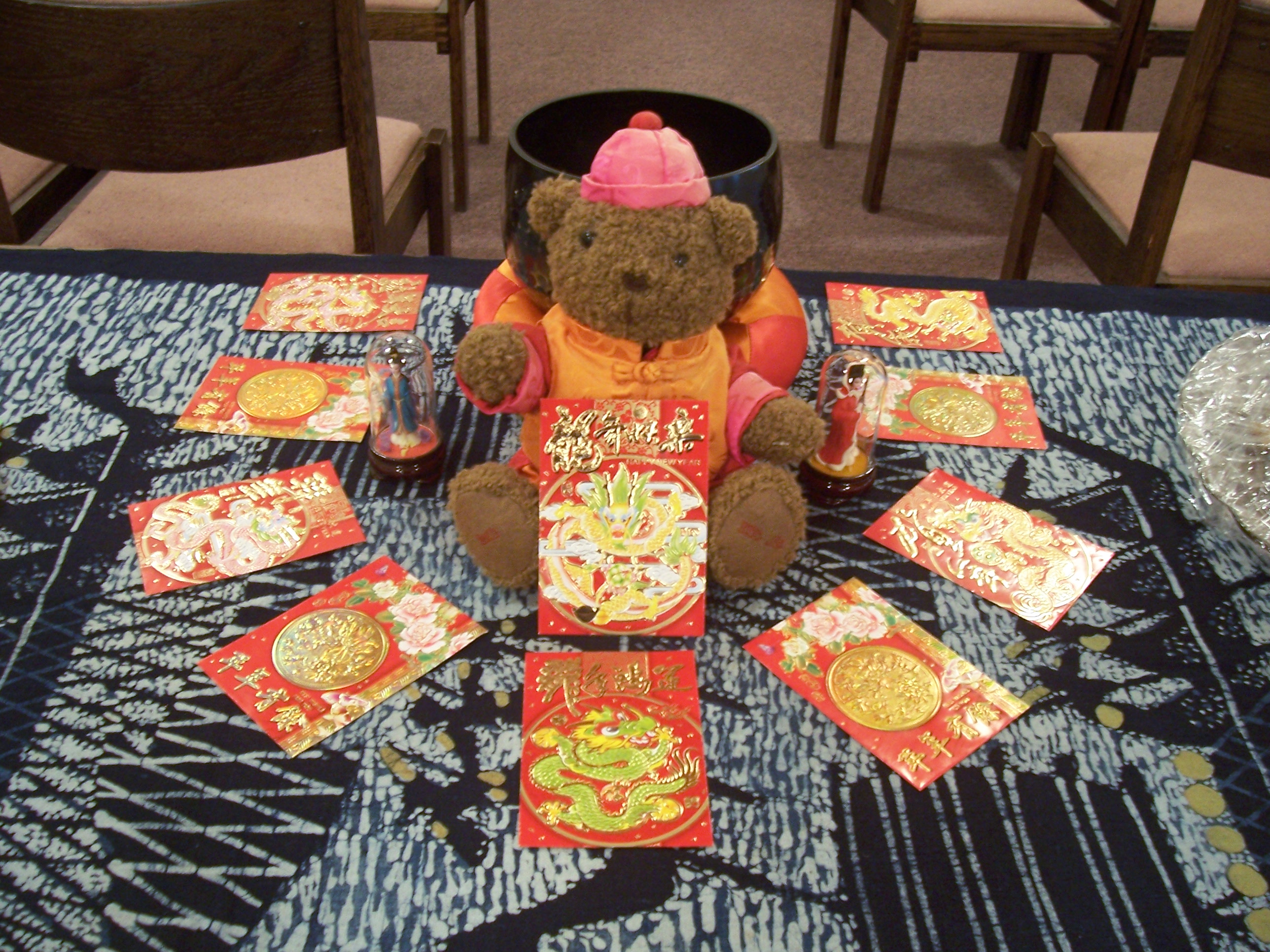
To sweeten the day even more, every gift was accompanied by the traditional Chinese money gift, the hong bao (red envelope). This was from the Parents’ Association. Inside, we found 1,000 Taiwan Dollars ($120 US).

Here in mainland China, I have also enjoyed the benefits of IWD. As a college English teacher, I find we women are never forgotten by school officials.

At my previous college in Sichuan Province, we had an entire day off with a free tour to a cherry blossom park. We walked about the area, admiring the beautiful flowering trees, chatting, taking pictures and enjoying our complimentary lunch and dinner.

The next year, each department prepared performances. We women were asked by the male administrators to show off our talents in singing, dancing and acting.

It sounded like a good idea but the amount of work that went into preparing for our programs was excruciating. After our complaints, the next year there were no performances. Instead, each of our 12 departments was given 800 yuan ($130) to take us ladies out to dinner.

Now that we appreciated.

My current teaching placement is in far southern Guangxi, one of China’s 5 autonomous regions and one of the poorer provinces of the country. Our small, rural college doesn’t have the funding to spend on such lavish Women’s Day presents as big dinners or all-day outings. Still, despite the tight budget, the administrators make sure that we are honored in some way. Whether teachers, office workers, cooks or grounds’ maintenance staff, we women each receive a hong bao. The teachers are given 100 yuan ($16); others are presented with 50 yuan ($9).

While the gift isn’t nearly as grandiose as former schools I’ve taught at, the gesture from this struggling college certainly outshines that of my former employers.

The average salary of a small college teacher here is $350 a month, with the cooks and grounds’ crew receiving about $50 a month. That little extra money goes a long way in rural China, especially for those who have families to support.

IWD In The English Language Classroom

To commemorate International Women’s Day in my English language classroom, I always make sure my students are fully aware of this day. My IWD unit includes a history of IWD, current statistics about women in China and the US, and Internet searches done by students on notable American and Chinese women.

This year, an added element to the unit involved my male students.

Out of the 240 English language majors I teach, 13 are men. This follows the trend of most Asian countries, where liberal arts’ study falls mainly to college female populations.

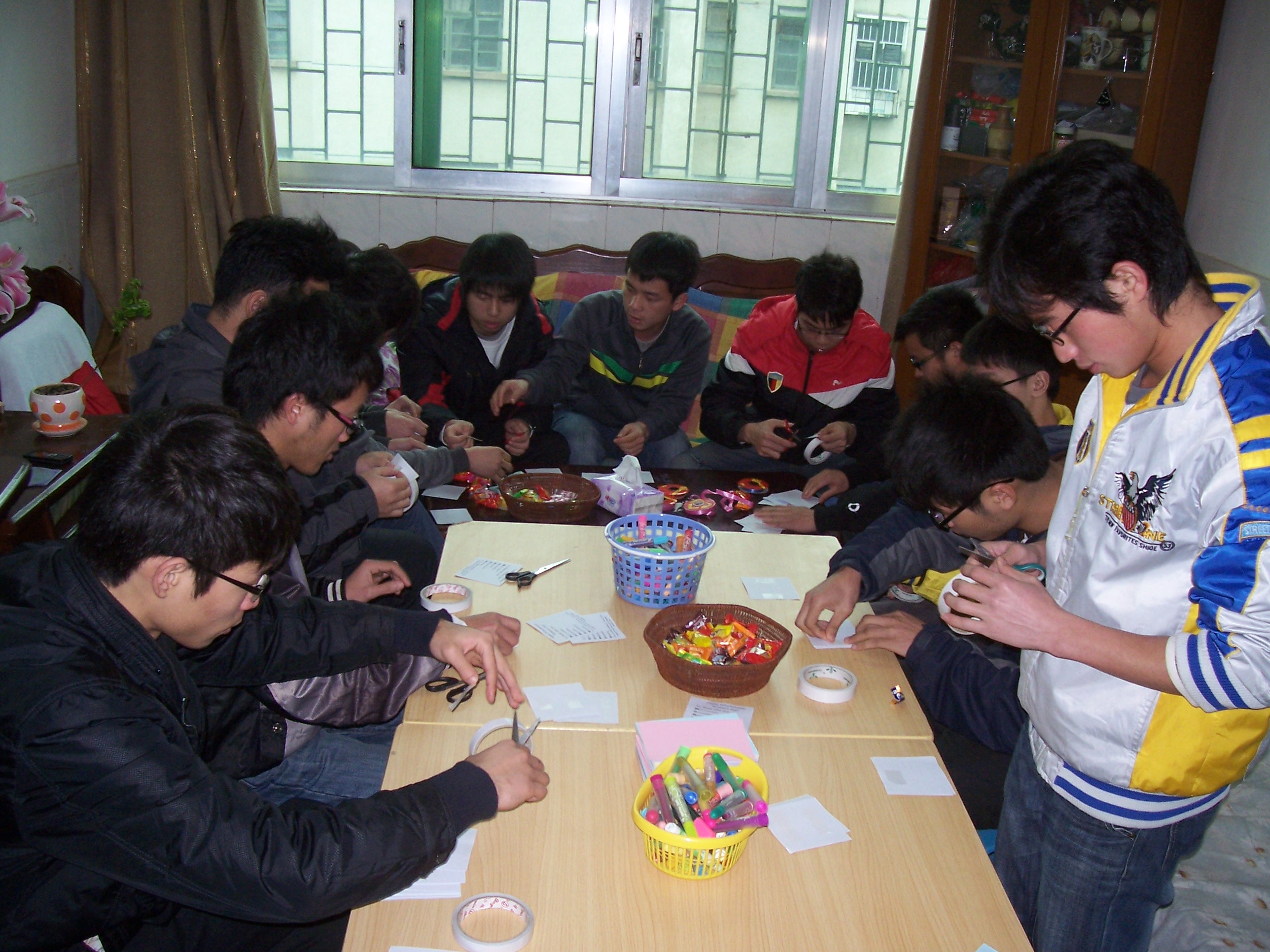
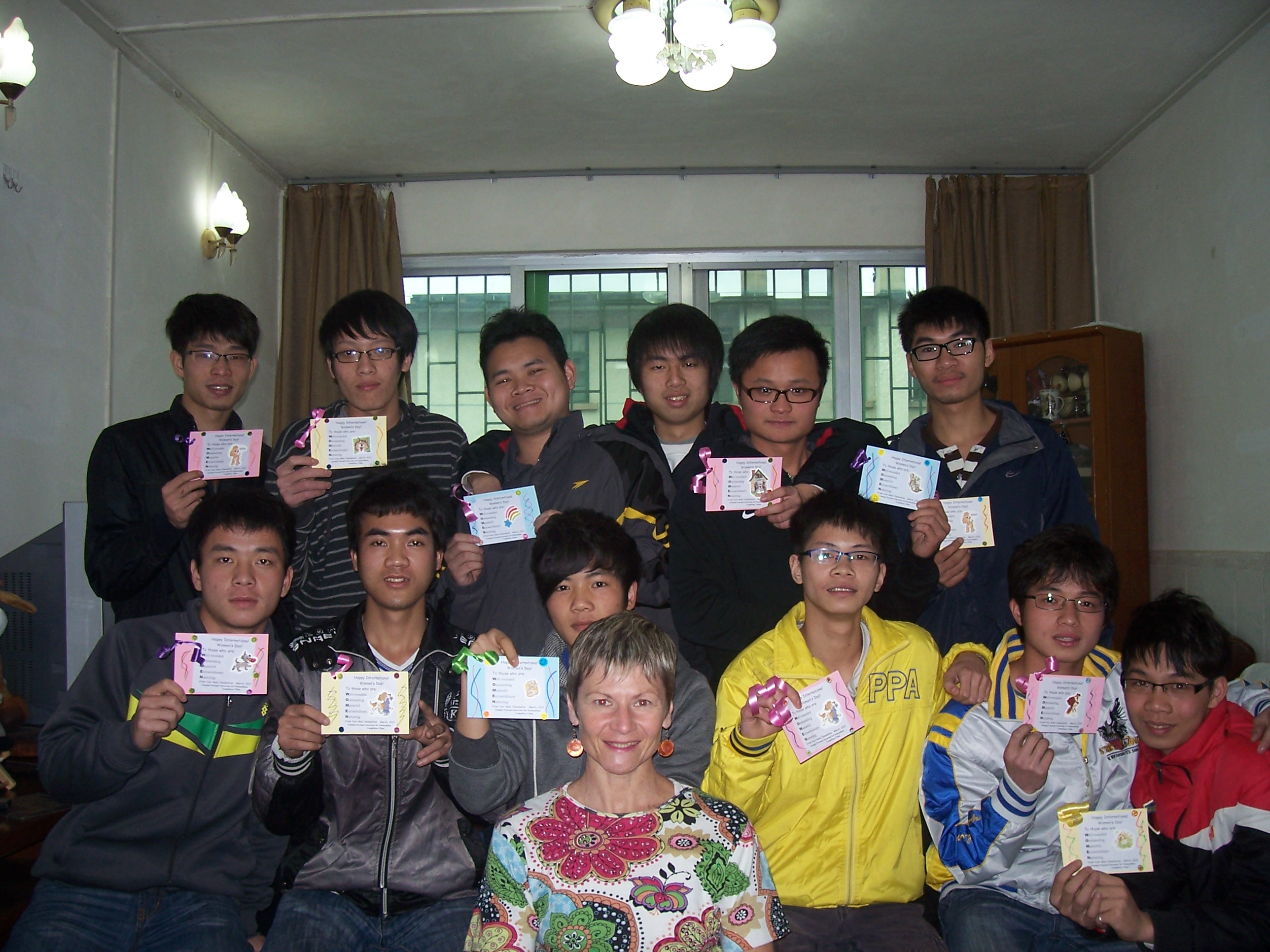
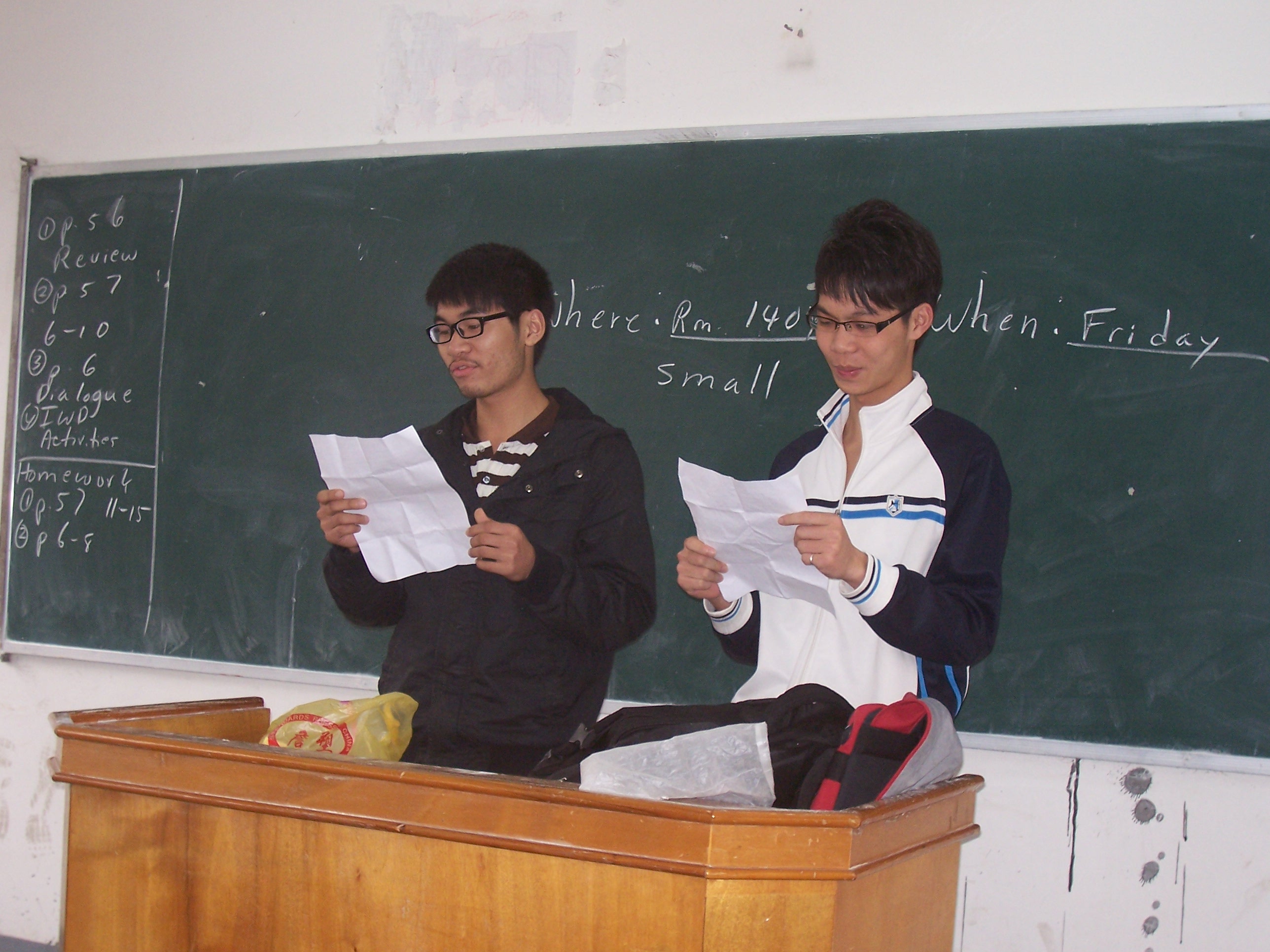
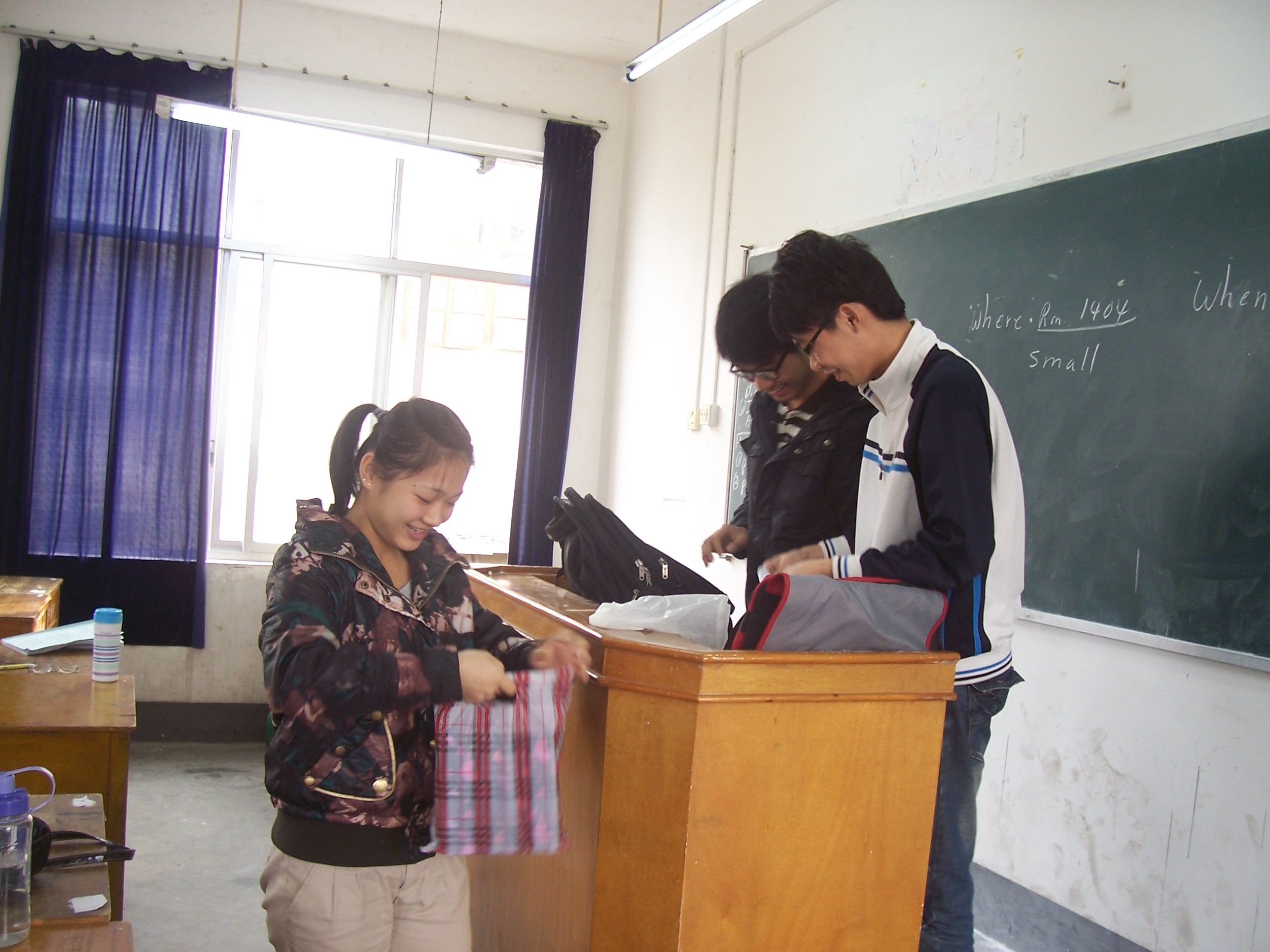
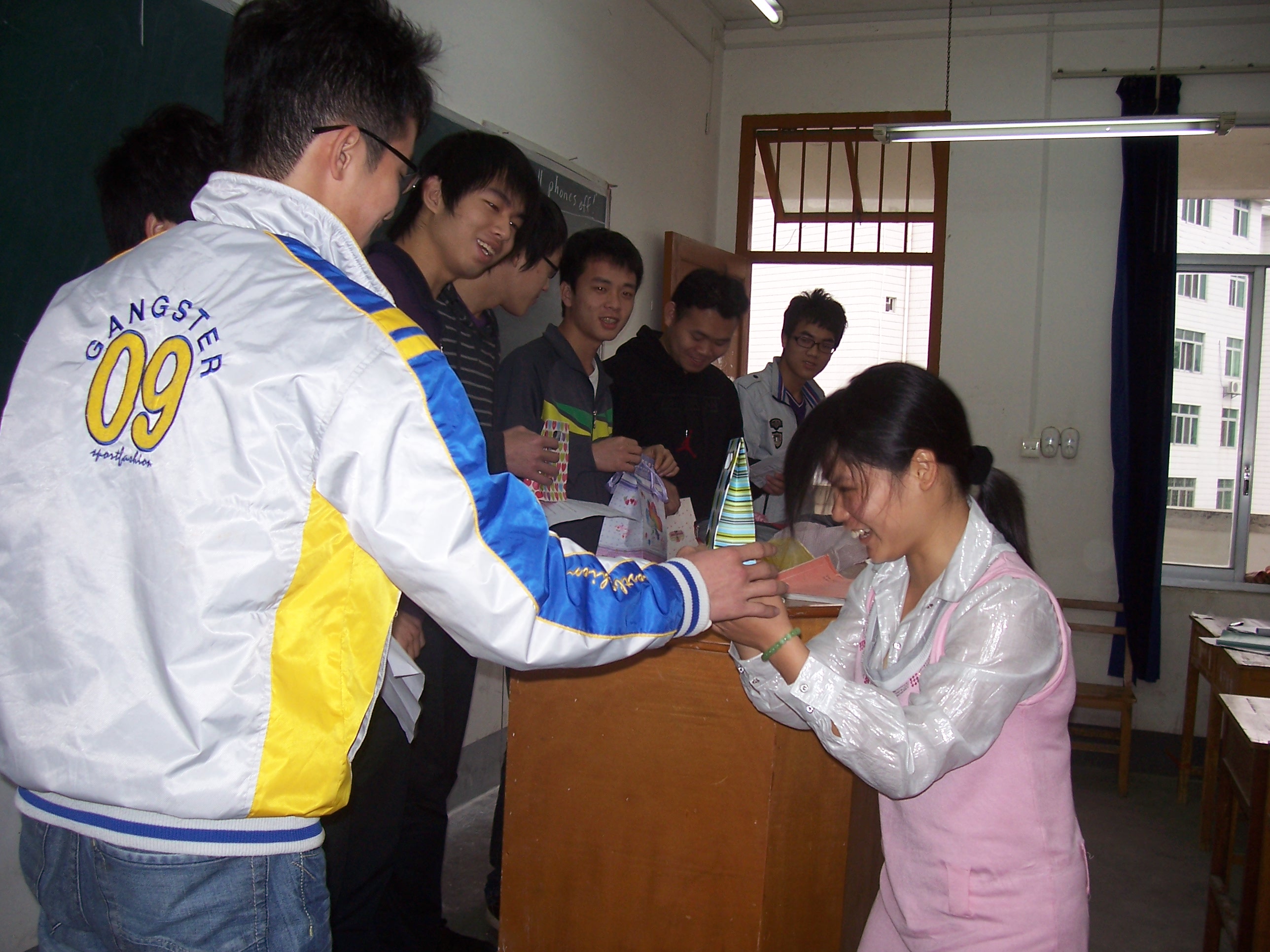
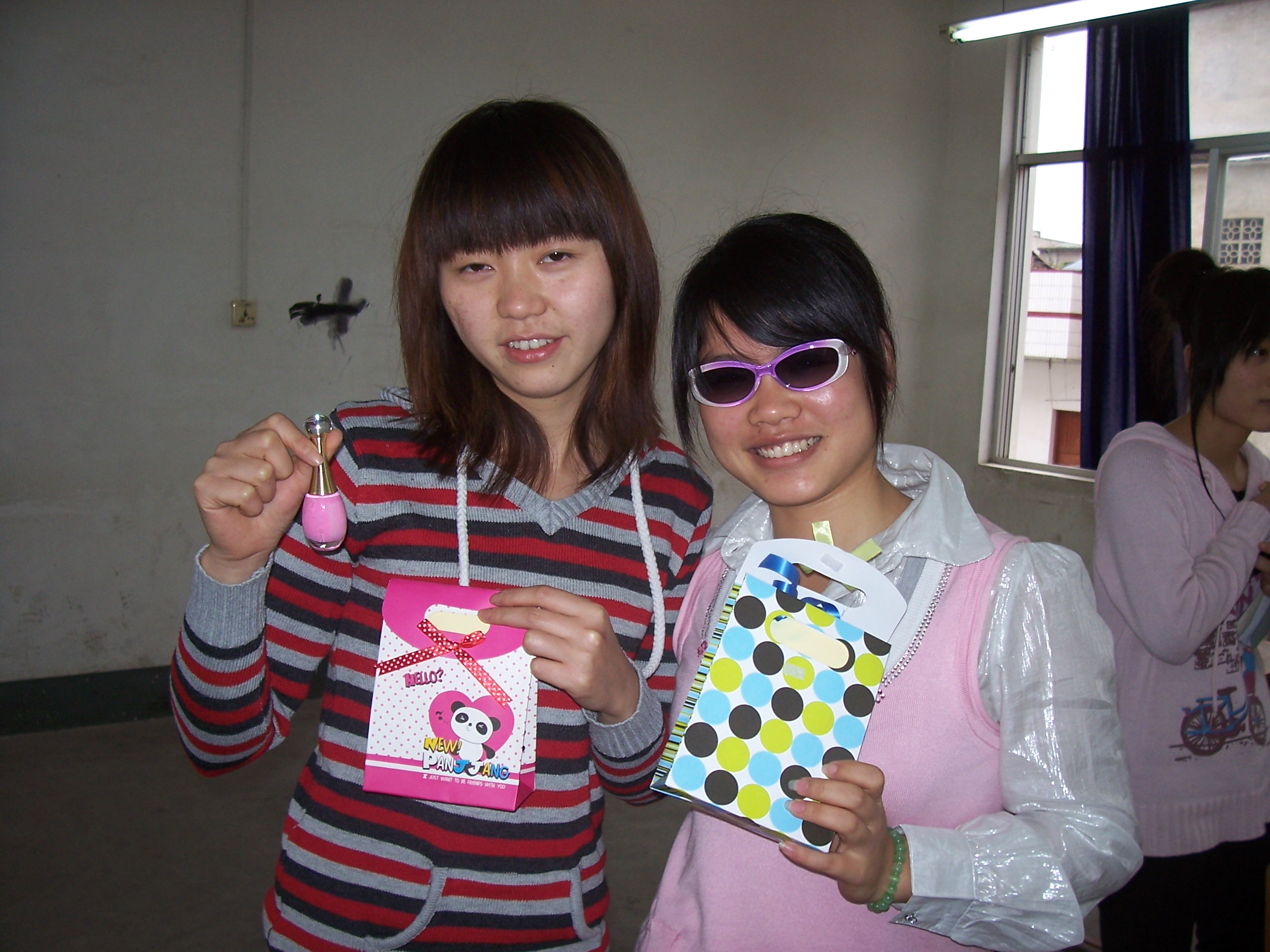
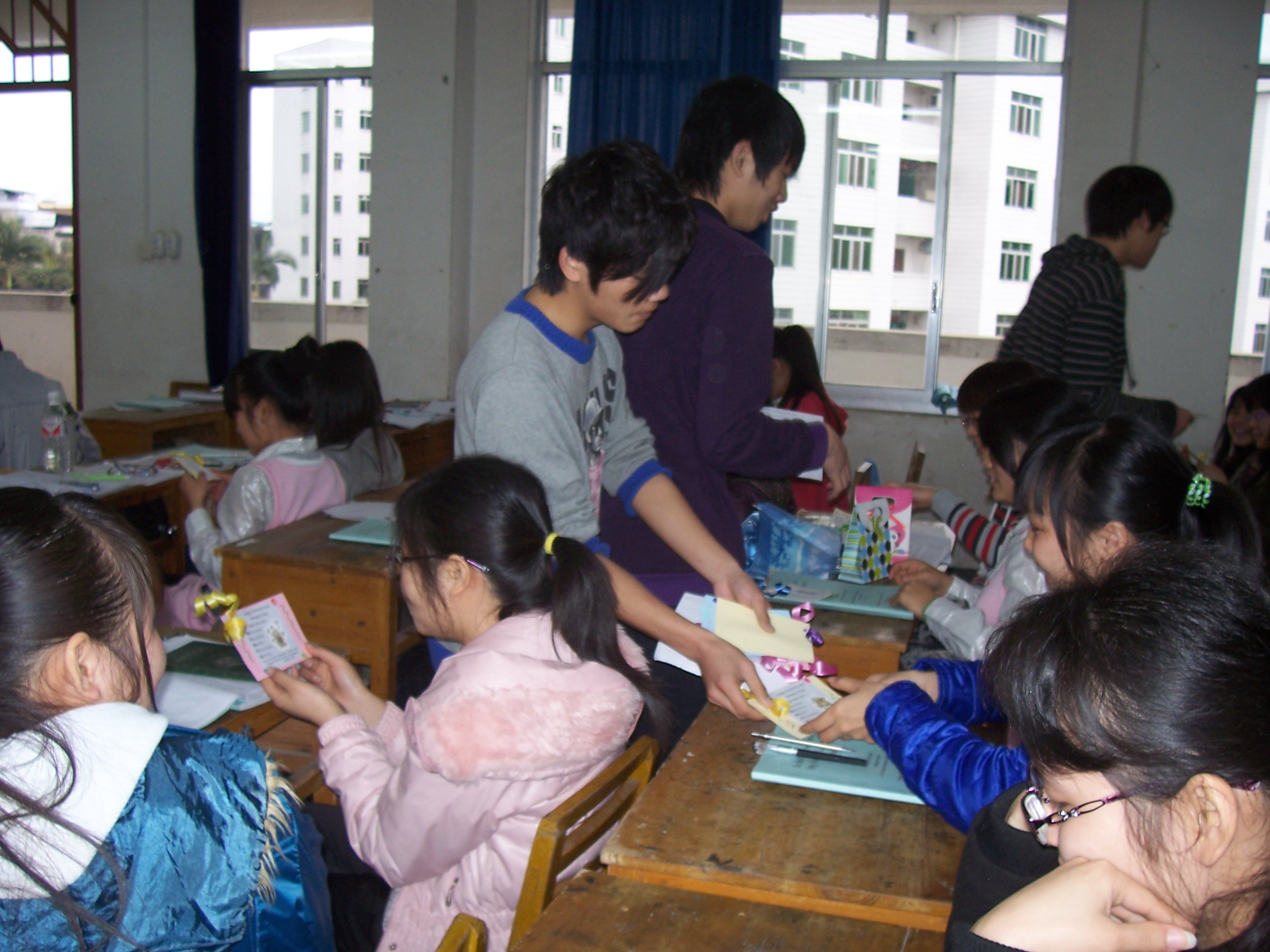
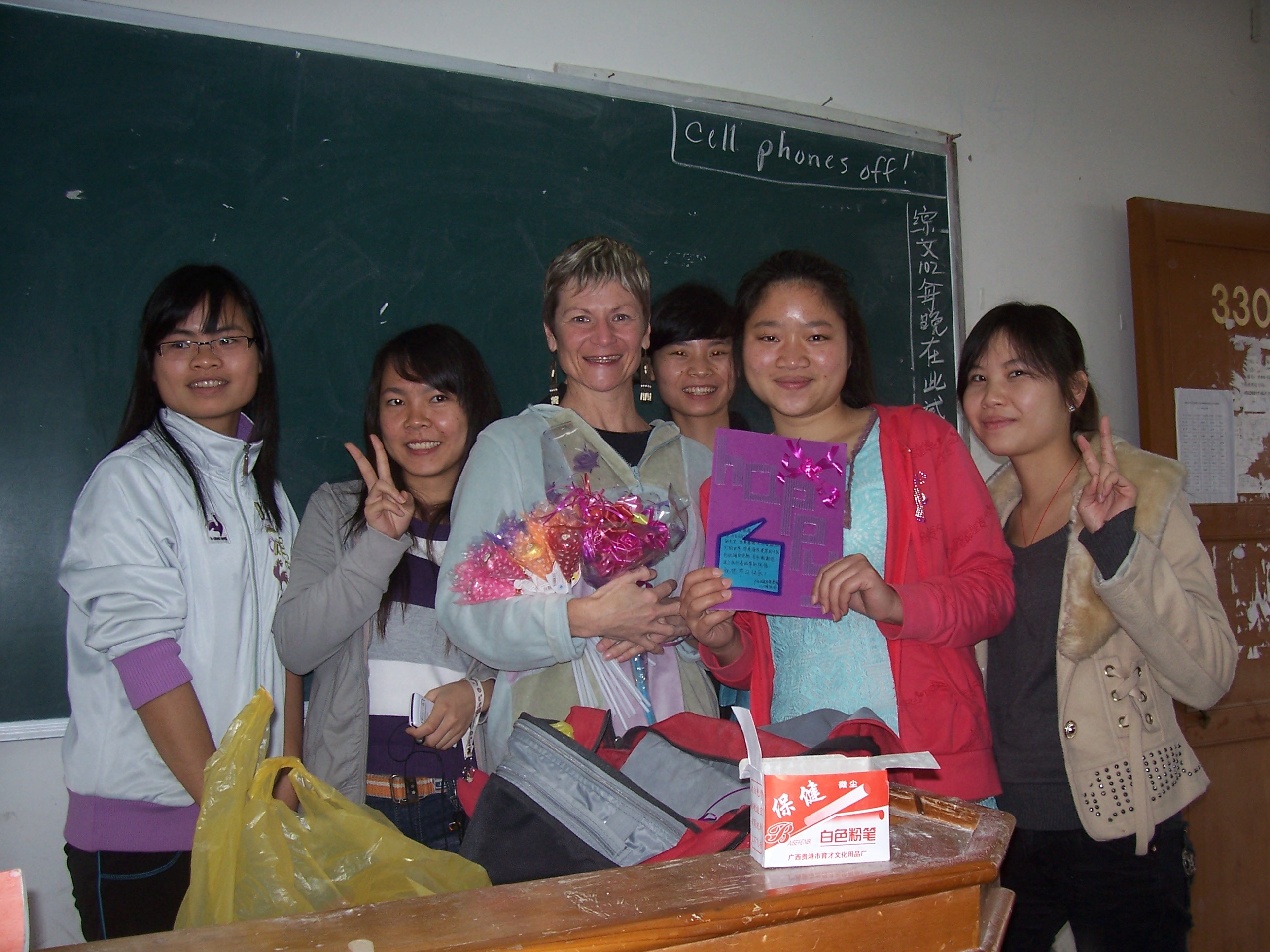
To give our women students a meaningful day, the gentlemen in each class serenaded the ladies and held a drawing for prizes which they purchased themselves with funds from me. They also presented their classmates with handmade favors. These they made in my home on the weekend.

In my home, the guys are busy making IWD favors for their female classmates.