A Great Visit Home!

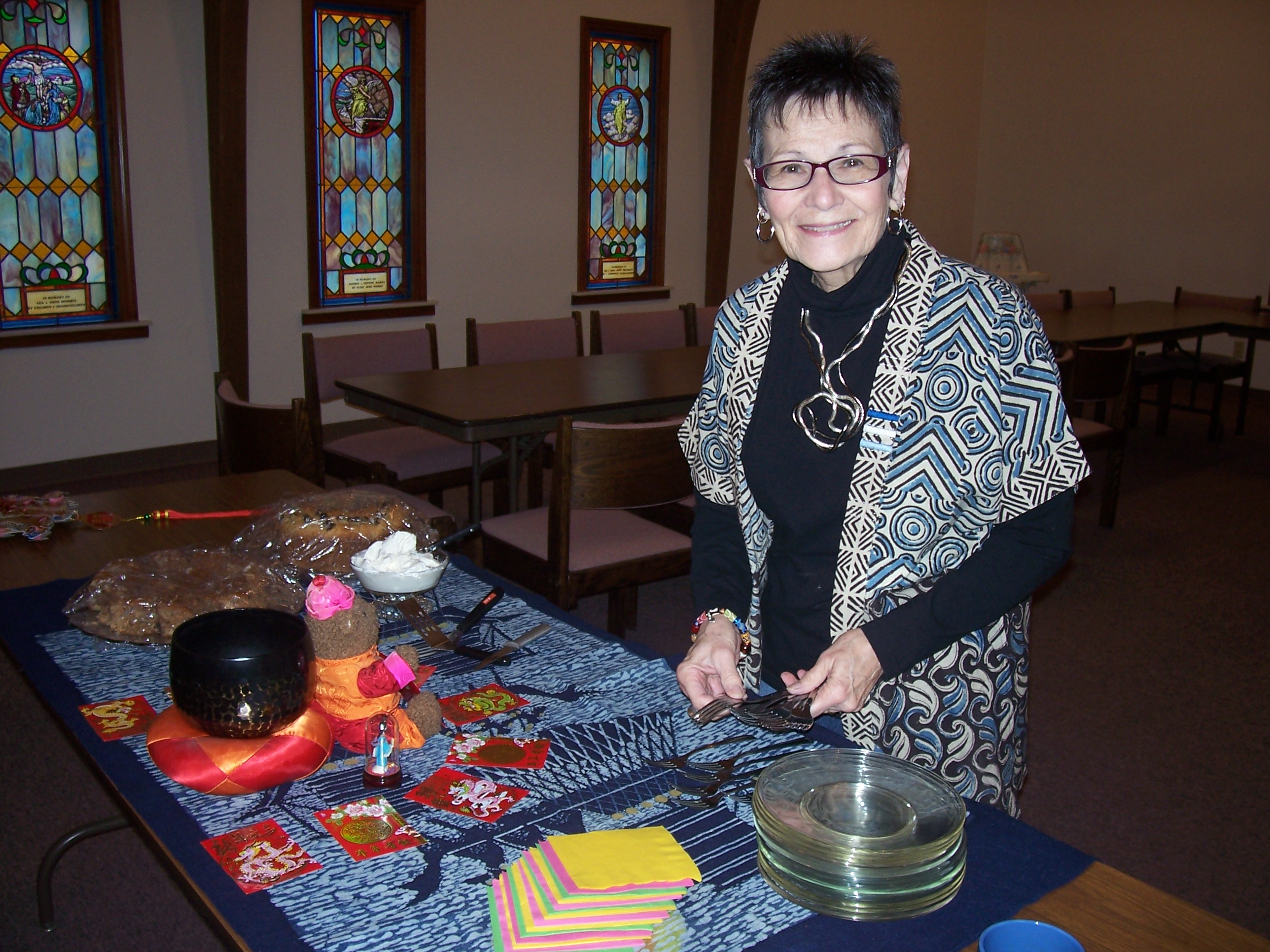
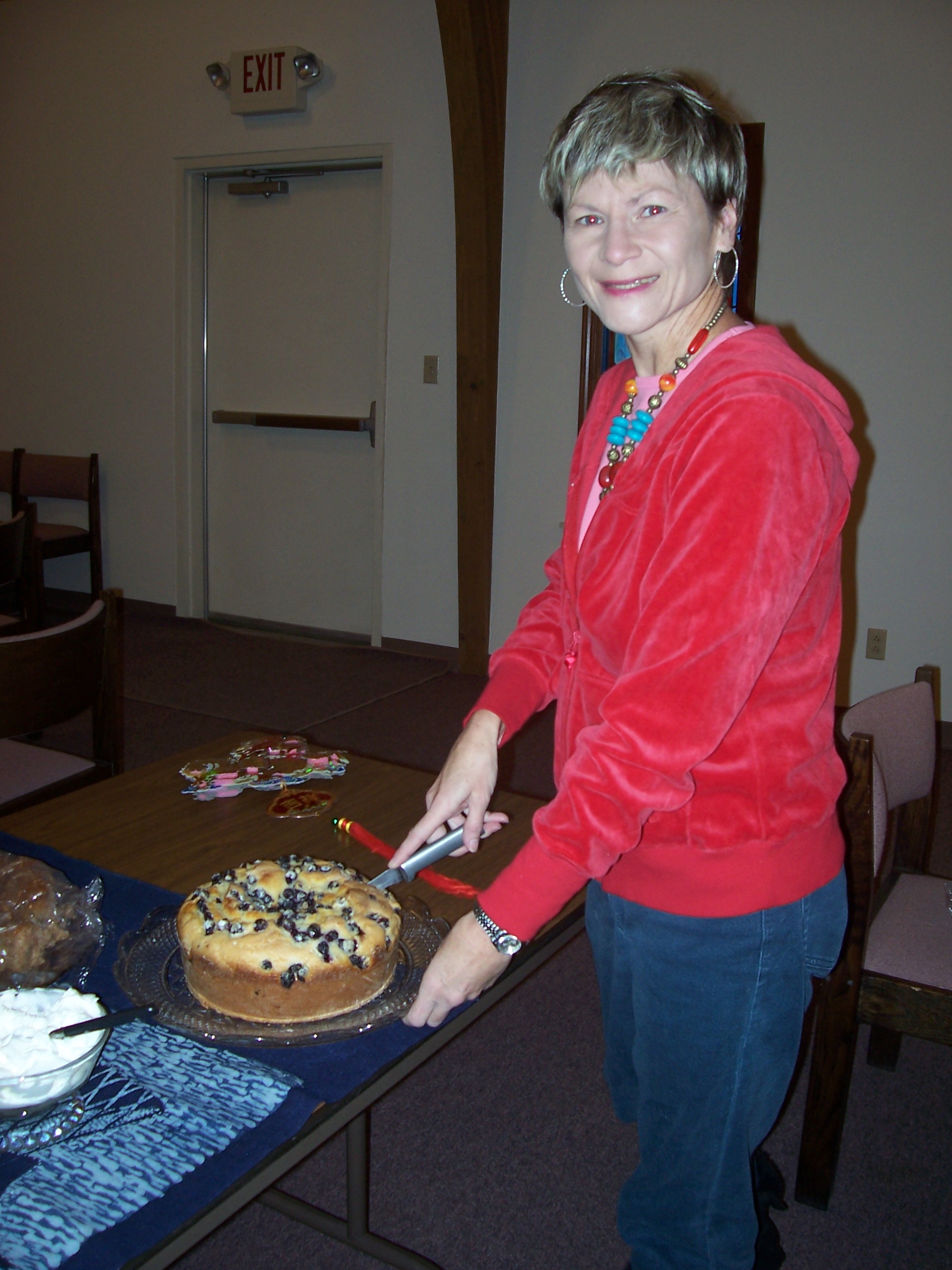
Attending my home church’s circle meeting was one of the highlights of being back in my hometown.  My mother, Priscilla, was in charge of the program and I was in charge of desserts.   Our homemade apple spice cake and blueberry bundt cake was enjoyed by everyone but the most fun we had in hosting was to create a Chinese New Year display for our table setting.

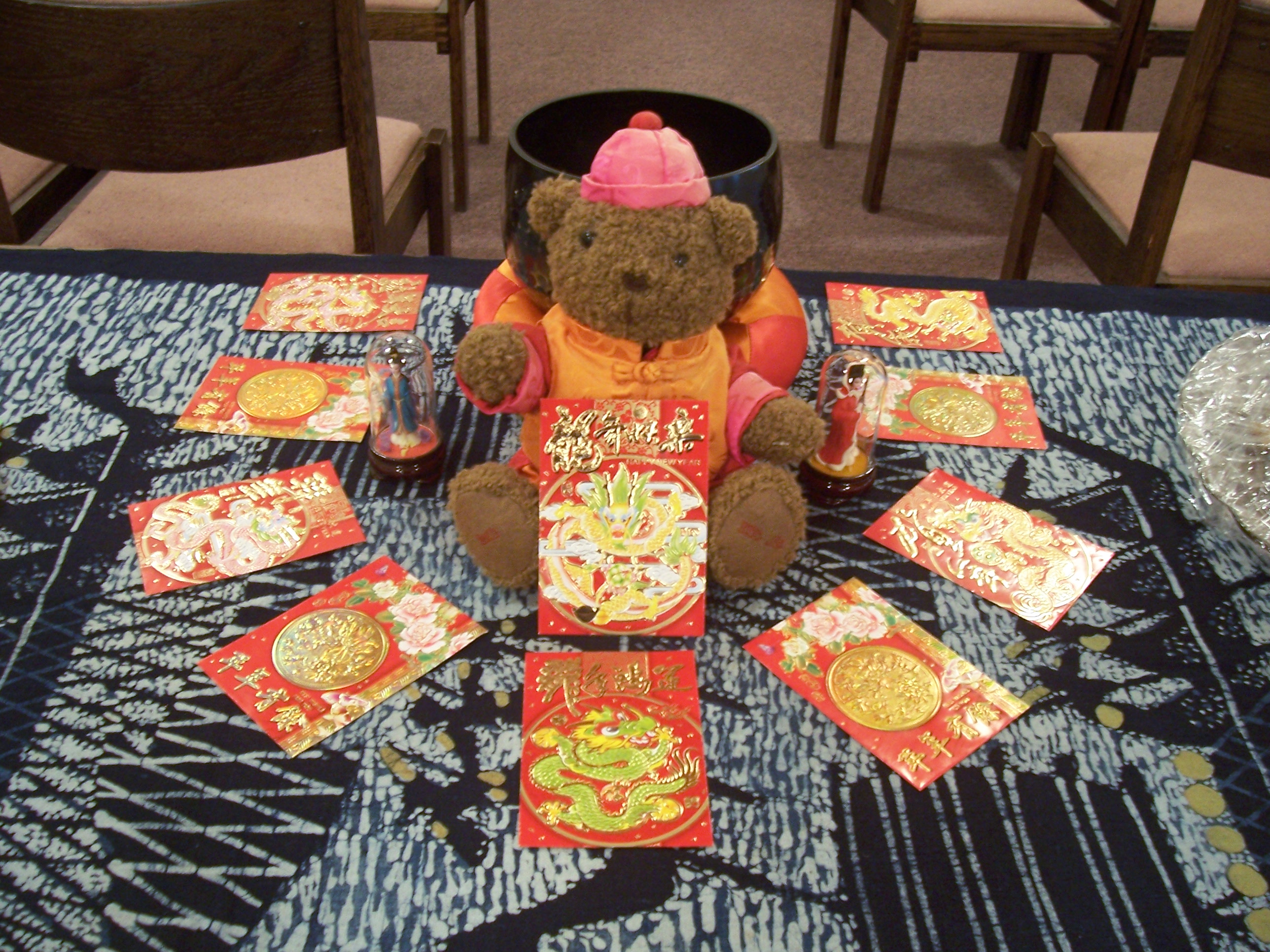
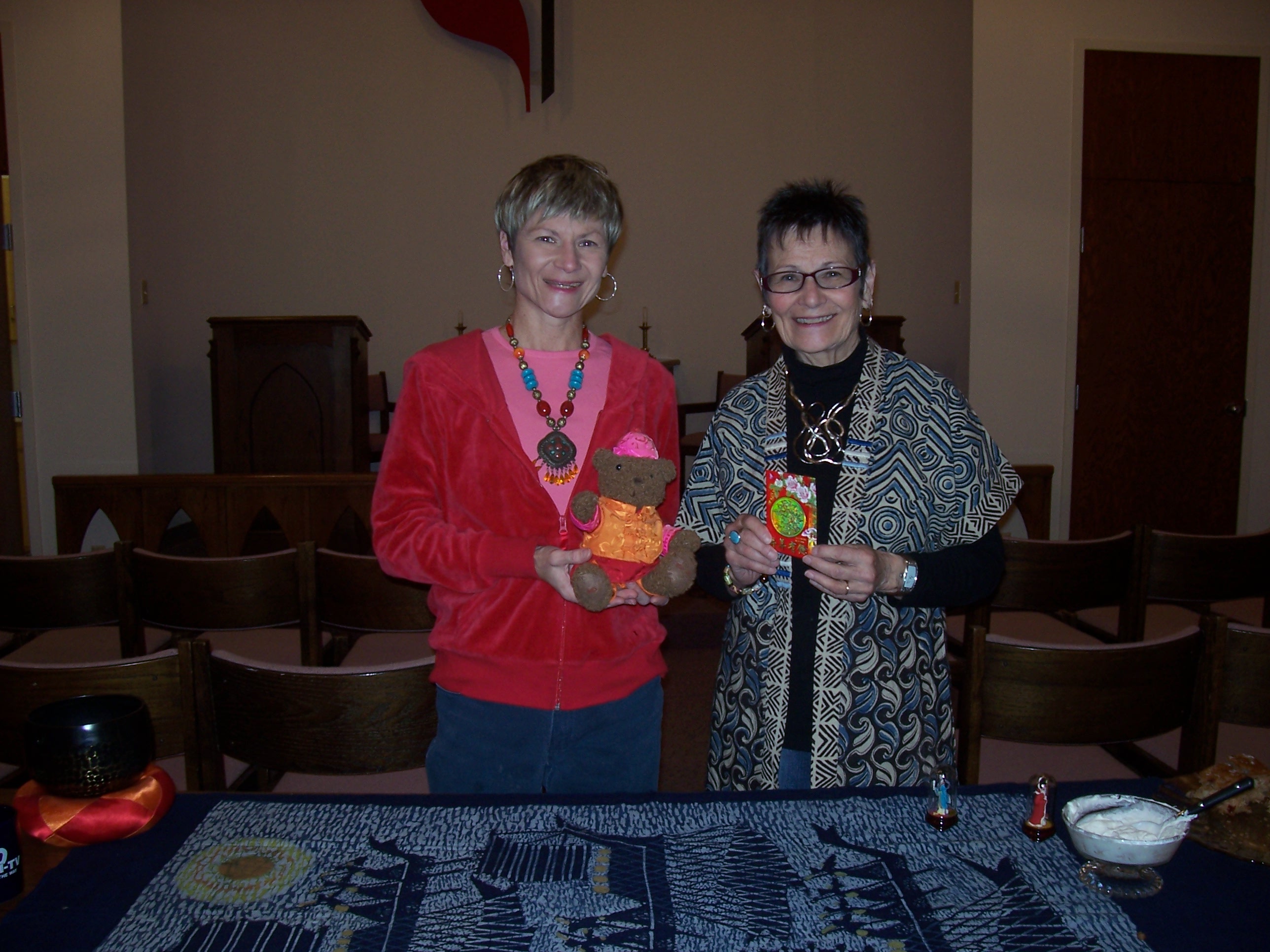
As you can see from the photos, we ushered in the Year of the Dragon in style.  The red envelopes (hong bao) were also a gift to those attending.

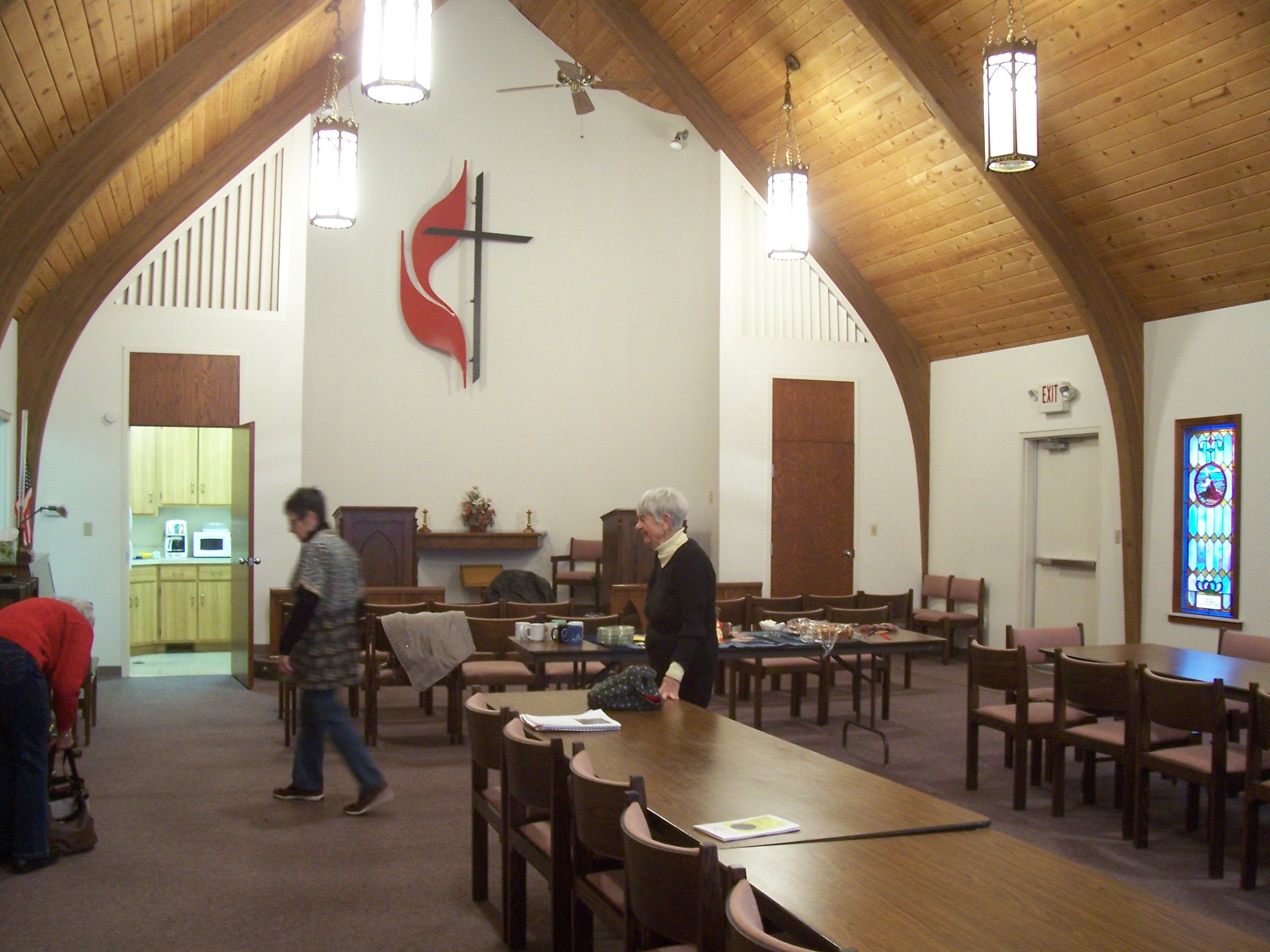
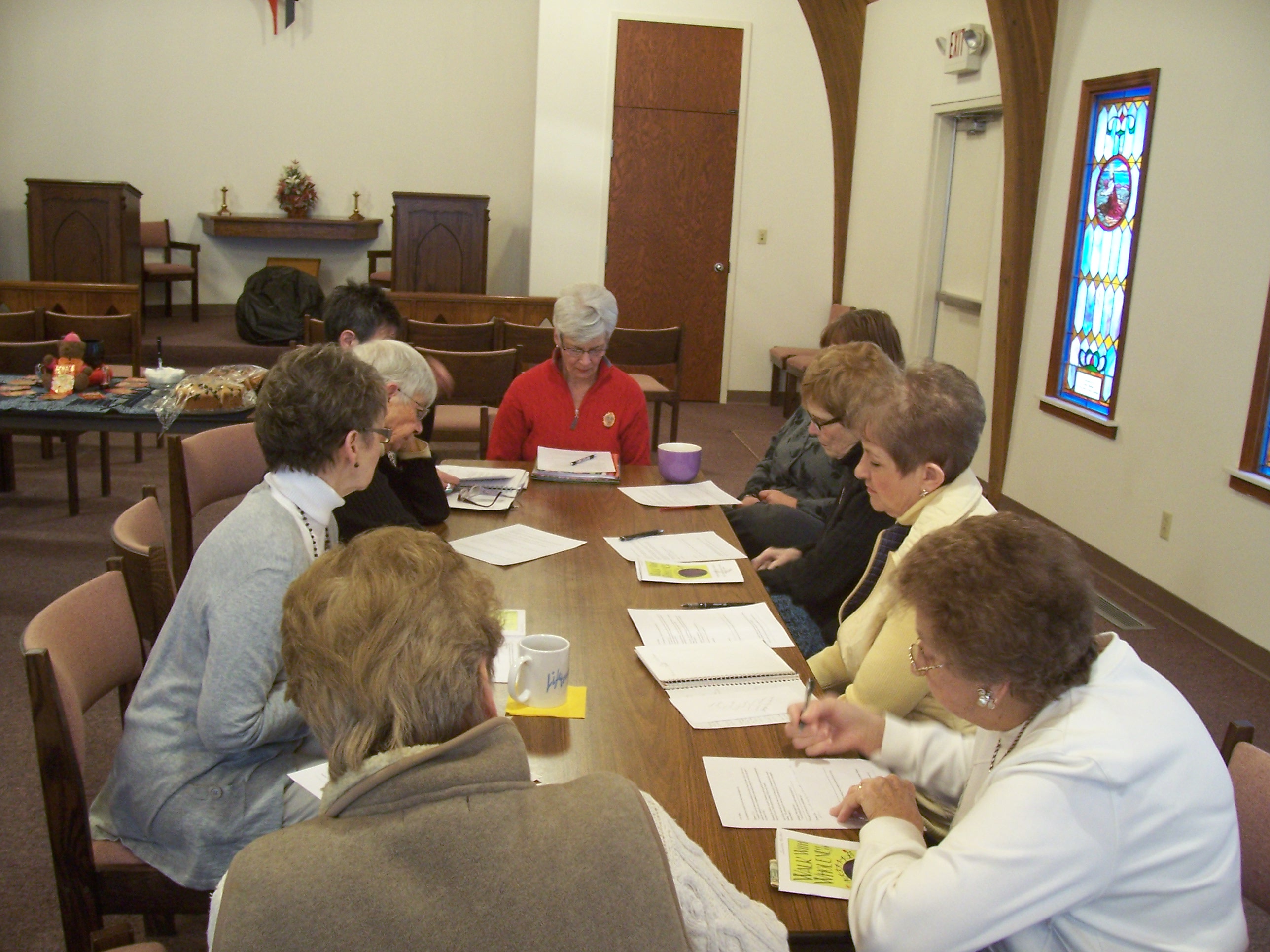
Our circle meeting was held in the church chapel.


Our Chinese New Year display was quite impressive


My mom, Priscilla, getting things ready.


I proudly cut into our blueberry bundt cake.

My mom's church circle: small in number but strong in spirit


My mother, leading the program's discussion

A successful circle meeting -- Happy Year of the Dragon!


Posted in Uncategorized | Leave a comment

The Protestant Church in Longzhou: Connie’s Newest Newsletter

It’s been a great 3 weeks I’ve spent in America, visiting with my parents and friends.  My holidays are almost finished so it’s off to China tomorrow, leaving on a noontime flight out of Indianapolis, to Detroit, to Shanghai, to Chengdu for the dog pick-up, to Nanning and then a 3-hour busride return to Longzhou.   The spring semester is about to begin, and so is my last months in this small town before heading off to a new placement in the country.

During my time in Marshall, I did manage to finish my newest newsletter, which was about the Longzhou Protestant church.  I’ll include parts of that here for those who are not on the newsletter list.  Enjoy!

The Last Semester on Campus

This will be our last semester in little  Longzhou (loh-ng joe) before moving this summer to the new campus in Chongzuo, 1 ½ hours away.

Over 8,000 students have been residing and studying on the new campus.  Our old campus has only  600  this year, with 50% being English language majors enrolled in the 3-year program. (The 3-year program would be the equivalent of aU.S.junior college education.)  This 3-year program will no longer be offered after all students have moved to the new campus. Only 4-year degrees will be offered.

At present, I have no news of where I will be moving in June.  The next newsletter will certainly tell all.  For this update, I’d like to share more about the Christian community here in Longzhou, namely our small Protestant church and its warmhearted, welcoming members.

Longzhou’s Christian Community

             Entering the 100-year-old sanctuary of theLongzhouProtestantChurchis one which leaves me in awe of the power of the Lord’s work in this small town.

The French missionaries to this area did their work well.   They established a strong Catholic church (currently in a glorious new building across from our school’s front gate) and a less flamboyant Protestant church, located along the riverfront in its original structure.

In the 1800s, the streets of this booming river town were filled with French nationalists. France’s plans to colonize southernChinawere progressing quickly. The first French embassy was established in Longzhou.  The first overseas’ customs office was set up at the Vietnamese-Chinese border, just 40 minutes away.   Trade between the three countries flourished with the French in the middle, seeing to the oversight of goods coming and going via waterway, train and roads.

After the Sino-French wars (1883 – 1885), foreigners weren’t quite as welcome but their influence remained both in architectural building designs and in religion.  Today’s Christian churches, blossoming under Chinese Christian leadership, are a testament to that.

The Longzhou Protestant Church

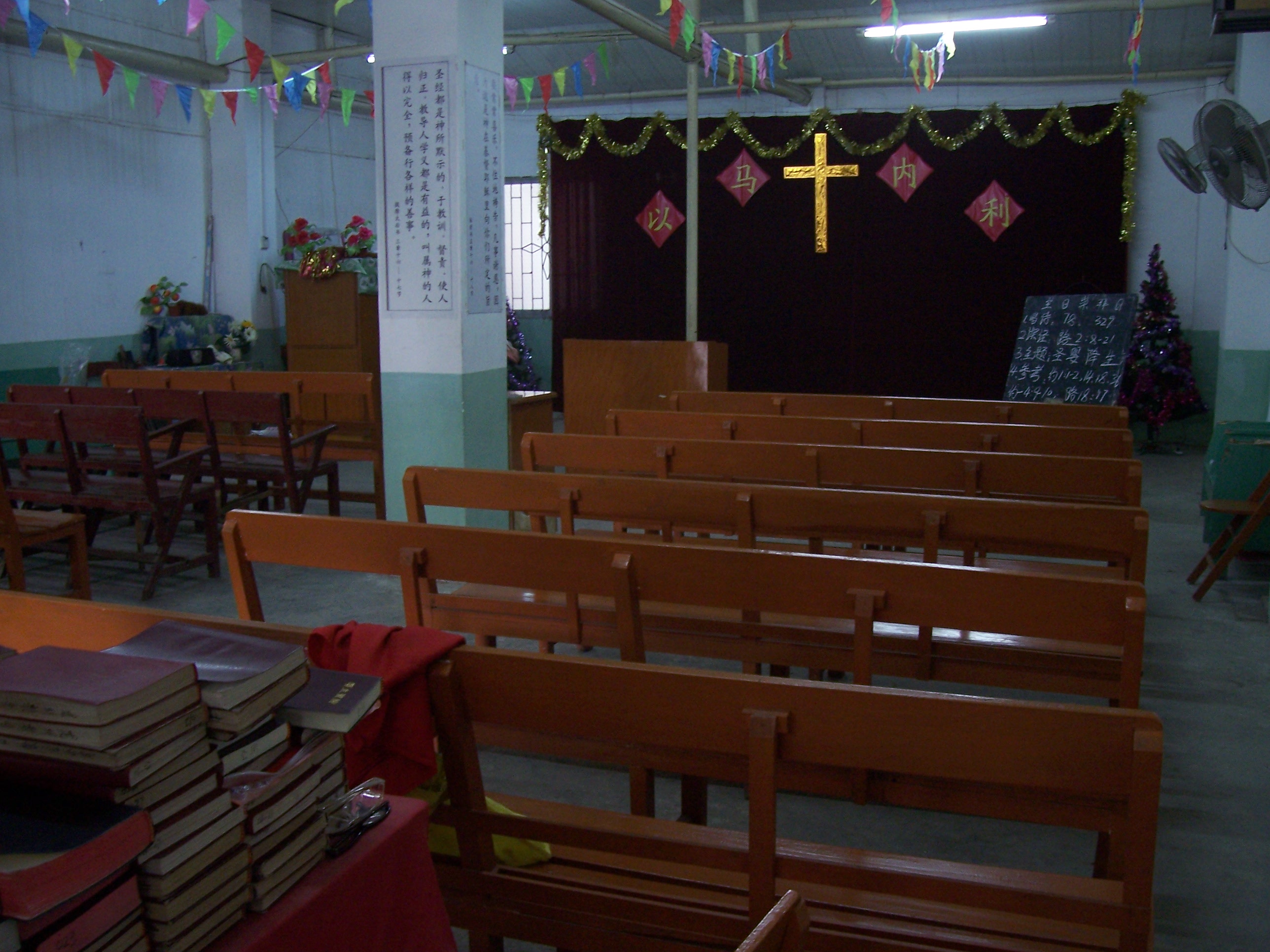
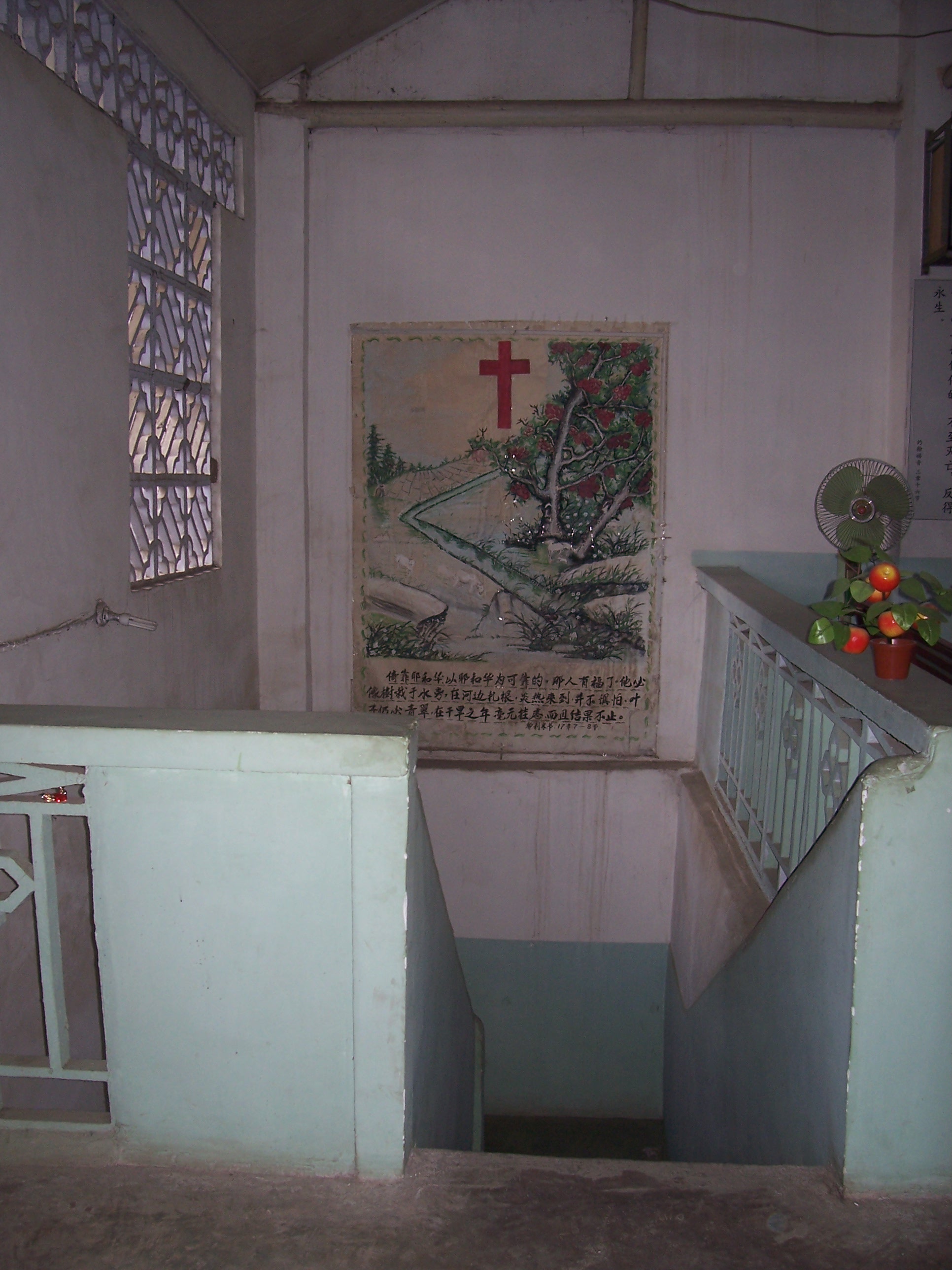
The Longzhou Protestant church is one which doesn’t get much recognition in the town.  Its location is in the off-beaten alleyways of old Longzhou and is sandwiched between the Chinese National Lottery office and a bicycle shop.  The tiny sanctuary is on the second floor of the century-old building.  Newly painted aging wooden beams and a fake ceiling bring an updated look to this time-weathered worship center.

Thle small 100-year-old sanctuary, with Amity hymnals in the back.

The stairwell which leads us to the 2nd-floor sanctuary


There are 20 members, mostly the elderly, who attend services every Sunday from 9 a.m. to 11 a.m.  An ordained pastor from Nanning comes every month to give communion and the message.  Layperson Zhou Ning, a vibrant young woman in her 30s, leads services when the pastor isn’t present.   Wednesday night prayers are also held from 8 to 9 p.m. for those who wish to attend.

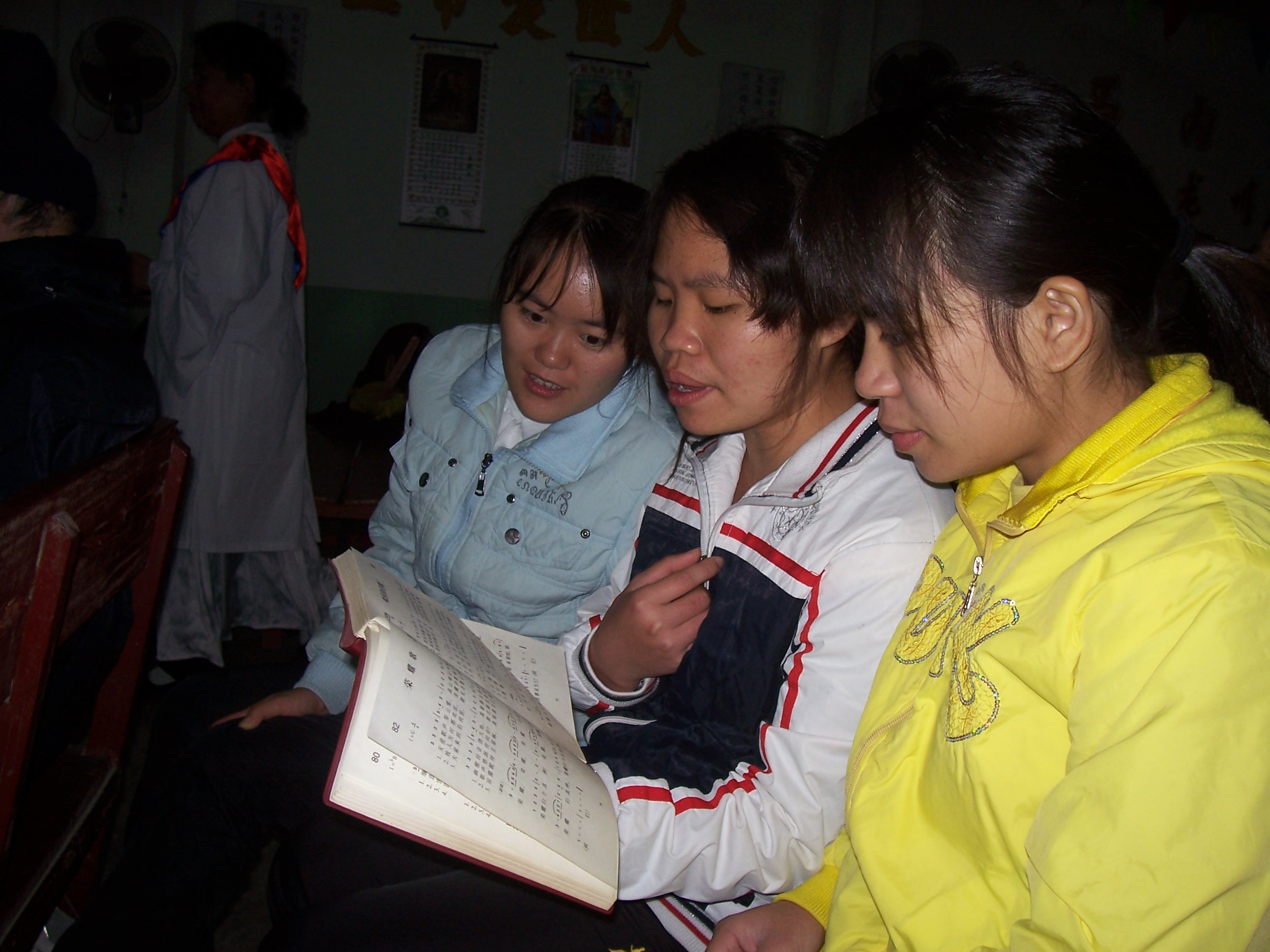
Amity Foundation Bibles and hymnals are available at the back of the room for parishioners to use.  Another Amity  publication, tapes of all the hymns in the hymnal, is used to lead us in song practice and worship. Zhou Ning is the one in charge of starting and stopping the tape during our services.    There are no fancy chordings or flowery embellishments.  Hymn tapes are single notes, clearly plugging out the melody again and again to get everyone through the verses.  For many Christians inChina, hymns are new tunes, quite a few being our familiarWestern melodies.  These are a bit strange for Chinese ears thus the need to simplify the music for those congregations without pianos.

A Blessed Christmas in Church

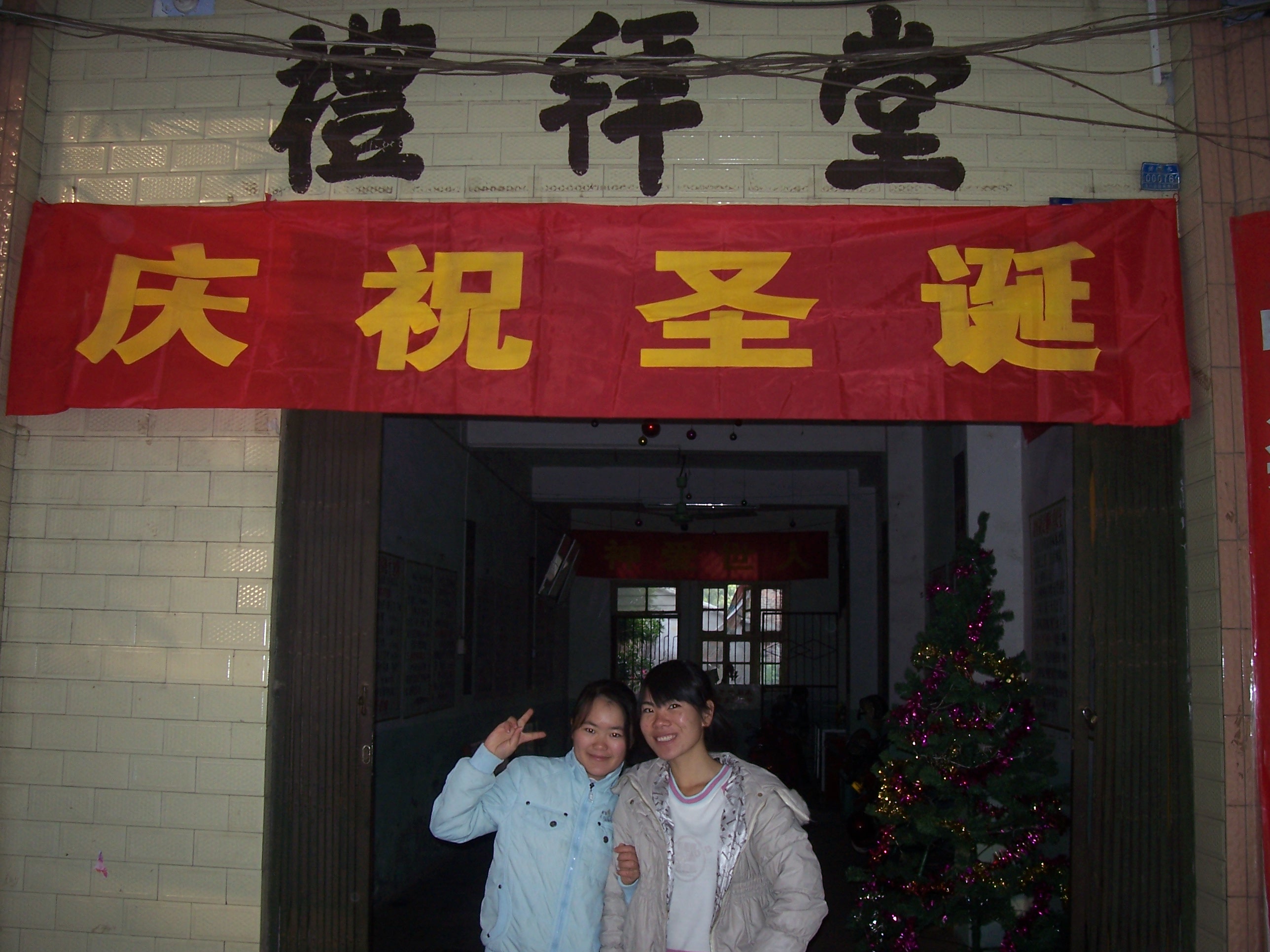
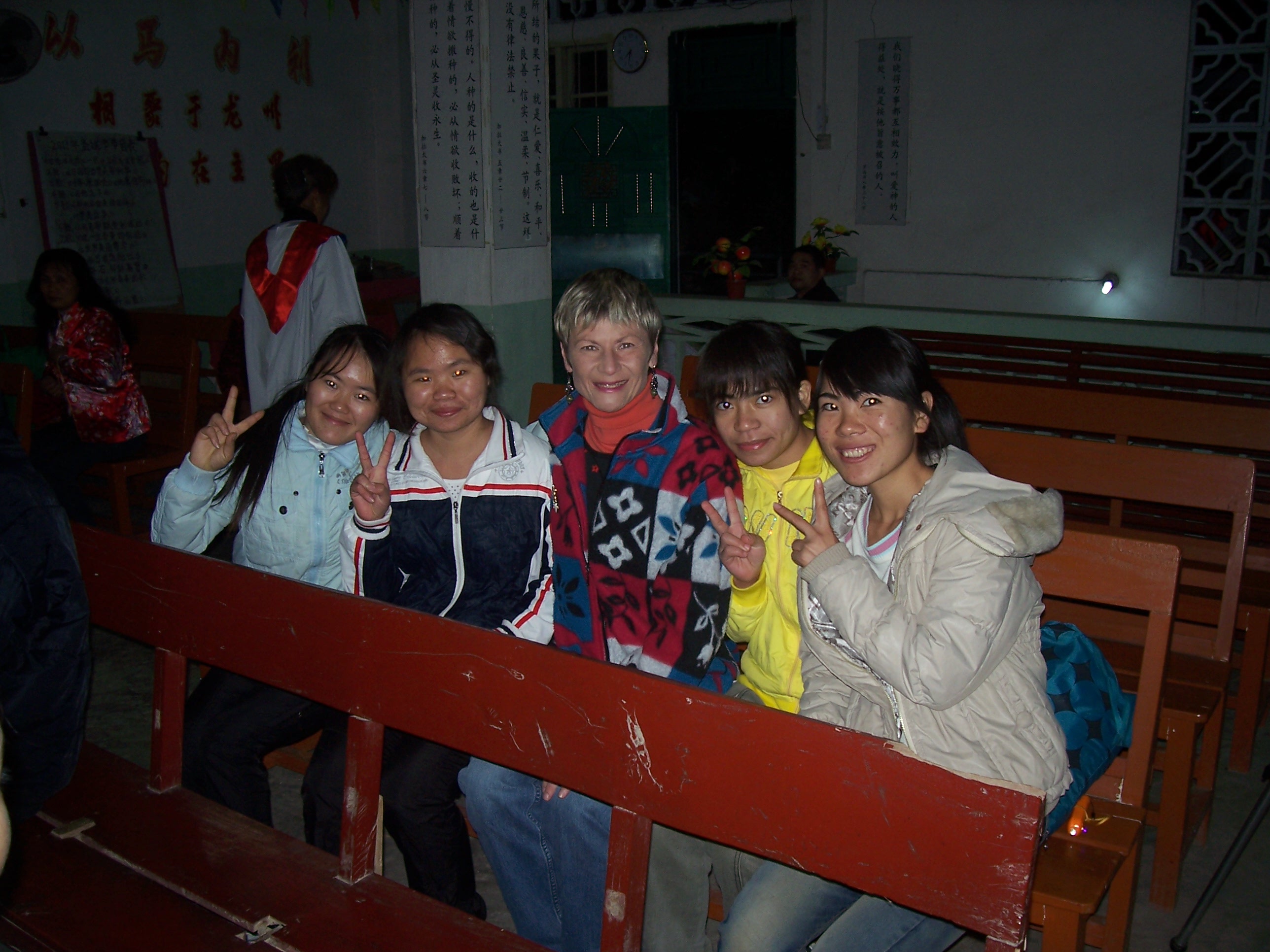
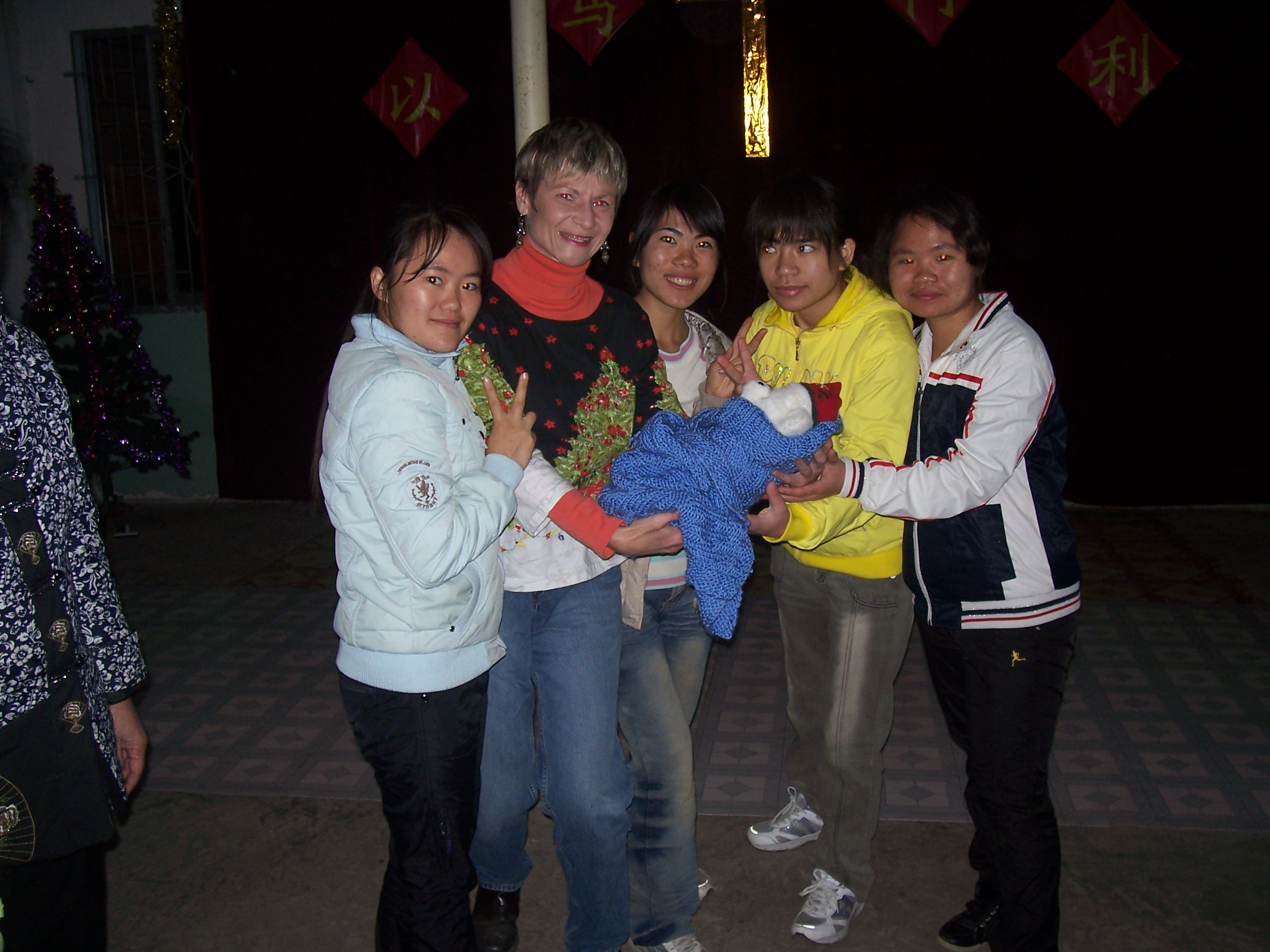
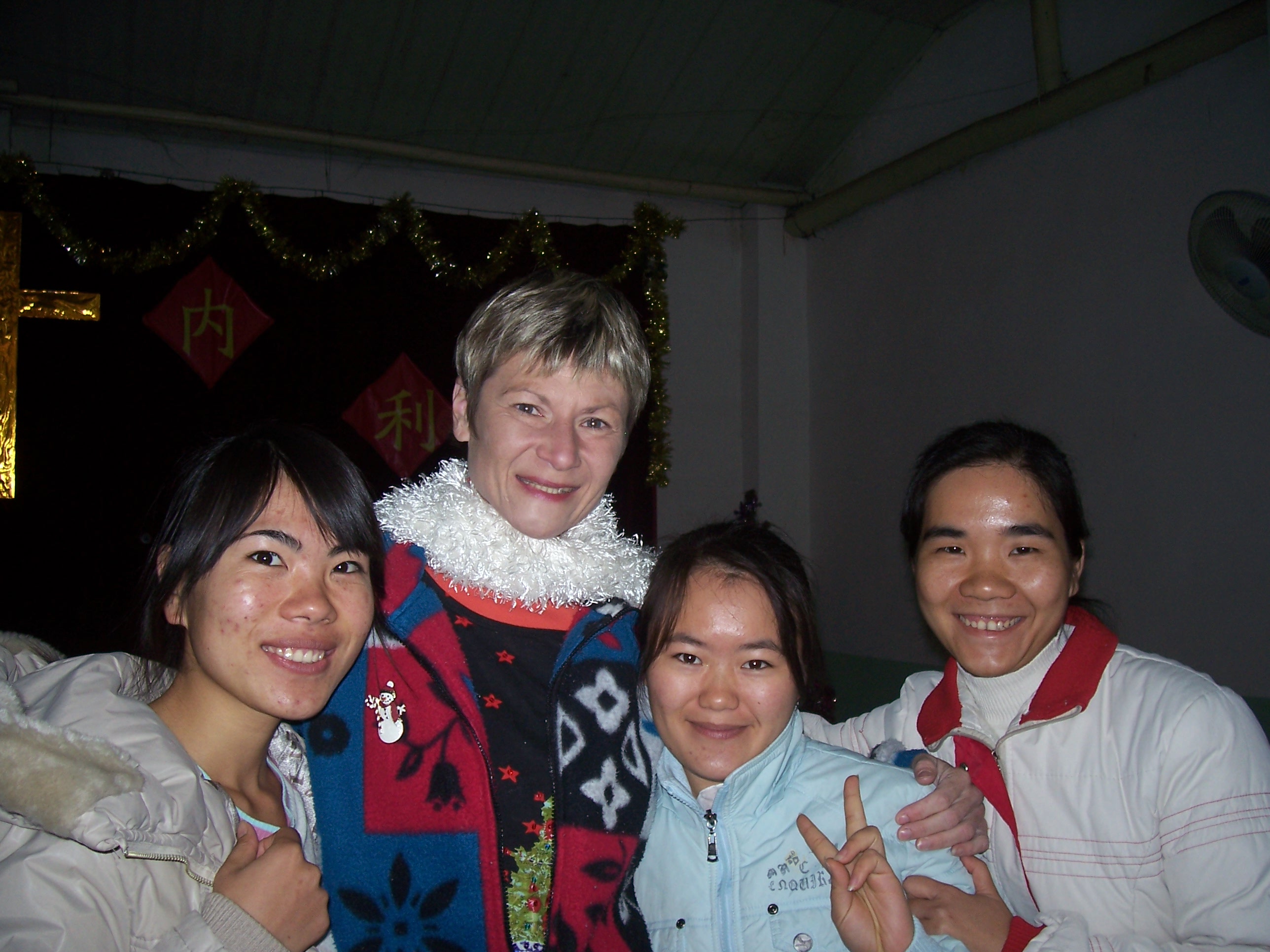
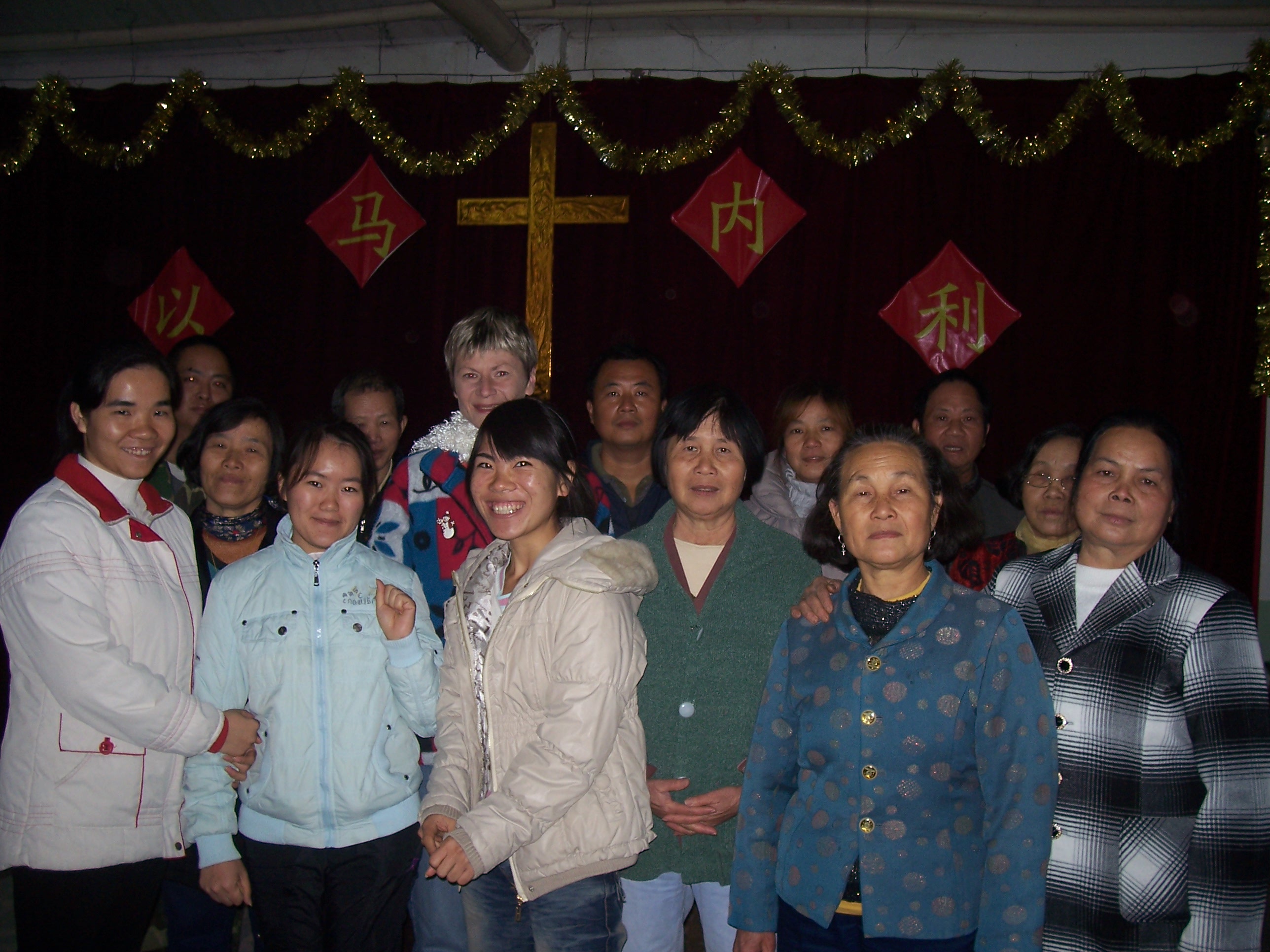
Christmas morning and the evening of Christmas day saw myself,  my Christian student, Cherry (Wei Fang), and four of her classmates enjoying celebrations together.   These are my first year students, those in my Business English class.

Ever a good evangelist, Cherry always invites her non-Christian classmates to attend church with her every Sunday.  In her hometown, the huge city ofLiuzhou, she and her family regularly go to church, over 1,000 strong in membership.  It was quite a shock for her to land in tiny Longzhou where the congregation is much smaller, certainly much older and services are a quiet affair.  Yet her love for Jesus sends her to worship every Sunday with the same enthusiasm and faithfulness as at home.

Lani (left) and Cherry (rt) attended church with me Christmas morning

            After attending worship in the morning, Zhou Ning invited us to return that evening for the 7:30 p.m. performances.  This is a custom of Chinese Christians, to celebrate Christ’s birth in song and dance.  My students and I met in my home later in the day to practice our performance, Away in a Manger, in both Chinese and English.  To add some drama, we wrapped baby Jesus (a holiday bear) in a prayer shawl given to me by Paris 1st UMC.  On the last verse, we rocked Jesus and passed him along our row of singers until the end.  After lifting him high for the congregation to see, we knelt to peer at his little face for our grand ending.

Getting ready for our performance in the evening.

My students enjoy singing hymns for the first time at our Christmas Eve services.

Our "Away in a Manger" with baby Jesus


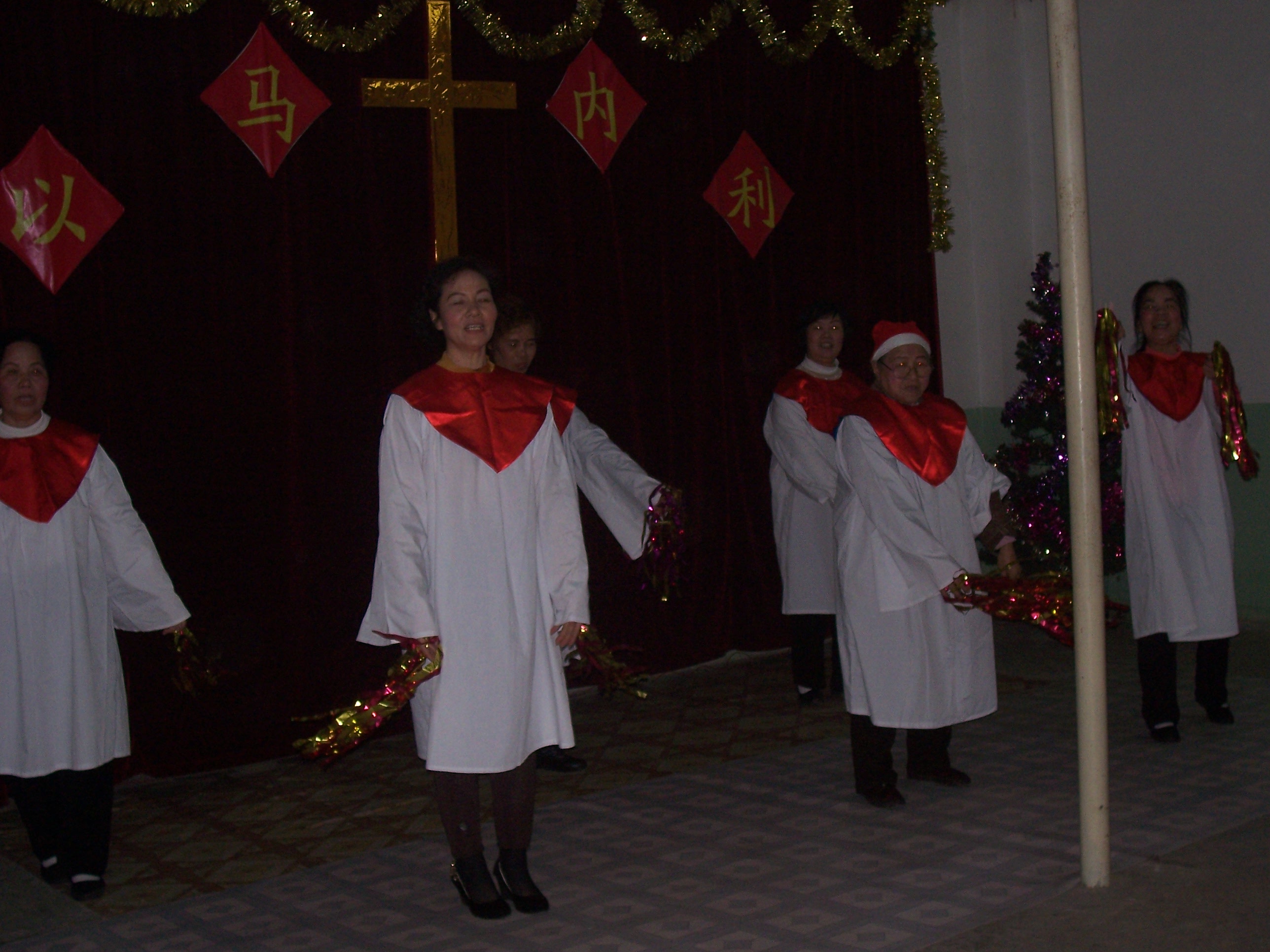
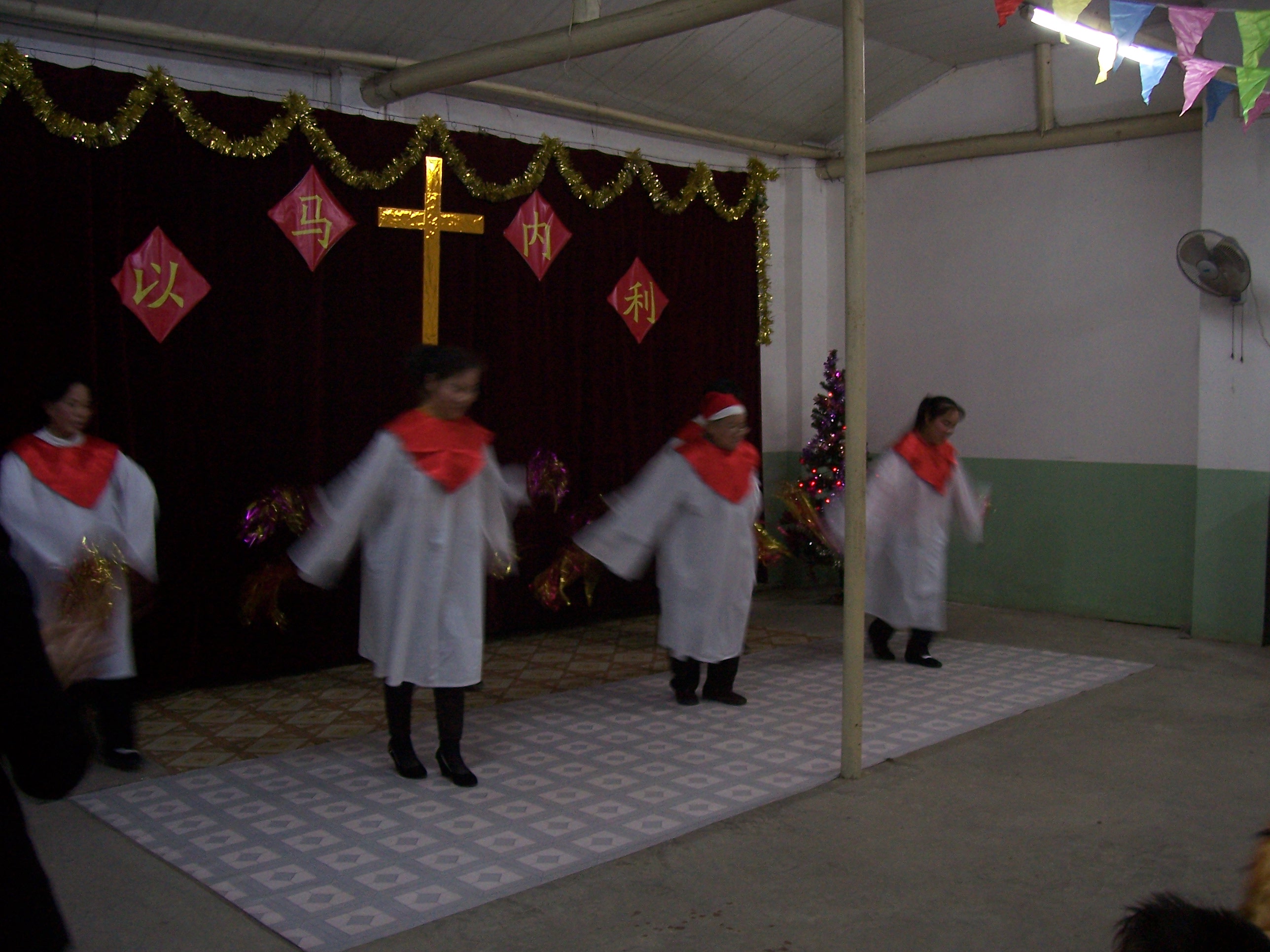
Other performances by the choir followed


A great liturgical dance number!

Later, one of the elderly members came up to us and said she was moved to tears, seeing the foreigner with so many young Chinese in her church on Christmas day.    Never had this happened before in all her years attending worship.

All together, we had over 15 performances.  The choir had several attire changes, from festive fan dancing garb to choir robes to satiny liturgical dance dresses. Solos and duets were added by parishioners. We were a small group in the congregation, about 25, but there was no need for a packed house. The joyful spirit of this day was upon us and that is all that we required.

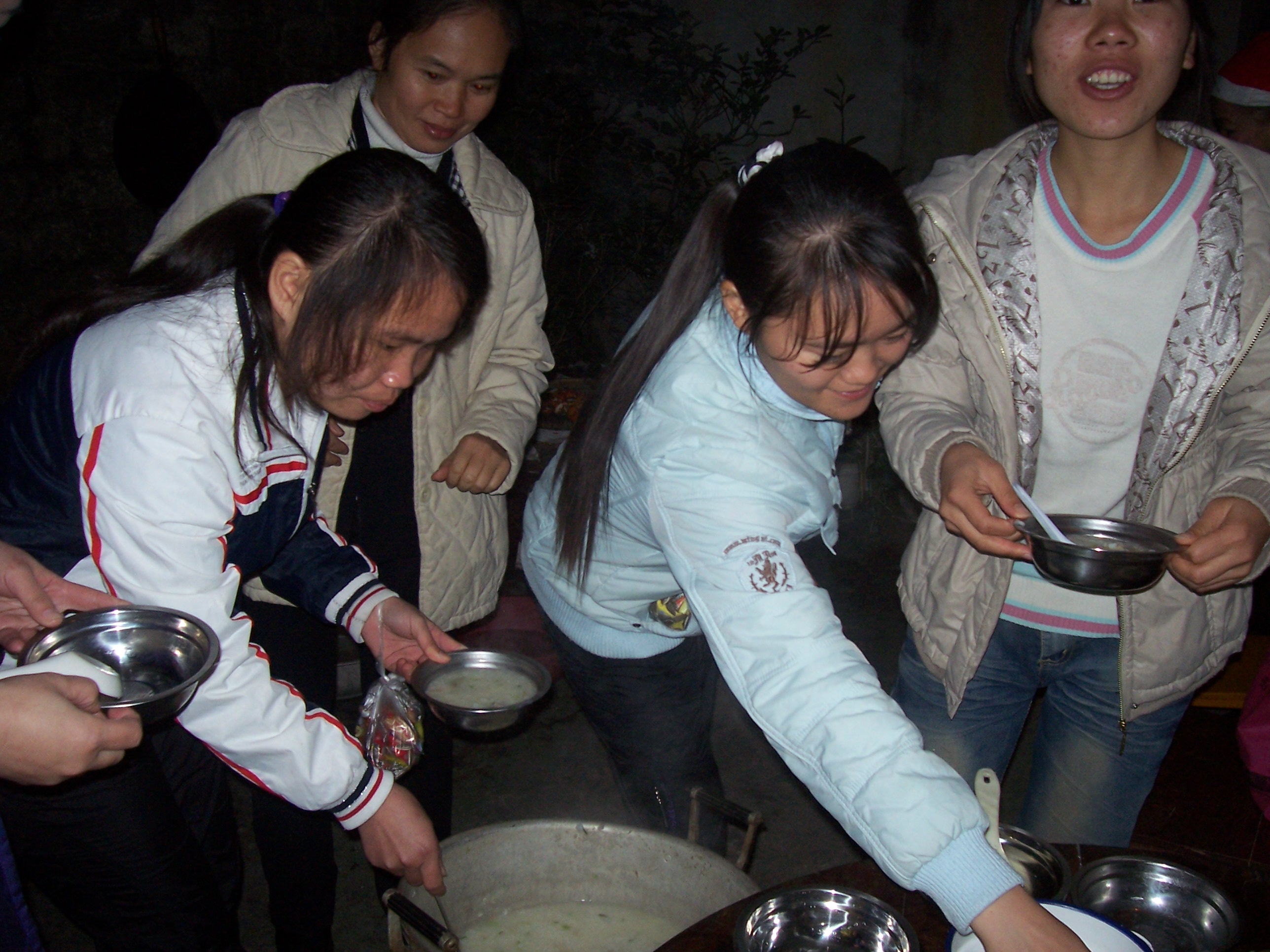
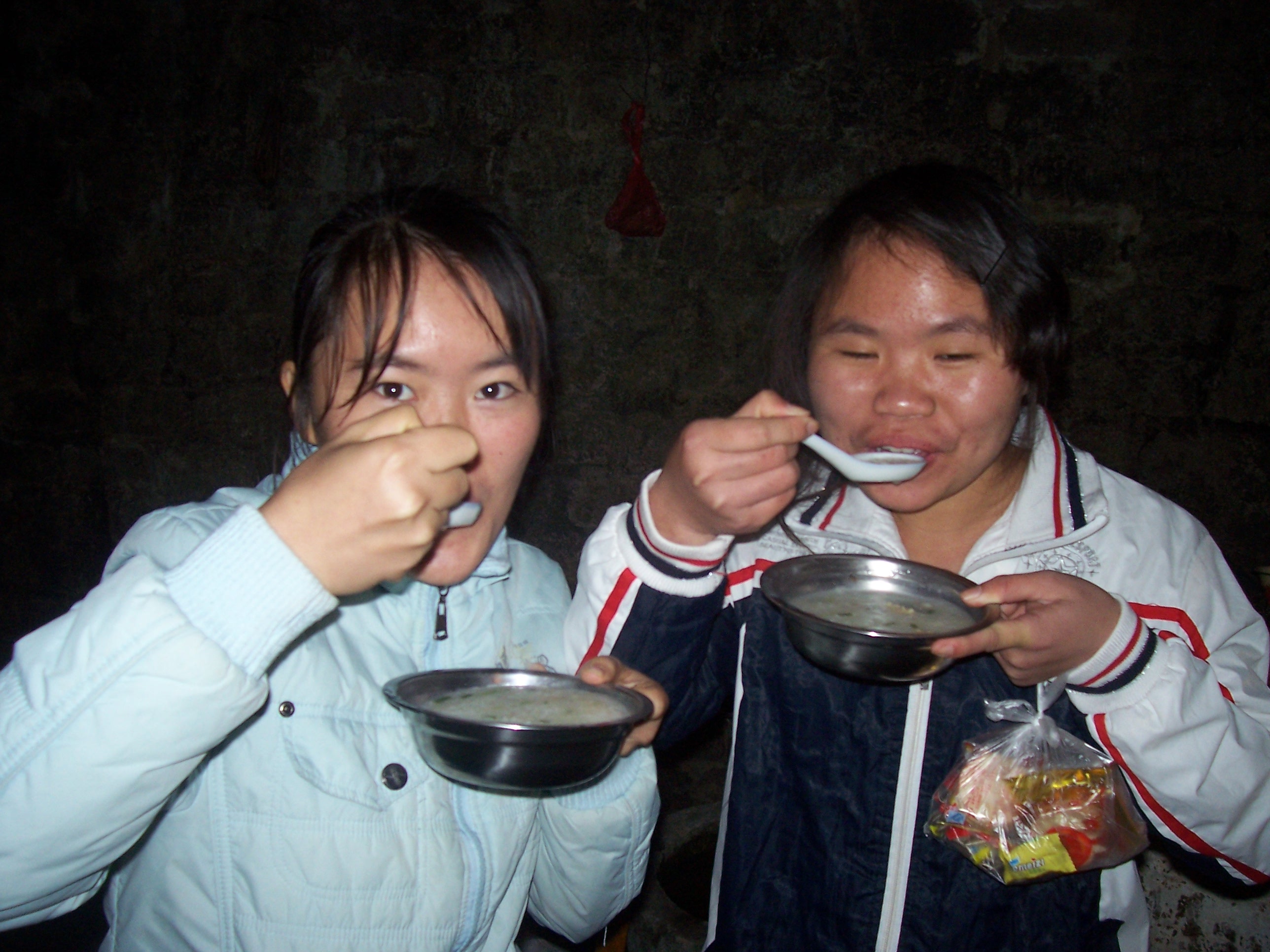
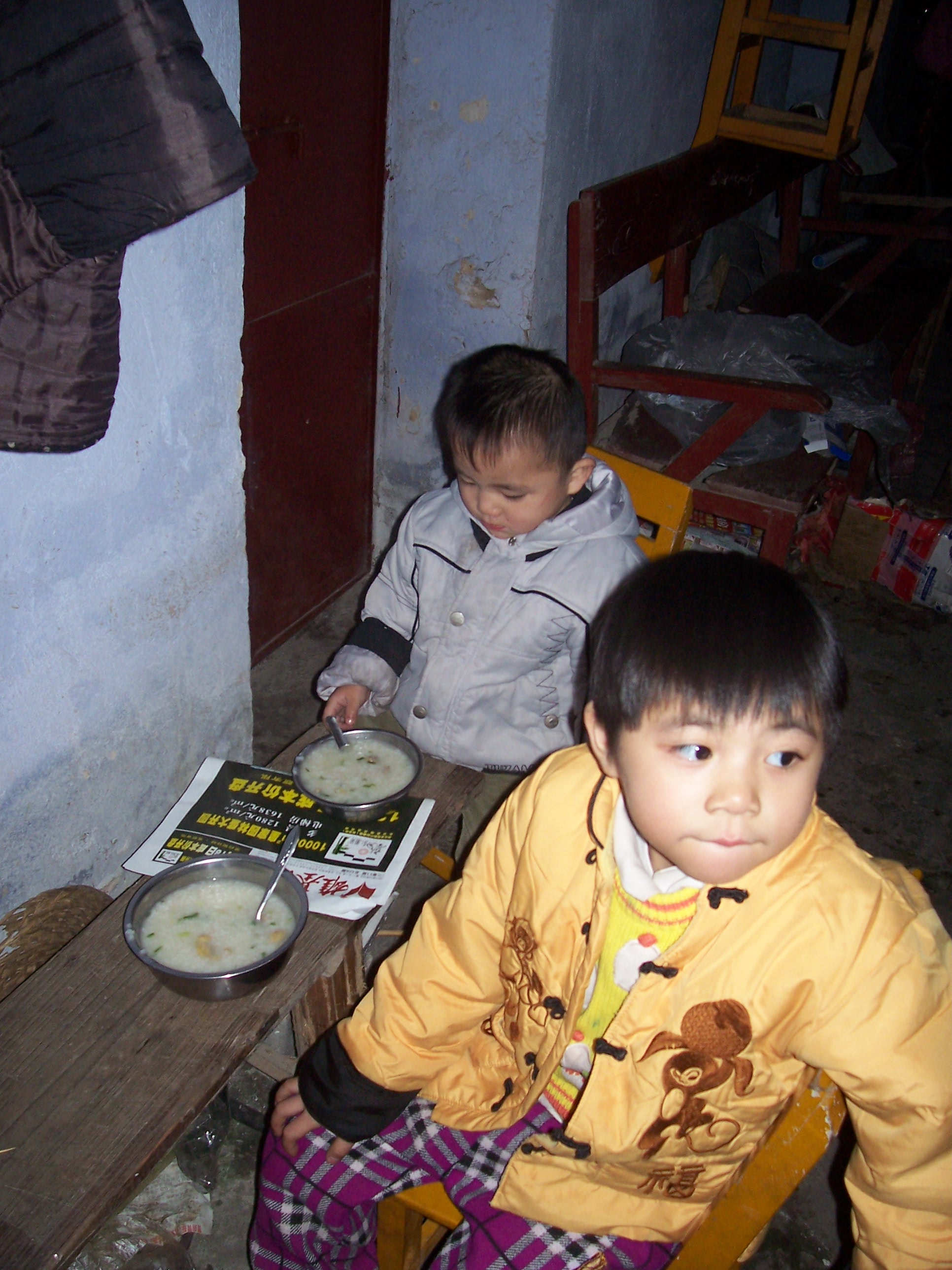
At 9:30, the last group sang.  We were all invited outside into the back courtyard where several of the women had prepared a huge vat of homemade chicken and rice porridge.   Everyone eagerly gathered around to be handed a steaming bowl.  It was very much appreciated on our chilly, 40-degree-night under the stars.

It's time for soup!


Cherry had 3 helpings, as did her classmates.


Pretty yummy!


The kids enjoyed their porridge as well.


Myself praising our cook for the evening.

We laughed and complimented one another on our performances.  My starving students, used to dull dormitory food, had more than 3 helpings of soup which pleased the cooks to no ends.   Our exciting, unique night together sped us home in high spirits as we trekked along the dark river road back to the college.

We were a small worship group but a very blessed one on Christmas Eve.

How Do Chinese Become Christians?
               The journey to Christ is always a fascinating one when asking Chinese Christians how they became Christians.  Many were introduced to the Christian faith by friends and family members.  Others, walking by churches and meeting points, were drawn to enter by the singing or praying they heard.

In the case of my student, Cherry, her faith began with her grandmother’s illness.  She was going blind.  In her neighborhood, her grandmother’s Christian friend introduced her to Jesus’ love, invited her to church and the two of them prayed together.  Within a few months, her sight was restored.  After that, her grandmother was baptized.  Her grandfather, seeing the power of having faith in God, likewise became a Christian.  Cherry then attended church with her grandparents from a very early age until she also accepted Christ into her life.

Stories such as this are always inspiring to hear.   They bring a greater understanding of the power of God’s love and the need for us to share that love with others in any way we can.

I like to think that Cherry and I were brought together for a reason here at this school.  Cherry’s invite to her non-Christian classmates brought Liao Jinfeng (Kiley), Zhang Yuyu (Lani), and Mo Binyi (Honey) into our midst as first-time church-goers. They heard the message of  Layleader Zhou Ning, who told of Jesus’ commitment to us as children of God.  They joined the two of us in our praise to the Lord in song.  And we all enjoyed fellowship afterwards with kindhearted people who demystified what it is to be a Christian.

Here’s wishing you  平安 (Ping Ahn, Peace) for the Year of the Dragon!

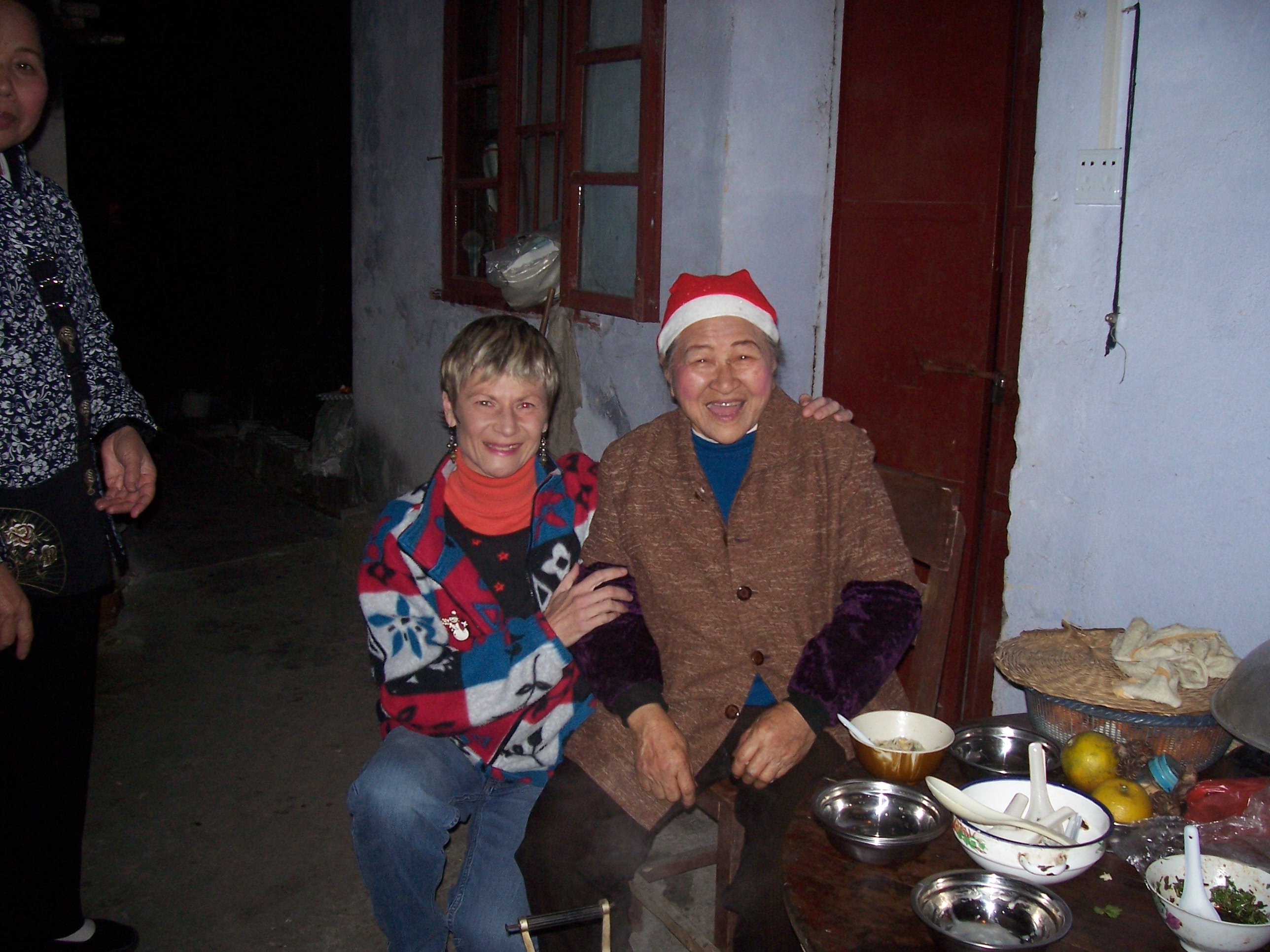
Left to rt: Cherry, myself, Lani and Layleader Zhou Ning

Posted in Uncategorized | Leave a comment

The Year of the Dragon Approaches!

Note:  The following entry was written as an article for my hometown area newspapers.  I’ll include it here for those interested, as well as the photos for the text at the end.  Enjoy!

In America, our biggest holiday season is December.  Preparations for Christmas and New Year’s begin the day after Thanksgiving and careen wildly onward until January 1st .   The New Year then sends us scurrying back to work and our usual mundane routines.

Yet in China, January 1st signals not the end of the holiday season but the exciting rush leading up to Spring Festival, what Westerners know as Chinese New Year.

The Chinese New Year, a 15-day celebration, is based upon the lunar calendar.  It starts with the New Moon on the first day of the new year and ends on the full moon, 15 days later.  The 15th day is called the Lantern Festival, which is celebrated at night with lantern displays along streets and in city parks.

Each New Year is also associated with one of the 12 animals of the Chinese zodiac.  These animals, in their yearly order, are as follows:  the rat, ox, tiger, rabbit, dragon, snake, horse, goat, monkey, rooster, dog and pig.  Last year was the Year of the Rabbit, celebrated on February 3rd. This year, Chinese New Year falls on January 23rd and officially ends on February 4th, where the Year of the Dragon will grandly begin its reign for 2012.

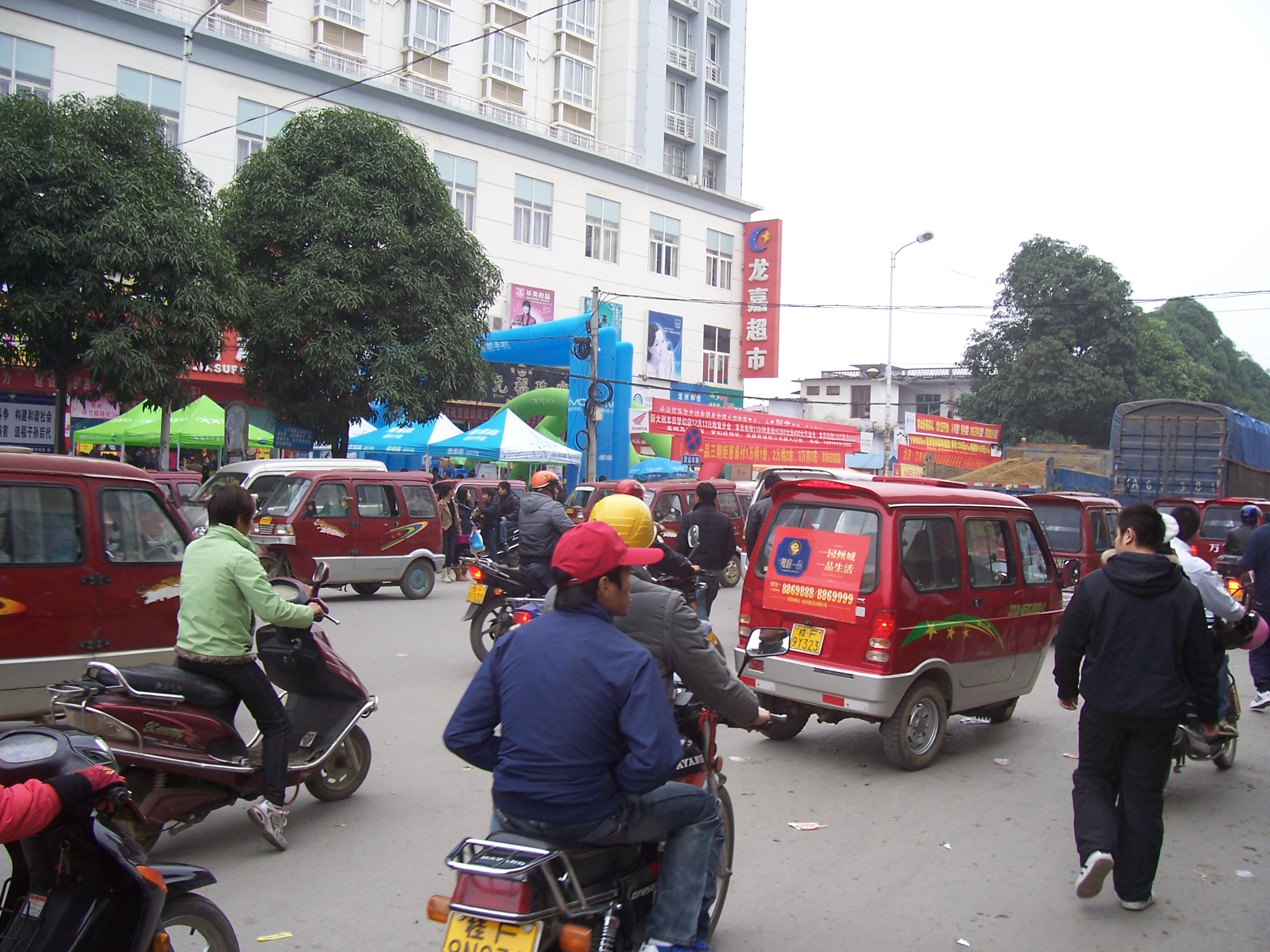
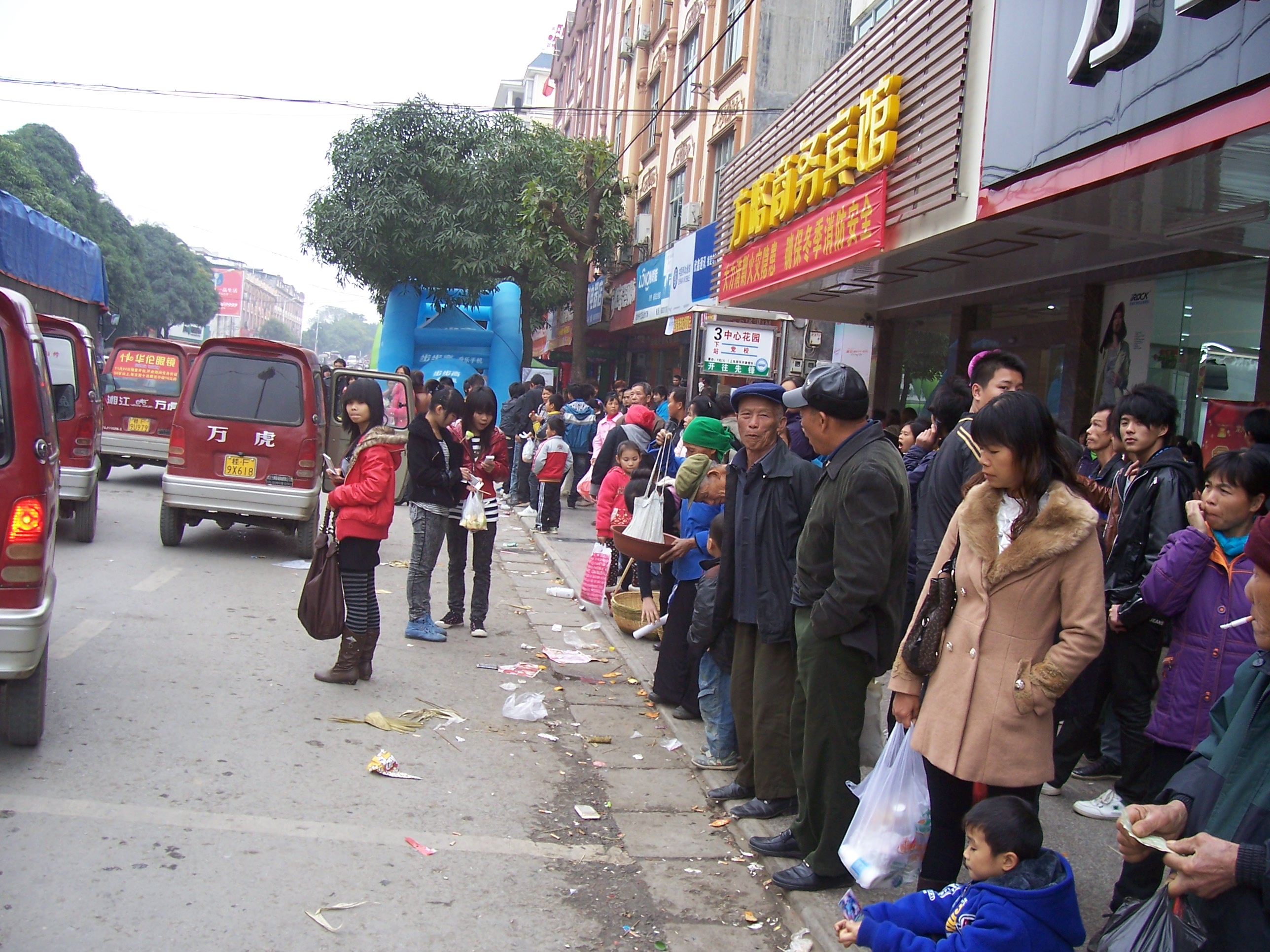
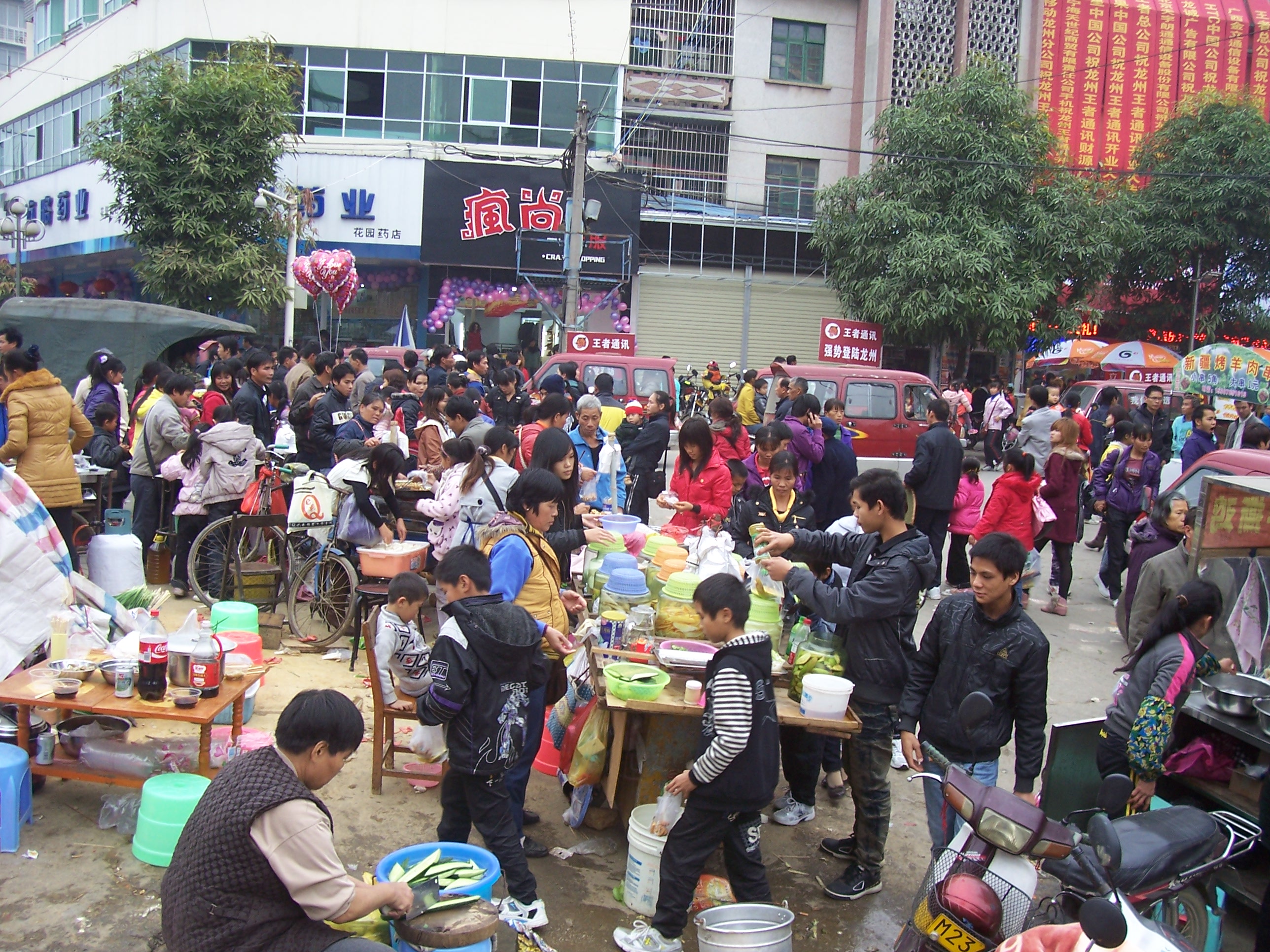
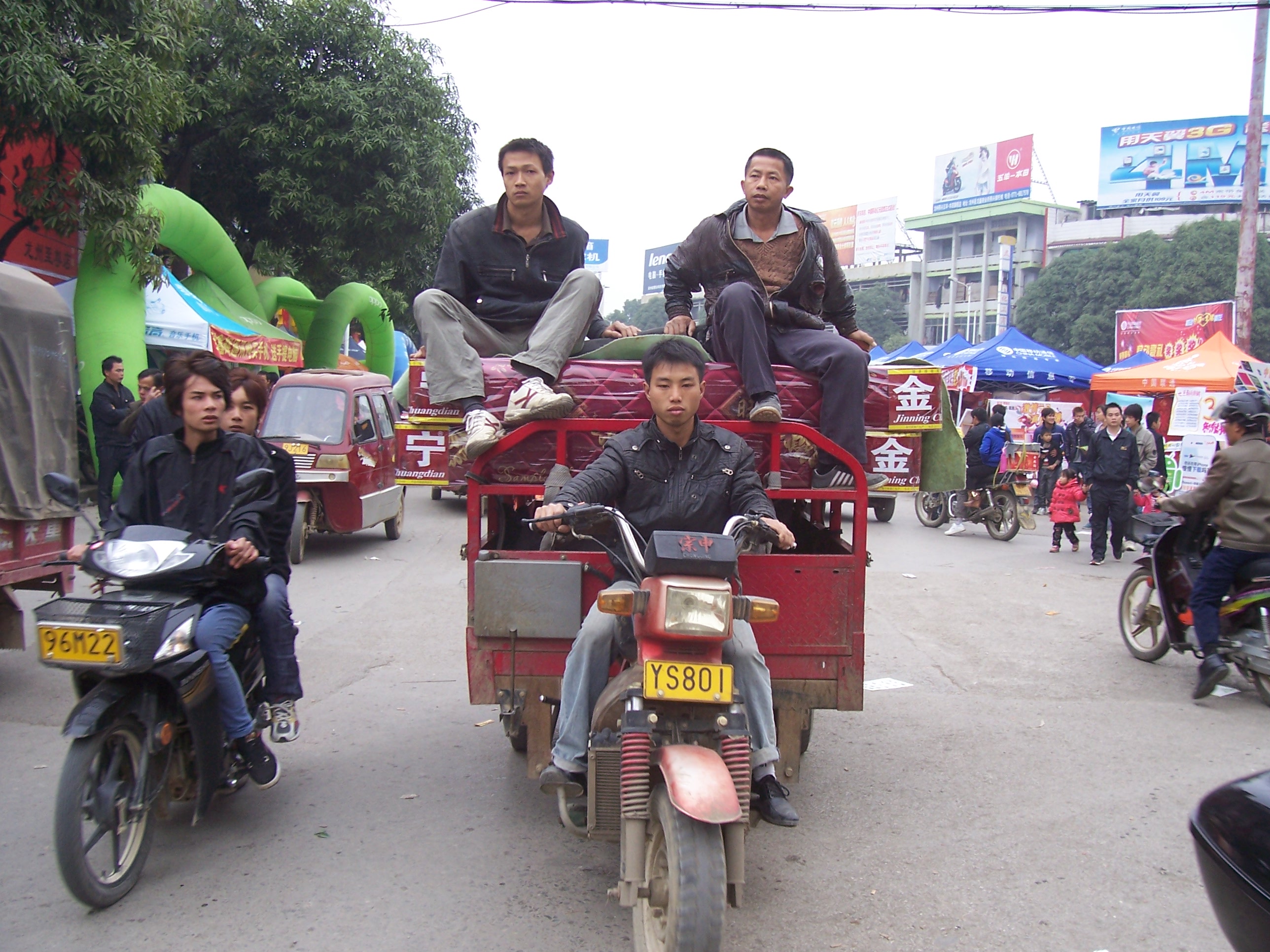
So when exactly does the excitement begin for China’s biggest celebration of the year? It starts with our Western New Year.  January 1st, a designated one-day holiday in China, becomes the equivalent of the America’s Black Friday.  Shoppers swarm into their local business centers for major spending ventures all leading up to Spring Festival.
The streets of Longzhou on January 1st are crowded with shoppers.


In Longzhou, Roadside snack sellers take advantage of the holiday crowds.


Buying new is important. These 2 mattresses are being hustled off to their new owners who took advantage of holiday sales.

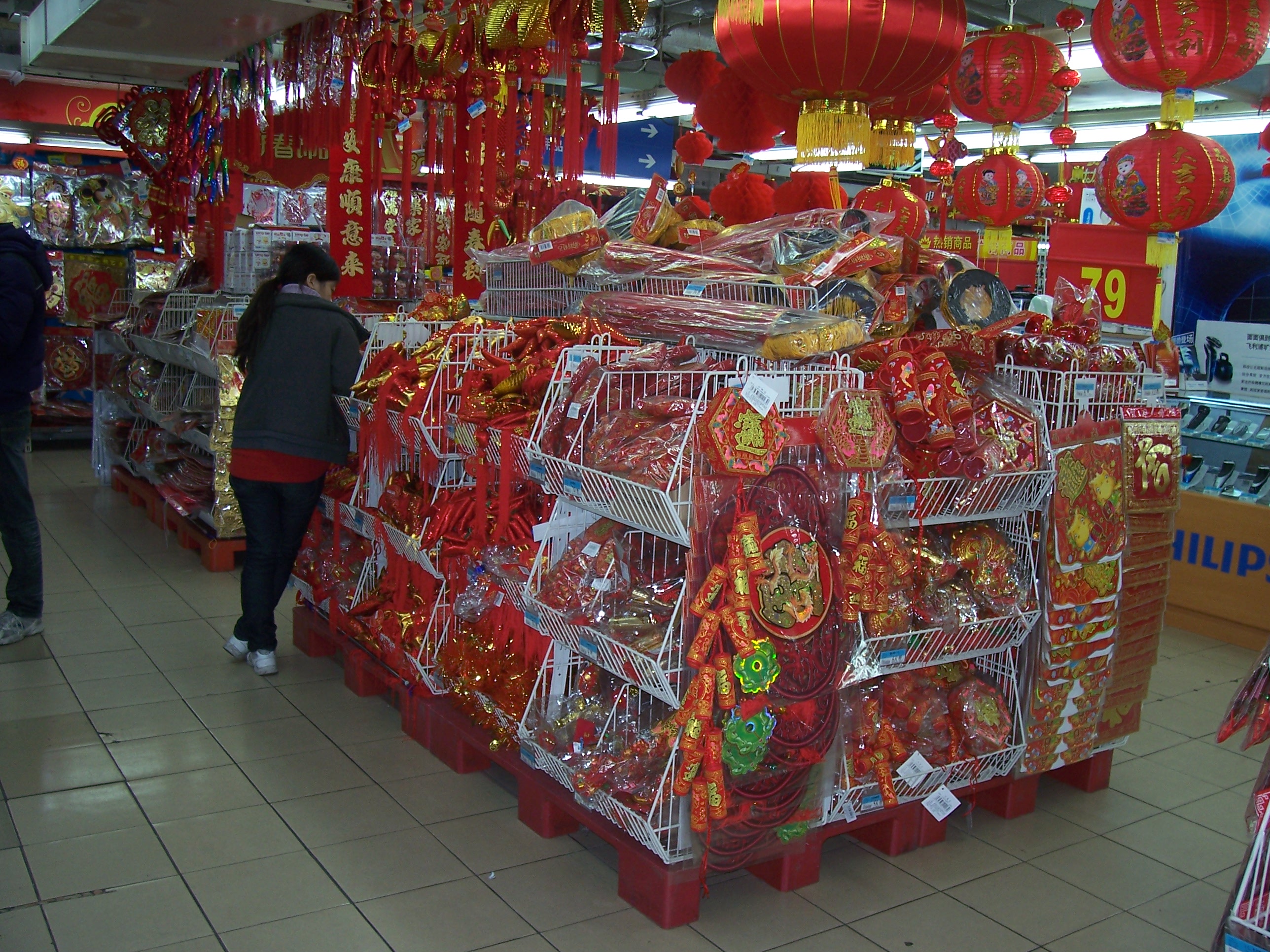
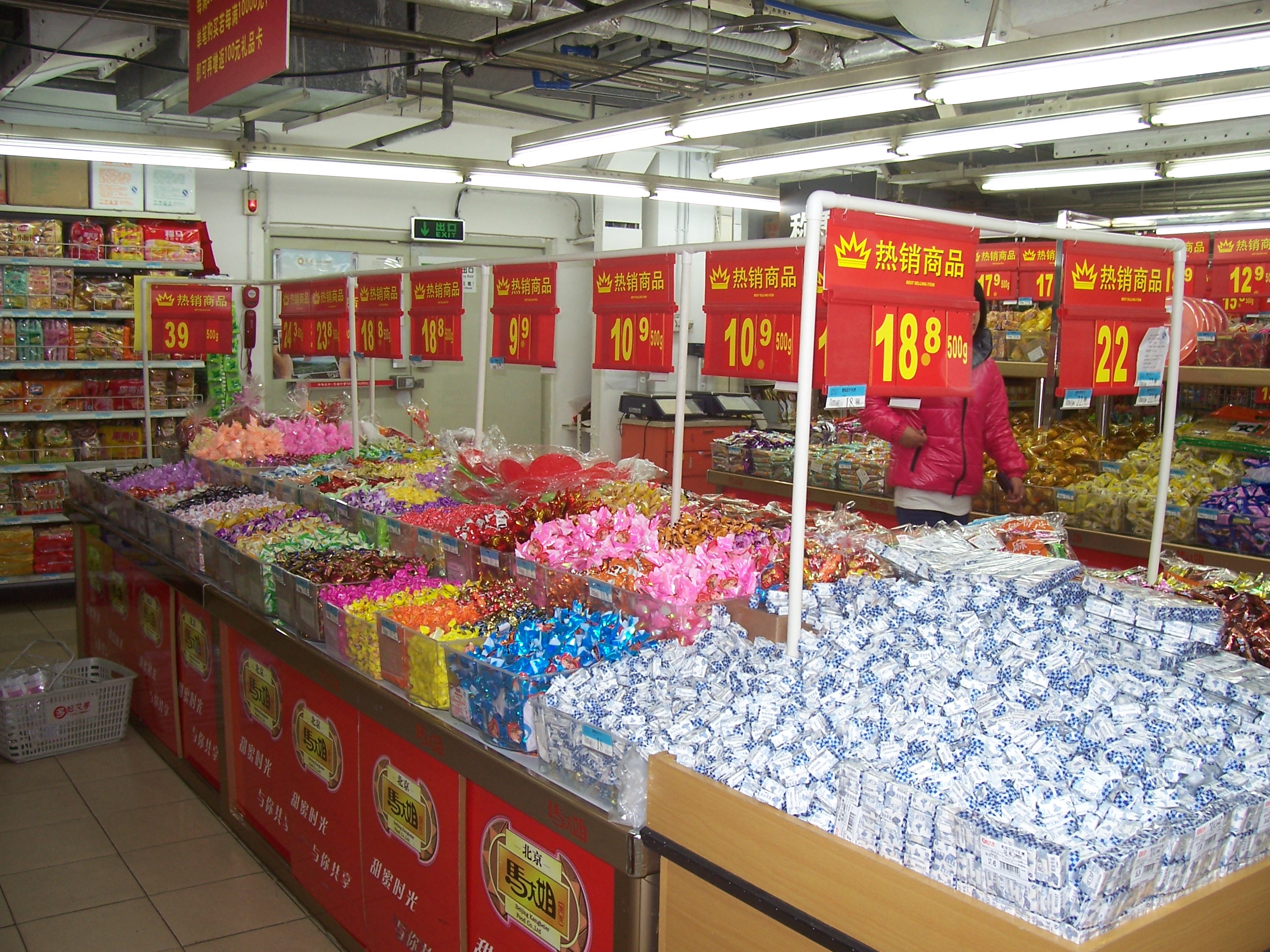
ATM machines and banks are overrun with eager Chinese, pulling out funds for holiday purchases and gifts.  Grocery stores in small towns and big cities fill their aisles with assorted wrapped candy, New Year’s decorations and specialty food items.  Shops put together festive gift packages of liquor and cigarettes for men, overseas’ cosmetic items for women.  Clothing sales can be found on every street corner, enticing everyone to build up that new wardrobe for the warmer weather ahead.

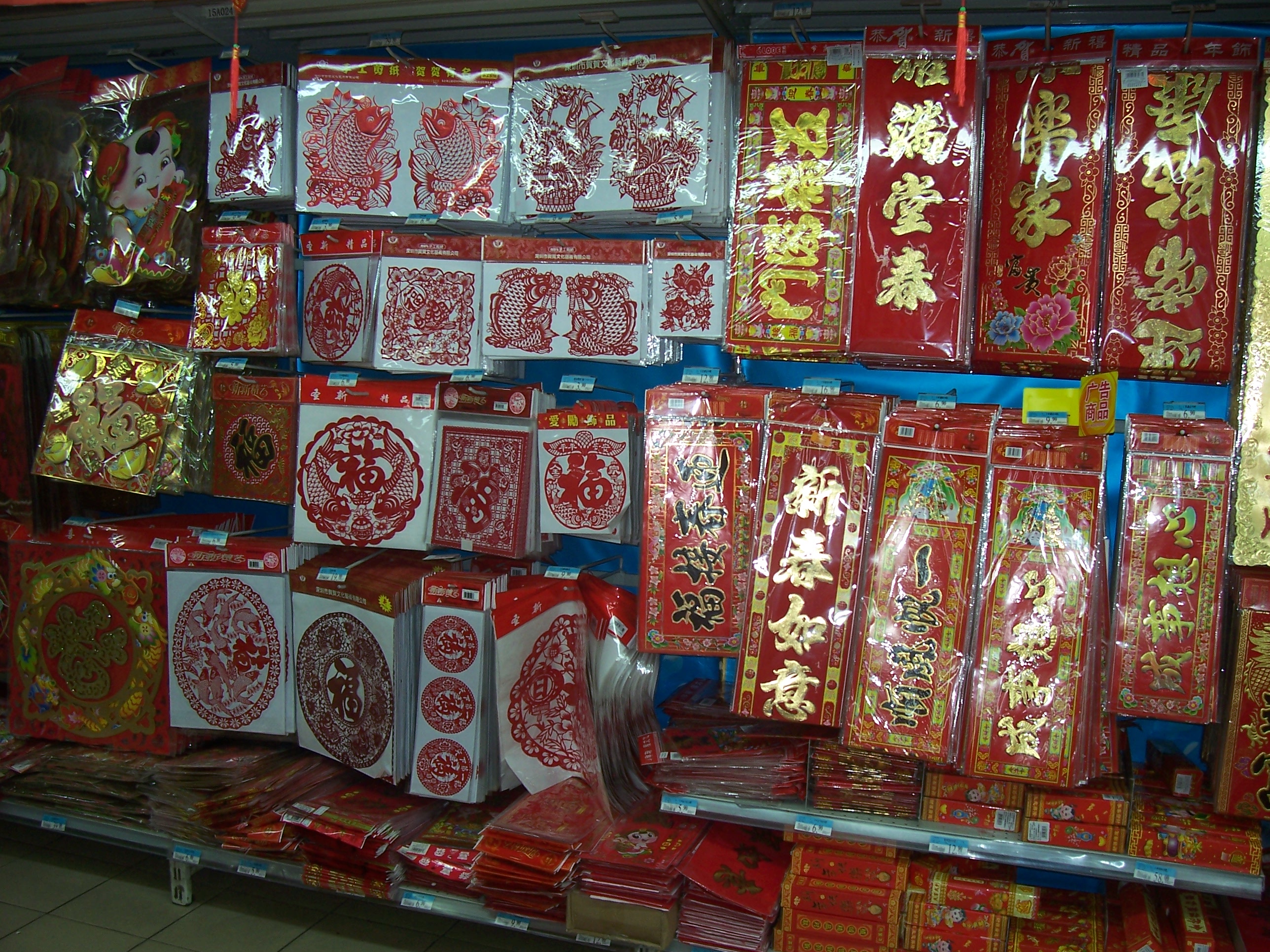
Store aisles begin filling with holiday decorations starting January 1st.

Bins of candy appear for the upcoming holiday. Candy of all kind is always a favorite for Chinese New Year.

Meanwhile, millions of migrant workers begin their travel plans to return to their small villages and towns for their yearly visit home.   A majority of these are uneducated farmers from the countryside who left their families to tend the land while they went to work in the cities as factory and construction workers. While poorly paid, making $200-350 a month and working 12 or more hours a day, the much-needed income allows them to send money home to support spouses, children and aging parents.   Chinese New Year is the only time they allow themselves a short 5-to-10 day break to return home and reconnect with loved ones.

For years, this migration of tens of millions has always been a major headache for transportation officials in China.  Train and bus services handle the bulk of these travelers as air travel is quite expensive, only used by those who have ample incomes to afford it.

In the past, tickets could only be purchased at the stations and not reserved.  Crowds were horrendous and lines were literally days long while exhausted workers waited their turn at mobbed ticket windows.  Recently, with better organization and computer technology, tickets are now able to be reserved, either by phone or in person.

And just this year, the first online ticket purchasing for trains has been added to help reunite migrant workers with their families.  According to the Chinese rail ministry, 5.88 million train departures a day throughout the country will be taking place from now until the end of the holidays.  Online booking is to help train passengers fill those millions of seats with ease, although I heard the train booking website was struggling under 1 billion hits a day when it first opened.  Frustrated individuals were logging on only to find the site had crashed, too overwhelmed to accommodate the 1 million-a-day hits originally expected.  That has since been remedied, according to reports, although final booking can still take a few days of trying due to the volume of website visits.

Aside from migrant workers, there are others who are anticipating the Chinese New Year as a time for rest and relaxation.  Schools all across the country have ended their winter semesters and will be starting up again February 5 or a bit later.   White collar company workers usually receive 3 to 5 days of vacation from their work units, although some might receive more depending on their bosses. Family businesses (such as convenience stores and novelty shops) sometimes close for 3 days but many remain open, taking advantage of those out and about wishing to spend their money.

The most exciting shoppers at this time are the children, who receive money gifts from relatives.  These monetary gifts are called the hong bao (red envelope) because the money is placed in decorative red envelopes.

College students also receive the hong bao, which many use to help pay for their tuition and further education costs for the spring semester.  At my small 3-year college, for instance,  $800 is required for the school year.  This is sizably cheaper than American higher education institutions but by no means cheap for the Chinese.  A majority of my students are from farming families whose parents live off the land and have no steady income.  Extended family members then become a major source of their college funding, which often comes in the form of the Spring Festival hong bao.  Unlike American students, who might blow their holiday gift money on vacation trips or fancy gadgets,  my students return from their holidays, head straight for the bursar’s office and make sure that hong bao money is put to good use:  paying for one more semester of college study.

By far, the most important custom for Spring Festival is the gathering of family members and friends to eat, drink and be merry.  “Gongxi, gongxi! (goh-ng shee, goh-ng shee)” or “Congratulations! Congratulations!” is the greeting given to everyone.  The meaning of the phrase is to congratulate one another on the new year, which will hopefully bring good luck, fortune and happiness to all.

After eating a huge meal, card games and mah-jong are played in living rooms while children light firecrackers outside.

In the evening, families gather around TV sets for special programs.  Magnificently staged variety shows feature famous Chinese movie stars, comedians, acrobats, dancers, musicians and singers.  These extravaganzas are a broadcasted 24-hour affair from Spring Festival Eve to Spring Festival Day and onward.

Overseas’ fans of the Chinese New Year can easily enjoy such televised events online.  In fact, the 2012 CCTV (China Central Television) New Year’s Gala can be seen in both Chinese and bilingual versions by visiting the website english.cntv.cn.  The homepage guides English speakers through holiday shows, schedules and programming, including Year of the Dragon performance celebrations

For anyone in the US wishing to experience a little of their own 2012 Chinese New Year, I suggest heading over to your local Chinese restaurant.  Wish your Chinese hosts “Gongxi, gongxi! (goh-ng shee, goh-ng shee)”.  Partake of a hearty meal, one equivalent of a huge family dinner in China.  And don’t forget to check out the online CCTV gala broadcasts.  It’s all a great way to understand and embrace a unique culture a bit different from your own.

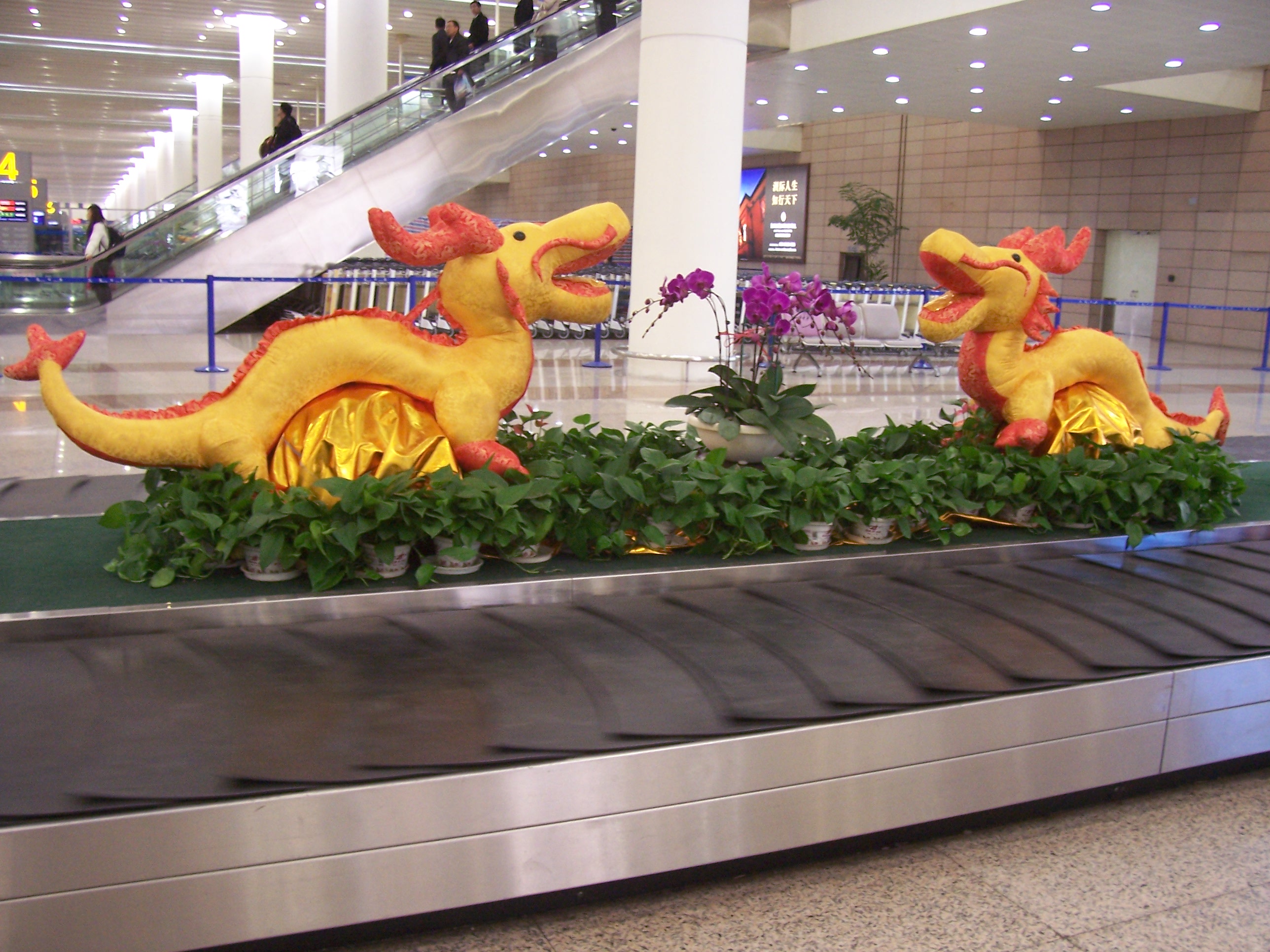
The Shanghai Internatioal Airport's luggage claim area greets incoming travelers with Year of the Dragon displays.

Posted in Uncategorized | Leave a comment

Holidays Have Begun: Back in America!

Hello again, everyone!

For once, I can actually write my own blog and post myself as I’m here in the States at the moment, for our Chinese New Year holidays.  My quick return, after the summer itineration, is mostly due to my father who hasn’t been doing very well.  While it will be a fast visit for me, about 2 1/2 weeks, it’s important to me to make time for my US family, namely my parents.  The summer was rather busy so this time around will give me more time to spend helping out a bit.  In fact, today’s duties included picking up my dad’s lunch at our senior lunch center, driving the car’s load of  Goodwill items over to Terre Haute (15 miles away) and sitting in the church office as the sub for the secretary.

Slipping back into the American lifestyle feels a little strange but after a couple of days, it’s as if I never left.

A Birthday Journey of Great Rewards:
In China

This trip back to the States was especially fun because I traveled on my birthday, January 12.  I have always wanted to do this.  Crossing the International Date line gives me 2 birthdays, actually, in two countries.  I left China at 10 a.m. Thursday and I landed in America at 3 p.m. Thursday the same day.

Naturally, I had to tell everyone along the way it was my birthday.  Why not?  For a 47-year-old, I look pretty good!

I started my birthday-dropping announcements at the hotel in Shanghai, where I spent the night before my flight began.

“Today’s my birthday,” I told the desk clerk at check-out. “Do I get a discount?”

She just smiled and charged me the usual $35 for my stay there.

Oh, well.  It was worth a try.

On the Flight Overseas

My other announced birthday remarks brought about a bit more notice.

On the airplane, I just happened to joke to the flight attendant serving me lunch, “Today is my birthday!   Can I get a candle for my dessert?”

While her reply was similar to the desk clerk (a “not sure that will happen” smile), she made sure to wish me a happy birthday and later offer me extra snacks throughout the flight (peanuts, pretzels, cookie packages, more drinks).  She also told her colleagues the birthday girl was in Seat 27-C, giving me a bit more special attention as each one passed along the aisles.  Winks and nods my way followed  when our eyes met and there were whispered “Happy birthday!” greetings during the in-flight movies or when they passed me by.

I also told the Chinese sitting near to me it was my birthday.  So not only did I have our Delta flight crew wishing me a happy birthday, the Chinese were doing so as well.

So far, my forwardness in announcing it was my birthday was paying off.  Thus  I figured why stop on the airplane?

US Immigration and Customs

Upon arrival in Detroit, where I would catch the next flight out to Indianapolis, I decided I’d try the same thing upon entering the country through US immigration and Customs.

When it came time to check my passport upon entry, I asked our immigration and custom’s officer, “Do you notice anything interesting about my passport?”

He looked at me strangely.

“Should I?” he said.

“Date of birth,” I hinted with a secretive look.

He warily peered downward at my passport picture and gave the entire page a careful going over.   At that point, I wondered if I’d made a mistake until his face broke into a wide grin.

“Oh!  It’s your birthday today.  Well, welcome back and happy birthday!”

At the Detroit Airport

So far, I had fared quite well with my birthday ploy.  No sense in giving it up quite yet since I had 2 hours to cruise through the Detroit Airport before the last leg of my journey.

There were numerous shops to enjoy, including my favorite that sells newspapers and magazines.  I always pick up a NY Times there coming and going from the country as well as Diet Mountain Dew, which I can’t get in China and enjoy immensely.

When purchasing these two favorite  items, I told the cashier, “It’s my birthday today.  I’m definitely going to enjoy this Mountain Dew and newspaper after being out of the country for awhile.”

“It’s your birthday?” the cashier said with surprise.  “Well, happy birthday!”

Then the good-natured person standing behind me decided to add his birthday greeting to mea as well.

“Your birthday?” he said. “Happy birthday!”

But it was the chocolate shop I stepped into that truly made my day right before I boarded the plane.  Their “60% off Christmas Chocolate” table caught my eye.  I would never think of purchasing such specialty chocolates as-is because they’re just too expensive.  I mean, $5 for a little chocolate candy bar?  Get real!

But sale items I keep my eye out for, so when the chocolate shop’s sale table popped up with tin-foil Santas, festive Christmas wrapped chocolate boxes and holiday bars, I made a point to stop by and purchase one.

After doing so, I noticed there was a “free sample” tray of chocolates sitting on the counter so I helped myself to one.

“Oh, my gosh!” I gushed.  “This is SO delicious!  I haven’t had chocolate this good in ages.  This is really making my birthday special.  Thank you!”

“Today’s your birthday?” the girl said, handing me my chocolate purchases.  “Well, in that case, have another!  And happy birthday!”

I certainly wasn’t turning down that birthday gift, you can be certain of that.

Family and Friends Send Best Wishes

And, of course, there were birthday wishes awaiting me from my brother, who picked me up at the airport for our 1 1/2 hour drive back to my hometown, as well as my parents, anxiously awaiting my arrival.     I likewise had a load of both email and mailed cards from my Chinese students, friends and church groups as well, wishing me blessings for my birthday.

In other words, for my two-day birthday in two countries and over the ocean as well, I think I got my money’s worth for my 47th year.

Thanks to all of you who sent special thoughts my way!  Be looking for more posts in the next two weeks.  I’ll also be posting pictures from the school year I was unable to do myself so be looking for those.

Ping An (Peace!) until next time.


A Dairy Queen ice-cream birthday cake awaited me upon my US home arrival.


Posted in Uncategorized | Leave a comment

Connie’s Christmas in Full Swing

As I write this, I’m in the midst of December Christmas festivities for my students at Guangxi Normal University for Nationalities. We have just finished our Christmas culture lessons, including our classroom re-enactment of Christ’s birth and learning the traditional symbols of the holidays. Next step? The dreaded semester finals.

Testing Taking Place

For me, it’s now Week 2 of conversation testing. I’m to finish all my exams by January 1st but my students will be continuing with other final exams until January 14. At that time, their school year will end. The foreign language teacher, however, always finishes early. This is to allow students to concentrate on more important classes to close off the school year.

My second year English Education majors are being challenged to thoroughly explain their thoughts and ideas concerning testing young learners in English. For 30 minutes, each pair must truly demonstrate their ability to create good testing questions and theories for their future students. In Chinese, the test would be a piece of cake. But in English? Well, let’s just say they are proving themselves qualified to be second year English majors. So far, everyone has done above-average on their test scores, which is a good sign that they are on their way to be wonderful teachers someday.

As for my 120 freshmen, testing with the foreign teacher is nerve-wracking. This is their first oral conversation final in their lives. While they do work in pairs to give one another support, it still causes them anxiety and panic.

In Chinese junior and senior high schools, all English tests are strictly timed written exams – reading (passages with questions), listening (tapes played once with comprehension questions), vocabulary and grammar (choose the correct word for the sentence.) No spoken English is required.

At the college level, oral tests are a given for English majors. Understanding each other and responding to questions is a top priority in my class so that’s what we do for the final. Although they’ve had 4 weeks to prepare for the set questions and dialogues required of them (all of which were given beforehand), it’s still a frightening experience, one which demands celebration after it’s over.

Let’s Celebrate!

So, as is my custom, after every small group has completed their tests, they are invited to my home for Connie’s Christmas Open House. I have 14 of these in total, held in the evenings, for both my freshmen and sophomore students. 

With my freshmen, their newfound Christmas knowledge can be put to use while enjoying my over-the-top Christmas fantasy land. Miniature crèches , stockings, holiday stuffed animals, Christmas trees, strings of lights, sparkling tinsel roping, advent calendars, Santa hats, and family photo albums – This is the first time for them to visit a foreigner’s home. They are so excited that their cell phone cameras are in constant use for the entire hour they are visiting. Pictures with me, their friends and of the many decorations gracing my home are a must to show family members back home and for memories of our special night together.

My sophomores are not quite as amazed since they saw all this last year. They are more laid back. We sit together, talk as old friends, and gobble down my homemade Christmas cookies.

There will be more time together with my colleagues during their open house on December 24. Their children are always invited, which makes for a more joyful atmosphere since everyone enjoys showing off their kids and the little ones have so much fun.

Goodies Galore

I never tire of these special Christmas events, especially because a great deal of the goodies served have been provided by kind people back in the States.

Christmas checks deposited into my U.S. account have been very generous this year. The uptown candy ladies are ecstatic every time they see me head their way, which is on a daily basis. They fill my bags with assorted varieties, convincing me that 10 pounds is better than 8.

I don’t argue.

Candy for my students is a great luxury. They never buy it for themselves due to the price (A pound of candy for $1.00 is two meals in our cafeteria). Being able to heap my Open House baskets high with different sugary treats is so much fun. Even more so is watching my guests excitedly dig through all the selections available and choose the ones they like the most.

To prepare for these events, I’ve also had a few weekend trips to the capital city, Nanning, three hours away. I was able to purchase butter for cookies and fudge (butter is not a Chinese food item so it is very difficult to find), as well as a substantial supply of great decorations for our English Center.

Christmas Items in China? Yes, and Plenty of Them!

Even though Christmas is not a Chinese traditional holiday, the idea of the festivities has spread clear across China. Stores now stock up on Christmas decorations for those wishing to enjoy a “Western” holiday. Christmas sales can be found in every major chain store. Santa hats, roping, Christmas stockings, door decals, trees, strings of lights and ornaments can be purchased for fairly decent prices.

While Longzhou’s supply is quite limited due to the size of this small town, Nanning as a big city had plenty to offer. On my trips to the Christmas section in Nanning’s chain grocery the Ren Ren Le (Everbody’s Happy), I think I bought out the entire holiday aisle. Dozens of curious Chinese gazed at my cart on my numerous buying sprees. Their eyes grew big when they saw it overflowing with tinsel roping, stockings, lights and everything else I couldn’t pass by.

At the check-out counter, I even had some customers dig through my cart while we waited, pulling out items to ask what we foreigners used them for.

“To make the house look pretty for Christmas,” I told them. “It’s an American tradition.”

Even though China is currently over-run with Christmas decorations placed in stores to give a more festive atmosphere for consumers, buying such things for personal use is considered a waste of money. When the Chinese standing behind me in the grocery line watched the check-out attendant total my goods, they shook their heads in disbelief.

The kids, however, had a different viewpoint. They gazed in awe and wonder at all these sparkly things being stuffed into bags. I could just imagine their thoughts: “The foreigner’s home must be really something to see!”

One little girl had her eyes on a little Santa box I had in my cart. I purchased 10 of these as gifts for my monitors (class leaders) to thank them for their help this semester. Since I had an extra one, I made sure she received it after I’d left the line.

“Merry Christmas!” I told her, handing her the box.

She hesitantly looked at her mother who told her to thank the foreigner and take it. She did so with great care and a huge smile.

The one thing I love about Chinese parents is that when it comes to giving a child something special, there isn’t a big fuss made. No “Oh! Don’t do that. It’s too expensive” or “You don’t know us. Please, take it back.” They understand that gift-giving is a gesture from the heart that should be accepted with gratitude, no matter how big or small the present.

I think that follows for us at Christmastime as well.

And on that last note, I’ll close.

Many, many blessings for your Christmas Sunday and a very happy new year!

As always, Ping An (Peace) from China.


Posted in Uncategorized | Leave a comment

Our Campus Elderly Create A Gardener’s Paradise

Note: My website is still blocked. This posting is courtesy of my friend, Pam, in Marshall.


The elderly in China have all sorts of activities to keep them busy.  Retirement age in China is 55 for women, 60 for men, so most retirees are quite spry, healthy individuals. In towns and cities, they enjoy gathering in the evenings or early mornings for group exercise (line dancing, taiqi, ballroom or traditional Chinese dancing). They form small clubs and practice in nearby parks. It’s quite common to see such clubs every day in China, out in the open and enjoying their crafts: choirs belting out folksongs or Beijing opera numbers, mahjong players, mini orchestras, painting or sketching enthusiasts, Chinese calligraphy artists, or sword and fan dancers.

Others not in metropolitan areas, those who are countryside farmers, never give up their skills of growing vegetables around their rural homes. Even when they join their grown children living in towns and cities, their green thumbs itch for seeds and soil.

Perhaps that’s why, on our campus, we have so many of the older crowd who have taken up gardening.

Most of the teaching staff here came from remote farming communities. Our teachers were the first to get a higher education in the family, have a good profession and be able to care for siblings and aging parents with their incomes. Children in China feel a great obligation to care for their relatives when they grow up, thus it’s not unusual for parents to move in with their kids later in life.

So in our campus faculty apartments, many elderly are living with their grown children. And because they were farmers in their youth, they feel the need to keep busy planting on Mother Earth.

That’s where our gardener’s paradise began.

A Deserted Patch Is Tended To

Three years ago, when I first arrived at this school, I took a walk around the campus. On one end, there was a walled in area with deserted classrooms, toilet shacks and dormitories.

For a number of years, this had been our college’s attached junior and senior high school. Young people from the countryside areas and Longzhou had registered to study there. Those who weren’t from Longzhou stayed in the dormitories provided. I heard that about 600 attended both the junior and senior high levels. Hard to imagine in such a small space.

In 2004, the college decided to do away with the institution because better schools were being established in Longzhou. There was no need for us to help educate younger students. The administration decided to focus on only on those at the college level.

Seven years of disuse took its toll on the past educational institution. The cement had buckled, weeds sprang up everything and walls crumbled. Piles of brick were heaped high, waiting to be at some point recycled for small building projects around the campus.

In other words, when the dog and I first walked into this walled-off area, it was a mess. A sign posted on the iron gate told people to stay out, even though another entrance easily allowed people to come and go as they pleased.

No one did as there wasn’t any reason to.

Every day that first year, I had classes in the building adjacent to this eyesore. I was on the third floor, which allowed me an excellent view to look down on our abandoned school yard below.

Imagine my surprise, however, when very slowly, day by day, bit by bit, that weedy mess changed into something amazing.

The elderly on our campus began to see possibilities in growing things among the rubble. Our campus had no other place to grown small gardens than this one plot of land. Thus, despite the sign saying otherwise, the determined, innovative elderly entered and started their journey to create something out of nothing.

A Gardener’s Paradise Emerges: Something from Nothing

For over 2 years now, I’ve watched from my 3rdfloor classroom balcony as a magnificent vegetable and fruit tree garden appeared.

It started as one sole woman cleared a tiny area to put in some beans. News quickly spread as word got out among the older folk living here that there was a place to grow things. If you were willing to put in the time and effort to clear out the bricks and concrete, and block off your own little corner, you were welcome to join in.

And so it happened that we now have an impressive garden, created by our campus elderly, which is truly a work of art.

Looking down on this amazing feat, you can see tidy rows of beans, carrots, cabbage, peas, soybeans, cilantro, scallions, hot peppers and corn. Vines of egg plants, pumpkin, tomato and cucumber cluster about in nooks and crannies. Four papaya trees are already bearing fruit and a few pipa trees are likewise ready for harvesting (Pipa, or loquat, is a south- Asian tropical fruit, something like an apricot.)

Every day, in the cool, early mornings or late evenings, you can see our gardeners carry water to the tiny seedlings and tend to their charges. In fact, it’s not unusual for me to meet my 5th floor neighbor hauling buckets of water up and down our stairwell for her vegetables. She balances her two heavy buckets on a pole set on her shoulders and skillfully maneuvers herself down five flights of stairs. (No elevators on our campus, no matter how high the building.)

I’ve watched her carefully, slowly make her way to her garden, under the heavy weight of her buckets. It’s a rather long stretch to get there but she does it several times a day.

Nor is she the only one. If you want your garden to thrive, there’s no other way to supply thirsty plants with what they need. There are no water lines connected in that deserted part of campus. Our tropical, sizzling sun and roasting temperatures shrivel everything in a matter of hours, even during winter. If you want your plants to survive, you’ll have to provide water another way. Carrying it from home is the only option.


What Will Befall Our Campus Garden?

Such care and love have been put into this gardener’s paradise that I do wonder what will become of it next year. In the summer of 2012, our school is moving.

The entire campus will be sold. All students and faculty will be moved to the new campus in Chongzuo, 1 ½ hours away, where already a majority of the students (8,000) have already been attending school for the past two years. Our school, educating the one-thousand plus, 3-year vocational students, had been holding off the move until more dormitories and faculty housing had been built to accommodate everyone.

I’ve heard now that everything is ready for our arrival in Chongzuo. Next semester will be the last one at Longzhou’s Guangxi Normal University for Nationalities. After that, another school with another name will take our place.

That’s why I wonder what will become of the garden that our retired farmers have worked so hard to create. Without anyone here to tend to the individual vegetable plots, there is little hope of its survival. Such a fate of doom and gloom!

Or not.

Perhaps whoever moves into our faculty housing units will bring with them retirees willing and excited to take over where our gardeners left off. Might even be a banana tree or two gracing our gardeners’ premises in a few years.

Now that certainly would be something to see!

Until then, our squatters’ paradise still has numerous months to thrive and flourish, bringing with it our elderly’s nurturing love of gardening.

Until next time, wishing you Ping An (peace) for your day.


Posted in Uncategorized | Leave a comment


This slideshow requires JavaScript.

Posted on by connieinasia | Leave a comment

“Our Annual Halloween Party Approaches!”

Note About Silence:  Every so often, I am cut off from my website and not able to post blogs.  WordPress, my website provider, as well as Facebook, are blocked in China.  In the past, I’ve gotten around the WordPress block but for 3 weeks, it’s been a no-go.  Thus I have asked a good friend in America to post for me until I can do it myself.  Sorry for the long silence but that’s the reason.

It’s that time of year, when the English Association leaders start to swarm into my home for discussions about our annual school Halloween Party.

This tradition was started by the first foreign teachers to the campus, over 8 years ago.  It’s filled with face painting, costume games, bobbing for apples, Trick-or-treat activities with the campus kids, and watermelon carving contests (Watermelons are our substitute for pumpkins, since pumpkins in China are oblong gourds, not round as in the States).

We are running into a bit of a dilemma this year, however.

Our Halloween weekend is already completely filled with other activities, including the national 21st Century Speech Contest prelims which were scheduled at the same time as the party.

This contest is one which requires a foreigner on the judging panel in order for winning contestants to move on to the provincial competition, held in Nanning.  Since I’m the only foreigner within a hundred miles, looks like I’m a must to judge at our school. 

As often happens, everyone in our language office assumed I knew about this. (I didn’t.)  The person in charge was supposed to invite me to judge. (She didn’t.)  Thus I only found out about this conflict of interest 3 days before we were to have the big night.

Being a pro-active person, I headed over to the office on Tuesday to discuss this with the secretary to find out if we could change one of the events.

After several phone calls to other English teachers and our dean (attending a conference in Nanning), we now will be having the speech contest on Sunday night.  That leaves Halloween open for Friday evening.

Saturday night would have been an option except we are having the 1st year welcome gala on that night.  For 3 hours, all the departments will be putting their best students forward for elaborate dance numbers, singing, skits, and a fashion show  to  display the upper classmen talents.  School organizations and clubs (guitar, kungfu, rollerblading, ballroom dancing) will also be performing.

In other words, this weekend will be packed with events.

 Added Guests to our Halloween Party List

 As always at our party, the campus children will have their special time with their own “Trick-or-Treat” segment to get candy and a supervised watermelon carving activity.

Yet we will also have even more added youth to the college crowd:  Joe’s 8th grade class!

15-year-old Joe is one of my faithful Saturday visitors for my time with the kids.  I’ve already been to his home for a birthday party and then to his school last semester to give a lesson to his class. (See previous blog entries)

Last week, Joe invited me once again to visit his school.  Since Halloween was just around the corner, I adapted my college Halloween unit to fit a 40-minute class for junior high.  It came with a short reading about Halloween and then showing traditions of the day with class participation.

Ms. Nong, the English teacher for their class, was once again on hand to co-teach with me and help out when needed. She and I had just as much fun in the classroom as the students.   Donning costumes for Trick-or-Treat re-enactments created roars of laughter and great fun, but the candy prizes were probably the biggest hit of all.

Before closing, I invited those who wanted to come to our college Halloween night.  There was a cheer that went up when everyone heard the party was on Friday night.  Usually, they have daily evening classes from 7 to 10 p.m. but not on Friday.  They’re free to attend and it looks like quite a few will.   

 What’s In Store?

We start at 7 p.m. with independent activities at different stations:   face painting, scary tattooing (water-based ones, courtesy of our US Dollar Store), mask making and costume wearing (witch, headless person, ghost, Chinese princess). 

8 p.m. is the start-up with our Ballroom Dance Club opening the night with a few numbers.  Then it’s onward into Halloween, with introductions and all the rest.

Our night closes with the Jack-o-Lantern contest to see which group has the best carved watermelon.  We’ll be having 2 prizes:  People’s Choice and Connie’s Favorite. 

After that, it’s pictures galore while everyone scrambles to capture the last few memorable moments of the night.  


 Hoping for Website Access

I hope again for my website access  to show you all the photos from our Halloween night and also from Joe’s classroom.

              Until next time, here’s wishing you Ping An (peace) for your weekend.


Posted in Uncategorized | Leave a comment

A Drenching 7-Day Holiday

        National Day holidays have ended today, yet the remnants of Typhoon Nesat from a week ago are still hovering in Guangxi Province.

      Last Friday morning had my hired driver, Mr. Ling, landing at the bottom of my stairwell right on time at 11 a.m..  My early morning class had gone very well and I was relieved that the heavy rain was holding off.  The news had reported of a typhoon landing.  The skies were all whispy, dark, wind-spun clouds whisking by but the rain seemed to be holding off. 

      I was hoping that would be the case on our 3-hour drive toNanning.

      Oh, sadly, not so!

         Little Flower, Mr. Ling and I were cruising down the road in his SUV only 20 minutes before the big wind swooped down upon us.   

          After passing our Longzhou tollbooth, we were on the expressway where we were battered by heavy gusts that had Mr. Ling gripping the wheel firmly while his windshield wipers frantically thumped on high speed to keep the glass clear from the rain.  Even LF woke numerous times from her pleasant slumber on my lap when we were thrust and tossed aside by the quarrelsome gails.

          Two hours into the trip and we still were experiencing bad weather, even for my favorite Fusui rest stop. 

Fusui Rest Area

          Let me take a little moment to tell you about these new-found Chinese rest areas.

         As middle-class Chinese are getting wealthier, they are also getting more accustomed to comforts.  One of those is private car ownership, which years ago in China was unheard of.  Now the cities and expressways are full of private citizens with their own cars.  This abundance of vehicles has obviously brought with it a great dealo f nuisance (traffic jams and horrendous pollution), but there some perks.

            One of those plus points is the great rest areas China’s transportation ministry has developed.  Before, motorists and long-distance bus passengers were forced to stop at grimy shacks that had rank, disgusting toilets and served unsanitary food. 

          Not so anymore.

          The rest areas  that line our Nanyou Expressway are truly lovely.  As a newer highway, and one that stretches all the way from Vietnam, it especially has pleasant pit stops due to the Chinese-Vietnamese tourist trade.  

         For those of us traveling from Longzhou, the best one is the Fusui Rest Area.

         Fusui is a small town located just 1 hour from Nanning.  Its rest area is just before the exit into the town.  Not only does it have the most beautiful scenery of the 3-hour drive to the capital city but it has the best man-made landscaping and biggest snackie offering in the convenience store.

          I’ve taken plenty of pictures of the Fusui stop but not this time around.

          When Mr. Ling pulled in to get gas and allow us to use the rest stop facilities, the weather was just too wet for photographs.  LF pranced about in the downpour, hiding under trees and picking her way through the grass to do her business.  I was more fortunate to have the indoor toilets to use.  

           Although it wasn’t as pleasant a stop as I usually experience, I did enjoy gazing for a short time at the misty mountain range that lay before us.   Even in the wind and rain, the Fusui Rest Area was surrounded by the mystical charm of traditional China.

 Arrival in Nanning

         We made it to our small hostel a little over the usual 3 hours due to the wind and rain. 

         The trip was well worth the money, especially in the horrible weather.  Granted, the bus is so much cheaper ($12) and on most occasions, I would use it.  But with my luggage and the dog in tow, the private car is the best way to go.  It is my only holiday splurge and since I save on the hotel (only $10 a night), I figure I can afford it.

           Mr. Ling is one of the cheaper drivers in Longzhou.  He charges $85 for a Nanning trip, which I still think isn’t enough.  The toll on the expressway is 90 yuan ($14) one way, $28 roundtrip.  The gas is 270 yuan ($45).  So all together, it’s $73.  He makes a total of $12 for his efforts, which entails over 6 hours of driving in one day, there and immediately back.

           Mr. Ling was kind enough to wait for me to check into the room then give me a ride to the Xiyuan Hotel swimming pool, which was on his way back to Longzhou. With the horrible rain, getting a taxi was going to be difficult so this saved me not only a $5 fare but some time as well.

 A Holiday of Drenched Spirits

         Mostly around China , everyone enjoyed their official 4-days off with trips to scenic spots throughout the country, tours to major cities and outings to buy big on store sales.  (Consumerism is huge in China for holidays.)

        But here in the south, China’s 62nd anniversary of the founding of the PRC was a dreary affair.  October 1st continued with torrential rains that just wouldn’t let up.  Even the big fireworks display was canceled that evening. It did get underway here in Nanning but a sudden increase in rain caused the planners to give it up.

        Dropping temps also had people hovering inside, not at all willing to go out in this mess with umbrellas in hand to fight those wanting taxies or thousands of Chinese crammed into shopping areas to get the best of the sales.

         My greatest sympathy lay with several of my 2nd year students.  Before the week-long holiday, on Thursday, I had met with a few of them in the English Center where they excitedly told me of their plans to go to Guilin , in the north of the province, for sightseeing. Guilin is famous for its gorgeous scenery, with odd mountain formations that jut upward out of the middle in the plains. Winding rivers weave their way around densely forested areas, giving tourists spectacular cliff views during river cruises.  

        Guilin is  a well-established tourist destination with many attractions and is a favorite for Chinese and foreigners alike.

      From Longzhou, it’s a 3-hour bus ride to Nanning to pick up either a bus (5 hours) or train (7 hours) to get to Guilin.  The bus is more expensive as it is a straight shot to Guilin city.  The train a bit cheaper as it stops along the way. 

        One group of my students was traveling by train, another by bus.  They were so excited to be going on an adventure of this sorts with friends.  Money is tight and touring is not something  my students have the luxury of doing. When I heard of their plans, I was so happy for them.  What a wonderful time they would have!
      But those conversations were on Thursday, when our skies were clear and it was roasting outside, nearly 95 degrees.

      The next day, the typhoon hit.  \

       Here Mr. Ling and I were being blown all over the road so I could just imagine the bus ride being the same that my students took to Nanning. 

        Saturday was just as miserable, if not worse, with the constant rain and cold.  Sunday was likewise yet another day of showers with only Monday for us being dark but clear of the rain.

        I’m wondering what stories my students will have when they return on Friday to begin make-up classes on Saturday.  Most likely, it won’t have been a very fun venture, plus quite chilly as Guilin is far to the north.  But I have no doubt it will certainly be a memorable, unforgettable journey for all of them.

Wedding Parties Grin and Bear the Weather

           Yet others who had to make the best of a rainy situation were our wedding couples.

      As is quite prevalent inChina, holidays are the time for marriage parties and celebrations to take place. Holidays are safe because guests invited are off of work. Since wedding celebrations are an all-day affair, beginning with a huge noontime dinner for a hundred guests or more, and then carrying on all day at the place of venue with card games, KTV or chit-chat, it’s important to make sure everyone can come.  Holidays provide that opportunity and National Day is a big one for this.   With most employees getting 4 days off, it’s the perfect time to share your marriage happiness with family and friends.   In fact, one of my former students told me she had 3 wedding invitations this National Day.  Busy girl!

       In Nanning, last Saturday to Tuesday was to be the day for couples to gather outside of their chosen marriage venues (expensive restaurant hotels), greet guests and usher everyone in for the big dinner.  Traditional white wedding dresses with poofy full skirts, glittery floor-length gowns or sequin-studded qipaos (Chinese dress) are the thing Chinese rent from wedding agencies throughout the city.  The groom is likewise in a spiffy suit, usually a tux, also rented. Professional make-up artists and hair stylists also make sure the bride and groom look their best for their marriage display.

       For National Day, it’s not at all unusual to see wedding couple after wedding couple along the streets, at the doorway of posh establishments, handing out the traditional favors of candy and cigarettes to guests entering.  But for our southern China, the rain and wind sent a lot of our couples inside to greet guests. 

         Nor were the closing wedding pictures, taken outside in nearby parks with family and friends, yet another popular sight I’d usually be seeing at this time.  I was sorely disappointed not to be able to capture any of these special moments on my own camera, which is something I often enjoy doing for holiday wedding parties inChina.

         I only glimpsed one couple with their happy crowd standing at a riverside park in front of a flowery display of “62” (for the 62nd anniversary).  This was during a lull in the rain, as I was zipping my way by taxi to the pool. I missed my chance.  I had no camera in hand, and no other couples have I seen since.

 Back to Longzhou

         My last swim for the holidays was to an empty pool.  The non-stop, pouring rain and chilly temperatures kept many of the die-hard swimmers away this morning. Since the pool water is not heated, the outside degree plunge has crept up on us all during the week. 

          Mr. Ling was not able to make the trip back to Nanning due to a friend visiting so he sent another driver, Mr. Wang, to pick us up.  At 3 p.m., the rain hadn’t let up so we left as we had come:  with stormy skies overheard and the windshield wipers frantically going.

          And just as last week, as soon as we were within 20 minutes of reaching Longzhou, right after the tollbooth exit, the rain stopped.  It was a dry landing, much appreciated by both of us.  Little Flower was immediately able to go for a nice, long sniff-and-smell around the campus after being stuck inside for 7 days straight.   Students were likewise out and about, finally able to enjoy a rain-free evening. 

          Will our 90-degree weather return? 

           According to the weather reports,  when we all hit the classrooms for make-up days tomorrow, it’s to be noticeably warmer with bouts of sunshine. 

            Wouldn’t you know it.  After holidays are over, we get the nice weather.  Go figure!

        While my photos were pretty sparse this time around, I’ve included a few.  (Those from the Fusui Rest Area were taken weeks ago, on a much kinder weather day than the one we had for the holidays.) 

         Until next time, here’s Ping An (peace) from a drenched southern China.    

This slideshow requires JavaScript.

Posted in Uncategorized | Leave a comment

A Monetary Gift Brings Great Appreciation and Joy

             Last semester, I was informed that our United Methodist Women’s Division had graciously made a gift of $3,200 for “Connie’s work inChina.”   The funds were transferred to the Amity Foundation inNanjingwho then sent it on to me in Longzhou.

            Such a generous amount was immediately put to good use — copying photos for students, buying candy for special events and getting a few needed items for ourEnglish Center, like a wall clock, pens and English study materials found in Nanning book stores.

 Textbooks Needed

            But what I was truly excited about with this amount had to do with this semester.

            Some of you might remember that I prepare and compile my own textbook for use in our classrooms.  These materials I have collected over the years and also created myself specifically for use with Chinese college students.   One textbook is for the first year students, entitled “In the Classroom with my Foreign Language Teacher.”  The second textbook is for my 2nd year English Education majors, “Talking and Learning About Teaching.”

            After putting together my two 100-page books, I drop them off at the small family-run copy store across the street from the school.  There, Ms. Chen and her husband run off what I need.  In the past, I usually covered half the price of the copied book and my students paid me the difference, which ended up being about  $1.25 (10 yuan) for them.

 The Announcement “They’re Free!” Brings Cheers and Gratitude

            This year, however, not only were our textbooks free for the students but free for me as well.  I had 95 books copied for the 2nd year students, coming to 1,450 yuan ($230) and 145 books for the 1st year students, coming to 2,030 yuan ($322). 

            When I announced to the students in each class that their books were free, due to the generosity of Americans who wanted to help them, they were overwhelmed.  Their cheers and shouts of excitement were heard in next door classrooms whose teachers later asked me what all the fuss was about. 

            “Free textbooks,” I told them, “courtesy of my American sending agency.”

            Even my colleagues were moved by this display of care and concern shown to others across the world. 

           My dean, Liang Ling, remarked, “Oh, how wonderful!  Please thank your sending agency for this gift to our students.  We appreciate this kindness so much.”

 A Hearty “Thank You” to the United Methodist Women’s Division

           So from Dean Liang Ling, and myself as well,  I pass along a big thank you to those of you who support our Women’s Division through your giving and support.  This has meant a lot to all of us, and the great thing is that there’s still plenty of money yet for next year’s book as well!

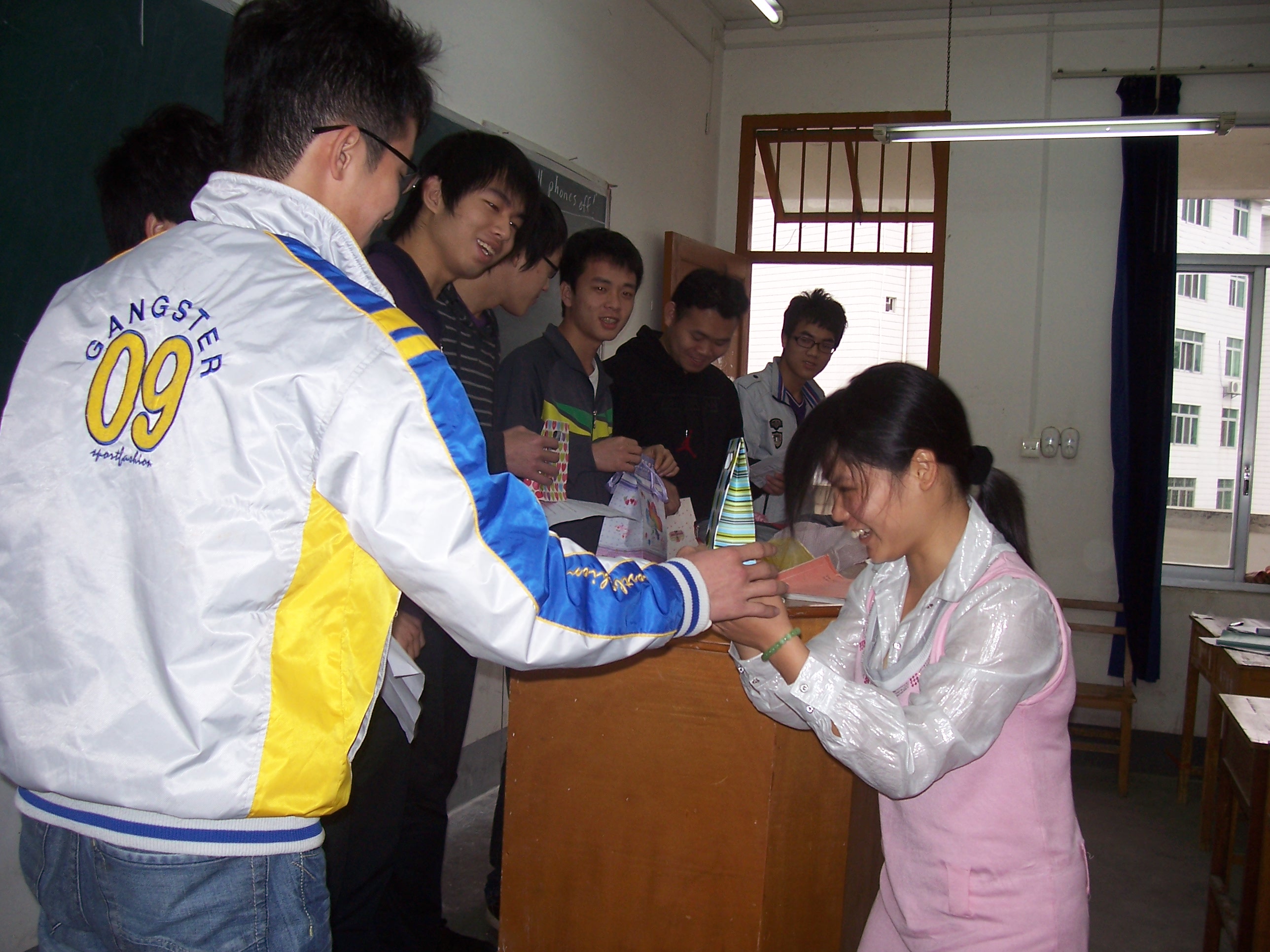
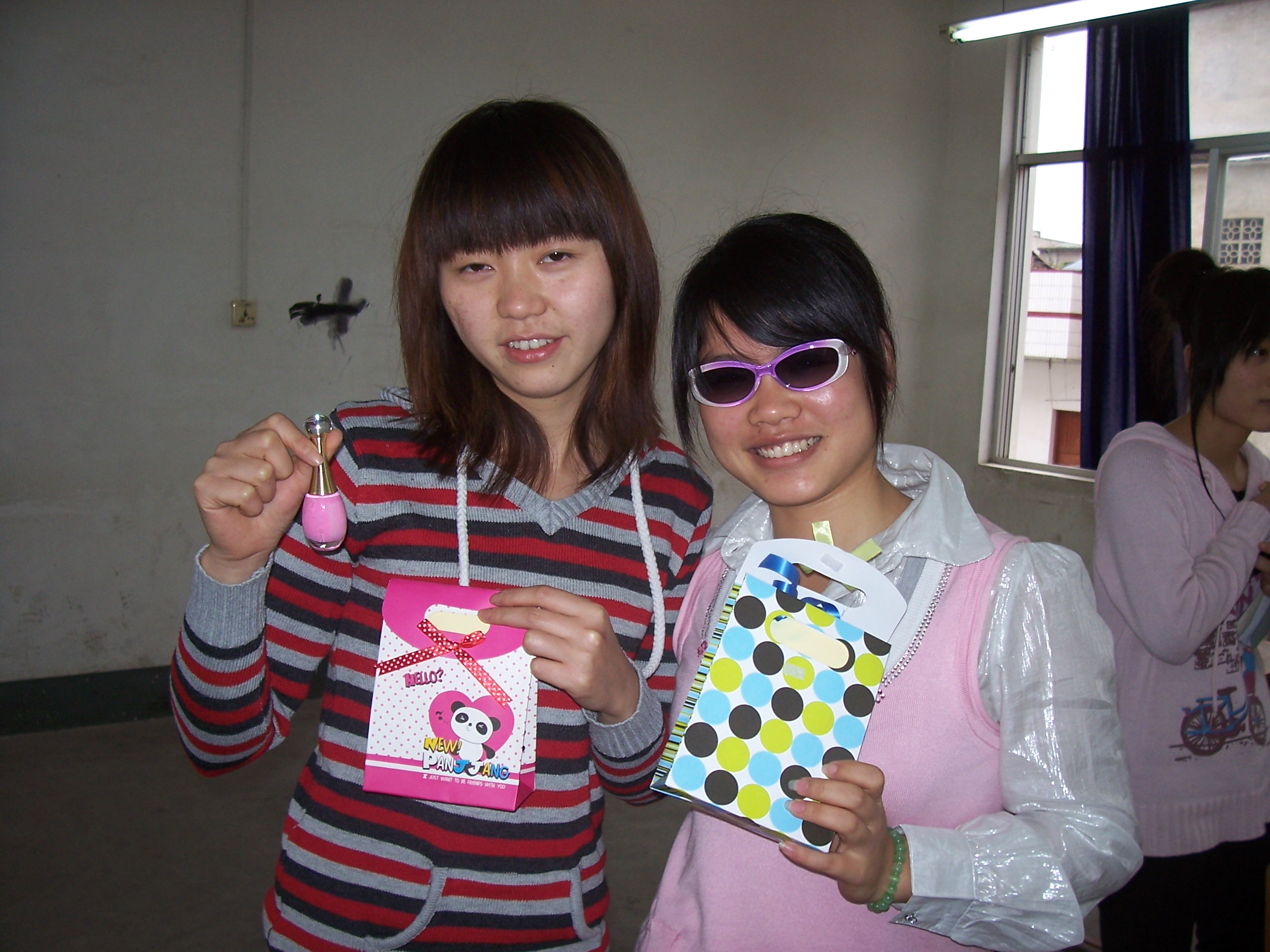
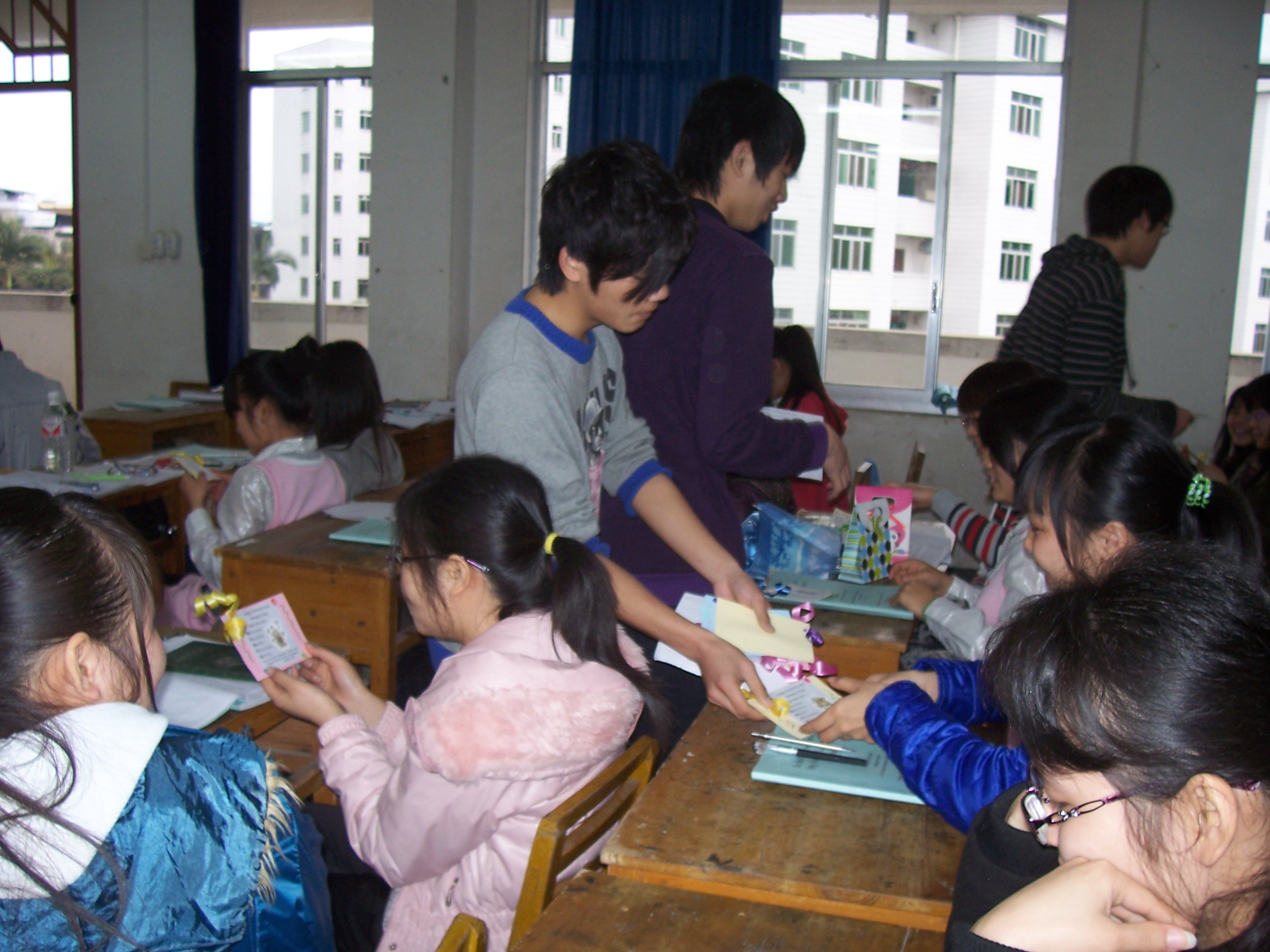
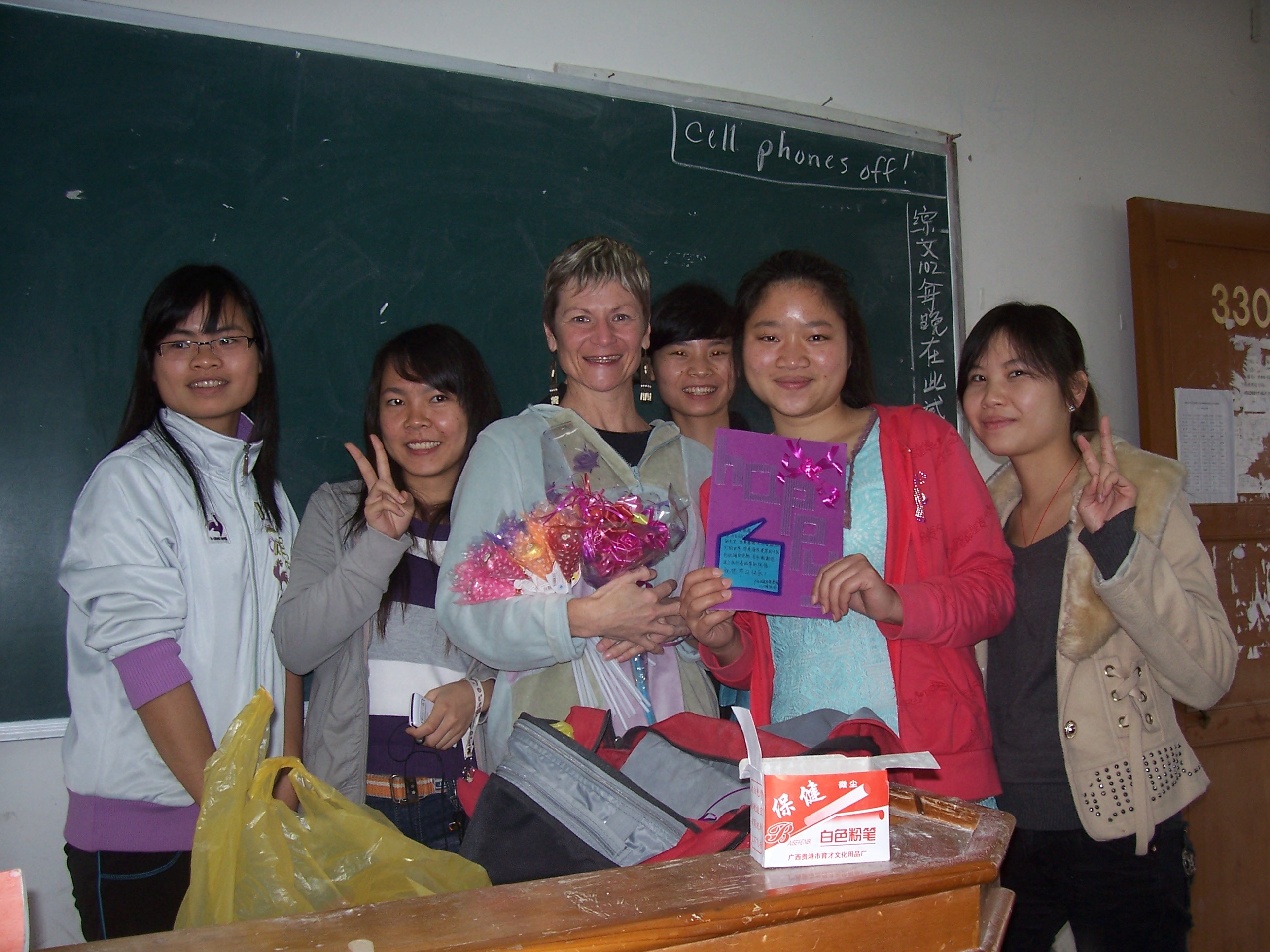
            Enjoy the photos of your gift to us.  As you can see, it’s a pretty happy moment for everyone, including Ms. Chen whose copy shop made a tidy sum which I’m sure she definitely needed.

            Until the next report, most likely afterChina’s National Day holidays, here’s Ping An (peace) for your weekend.  

This slideshow requires JavaScript.

Posted in Uncategorized | Leave a comment