Wonderful News from Luzhou: Canine Rescue Has a Home!

After that last entry,  it’s time to report some good news, sent in an email this morning: DP has a home!

A playful DP, ready for adoption.

A playful DP, ready for adoption.

A Re-cap of DP

I wrote in a previous post that, before leaving for the States, I had taken into my care a 3-month-old puppy dumped on the campus by one of our students.  I named him DP (Dormitory Puppy) because the girls’ dormitory was his hang-out while anxiously awaiting the return of his owner, who had abandoned him to go home for the summer.

Healthy at first, he soon became sick.  Rather than watch the poor thing die a sad, lingering death, I hustled him off to our local vet. He was diagnosed with a common canine killer, the parvo virus.

A very, very sick dog.  Here Dr. Mao  examines DP on his arrival to the clinic.

A very, very sick dog. Here Dr. Mao examines DP on his arrival to the clinic.

Since his illness was so progressed, no one was sure he’d live long enough for the full treatments necessary but, amazingly enough, he did . I visited him every day at the clinic, taking him for walks and giving a little people pampering, up to the day before I left for America.

The vets and I had already reached a monetary agreement of how much I’d pay for them to house him, care for him and eventually find him a home while I was gone.

DP's home in the clinic until someone adopts him.  My last photo on him before leaving for America.

DP’s home in the clinic until someone adopts him. My last photo of him before I left for America.

Although a sweet, gentle puppy, my biggest concern was his size.  This was going to be a BIG dog.  So few in China want a big dog.  Would our 3 vets (Dr. Huang, Dr. Mao and Dr. Li) be able to find a Chinese animal lover willing to raise what would potentially be a huge animal?

I really had my doubts.

The Exciting Email

         But this morning, an uplifting message about our deserted doggy was waiting for me in my inbox, sent from my Chinese sister, Cathy (Li Xiaolian).

Since I would be in the States for a month, I’d given Cathy’s telephone number to Dr. Huang for him to call if someone wanted to adopt DP.  That way, Cathy could relay the news to me while I was away.

Sure enough, there it was this morning.

Cathy wrote:  “I received a phone from dog hospital, there a good lady take your dog, they gave me the phone number of that lady, and said if you want to know about detail, you can phone to them.”

Oh, Happy Day!

      When I read that note, I could hardly contain my excitement.  Not only does DP have a home, he seems to have a truly great home!

I think you can all guess the first thing I’ll be doing once I land back in Luzhou:   Call DP’s new owner and hopefully set up a time when I can visit this “good lady” who has so kindly adopted my big-pawed stray.

Now that certainly will be a great beginning to the school year.

From Illinois, here’s wishing you Ping An (Peace) for your weekend.

Posted in Uncategorized | Leave a comment

Tang Niao Bing (Sugar-Urine Sickness): Diabetes on the Rise in China

I received several comments on my website regarding the magnificent recycling efforts of Mr. and Mrs. Old Man River (Mr. Zhen and his wife, Ms. Wu).  It’s so nice to hear how others appreciate the hard work the two have done over the years to make our campus a little cleaner and brighter.

Here’s a bit more about my neighbors, including my other friends, which causes me great concern about the health of the Chinese people.  The culprit?  Tang Niao Bing (Sugar-Urine Sickness), known in English as diabetes.

Increases in “Sugar-Urine Sickness”

During my 3 years away from the college, the Rivers have changed in a couple of ways.  Aside from aging, Mrs. River now has Type 2 diabetes.  She told me that she goes twice a day to the local medical clinic across from the school front gate to receive her insulin injections.  I’m guessing most Chinese doctors  recommend that medical personnel give daily insulin shots rather than have people do it themselves but maybe I’m wrong.  Perhaps it’s her own choice to do this with help because she’s nervous about doing it herself.

       I do know that diabetes is on the rise in China. In my former school, our waiban (foreign affairs director) announced his aging father had diabetes, among other ailments.  Here in Luzhou, our college president is an insulin dependent diabetic (Type 2 as of two years ago) and Jalin’s mom (my former Chengdu neighbor) is taking pills for the disease.  Her daughter (a college student in New York City) and her older sister, who has a massage parlor in the Big Apple, send her the medications from America.

Yes, due to the rising increase of diabetes, China has these drugs as well but  quality control is iffy.  Some of the items sold in pharmacies are later found out to be fakes.  A majority of Chinese would much rather have overseas’ meds than meds from China just for this reason.  They are especially wary of buying “American” drugs in country.  TV and newspaper reports remind consumers that bottles and labels may say this is an overseas’ product but the contents have been tampered with and exchanged for cheaper or fake pills.  This has been a growing practice in China with pharmaceutical companies and small, homerun pharmacies being put to the forefront for fraud.

What’s Causing the Rise in Diabetes?

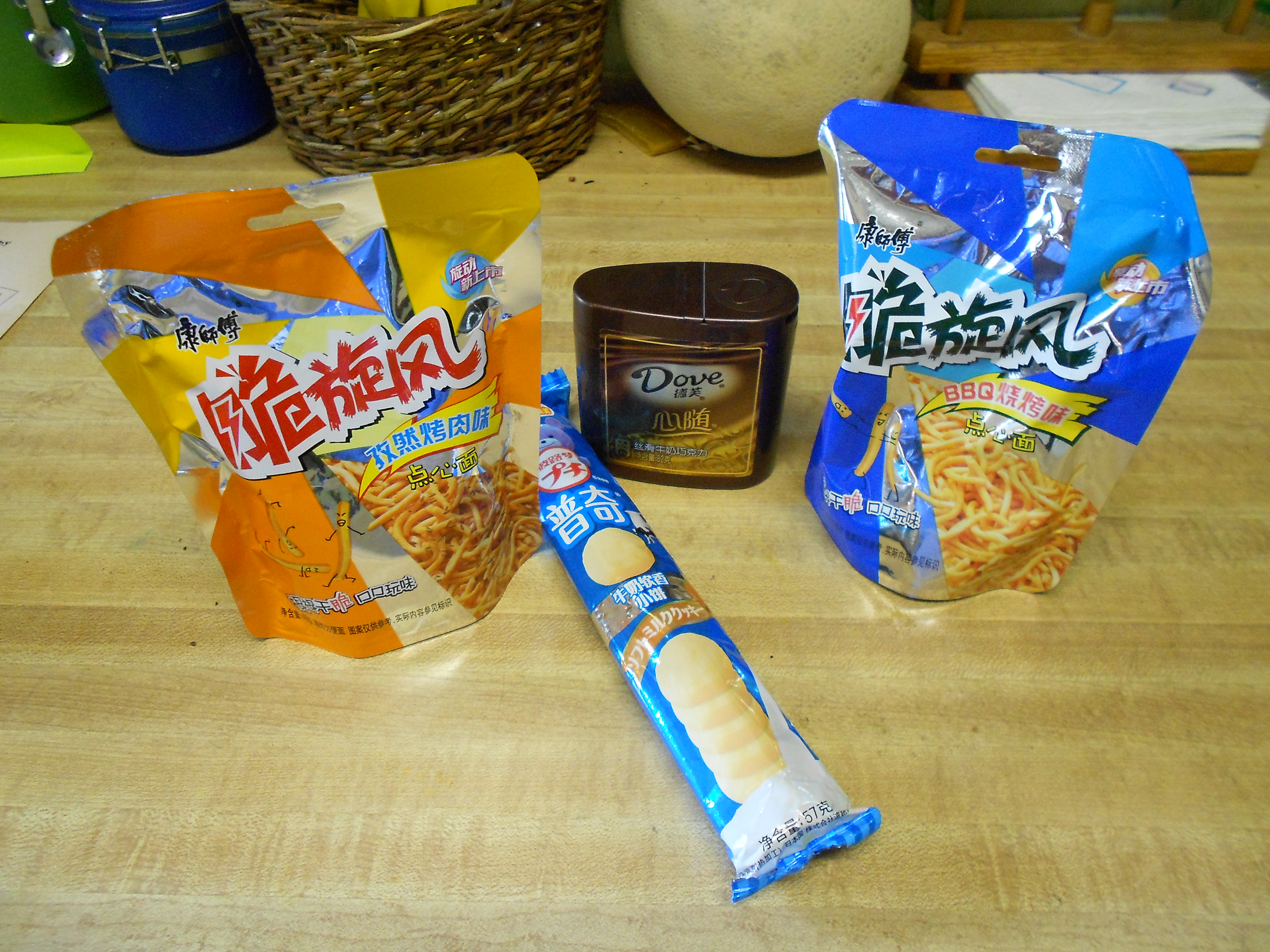
Butter cookies, Dove chocolates and crunchy noodle chips: Just a few modern goodies that have overtaken young people's traditional diets.

Butter cookies, Dove chocolates and crunchy noodle chips: Just a few modern, unhealthy  goodies that have overtaken young people’s traditional diets.

The August edition of National  Geographic has a very frightening, eye-opening, extensive article entitled “Sugar: Why We Can’t Resist It” which points out just how prevalent this condition has become in the world.  One paragraph (p. 96) reports:  Why in 1980 did 153 million people in the States have diabetes and now we’re up to 347 million?  The culprit:  Sugar.

While Mrs. River, our president and Jalin’s mom most likely didn’t get diabetes due to sugar overload, I can see it easily happening in the country’s younger generation, especially the kids.

It was great when China opened up to the outside world in the early 80’s, but the open-door policy did bring a huge negative change to the country, namely in people’s diets.

In downtown Luzhou, our McDonalds always has a long line for ice-cream cones, served from this street-side walk-up window.

In downtown Luzhou, our McDonalds always has a long line for ice-cream cones, served from this street-side walk-up window.

All those fast-food chain restaurants, food and drink products from America and other countries seized China by storm.  Walking in any grocery store now yields aisles full of chocolates (Dove, Nestle, Hershey’s, Cadburys), soft drinks and juices (Fanta, Coke, Pepsi, Sprite, Minutemaid and tons of sugar-filled Chinese brands as well), kids’ single servings of sweetened, flavored pure milk products (strawberry, chocolate, vanilla, apple, melon), cookies galore, and a huge variety of  ice-cream bars not to mention all the sugary breads and cakes that have overtaken all the bakeries.

Ah, those delicious, wonderful bakeries!

Years ago, bread was traditionally steamed mantou, both plain and lightly sweetened. Now European style bakeries which cater to Chinese tastes have overtaken all shopping districts.  Bakeries can be found on every street selling to the masses sugar-laden buttery sponge cakes, crunchy cookies and fluffy bread buns or loaves. In fact, the breakfast of many school kids, including my college students, consists of a piece of yellow sponge cake and a carton of sweetened milk picked up on the way to early morning classes.

It used to be a hard-boiled egg and a plain mantou.
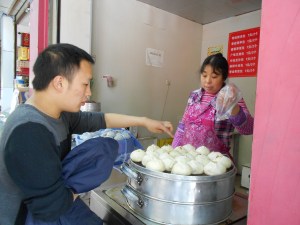
My former student, Ji Ke, still enjoys his breakfast mantou, bought from local sellers.

My former student, Ji Ke, still enjoys his breakfast mantou, bought from local sellers.

Diabetic Research Findings

In America, the American Diabetes Association states that in the US, 1 out of 10 people have diabetes, a total of 25.8 million, Type 1 and 2 both included.  Of that number, 18.8 have been diagnosed and 7 million most likely undiagnosed.  Not included are the 79 million categorized as pre-diabetic.

A United Kingdom’s website (Diabetes.co.uk, reporting on the global diabetes community) stated that an estimated 1 out of 10 people in China have diabetes (Type 1 or 2) while in the UK, it’s 1 out of 20.

China is likewise thought to have surpassed India with the highest number of diabetes reported within a highly populated country.  Also mentioned was that Type 2 was rarely seen a decade ago in China.  Now is a different story, with numbers having tripled according to experts.  This seems to be somewhat proven in my own encounters with friends.

In fact, 20 years ago, when I first came to China, no one even knew the disease’ name in Chinese.  Now tang niao bing is known by everyone, even the young kids I meet and the poorer, less educated people from the countryside.

Numbers Not 100% Accurate, But Alarming

According to most experts, it’s hard to estimate just how many have diabetes in the country because many people go undiagnosed.  A preliminary study conducted in China by the International Diabetes Federation found the number of diabetics has risen in excess of 92 million.

The certain thing is that diabetes in China is becoming dangerously high.

One of the major suppliers of diabetic medications in China is the US pharmaceutical company, Merck, whose business has increased astronomically in China.

“China has, unfortunately, become the world’s capital for diabetes,” said Michael Rosenblatt, Merck’s chief medical officer, in an Oct. 25 interview in Shanghai.  “The government is starting to pay more attention a this is the beginning of a huge problem, both health and economic.”

My Gifts Brought Back to Chinese Friends Are Changing

         In the past, I used to bring chocolates and American goodies to my Chinese friends after visits to the States.  These were one of the few things that were not labeled “Made in China” and were considered unique.

Not any more, especially as almost all of my former candy presents can now be purchased in any Chinese grocery store.

Now I focus more upon sale-item clothing, skin care products, jewelry, multi-vitamins (very expensive in China, and often fakes) or small local items.  They last longer and can be kept as a memento of their foreign friend, Connie.

Hard to hold on to an American Snicker bar for 20 years but not so for my hometown’s name and logo emblazoned on a T-shirt or a mug.  Those kind of gifts are more health-friendly, and certainly more appreciated.

And having said that, it’s about time for me to begin  that gift shopping already.  With just one week to go before my return to China, it’s always best to get a head start.

From Illinois, as always, here’s wishing you Ping An (peace), and good health, for your day.

Posted in Uncategorized | Leave a comment

From Smalltown Marshall: “The Fair’s In Town!”

Last year while in America, I just missed our county fair which every summer stays for a week at our county fairgrounds located here in Marshall.

When I was kid, this was the big summer event, filled with specialty food stands and crazy amusement rides that had your head spinning and your stomach churning after each dizzying spin.

Numerous organizations had their booths out, selling raffle tickets for their causes.  Displays of locals’ artwork, homemade baked goods, crafts and collections graced tables inside the fairgrounds’ meeting hall.  The fair queen contest, cattle judging events, horse racing and the demolition derby (the closing attraction of the fair) brought out the crowds in droves.

Today’s county fair is a bit different than when I was a kid.  It doesn’t bring quite the novelty or attendance that it once did but our Clark County council is still determined to host this carnival every year.  And we area residents are certainly glad of it.

The 2013 Clark County Fair

Democrat Party at Fair 048

         I haven’t been to our local fair in years so this time around, I made sure to enjoy several visits. Family Attractions from Georgia was the city’s hired group to bring us our yearly entertainment.  A new system of one $5.00 entrance fee per person gave everyone free rides rather than pay for each ride individually. This caused longer lines than usual for the Ferris wheel and the wilder, up-side-down tumbles of other mechanical entertainment wonders and brought out a higher attendance than usual.

$5.00 a person allowed anyone to enjoy as many rides as wanted, including parents with their kids.

$5.00 a person allowed anyone to enjoy as many rides as wanted, including parents with their kids.

A short-term pass, given at the gate, would allow an attendee 30 minutes to pick up food or visit booths within that time limit.  When returning, the person’s $5.00 was reimbursed.  This definitely enticed us older folk, not at all hyped on amusement rides, to quickly slip in and indulge in all those fattening goodies we most likely wouldn’t have if not for that 30-minute pass.

We can blame some conniving fair committee member for that sly, clever maneuver.

Ice-cream waffle cones, cheesy fries, pizza slices, cotton candy, home-dipped corndogs, pork burgers --- Walking this carnival roadway will lead to several unwanted pounds.

Ice-cream waffle cones, cheesy fries, pizza slices, cotton candy, home-dipped corndogs, pork burgers — Walking this carnival roadway will lead to several unwanted pounds.

My Dad’s Donkeys on Display

Democrat Party at Fair 043

          I took the 30-minute pass on several occasions to visit the Clark County Democrat’s table set-up.  My father’s collection of political donkeys and pins was displayed as an eye-catcher for people to stop by and see what the Democrats have been up to.

Just a few of my dad's many Democrat items put on display at the fair.

Just a few of my dad’s many Democrat items put on display at the fair.

Our Republican Party was in the space next door, showing the crowds that  many in our community are committed to government involvement at all levels, no matter what philosophies or party affiliations they might have.

Democracy in action!

On the first day of the fair, I drove my dad over to make sure his donkeys were positioned just right on the table and to check out how things were going.  He was very pleased to see all his items neatly lined up, carefully arranged and positioned for the public to enjoy.

My dad, Bill, making sure his donkeys are in proper displaying order.

My dad, Bill, making sure his donkeys are in proper displaying order.

At the fair together, my dad and I.

At the fair together, my dad and I pose for a father-daughter photo.

An Evening Stroll to the Fair

2013 fair pictures 008 

The last night of the fair, my mom and I walked our Chinese immigrant rescue dog, Xiao Lao-lao (Little Old-old), down to the fair to let him enjoy our town’s festivities.  We stayed outside the carnival area, mostly because our diminutive canine wasn’t too keen on sidestepping so many people, but I did get some nice photos of the lit rides from a distance.

Seeing the sparkling, grandly shining, multi-colored stretch of festival lights before us brought back just as much excitement as when I was a kid, in the 1970s, and when my mom was a youngster, in the 1930s.  Nice to know the child-like spirit of fair week is still present in both of us.  I’m sure it will remain so for years to come.

My mom and Lao-lao, dazzled by the night life of fair week.

My mom and Lao-lao, dazzled by the last night of fair week.

From smalltown Marshall, Illinois, here’s wishing you Ping An (Peace) for your own community’s fair week, whenever or wherever that may be.

Posted in A Visit Home to America, Smalltown American Life | 2 Comments

A Recycling Chinese Wonder: Mr. and Mrs. Old Man River

           Mr. and Mrs. Old Man River are my 1st floor, downstairs neighbors.

Of course, that’s not their real names.  It’s really Mr. Zhen, age 84, and his wife, Ms. Wu, age 60. (In China, the wife keeps her maiden name.  The children take the name of their father.)  But as a term of endearment, I use Old Man River, or River for short.

I’ve known this elderly couple for over 7 years.  When I first came to the school, I lived directly above them.  Their daughter is a teacher at our college and since these are the faculty apartments, they were all living there together. When I first arrived, there were 5 of them in their dingy 3-room apartment:  Mr. and Mrs. River, their adult daughter, her 4-year-old son and the father. A very tight squeeze but Chinese are used to these kind of living arrangements, including the shabby conditions of these on-campus living conditions.  Mold growing from the dank concrete walls, leaking toilets, wires dangling from ceilings – not very conducive to healthy living.

Now, it’s just Mr. and Mrs. River living there together.

Their daughter and her family privately bought a brand new, fancy apartment off-campus which they enjoy to the fullest.  They invited the grandparents to live with them but they refused.   This is their home along the Yangtze River.  To leave this place  and live clear across town without easy access to their friends or familiar surroundings is not to their liking.

And so they have remained in the tiny, dark school apartment with frequent visits from their grandson and daughter, usually on the weekends.

A Happy Competition:  Recycling

            What keeps these two busy?

Well, both the Rivers are experts at collecting recyclable materials.

This is one of  the greatest pastimes of many elderly all across China.  Finding plastic bottles, glass, cardboard, paper, rubber and Styrofoam, collected from trash heaps, trash cans and directly off the ground, is a great way to make money.  Recycling venders for all sorts of materials  make weekly or monthly pick-ups in their trucks after being called by locals.  They weigh the carefully packed items and pay X amount per pound, depending on what the current rate is for what material.  University campuses tend to have the most customers for this kind of money-making project, mostly because there is a wealth of recyclables to be found due to student consumption of bottled drinks not to mention discarded books and papers, especially at the end of the school year.

So as on any Chinese campus, we have a very healthy competition going between the elderly on who can collect the most stuff to make the most amount of money.

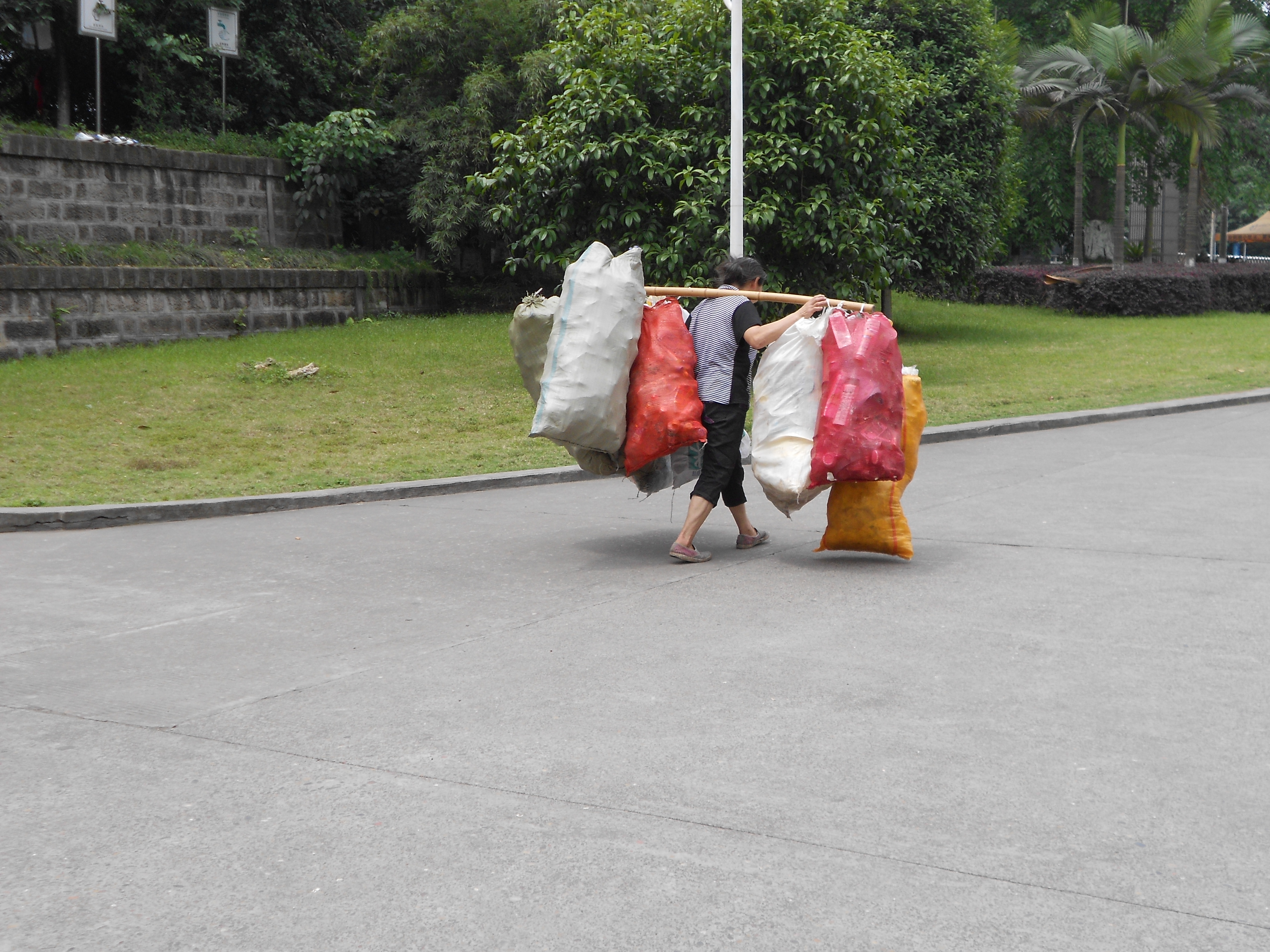
In competition with the Rivers, here is one of our campus elderly hauling their recyclables for pick-up at the front gate.

In competition with the Rivers, here is one of our campus elderly hauling their recyclables for pick-up at the front gate.

Early Morning Ventures Provide Fruitful Findings

           I would have to say Old Man River and his wife provide very stiff competition for these recycling “contests.”  They are both up early morning (6 a.m.)  and quite late at night (10 p.m.) to get the best selections from what the campus dumpsters and grounds have to offer.  Early morning is the best since students stay up late, strolling around the campus at night while eating snacks and enjoying drinks, the remains of which are left strewn everywhere.   Students in China are horrible at throwing things away in the proper receptacles.  They just don’t do it.  They are used to tossing their trash immediately on the floor of classrooms, dormitory hallways or outside on sidewalks and grassy areas.  Education on environmental responsibility is growing in China but is still a new concept for many in the countryside.  Their feeling is it’s the duty of workers to pick up trash so why should they bother lending a hand?  This of course leaves our recycling clans quite happy as they can spot discarded items a mile away without digging through the filthy trash cans.  Thus early morning ventures, which Mr. and Mrs. River participate in daily, are very fruitful.

Old Man River’s Recycling Heaps Bring Great Rewards

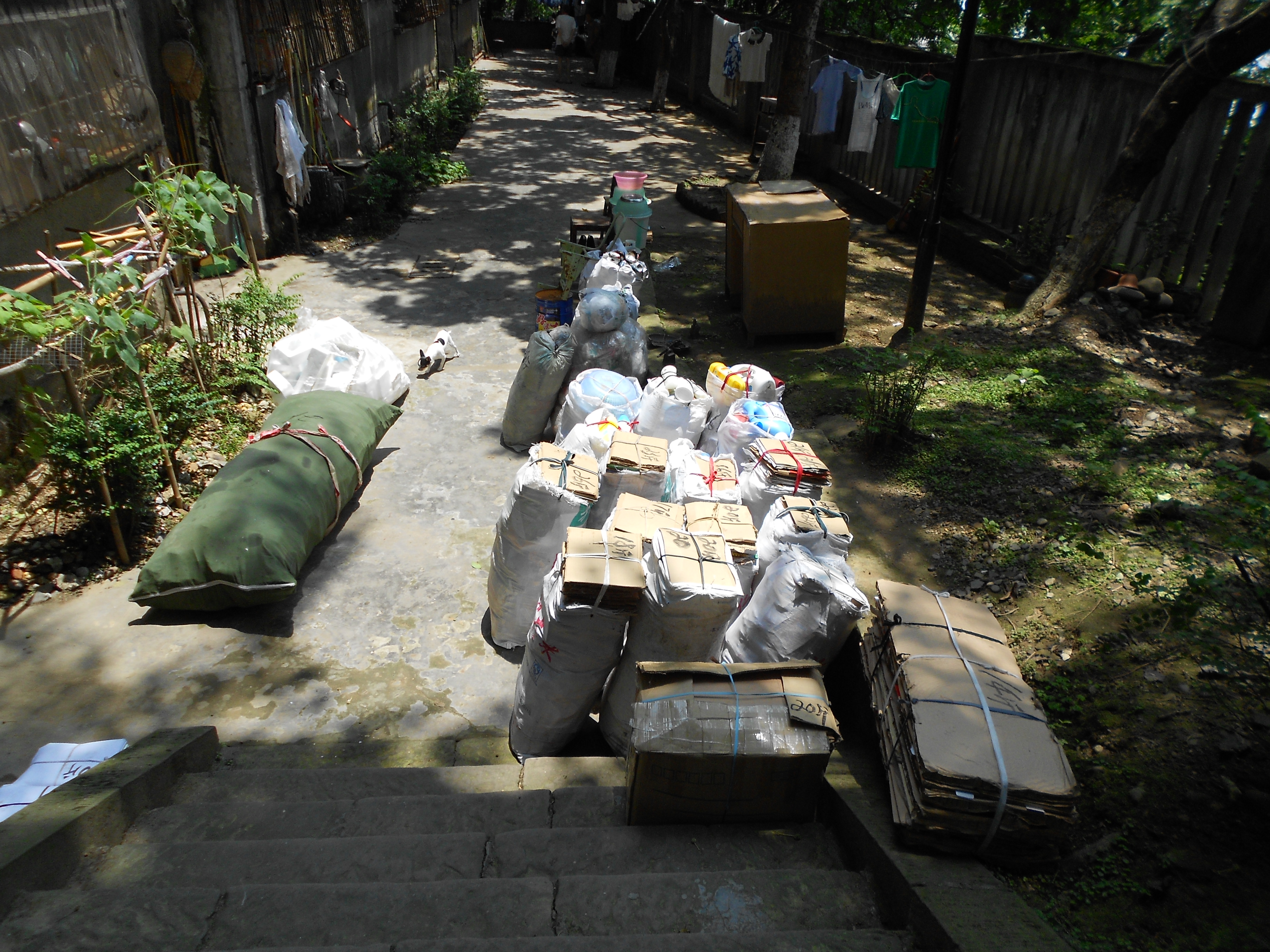
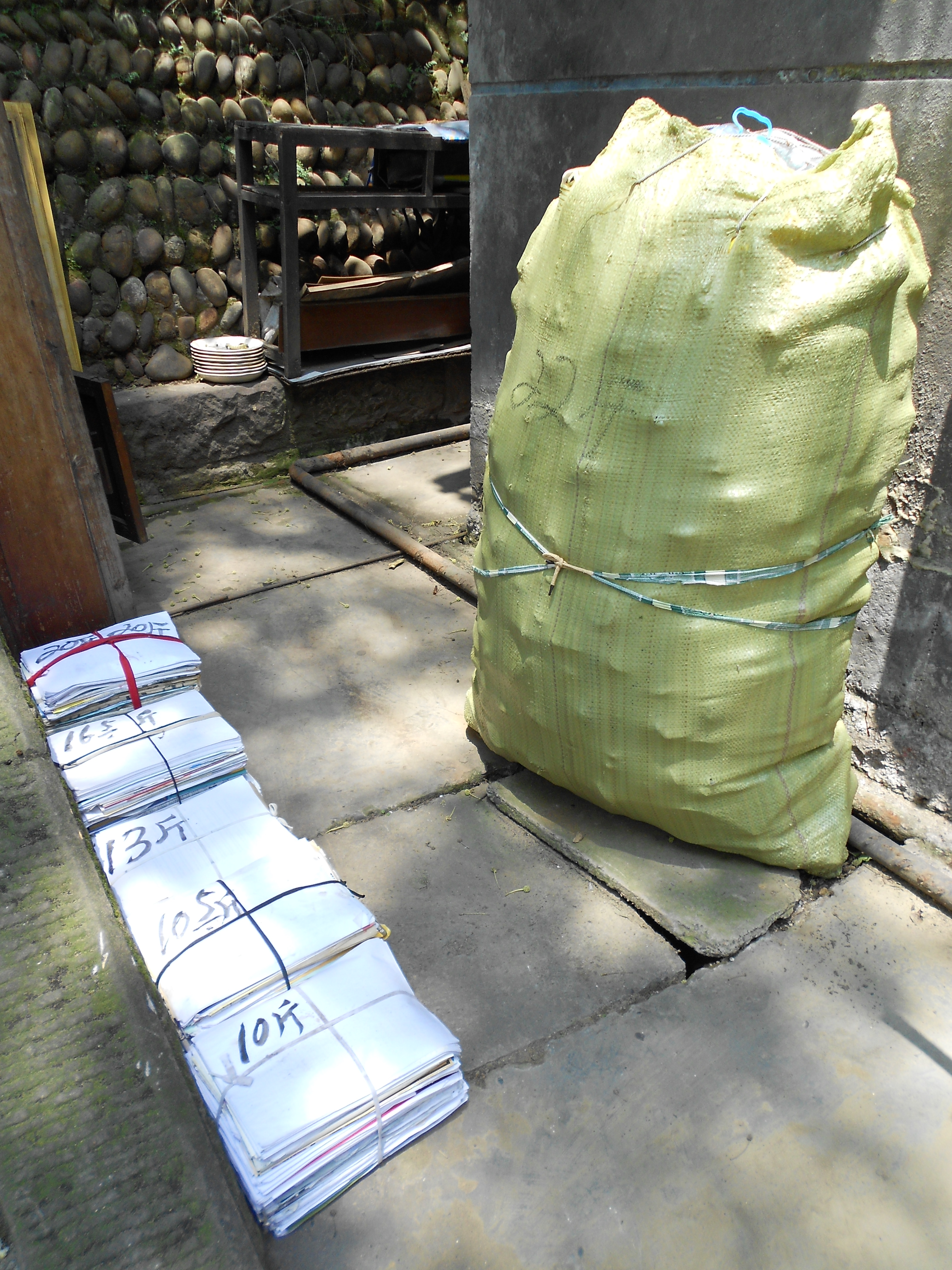
Two weeks of collecting result in quite a hefty amount of separated recyclables.

Two weeks of collecting result in quite a hefty amount of separated recyclables.

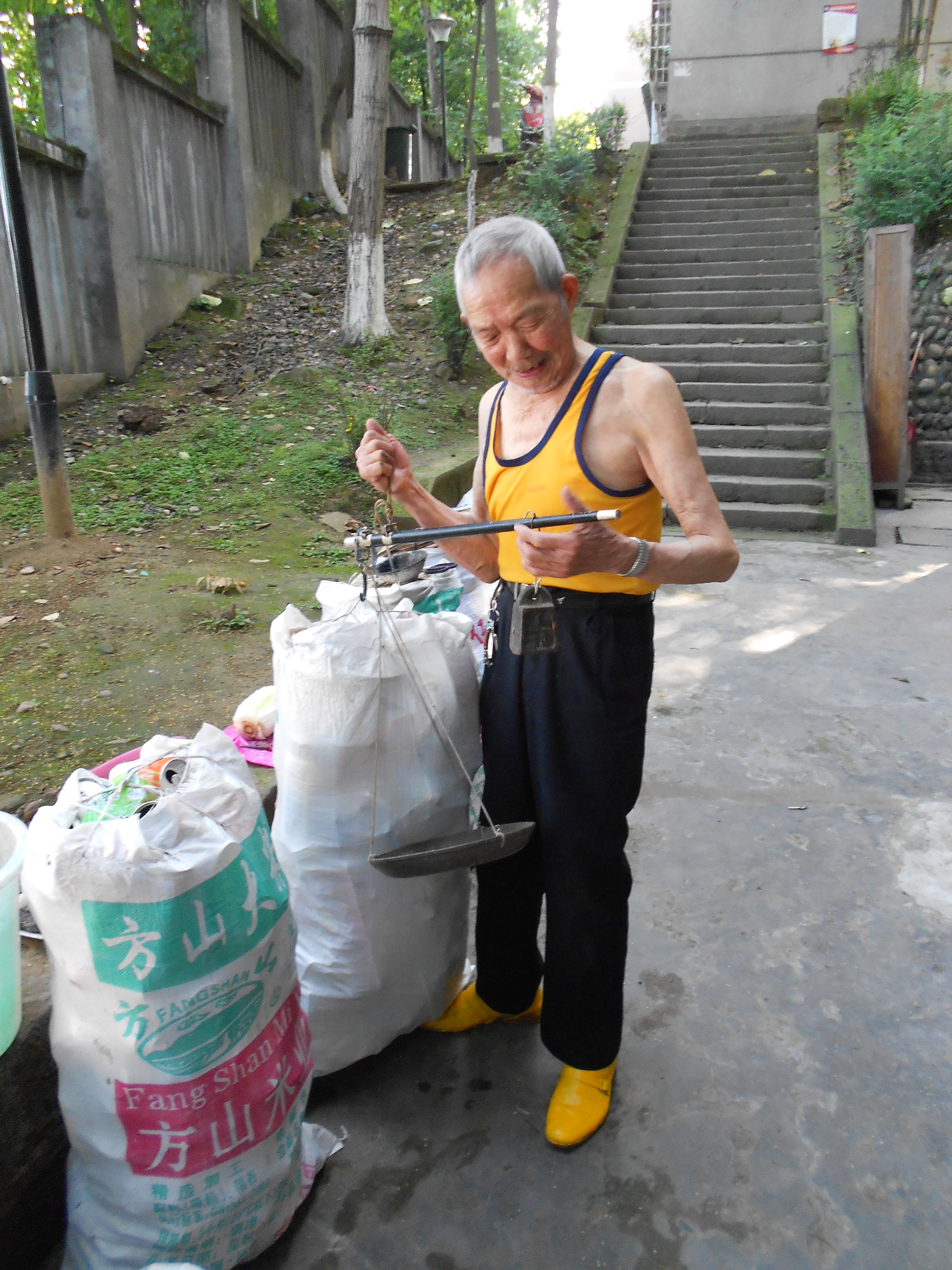
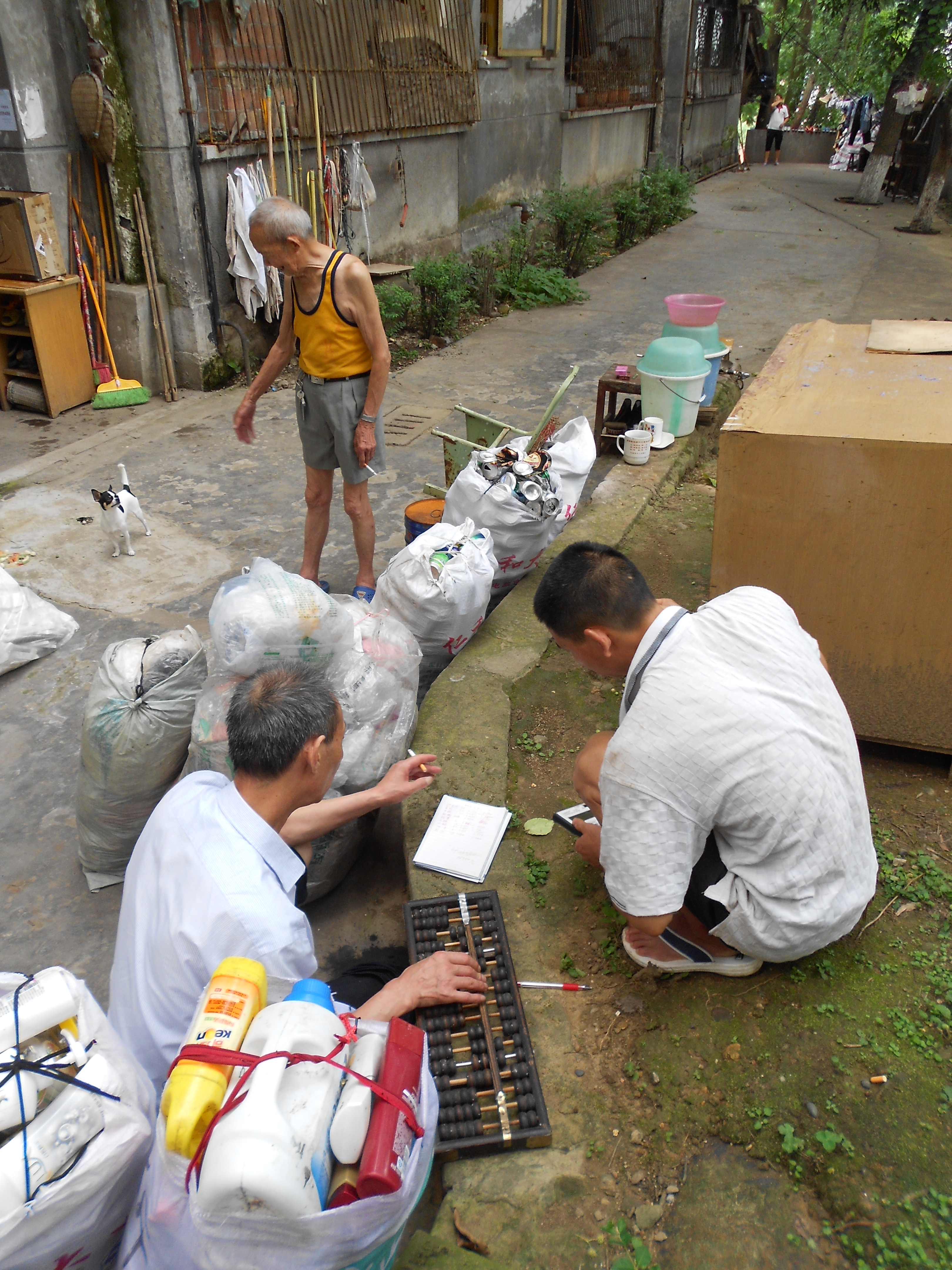
         Before leaving for the Luzhou airport a few weeks ago, Mr. River had compiled all his recyclables in neat, tidy piles outside our building.  He was busy with his Chinese calligraphy brush, dipped in dark ink, marking the stacks with the poundage after weighing them using his traditional Chinese scales.  He carefully recorded on lined paper each category on a piece of paper, the amount designated per pound, his weighed amount and the price he should be paid.

After packaging up everything, Mr. River weighs his items using a traditional Chinese scale.

After packaging up everything, Mr. River weighs his items using a traditional Chinese scale.

Mr. River carefully writes the weight with his calligraphy brush on every packed up item.

Mr. River carefully writes the weight with his calligraphy brush on every packed up item.

Cardboard:  18 pounds!

Cardboard: 18 pounds!

As I dragged my suitcase up the outside steps of our building on my journey to the States, the recycle truck was already parked in front of me. The driver was busy reweighing and adding up my neighbors’ amounts while the two of them looked on to make sure the numbers were accurate.

Our recycling guy and his driver both sort out the amounts, reweighing and recalculating, while Mr. River looks on.

Our recycling guy and his driver both sort out the amounts, reweighing and recalculating, while Mr. River looks on.


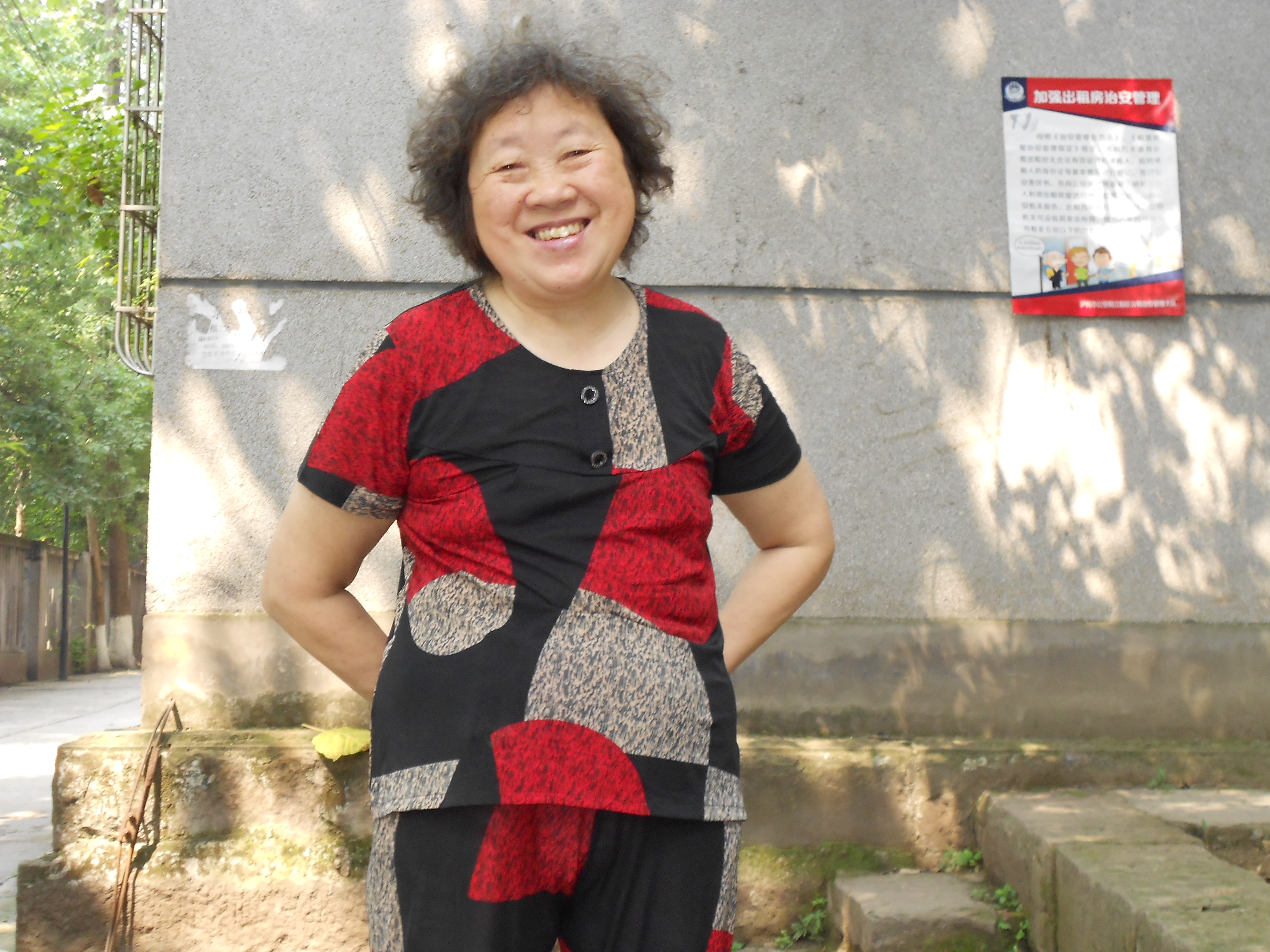
Mrs. River (Ms. Wu) helps her husband load up the recycle truck after everything is in proper order.

Mrs. River (Ms. Wu) helps her husband load up the recycle truck after everything is in proper order.

Loading up the recycle truck takes some time and energy on everyone's part.

Loading up the recycle truck takes some time and energy on everyone’s part.

Looking down on all the collecting the couple had accomplished in 2 weeks was quite inspiring.  One of those bagged piles could be attributed to me and my Diet Coke fetish.  I always make sure the Rivers get my plastic Coke bottles and cans to add to their stash.  This is my way of contributing a few dollars to their bank account every so often, something they are always appreciative of.

In this bag, my plastic Diet Coke bottles add to this 22 pound sack.  I'm more than happy to donate to the Rivers'  recycling fund.

In this bag, my plastic Diet Coke bottles add to this 22 pound sack. I’m more than happy to donate to the Rivers’ recycling fund.

I did take a peek at the total this time around:  269.30 yuan ($44.88).

Mr. River's carefully compiled and itemized list, seen here, was correct.

Mr. River’s carefully compiled and itemized list, seen here, was correct.

Not at all a bad haul for such diligence.

My Small Town’s Recycling Fever Falls Flat

         Back in the States, I watch as so many in my small town set out huge garbage bags full of paper, glass, plastics and cardboard to be tossed into our town’s landfill.

Shameful!

My mother refuses to add to that heap so we have a 4-station recycling area set up in the garage.  When her small bins get full, she loads everything into the car and drives over to the nearby city (Terre Haute, 15 miles away) where Indiana State University has a wonderful recycling center for the community to drop off all their materials.  When I’m at home, we usually make at least 2 runs to the center before going out to eat at a local restaurant

There is always a great feeling of accomplishment after emptying all these items into their separate bins, seeing all that would have been polluting the planet had we not bothered.

I can only imagine this is the same satisfaction my neighbors must get after every pick-up from the recycle guy.  Not only are they making our campus more beautiful by their efforts, not to mention getting plenty of exercise in doing so, but bringing in spending money for themselves.

Sure, dependence on adult children to supply their monetary needs is very acceptable in this culture but it’s still nice to know that, at ages 84 and 60, their ingenious self-sufficiency is still hard at work in their lives.

And on that last note, here’s wishing you Ping Ahn (Peace) for your day, with a gentle nudge aimed in the recycling direction for those not inclined to do so. (Hint-hint!)


Posted in Uncategorized | 1 Comment

A Chinese City in Mourning: Summer Pool Fun Turns Tragic

I’ve already written about my Chinese sister, Li Xiaolian (Cathy) who is an administrator at the Luzhou Police College.

Her college is a specialty school that trains young people who are wanting to go into police work, whether that’s a basic cop on the beat or a specialized investigator.  It’s a 4-year college, with students from all over China, and  demands strict physical requirements from those enrolled.  Formal dress uniform is required at all times during their education at the school, a bit like being in the military.  Even Cathy, as an administrator, has to wear a police uniform while on campus.  She’s even been trained in firing a gun, although she is not a police officer herself nor does her major (English education) have the slightest connection to such actions.  That’s just a school requirement for all staff,  instructors and admininstrators alike.

Moving on: News  from her school has shocked the entire city of 3 million for the past 2 weeks.

A death at their swimming pool.

What Happened?  Still Unclear

The Police College opens their campus and pool doors to the public after students have left for their summer break.  It’s an outdoor, 50 meter Olympic sized pool, one used for training the future officers how to swim as part of their training course.  In the winter, it’s closed and is only in use during warmer weather.  The last time I saw it was in December, an empty pit filled with leaves but still a very impressive sports’ venue to behold.

A few  weeks ago, after a majority of the students had taken off for home, the pool  opened for their yearly public swimming times.  In our roasting heat, the place was packed full, I heard.

Then tragedy struck–a drowning.

Before I left for America last Thursday, Cathy still didn’t have all the details, although her involvement in this has been meeting after meeting held by school officials discussing the severity of the situation.  The sketchy story is that one of their Police College students, age 19 and quite tall, was found on the bottom of the pool right before closing time at the  shallow end.  The pool staff tried to resuscitate him but to no avail.,

The school officials have begged the parents for an autopsy but they have refused.  Autopsies are not customary in China.  No Chinese parent wants their child cut into and the body desecrated.  That is just not the Chinese way.

Without evidence of exactly what happened, this places the school in a very precarious position.  Was the boy physically fit or not?  Did he hit his head and drowned?  Did something else happen to him?

Without anything solid, the school is fully at fault.  Compensation will be paid to the parents, which is again a Chinese custom in a death of this sort.  How much will be paid is another thing, to be discussed by leaders and negotiators on the parents’ side.

All of Luzhou Buzzing

            Such tragic news for a small city, where this is  the first pool death they’ve ever had.  It would be for any community, even my own.  I am, however,  a little surprised why more water deaths haven’t happened here.

Professional lifeguards are not required at many pools.  Mostly, the pool manager and his staff (some of which might not be able to  swim well) just sit around on the deck, smoking cigarettes, talking and playing with their cellphones.  Carefully watching the hundreds of people  in the pool is not a top priority.

And in some instances,  even seeing the people in the pool is a problem.

Quite a few Chinese pools are just water without any chlorine or chemicals for sanitation.  After the initial fill, the water slowly turns a dark, muddy, green and brown after a weeks of use.  It remains like that for the rest of the summer.  Seeing the bottom of the pool, must less your hand in front of your face when underwater, is impossible.

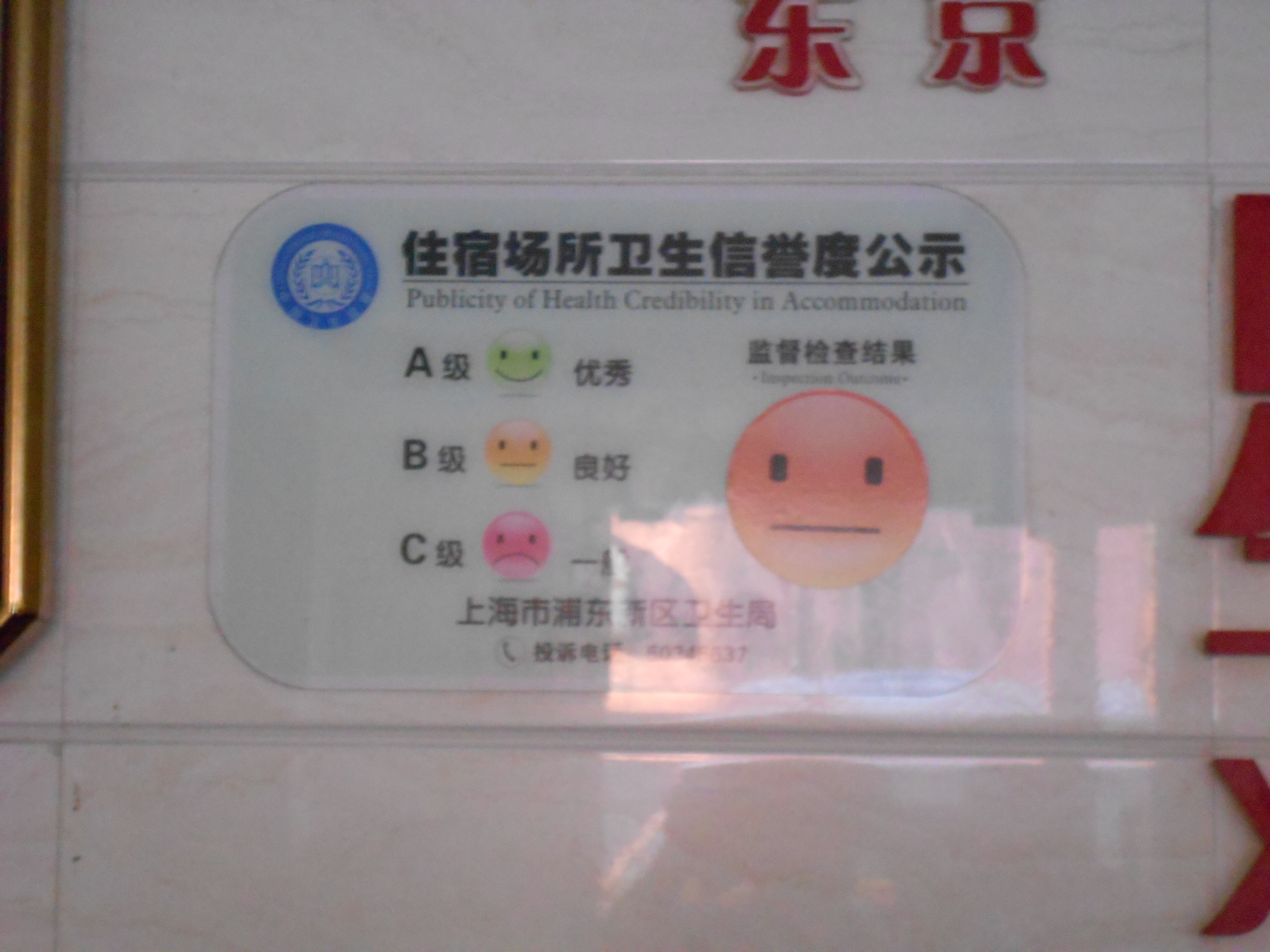
Granted, every city has a government sanctioned sanitation detail that goes around and inspects public-frequented areas.  This includes hotels, restaurants and other community used places, such as pools.   They are given an inspection and a sign which states the cleanliness.  This sign must then be prominently displayed for all patrons to see.

An example of China's sanitation inspection sign. This was my overnight hotel in Shanghai, which received a "B" (so-so) rating.

An example of China’s sanitation inspection sign. This was my overnight hotel in Shanghai, which received a “B” (so-so) rating.

My Number 6 Middle School Pool has an “A” rank and a smiley face, meaning they are in good standing.  Many other pools don’t get such a report and still others aren’t even inspected.

The Number 6 Middle School pool gets a much-deserved "A" rating.

The Number 6 Middle School pool gets a much-deserved “A” rating.

Just depends on the city you are living in how diligently followed such requirements are.

My guess is that after this recent tragedy, which was on everyone’s number one conversation list, even up to my flight out of Luzhou, the city government will start to crack down more on pool inspections and safety.  I noticed before leaving the city for my home country, our Number 6 Middle School staff increased their  attentiveness, circulating more about the deck to make sure people were still afloat.

No, they aren’t professional lifeguards, either, but at least they became more watchful than before.

The pool deck staff, while not professional lifeguards, have been a bit more attentive than usual.

The pool deck staff, while not professional lifeguards, have been a bit more attentive than usual.

Back In the States

After landing yesterday in the States, I’m looking forward to my own swims early morning at our local outdoor pool.  No concerns about sanitation or drownings here for the summer, especially as our temps have been so cool, with rainstorms at every turn. The staff told me few have come to enjoy the water.  Mostly, the pool has remained closed and quiet, unlike last summer when daily 90-degrees and bright sunshine had us all sweltering and gleefully diving into our recreational facility with gratitude.

And on that note, I’ll close this entry.  When I fully recuperate from jetlag, I’ll post more stories and pictures to keep everyone updated on happenings from this end.

Here’s sending you Ping An (Peace) for your week!


Posted in From Along the Yangtze, Luzhou: Yangtze Rivertown Stories, Tales from Sichuan's Yangtze Rivertown, Luzhou | 1 Comment

Four-legged Discards: What Chinese College Kids Leave Behind

        I have returned after a full week in Chengdu to a campus that is oddly quiet. Both our Luzhou college students and Qing Hai University students have fled, returning to their homes for the summer break.
            Along with their departure came loads of unwanted stuff, dumped into hallways, stuffed into trash cans or left in rooms. Unlike American university dormitories, check-out is a quick affair without cleaning up behind oneself.
                Mostly, students just take off.
               Bedding, cleaning supplies, rejected clothes, broken suitcases, used books and papers are piled high wherever students please.
              The mess is unbelievable but the campus workers manage to get rid of it all within a few days. They even are quite happy to find things of use, such as plastic buckets and basins, or recyclable materials which will bring them money.
              Other discards are more heartbreaking, meaning the 4-legged variety.

Pets Not Allowed! (But Who’s Stopping It?)

          It never fails that during the school year, students in the dorms head out to the local outdoor pet market and, for a few dollars, end up bringing home puppies, kittens or baby rabbits to raise in their rooms. These are forbidden by the school but secretly kept around despite the dormitory monitors’ watchful eyes.
            With 6 to 8 people in a room, usually the dorm mates either stick together in taking care of the little one or someone complains, causes a fuss and out the animal goes. On other occasions, students wait until an extended holiday before stuffing the critter into a bag, sneaking it on the bus and heading home. They dump the animal on the parents and return at times to get another pet, only to repeat the same procedure when the next holiday comes around.
            Puppies are especially adored. They are tiny and cute, following their owners around with total commitment and endless love.
            Whining, peeing, barking and destroying dormitory stuff is never an issue until it happens on a regular basis. Then dorm mates tend to get a little annoyed and the dormitory monitors, who were once tolerant of such things, start to wave around their authority more.
            The animal must go.
            Puppies that grow into bigger puppies are yet another problem. Most of the pet market canines are mutts of undetermined origin. Tiny at first but not so tiny after several months.

Adorable DP: A Student Reject

           And so it was that when our Luzhou students took off 3 weeks ago, DP (Dormitory Puppy) wound up outside Girls’ Dormitory 3, near where I live. He was obviously thrown out by someone who didn’t want to deal with taking a dog home with them. Instead, they just left him outside to fend for himself.
             He was a rather large puppy, a mix of German Shepherd and something else. Long, gangly legs made his romps especially funny to watch. He began his antics by following track runners early morning around the sports field before retiring to the entrance of Dormitory 3. There he sat and waited for his owner to return. He would eye every girl who exited or entered the building, sometimes standing to wag his tail at a passerby who would stop to pet him. Other than that, no one paid any attention to him.

DP (center front) on the sports' field playing with her Chi friend.

DP (center front) on the sports’ field playing with his Chi friend.

One Very Sick Pup

         I watched DP for 3 days as more and more students dragged their luggage to the front gate, excited to be going home. He flopped on the concrete. He wandered the dorm entranceway. He sniffed about the grounds.
         And then, he got sick.
         DP’s energy faded fast from racing around the sports field to just lying on the ground, not wanting to move or eat. He was so ill that he couldn’t stand up. Not even a pet from me would enlist his usual unfailing tail wag.
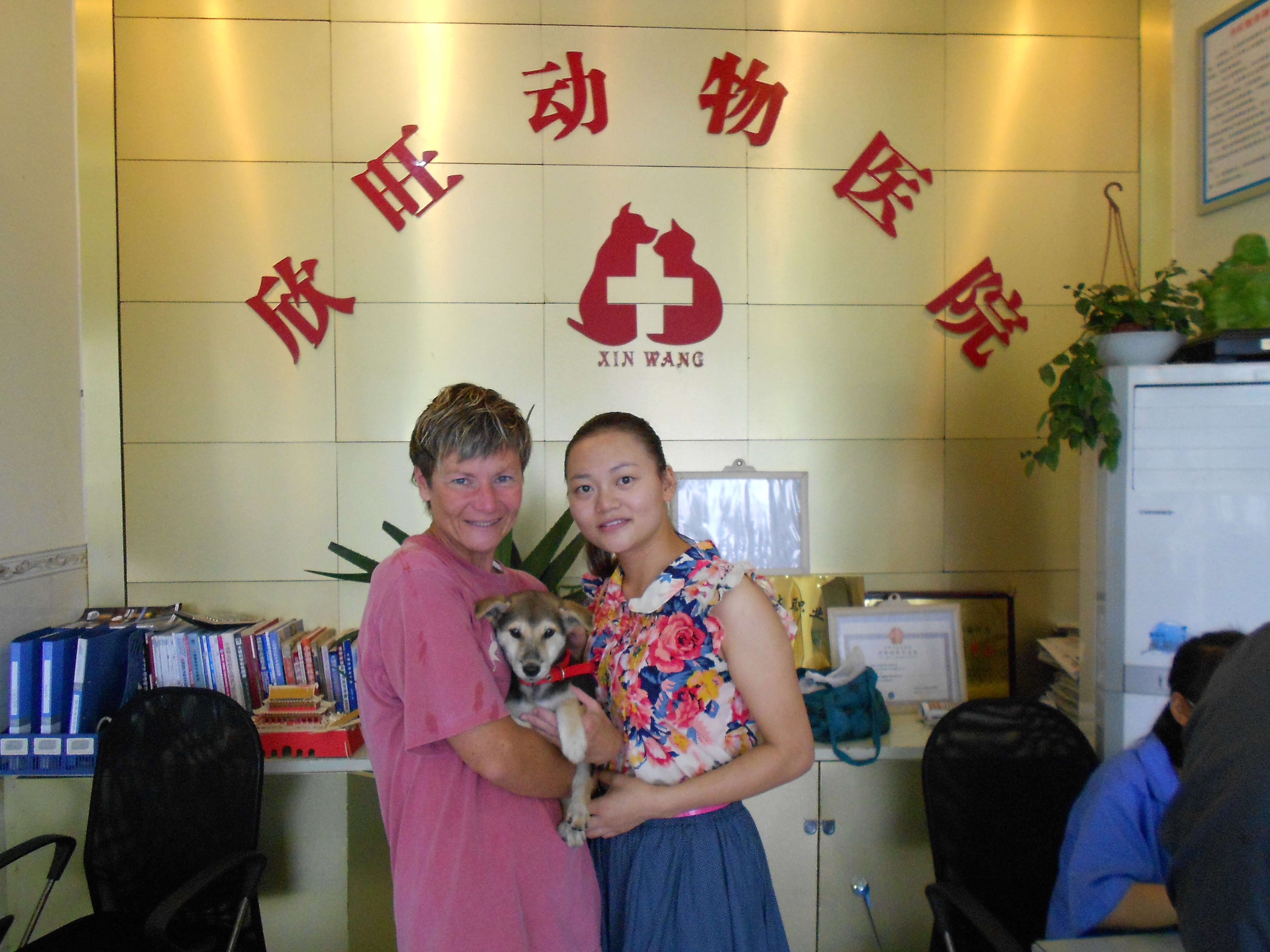
         Being the kind of person I am, I couldn’t watch the poor thing die. I bundled him up in my arms, taxied to Dr. Mao, Dr. Huang and Dr. Li’s clinic (featured in a previous blog) and there you have it . . . Connie to the rescue again!

The Verdict

          My guess as to his illness was either distemper, which would immediately demand euthanizing, or the parvo virus, which is treatable if the puppy is taken to the vet’s quickly enough. Both of these are major canine killers in any country but especially in China since very few vaccinate their pets. (Chinese are still new to pet ownership and don’t understand the importance of such things.)
            After the initial testing, DP had parvo and it wasn’t good. It was quite progressed. Puppies can die within 24 hours of contracting this virus and our little guy had already been sick for 3 days.
             Dr. Huang wasn’t very optimistic. I debated having him put to sleep but after consulting by phone with Little Flower’s vet in Chengdu, we decided to give the little guy 3 days. If he couldn’t recuperate by then, it was best to let him leave this world without suffering.

DP his first day at the clinic, getting his IV drip.  One very sick puppy. (The cone is because of vomiting)

DP his first day at the clinic, getting his IV drip. One very sick puppy. (The cone is because of vomiting)

Day 1, Day 2, and Day 3: Anxious Times

            When I left DP on a Friday, he was being fitted with his IV apparatus and started on the first day of treatment. A full bottle of fluids along with his meds, not to mention 2 shots, were immediately given.
            Saturday, I returned to visit him as he lay in his cage. He registered some recognition as to who I was with a tiny tail wag. I spent the hour sitting next to his cage, petting him while his eyes closed in comfort.
           Sunday, I came to find him standing in his cage, tail wagging and even a little bark to add.
          And by Monday, it was clear DP was going to survive.
          In fact, Monday had us walking outside with his new collar and leash I purchased from the pet store next to the clinic. He wasn’t in top, top form but he certainly was happy to be out and about. And I was certainly happy to see him that way.

What to Do With DP?

            Even if I could have a dog, DP’s future size would be a great hindrance to my living here in China. Larger dogs are difficult to travel with. They are also more feared than little dogs, meaning many Chinese wouldn’t want him near them, even when leashed. Dogs can also be lively and noisy, which causes trouble with neighbors, although DP was nothing of the sort. He has a very gentle, quiet disposition which would make him a perfect pet for anyone, even a family with kids.
          DP’s treatment lasted for 10 days.
          During that time, I discussed with our vets what to do with him. No one at my school wanted him and I wasn’t about to dump him onto the street after spending the time, emotional energy and money to get him better. We came to an arrangement that they would keep him until a home could be found.

DP Still In the Clinic’s Care
          I’ve been visiting DP every day at the clinic for a walk and some attention time. After my return from Chengdu, I noticed he is sizably bigger. This is going to be a very large dog.
          He is extremely smart, very gentle and loves flopping at your feet for pets. His first toys that I gave him have been a great hit. He especially likes the rope ball which he enjoys rolling around on the ground with and chasing after. His leash walking has greatly improved and he is very good about coming when called.
           In other words, he is a perfect starter dog for someone.

DP on his walk.  One happy dog!

DP on his walk. One happy dog!

DP and I on our daily walk near the animal hospital

A Lucky Break
           We did have a lucky break when a reporter for the local newspaper came to interview me at the clinic about DP. I told her the dog’s story and how he really needed a happy home. DP and I had our picture taken and the story ran in the paper over a week ago.
          Still no takers but at least there is a little publicity about his plight.

Me, DP and our reporter, Ms. Chen, after our interview.

Me, DP and our reporter, Ms. Chen, after our interview.

Leaving Tomorrow for America
           Tomorrow will probably be my last visit to our little friend until a month later, when I return to China for language study. I will be spending my summer holidays in Marshall, Illinois with my parents while applying for my student visa from the Chinese Embassy in Chicago.
            It is hard to leave DP by himself, in his cage at the clinic without our hour walks and happy play times. The vet assistants are busy taking care of the other animals. At least he has some toys to play with, which should keep him busy. His vaccinations are already paid for and will be given during my time away. He’ll be good to go in 6 weeks.
            I will just hope that when I return, someone will take interest in our big boy and want to give him a wonderful life.
           From Luzhou, China, here’s wishing you Ping An (Peace) for your day.
DP with her favorite toy. Let's hope someone wonderful adopts you.  (Who could resist that face?)

DP with his favorite toy. Let’s hope someone wonderful adopts you. (Who could resist that face?)

Posted in From Along the Yangtze, Luzhou: Yangtze Rivertown Stories, Travel | Leave a comment

Chengdu Apartment Hunting

              It’s Saturday morning and many of our Qing Hai students are off, dragging their luggage behind them, on their way home. They have a 3-1/2 hour bus trip to Chengdu, followed by a 26 hour train trip to Qing Hai’s capital city where many will transfer onward to get to their villages.
             And for me, it’s off to Chengdu to look for an apartment! My hope is to find something near where I was before, 5 years ago, in the same neighborhood.
            I will also be picking up my Sichuan University acceptance letter from the overseas’ student department. This will allow me to get my student visa, once I am back in the States in a few weeks. Applying for visas must be done in your home country, thus the return to America to get that taken care of.
            At present, the schedule is to return to Luzhou after Chengdu, fly off to America on July 18 and return August 19 to apply for my permanent student visa in Chengdu. Classes I heard begin on Sept. 15 but we are to be there early.
             I will not be reporting while in Chengdu as my website is blocked on other computers, thus this note until I return to Luzhou next week.

             Ping An (Peace), everyone! More news later on.

Posted in Luzhou: Yangtze Rivertown Stories | 1 Comment

My Chinese Sister, Li Xiaolian (Cathy)

         My Chinese sister, Li Xiaolian (Cathy), and I finally accomplished a 10-year goal: for the two of us to meet up in the pool together for me to give her a swimming lesson. We’ve talked about it for years but it wasn’t until this past Saturday morning that we finally succeeded.

Cathy and I finally make it for our first swimming lesson.

Cathy and I finally make it for our first swimming lesson.

          Seeing us giggling, speaking in English and splashing around in the water caused quite a stir among other pool patrons. They marveled at Cathy’s English and my skills at teaching strokes. We certainly made the most of that 10-year wait, the length of time our friendship began in 1993 with my arrival in Luzhou.

Our Friendship

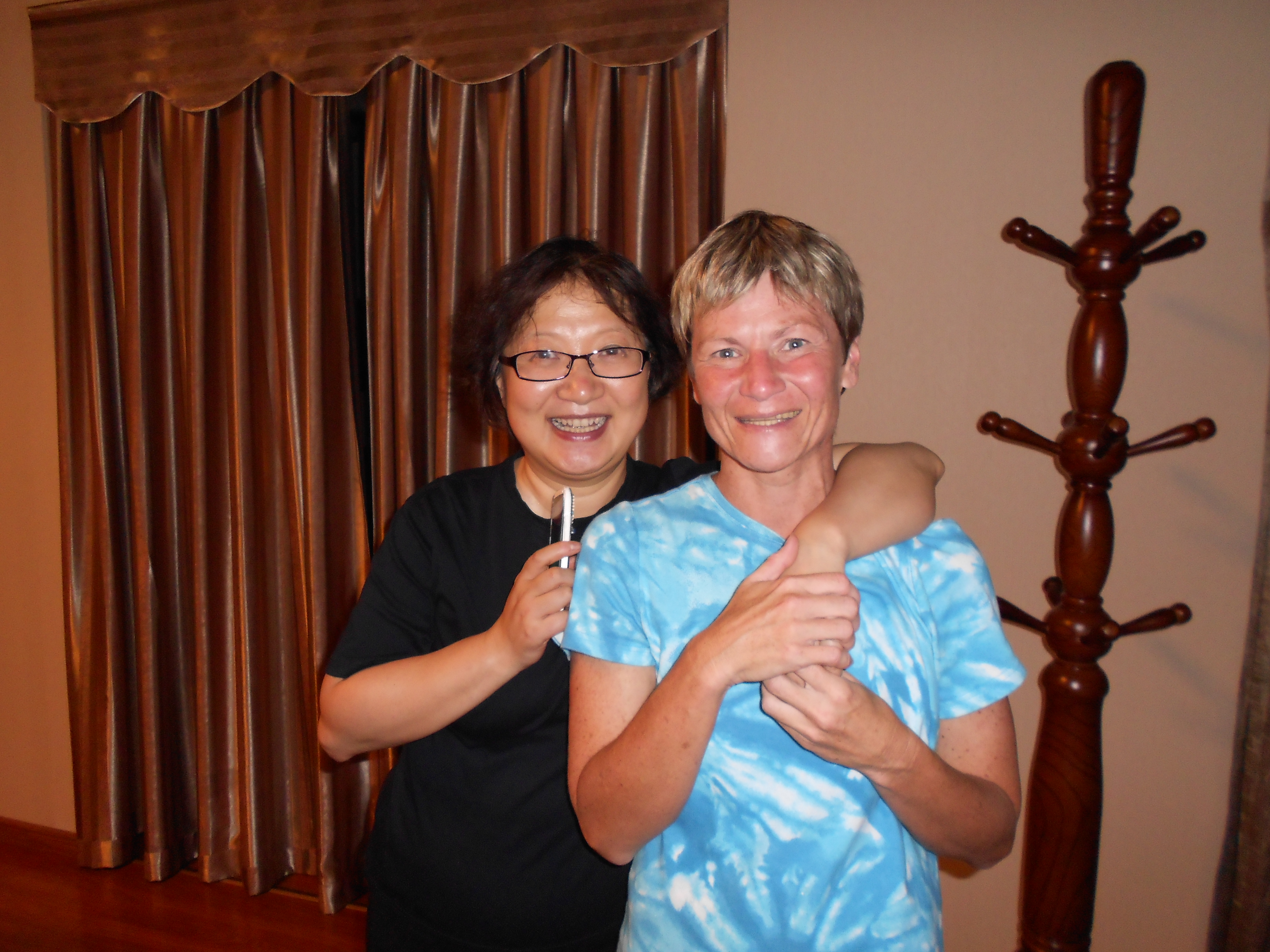
My Chinese sister, Cathy, and me

My Chinese sister, Cathy, and me

          Cathy is the former Dean of the English Department at our college. This is why we know each other so well, but she left 6 years ago to take up another faculty position at the Luzhou Police College, located up the road from us.
             In the past, I’ve written about Cathy, including her son’s matriculation into a top Beijing university. As was the custom, Cathy and her husband threw a huge celebratory party to invite friends, family and neighbors to share in their happiness. It’s hard to believe that blog was written 4 years ago with photos of a young, 18-year-old “Jack” heading off to study.
            Now he is graduating and will be working as an engineer for the Army, which gave him a full-ride scholarship to attend the top engineering school in the country. His mom’s hope is for him to be stationed in Chengdu, quite near Luzhou, so that she can see him more often. He is their only child and, as all one-child policy parents, is their greatest pride and joy.
             As for Cathy, who is my age, we’ve kept in touch over the years that I’ve been gone from Sichuan. We consider ourselves sisters, sharing everything of importance about our lives, families and personal secrets.

Cathy has decided to teach me to play mahjong.  Here she gathered her friends together and invited me along.

Cathy has decided to teach me to play mahjong. Here she gathered her friends together and invited me along.

A Missed Opportunity Due To A Stupid Mistake

            As mentioned before, Cathy and I share everything, including her darkest and most regrettable time in life.
             This happened about 5 years ago, when Cathy’s dream of entering the PhD program at the prestigious Beijing University came to a stunning end.
             PhD programs in China are very difficult to get into, especially for us older folk. Programs place age limits on candidates, rarely taking anyone in their 40s. Yet Cathy, then 43, managed to get her application accepted and with permission from the Police College, she was allowed to attend the PhD entrance examinations held in Beijing. (Note: College faculty in China must get permission from school leaders to take exams to enter any higher education program. This is why it’s always best to have excellent relationships with the higher-ups. If you don’t, most likely you’ll be out of luck when you are looking for favors.)
             The Beijing University entrance exams were a 3-day affair. Cathy arrived early to study and brush up on all that would be required of her. This included an English language interview, held in the afternoon after her basic English test was to be taken.
            She had exams in Chinese philosophy, Chinese education and other noteworthy topics designed for those entering any PhD program. She had studied and prepared for this for over 6 months.
The fundamental English exam, however, was to be the easiest one.
           With her vast experience in the language, not to mention all the educational articles she’d had published in English and her excellent verbal skills, the one test she knew she’d easily pass was that one.
        After her test was finished that morning, she headed over in the afternoon for the one-on-one English language interview. I was such a success that the interviewers couldn’t help but tell her that of all the candidates, her English ability ranked the top.
        That evening, Cathy told me she went to bed with soaring hopes of getting excellent results the next day.

         And excellent results she did get.
         She was called into the dean’s office where all her marks far outshone every other candidate that they had interviewed, a total of 5. All the marks, however, except one: The basic English exam, where she had not only failed miserably but gotten the lowest score.
            “How is that possible??!!!” she asked in shock.
            It seems that from question 2, Cathy had mistakenly missed answering a question on her test paper but continued to fill in her ovals. In other words, from Question 2 onward, all the answers she completed were wrong due to her not paying attention to the number she was answering.
            This disastrous mistake cost her dearly.
           She was not accepted into the Beijing University PhD program, despite being their top candidate, although they told her she could try again next year. Her heart was broken, however. She confided in me she cried for almost 2 weeks straight before finally accepting this fact and leaving her dream of a doctorate degree behind her.

Happier Times

The last time I saw Jack (Cathy's son) was  in this photo, taken 4 years ago as he was about to embark on his freshman year  in Beijing.

The last time I saw Jack (Cathy’s son) was in this photo, taken 4 years ago as he was about to embark on his freshman year in Beijing.

             Five years later, Cathy’s energetic spirit has returned and we can now enjoy spending time together after my 3-year absence. In fact, this evening we’ll be meeting up for a family dinner . . . of sorts. Cathy is scheming with her best friend to do a little match-making: her son (Jack) and her friend’s daughter (Lily). Lily will be attending this little family dinner along with myself.
           Will romantic sparks be flying? We shall see!

           Until next report, here’s wishing you Ping Ahn (Peace) for your July 4th celebrations.

Posted in Uncategorized | 1 Comment

Connie’s Updated Reports from Luzhou, China

The School Year Ends!

            The school year has finally ended! At least for me, anyway.
My final courses of the year are over and done with as of last Friday, with the re-take test for those who failed my literature course.
             Friday’s second-time-around test for the 12 Qing Hai University students who failed my literature final proved a good thing. Every student but one received a 60 and passing mark. If not for poor, clueless Jack (Dan Jian Nuo Bi), a Tibetan from Qing Hai province, I’d have had 100% student rate for passing all my courses.

The Struggle of Our Qing Hai Students

            It’s always hardest for the Qing Hai students who come here to attend school in Sichuan. Our college started this branch school alliance 6 years ago. Those in the 3-year certificate program (not the 4-year degree program) are placed here to complete their education instead of staying on the university campus in Qing Hai province.
            And let me tell you, adjustment to this area takes some getting used to.
            Qing Hai province runs deep into undeveloped Western China. It touts a crisp, cool New England climate, not the sweltering summer heat, deep humidity and sub-tropical weather we have here. The horrible 90 plus degree temps we’ve experienced these past 2 weeks has made our Qing Hai group melt into puddles on the classroom floor. Their energy level zapped; their diligence to learn squelched by the unbearable heat.
           Add to this the food, which is another troublesome spot. The spicy Sichuan hot peppers swimming in every dish, as well as very traditional southwestern dishes, make for unhappy, upset stomachs. All semester, I’ve had our far-to-the-west students come to me, hands on their stomachs as they double over in pain, asking for leave because they are feeling sick.
             Then there’s the strong, Sichuan accent to deal with. Most of the Qing Hai students (a majority of Tibetan nationality) find no comfort in living here, hardly able to understand what any native Sichuanese is saying. They mostly stick together on our campus, speaking Tibetan or Qing Hai dialect while staying far away from our Sichuan students at the college.
           To make them even more different, there’s no difficulty spotting them among the 8,000 Han Chinese who are here. Their habits, mannerisms and dark-skinned appearance are a dead give-away they aren’t from here. The rugged, tall, handsome guys are bedecked in jewelry, pierced ears and long hair. The girls boast flowing tresses down to the waist while their Muslim sisters are crowned in brightly colorful head scarves. This look is far different from the cosmopolitan youth of this province who wear trendy clothes and the latest short-cropped hairstyle.

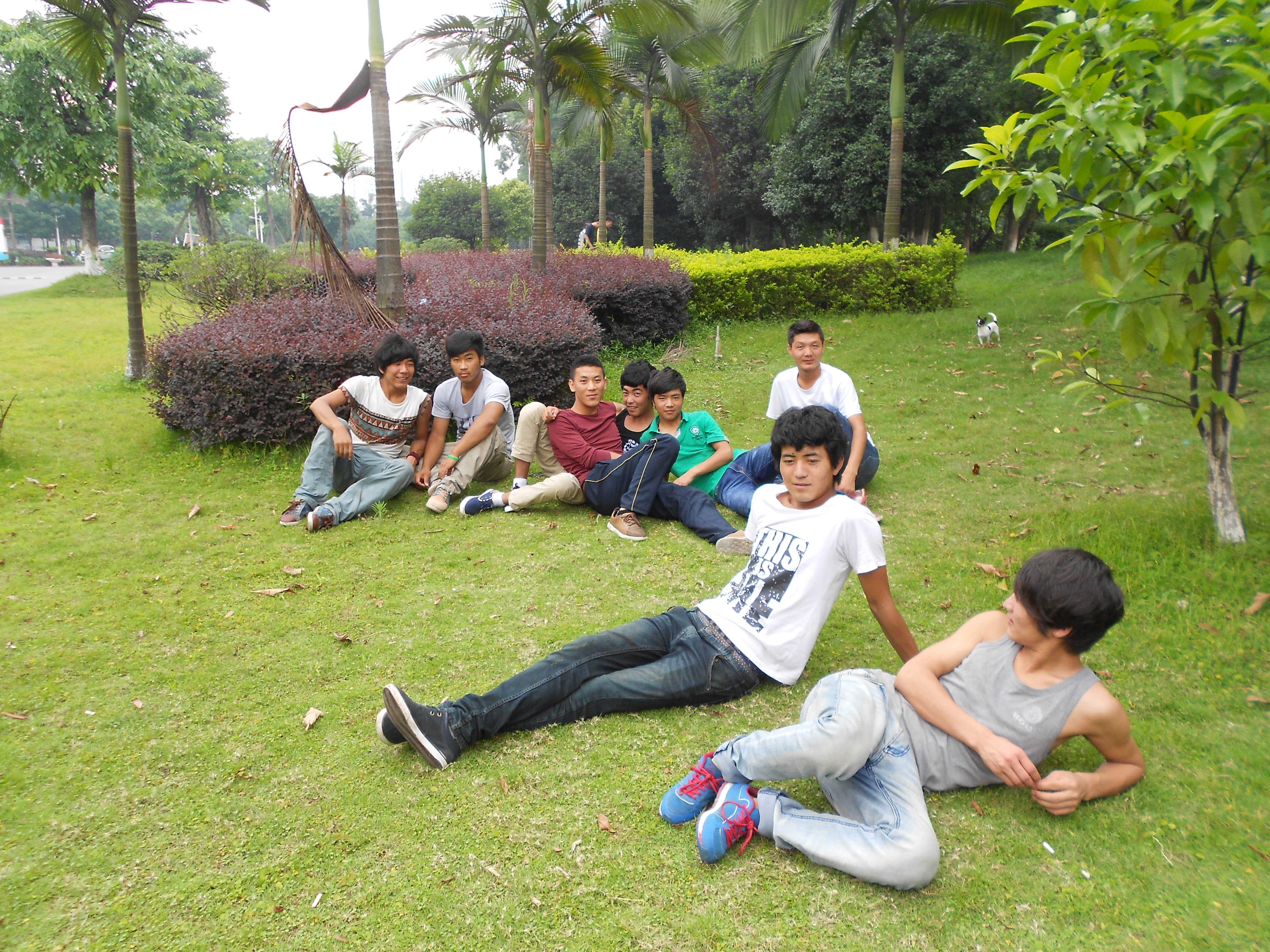
Our rugged, hardy Qing Hai guys, hanging out on the campus lawn which certainly sets them apart from others. No Sichuanese would be caught dead sitting on the ground.  A majority of Chinese consider that dirty.

Our rugged, hardy Qing Hai guys, hanging out on the campus lawn which certainly sets them apart from others. No Sichuanese would be caught dead sitting on the ground. A majority of Chinese consider that dirty.

            In other words, our Qing Hai 2,000 from the far grasslands of China really struggle in this alien environment.
             So for them, I have a soft spot, especially for our poor Jack.
He couldn’t speak a stitch of English in my class, nor even read it out loud, so my guess is that his parents forced him into this major. I can imagine them insisting an English major would offer him better opportunities, better jobs, better chances of leaving the difficult countryside life which is currently theirs. He is probably the first in the family to go to college, and, sad to say, most likely he shouldn’t.
             Jack has little aptitude or desire for study. The 8,000 yuan ($1,300) for his yearly tuition probably could have been better spent on his siblings. (Minority families, such as Tibetans, are allowed more than one child. Most have 2 or 3 children.)
That was quite apparent by his attendance in my class. He missed 8 of 12 classes this semester.
              The fact that he copied word for word from the essay of his classmate during the re-take test also hints at an inability to function at any English level, much less one for an English major.
Thus Jack, and only Jack, is my one failed student for the entire school year.
             I do wonder if he’ll even return next semester after going home this summer. My guess is probably not.

What’s Happening with Me!

               And the next question is: Will I even know about Jack’s fate, given that I won’t be teaching here again until the 2014-2015 school year?
            Yes, final decisions have been made after my Sichuan work visa was denied for the 2013-2014 school year. (See previous blog for explanation on why that happened.)
            It is official: I have been granted study leave for half a year with the other half spent in the States.
           I will be enrolled again in Sichuan University’s Chinese language program from August to February. (This is in Sichuan’s capital city, Chengdu, 3 ½ hours away from Luzhou.) From March to July, I will be in the States itinerating and doing as much PR work for the Amity Foundation as possible.
             During my China time, I will be visiting my apartment on the campus here once a month during weekends to make sure everything is in proper order. While I’m in the States, I will have my Chinese friend check up on things for me. (As mentioned before, the school has graciously allowed me to keep my things in the school apartment.)
              During my US time, I will be visiting churches within my own conference and others if I am scheduled in. My home base will be at my parents’ home in Marshall, Illinois, which will certainly be a blessing. My mother and I have been struggling for years trying to clean out the house during my brief landings.
               Needless to say, nothing much has ever gotten done.
              With this extended time period, I think we have a good chance of finally accomplishing something worth cheering about.
             Until next report, here’s wishing you Ping An (peace) from along the Yangtze.

Posted in Uncategorized | 1 Comment

China’s New Holiday: A Much-Needed Fling

             Last I left off, a new 1-week holiday had been thrown at us, causing school leaders to cut the semester 2 weeks shorter than expected. Everyone was left scrambling to fit testing into any time slot available, then working madly to calculate semester grades to be recorded into the computers. I wasn’t the only one running around at top stress mode. The tension in the school’s classrooms and our English offices filled the atmosphere with frantic frenzy.
           It wasn’t pleasant.
          On Friday morning, June 7, I finished up everything that needed done and headed off to Sichuan’s capital city, Chengdu, for a respite from the hassles thrust upon us. I needed time to recuperate before returning to finish out the rest of the school year with our branch school students from Qing Hai University. Their school year doesn’t end until July 5.

Chengdu News: Swimming at the City’s Natatorium

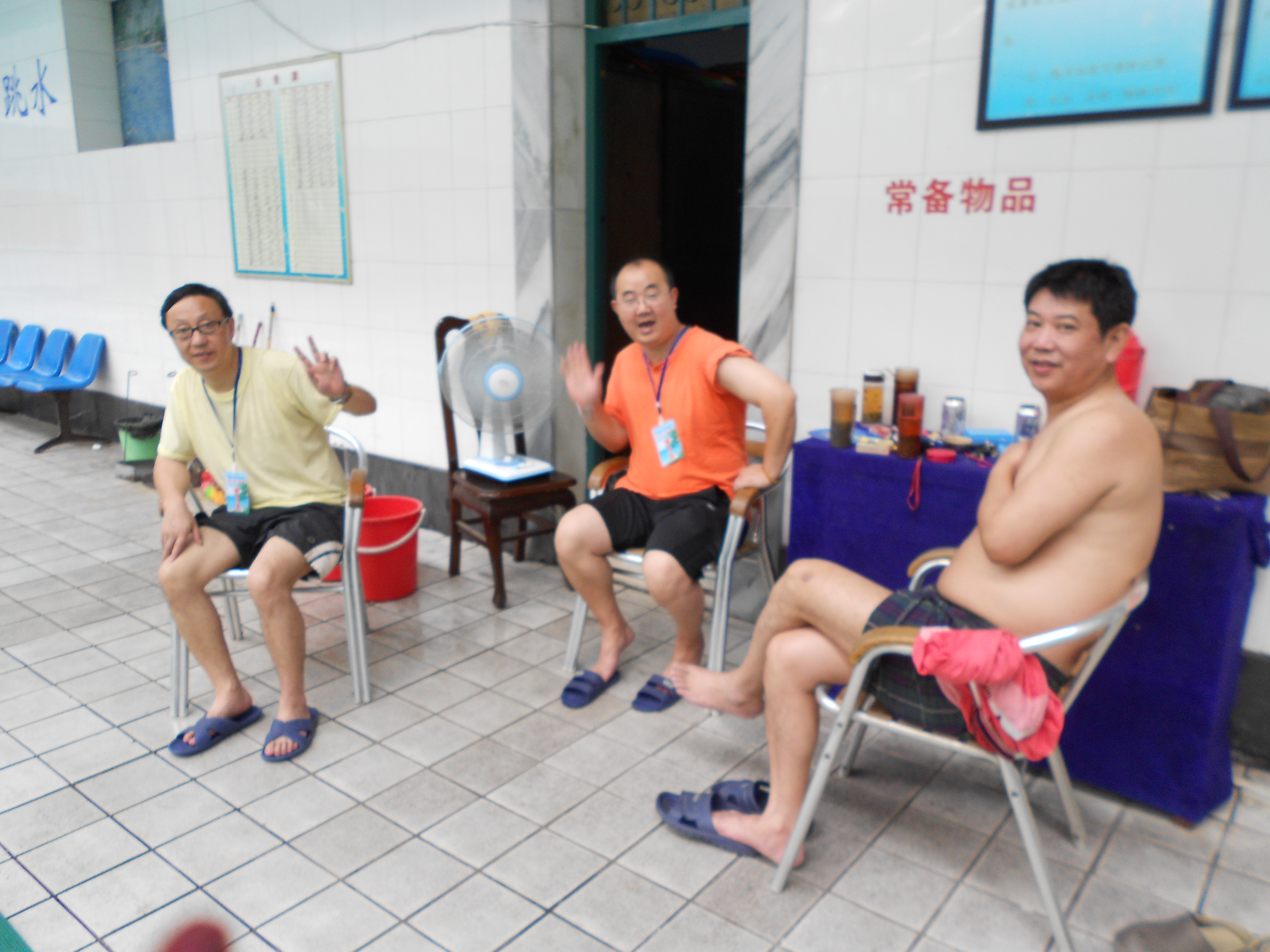
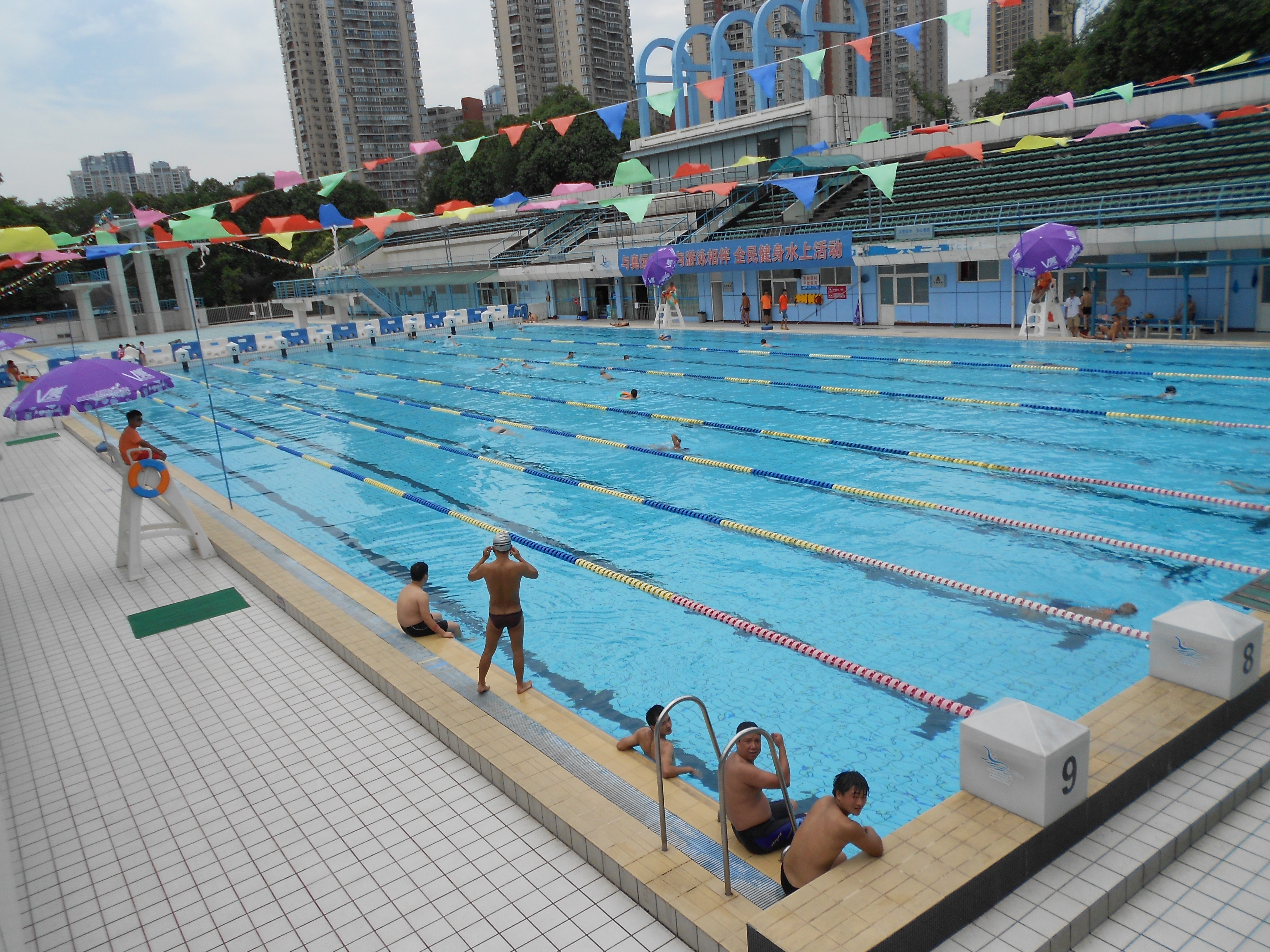
This was my hang-out with my male swimming buddies, every morning fo a week.

This was my hang-out with my male swimming buddies, every morning fo a week.

            I must say, it was a relaxing week and one much needed.
            I met up with my neighbors from years ago during my language study. I usually rent a room in my old apartment complex because it’s an area I know well. Everyone welcomed me back, wondering if I was there to stay.
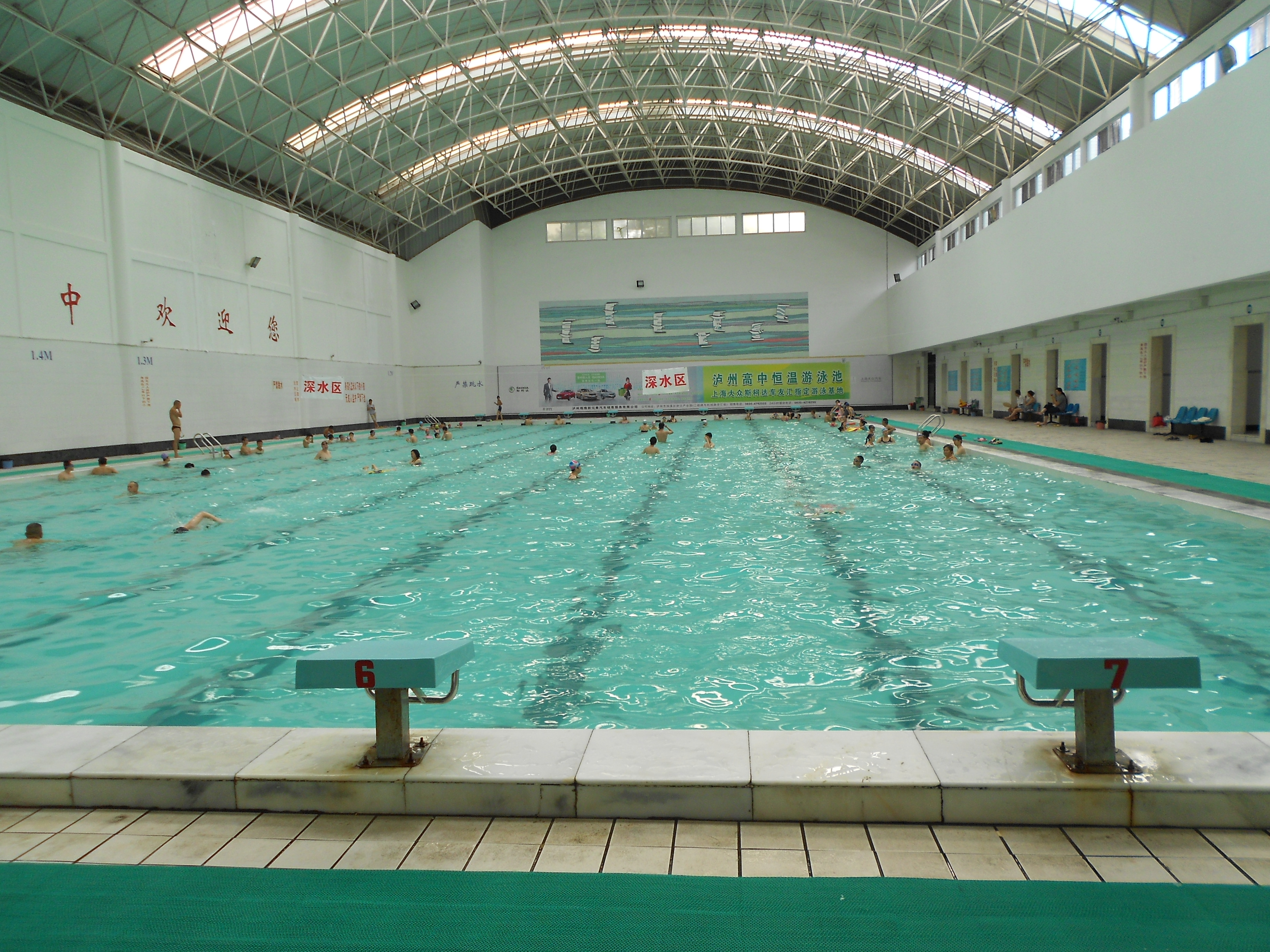
             Daily jaunts to the Meng Zhui Wan Swimming Pool had me meeting up with all my swimming buddies from the winter. This swimming complex has 4 outdoor pools, a water park and an indoor pool as well. The indoor pool is going through repairs during the summer so we are all forced outside, into the sizzling rays of sunshine, for our lap swims.
            Chinese women dislike dark skin so I was one of the very few women to swim with the guys in the mornings. We all greeted one another before and after work-outs, which made me feel quite special. All that male attention, even from the older men, is appreciated by a woman of my age!
              Over the years, I have noticed the swimming crowds at this pool as well as others in China are growing. Years ago, swimming was considered a wealthy sport. The cost of $3-5 for a swim was too expensive for most to afford. A huge luxury meant only for the upper classes. In fact, I enjoyed at times being the only person in my lane to swim.
             Not so anymore.
             Now, swimming has become a sport of choice for quite a few in all income ranges. Swimming lessons are a huge draw for metropolitan parents wishing to keep their kids busy during the summer holidays. The lifeguards often have their hands full giving lessons to classes of 30 – 40 kids early morning in the training pools while the rest of us enjoy our swimming times in the 50 meter pools.

My favorite pool sign:  "No slapstick, please!"

My favorite pool sign: “No slapstick, please!”

Walks around the Sichuan University Campus

           Aside from the pool, there were lovely walks around the beautiful Sichuan University campus, which directly is across from the place I always stay.
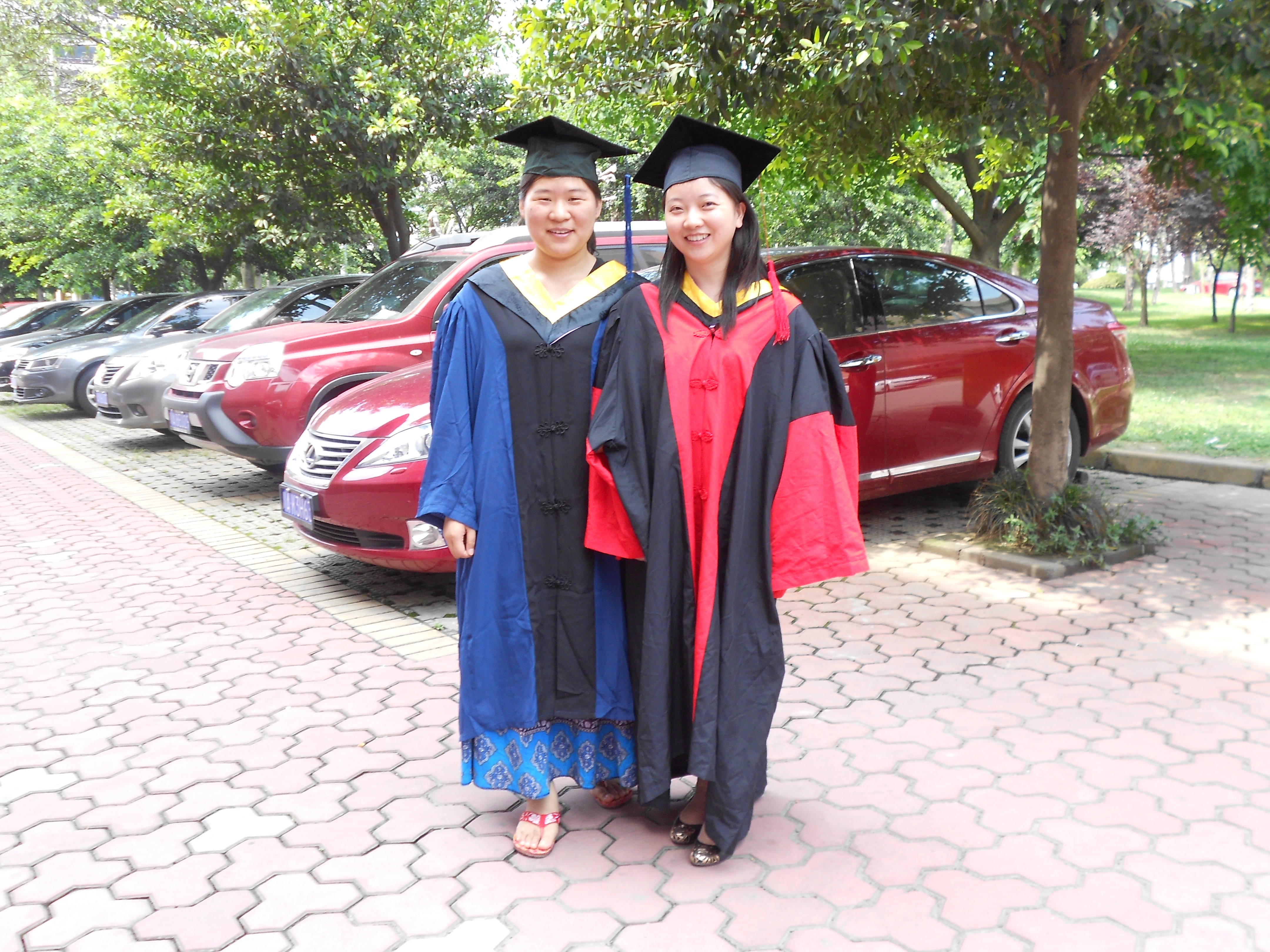
           Especially nostalgic was to see all the graduates from the many different university departments. This is the time of year when graduation ceremonies are held, one after another, during the weekends. Seeing such joyful faces, excited figures floating around campus in caps and gowns, brought back many memories of my own university graduation years ago.

Oh, happy day!

Oh, happy day!

           Throughout the school, clusters of classmates posed in front of buildings, on tree-filled lawns, on building steps, seated at the school’s lotus flower ponds and around the campus gates to record this auspicious day.
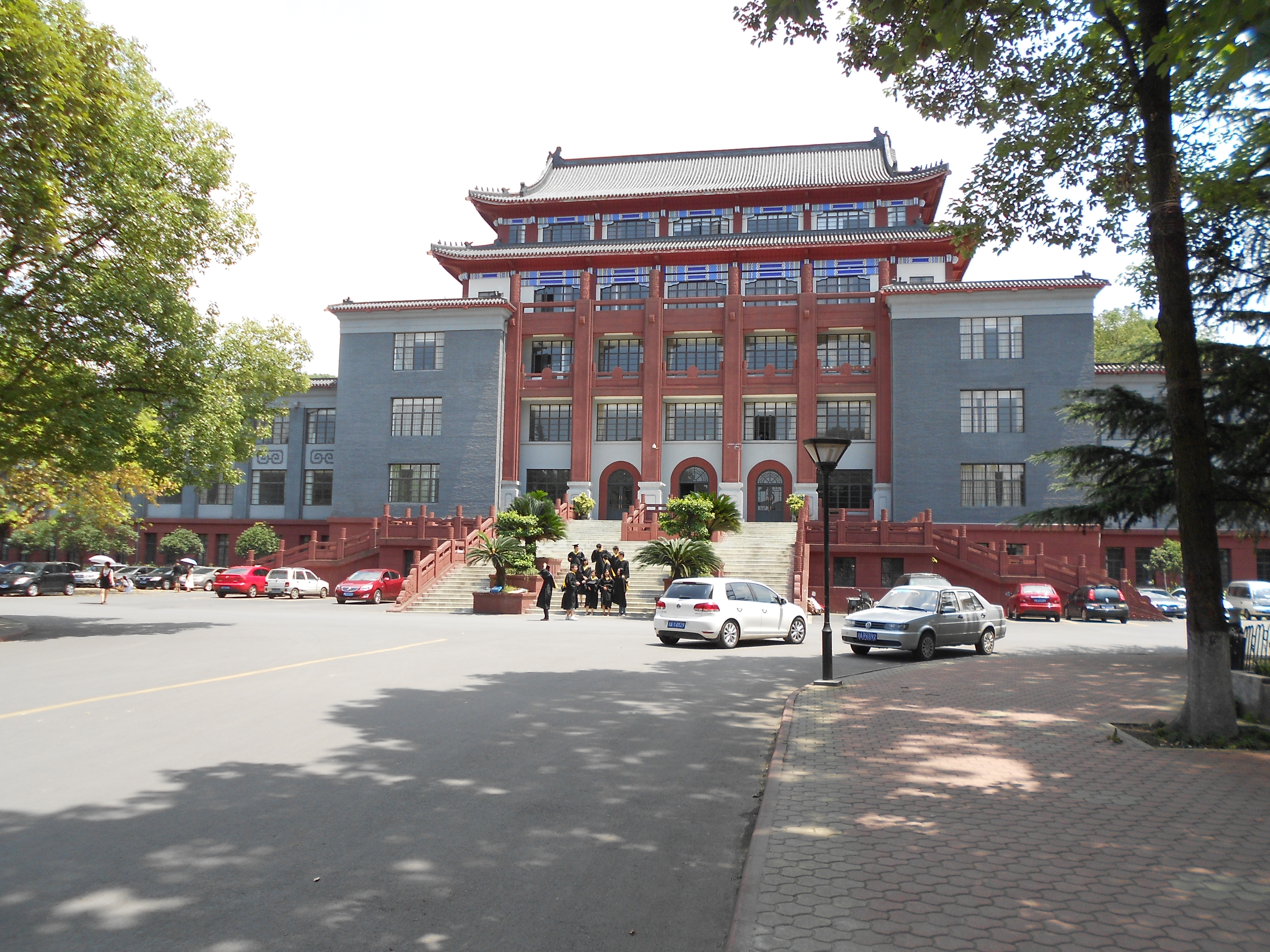
Graduates posed on the steps of the main administrative building for an impressive photo of their alma mater.

Graduates posed on the steps of the main administrative building for an impressive photo of their alma mater.


The lotus pond, at the entrance to the main gate, was another popular photo op for gradutes.

The lotus pond, at the entrance to the main gate, was another popular photo op for gradutes.


Graduates weren't the only ones interested in the campus' beauty spots.

Graduates weren’t the only ones interested in the campus’ beauty spots.


A photographer's heaven.

A photographer’s heaven.

            A new chapter in life for the up-and-coming Chinese youth was about to begin and they wanted as many remembrances as possible.

Back in Luzhou

            Back in Luzhou, I’ve resumed testing and grading for this week but on a much more limited, and relaxing, schedule. My Sichuan students have mostly left for the school year and will be returning after the summer. A majority of the school’s 8,000 have fled homeward with around 2,000 still remaining. Yes, we are quite the quiet little community at the moment. Most of the “leftovers” are the Qing Hai students, the ones I am currently finishing up.
                  My Peace Corp brethren, John and Ashley, will be leaving soon for the States. They have been gone for 2 years and are eagerly awaiting a reunion with family and friends before beginning a new life together as husband and wife in the States. We are hoping for a farewell evening together to at least chat a bit before their departure.

Unusual Circumstances Have Me Up in the Air for Next Year

            This past month has been quite a topsy-turvy ride for me, something which I have as yet to report. New regulations in this province have denied me a work visa for the next school year.         

             Sichuan government regulations state after 5 consecutive years in China on a work visa, foreigners must “take a break” for one year before returning to Sichuan. Another 5 years is then granted.
            At present, only Sichuan seems to have this rule. Other provinces are quite happy to have foreigners working in their areas no matter how long they have been here but Sichuan’s policy, as of this year, is fully underway and being strictly enforced.
               The Amity Foundation, my US sending agency (United Methodist GBGM) and I have been discussing what that entails and what will happen to me. Moving is one option but there is no hope ever of returning to Sichuan to teach. It would be goodbye to Luzhou forever.
             Another is language study for a year (a student visa is considered “taking a break” from a work visa), which will keep me in country, most likely studying at Sichuan University. Yet another is time in the States with assignments from the Board, either itinerating or something else.

             The school has graciously said they will hold my apartment for me, keeping all my things here if I plan to return. I would then stay at this college for several more years before taking on another placement in China.

Decisions to be Made Tomorrow

            Decisions on this will most likely be fully made tomorrow, after holding a conference call with those involved. My preference is always to stay in country but we will see how that unfolds.

            From Luzhou, here’s wishing you Ping An (Peace) for your day until the next report from along the Yangtze River.

Posted in Uncategorized | 2 Comments