Part 1: A Foreigner’s Glimpse at Troubled Southern China

After reading of the major drug raid that took place in southern China (see previous post), I couldn’t help but recall my own dealings with this secretive criminal world when I lived in Longzhou, a small town located not more than one hour from the Vietnam border.

Drug trafficking is big in southern China and was especially so in my area.  Our Vietnam-China border zone was a major crossing point for drugs, women coerced or forced into the sex trade, and illegally sold, endangered  animal parts that claimed to heal or enhance certain ailments. (All a bunch of nonsense if you ask the experts).

Drug use is just as prevalent, although everyone I talked to refused to admit China even had a problem. 

The local police and border guards, on the other hand, were very well acquainted with this dilemma and trained to take care of it with caution and diligence. 

MONITORING LONG-DISTANCE BUSES

I still remember every time I took the long distance bus to the capital city, Nanning, all traffic was stopped at the toll gate before entering the freeway.  Our buses were entered by 2 soldiers, politely checking our IDs and even our bags if someone looked suspicious. 

After 5 minutes or so, we were released to continue onward. Those who forgot their ID cards had to disembark, write down all their information on a clipboard, and return to their seats.  A few times, I remember some who were not allowed to climb back aboard because something was amiss.  One person had his bags of loose-leaf tea confiscated, which he  handed over without too much fuss.  

Once,  I was the person under suspicion when I brought Little Flower (my dog) with me.  She was in her carrier, covered by a towel, which is how we traveled in Sichuan.  What I didn’t realize was that in the south, in-coach dog travel is not permitted.  All animals must go under the bus, with the luggage.

Everything would have been fine if LF hadn’t started moving about in her carrier as the soldier walked by us for inspection.  Her wiggling caused the young man to ask what was inside, to which I showed the dog.  He then frowned, exited the bus and brought back his commander.

Everyone was staring at us and I was panicking the dog would be confiscated.  Luckily, I had her vaccination records with me.  After peering over the documents carefully, the two finally allowed us to travel onward.  This was not, however, before having a brief talk to the driver, most likely criticizing him for allowing us on the bus.

While we did manage  to make it to Nanning and back again that weekend, it was the last time I ever took my dog on a public bus in southern China.

A RUN-IN WITH A DRUG BUST

In another incident, I was at our police headquarters in my small town to register as an overseas’ resident.  This is a standard procedure in China for any foreign teacher.  We go to the local police station with our school representative to legally establish our residency for a year. 

While there, I witnessed a drug bust of sorts which made me realize how serious a situation it was to work the border areas.

A disheveled, young man in dirty clothes was hustled out of a police van in his bare feet.  (Most likely his shoes were taken so he wouldn’t run away). His hands were cuffed behind him and he was told to kneel on the tile floor in the main room where I was waiting.  Three officers then brought in his medium-sized duffle bag and began to unpack it, lining up the contents neatly on the floor for photographing.

This is the first time I had ever seen a criminal in China captured other than TV.  I had no idea what he was being held for until his bag was unpacked. The contents of that bag astounded me, not so much for what was inside but how much of it had been stuffed in.

There were 2 shot guns, divided into pieces for assembly, hundreds of bullets, a few packs of cigarettes (personal use?),  packets of what I assumed were drugs, his own private tools for shooting drugs and then a few other paraphernalia items I wasn’t familiar with.  (Definitely not my world.)

During the time it took to spread all this out on the floor, the prisoner remained kneeling, waiting for the documentation to finally take place.  He was not ill-treated or harassed in any way.  At times, he was asked questions if these things were his.  He merely answered by nodding or saying “yes” but it was clear he was not completely all there.  Whatever he had been taking or using made him extremely groggy.

While I was curious to know more about the guy, my business was completed within the hour so I had to leave.  I do remember it gave me a deep impression about what many of us living in Longzhou, my students, colleagues and even myself, never saw but was going on right under our noses, so to speak. 

(To be continued)

Posted in Along China's Li River: Longzhou, Guangxi, From Along the Yangtze, Luzhou: Yangtze Rivertown, Luzhou: Yangtze Rivertown Stories | 1 Comment

A Drug Bust in Southern China Recently Reported Across the Country

 I’m including this newspaper article to later follow up with my own experiences concerning drug-related issues in the south.  I also include it because I am currently watching Breaking Bad (a US TV series) and have seen the very disturbing Brazilian movie, City of God, both of which were referred to in the article.   

Be looking for my next two eye-opening entries after reading  the below. 

============================================================================ 

January 7, 2014:  From the UK’s The Telegraph,   “Inside China’s ‘Breaking Bad’ village” by Tom Phillips

Boshe, Guagdong province, CHINA — A smashed lock and a scuffed red doormat reading, “Stay safe!” adorn the entrance to the unusually opulent three-story villa.

It was here that Cai Dongjia, surrounded by expensive redwood furniture and gaudy faux Corinthian columns, ruled as Communist Party chief of Boshe, a farming community in China’s southern Guangdong province that has existed since at least the 13th century.

Yet in an extraordinary reversal of fortune, 51-year-old Mr. Cai was unmasked last week as one of the most wanted drug capos in the People’s Republic: a crystal meth mafioso who allegedly corrupted young and old in his attempt to make a fortune from drugs.

Mr. Cai’s kingdom began to crumble at just after dawn on Dec 29 when about 3,000 heavily armed operatives swept into Boshe’s dust-swept alleyways with support from helicopters, speedboats and canine units.

During an operation that was reported only last Friday, police claim to have closed 77 clandestine meth laboratories, seized three tons of methamphetamine worth an estimated $250-million and made 182 arrests, including Mr. Cai and 13 other Communist Party officials.

Methamphetamine or crystal meth is now the second most used drug in China after heroin.

Major anti-drug operations are nothing new, but the scale of the accusations against Mr Cai and his fellow villagers were staggering.

Chinese police labeled Boshe (population 14,000) “China’s number one drug village” and claimed it had provided a third of the country’s total meth supply.

Twenty per cent of villagers – among them pensioners, housewives and children – had been involved in the drug trade in some way, according to Qiu Wei, a senior anti-narcotics officer.

Mr. Cai was the “back stage boss” of a massive criminal network engaged in “drug making and selling, suspected corruption, abuse of power [and] dereliction of duty”, Xinhua, China’s official news agency, claimed.

 When Boshe’s secret leaked out on Friday it immediately drew comparisons to Breaking Bad, the television series that charts the improbable descent of Walter White, a school chemistry teacher, into a life of meth cooking and gangsterism.

But local reports suggest a better comparison might be City of God, a Brazilian film that accompanied increasingly youthful drug traffickers as they used weapons, bribes and violence to seize control of a Rio slum.

For in recent years Boshe had become a “fortress” that was effectively off limits to outsiders, police claimed. Lookouts warned local criminals of suspect activity around the village and gang members used “machine guns and hand grenades” to intimidate their enemies.

A local journalist who visited the village in 2012 reported being cautioned against photographing the luxury cars parked outside a growing number of houses.

Police vehicles were used to transport drugs in and out of the village, giving the gang “an almost cast-iron guarantee of protection”, the China Daily newspaper reported yesterday. Even local children were lured into the trade, it was claimed, spending their school holidays pulling apart prescription cough medicine capsules, the contents of which were used to produce the meth.

As Boshe’s meth racket expanded, the mounds of drug-related debris being dumped on its streets and fields grew ever higher, irreparably contaminating the village’s soil and river. The legacy of that period of lawlessness could be seen on Boshe’s rubbish-strewn streets this week.

Not a soul dared to speak openly about Cai Dongjia’s arrest or the plight of the 13 other government officials or policemen in custody because of the scandal.

Asked about the recent events, house-owners, shopkeepers and government officials were united in their amnesia. “I don’t know,” said one. “I can’t remember,” claimed another.

“I really can’t talk. If I said anything, I might be hanged,” admitted a third, whispering that at least one local person had been mysteriously found dead following the recent operation.

Police had plastered many of the community’s walls with A3 posters declaring drugs “the source of all evil” and calling on traffickers to turn themselves in by Feb 15. But in many places the posters had already been torn down or defaced.

While local newspapers claimed that 400 officers had been deployed to keep order in Boshe’s winding back alleys, in fact there was hardly a policeman to be seen this week.

A 20-year-old man who appeared to be trailing reporters on a moped rejected the charges against Mr. Cai and said claims that 20% of villagers had reinvented themselves as basement chemists were an exaggeration. “The party chief is not the kind of person the media is reporting,” he said, blaming the accusations on political enemies.

Yet the suspiciously large number of luxurious villas in this largely squalid seaside village suggested something was seriously amiss.

Stray dogs and unwashed toddlers could be seen wandering many of the shanty’s filthy backstreets and raw sewage ran under many of Boshe’s elegant but dilapidated Cantonese-style homes.

But the neighbourhood around Mr. Cai’s former home was from another world. CCTV cameras sprouted from the exteriors of sumptuous three and four-storey villas. House facades glistened with gold paint. Metal bars sealed spacious verandas from the outside world. A new BMW sat outside one address.

“The houses around here are really nice and luxurious,” said a 68-year-old visitor from Sichuan province who gave his name as Mr. Wu.

“You don’t see that much in rural areas. I guess it is the result of the [economic] opening up.”

Last month, Xi Jinping, China’s president, banned government officials from smoking in public in an attempt to clean up the Communist Party reputation.

But on Monday Cai Shuibao, the interim party chief who has been sent to Boshe following his namesake’s downfall, appeared in no mood to surrender his drug of choice.

He puffed furiously on Chinese cigarettes as reporters pressed him to discuss the allegations against his predecessor or show them to one of his village’s former drugs factories.

“I have only been here three days,” Mr. Cai said. “I know nothing, nothing.”

Visibly angry, the new party chief of China’s “number one drug village” turned away and stalked back towards the shelter of Cai Dongjia’s former office, past a newly erected propaganda billboard. “Good manners, discipline and hard work will get you ahead,” it read.


Posted in Uncategorized | Leave a comment

“It’s here! It’s here! It’s here!”: A Christmas Tradition Continues Along the Yangtze

My greatest purpose in returning to Luzhou for Christmas and New Year’s was to reconnect with teachers, college administrators, friends from around the city and my church community.

But a tad more on the selfish side, I wanted to pick up my Christmas presents which family and friends had mailed to the Luzhou address. I have no mailing address in Chengdu so the school’s address was it.  If I wanted all those little gifties from Santa to open, I’d have to travel back to Luzhou to get them. 

 So travel I did!

HEAPS TO OPEN

All packages for the foreign teachers  land in the English office.  I had already informed Angela, one of the Peace Corp volunteers, that boxes would be coming and she had permission to use my apartment key I had given her to put them in my home.  

 When I alighted, not only were packages waiting for me on my apartment table but also in the office.  There had been too many  for Angela to carry back with her on treks to and from the classroom so she’d left them for me to deal with.

As it turned out, a majority  were stickers and holiday pencils I’d been asking for all year.  I keep an ongoing supply of these to use for the students, plus share with the Chinese teachers or give away to friends with kids.  This year, a giant, abundant mound has accumulated since I haven’t been around to use them so I’ve been storing all of those Stateside generous mailings away for my return after the summer.

 But the one box I had been waiting anxiously to appear was my Christmas stocking, sent every year by my mother, filled with goodies and little what-nots that always bring my Christmas morning great surprise and fun.

 THE CHRISTMAS STOCKING TRADITION

 This tradition has been ongoing during the past 25 years whenever I am overseas.  My mother’s stockings have followed me around the world, from Japan to throughout Mainland China.  Never has a Christmas box gone missing, all arriving on time for December 25th and even some  the day of.

 So when my arrival here on December 22 had yet to produce my stocking, mailed December 3rd, I was a bit concerned.  As the days ticked by in Luzhou, Christmas coming and going, then New Year’s passing us by, I was losing hope.

Still no stocking.

 WHERE COULD IT BE?

 My mother and I had an ongoing email dialogue about its whereabouts. 

 She had sent it in a bright red holiday box, perhaps signaling the postal authorities that something dangerous was inside.  Did the Chinese hold onto it, or even ditch it, with worries that it carried explosives?  Did the cardboard rip open, scattering its contents of chocolates, cocoa mixes, and festive knick-knacks   throughout the country?    Did the English address cause confusion, sending the box to another Luzhou city in another province?

 My mom’s theory was that it was hibernating somewhere and would appear in the spring, perhaps along with Angela’s box full of cosmetics which her mother sent in September.  It hadn’t  landed yet, either.  

 Could be the two were huddled together in an unheated, dank,  frigid corner of a Beijing post office, counting the days to Spring Festival when both would finally, joyfully, find their way onto a truck headed south to our Yangtze river town and into our eager little hands.

 Oh, say it would be so!

 (As you can see, in China, when it comes to missing parcels from the States, our imaginations do run wild.)

 OH, YE OF LITTLE FAITH

As it turned out, no need to await Spring Festival’s  Year of the Horse (Feb. 1st) to gallop its way into my life, my Christmas stocking box bouncing against a stag’s flowing mane before dropping at my feet.

Right before I planned to return to Chengdu, January 4th brought it straight to my doorstep.

 Yes, even at age 48, I will never, ever outgrow  the excitement and delight of receiving my holiday present from my mother. 

 Oh, happy day!

LEAVING SOON

 Now that Christmas is officially over, having received my stocking and all, it’s about time to head back to the big city, Chengdu.  I’ve been trying to post photos but for some reason, they are refusing to upload onto my site.  This has happened before, mostly due to Internet traffic.  When the Net is extremely busy, photos either take forever or just never attach to the blog.    I’ll keep trying, though, because they are worthy of sharing.

 Until next time, here’s wishing you Ping An (Peace) from China!  


Posted in From Along the Yangtze, Luzhou Vocational and Technical College, Luzhou: Yangtze Rivertown, Travel | 1 Comment

The Yearly Blog Summary Report is In!

Happy New Year, 2014!
To start us all off, I’d like to share Word Press’ posted report of my website activities throughout the year. Thank you so much for following me in 2013. I look forward to your readership in 2014!
Ping An (Peace), everyone!

The WordPress.com stats helper monkeys prepared a 2013 annual report for this blog.

Here’s an excerpt:

A New York City subway train holds 1,200 people. This blog was viewed about 6,300 times in 2013. If it were a NYC subway train, it would take about 5 trips to carry that many people.

Click here to see the complete report.

Posted in Tales of China, Travel | Leave a comment

Luzhou Makes National and International News, Not in a Good Way

Yes, I’m starting off the New Year with a rather tragic tale, this one posted from my home along the Yangtze. However, this last day of 2013 will allow me to begin 2014 on a happy high note, hopefully with photos of all the fun I’ve been having these past 10 days.

A WHIRLWIND WEEK OF HOLIDAY CHEER

As you know, I returned to Luzhou (loo-joe) to enjoy the Christmas holiday for a week. I expected to have more time to write and post my stories but it’s been so busy!

There was cleaning the school apartment after 2 months away, putting up some favorite sparkly decorations and lights (couldn’t be without them), baking my delicious holiday cookies to give away, attending the PC (Peace Corp) party for the Chinese teachers, Christmas Eve at church, gatherings with Chinese friends and then a potluck hosted here by Geoff and Angela, our PC teachers, who invited several other foreigners to attend with their Chinese guests.

AN EXPLOSION OF GREAT PROPORTIONS

That last event, the potluck, was to be held on the Friday after Christmas. The day before, I prepared the only thing I can really cook well ( a humongous pot of homemade vegetable soup) to allow the many herbs to sit for a day. I had debated doing it the day-of but something nudged me into remembering why that old, wise adage, “Don’t put off today what you can do tomorrow,” has been going around for centuries.

Because it is so true.

Sure enough, Friday morning I awoke to find the electricity was off and no gas. The electricity came back on within 30 minutes, which was fine, but not the other.

In my apartment, as in most in China, the gas is used to both heat water (I have an electric gas water heater for my shower) and the range. No gas, no hot water for showers and no ability to cook.

Often times, we receive notices posted on our apartment buildings of times when any of our utilities will be off for awhile due to repairs or safety checks. Those are planned. But we sometimes get unannounced cut-offs due to unforeseen problems or difficulties.

Doesn’t happen very often but this last Friday, it was obviously so.

It wasn’t until later in the day that I found out why, when I picked up on all the news buzzing around the campus.

“Did you hear about the big explosion downtown?”
“I heard it was terrorists!”
“So many people died, hundreds! The hospitals were overflowing!”

THE FACTS EMERGE

Obviously, our gas lines were affected due to this explosion. It did come back on at 4:30 p.m., allowing me to shower and heat up the soup, but all the important details of what exactly happened weren’t revealed until Saturday newspaper articles appeared. Even we foreigners, sitting around our table of plenty that Friday evening, had all sorts of semi-accurate, gossipy stories to share about what had happened.

Here is the best article so far that I came across, putting this smaller river city, Luzhou, on the national map.

THE ARTICLE POSTED ONLINE

Huang Zhiling
China Daily/Asia News Network
Saturday, Dec 28, 2013

A fire caused by a blast of natural gas at a shopping mall in the busiest commercial street in Luzhou, Sichuan province, on Thursday night, killed four and injured 40 people as of press time on Friday.

The dead included three men aged 22, 45 and 55, and a 25-year-oled woman. One of the men was a security guard at the shopping mall. The woman had been watching a movie an d died after inhaling toxic gas in the aftermath of the fire.

Xiao Zhe, another moviegoer, said many in the theatre thought the sound of the blast came from a 3-D film and did not get up to leave.

The fire, which broke out at about 10:40 pm, disrupted the natural gas supply in the city of more than 5 million people for 14 hours.

The cause of the blast was under investigation, although some believed it happened when workers were repairing natural gas pipelines, according to Wang Tianquan, an information officer in the city.

According to Huang Cheng, an employee of the Huitong Department Store opposite the Mo’erma Shopping Mall: “I was preparing New Year’s gifts for VIP clients of our store when I heard the deafening sound of a blast. Somebody shouted, ‘Mo’erma Shopping Mall had a blast, and it caught fire,’ I fled and saw flames and black smoke coming from the first three floors of Mo’erma.”

Liu Kunfu, a resident of the city, was passing by the shopping mall with his 4-year-old grandson. Shattered glass from the six-story mall buried him up to his waist. He was rescued about a half-hour later when firefighters and ambulances arrived.

“My grandson was unscathed, as I covered and protected him with my body,” said the 49-year-old, who received treatment for bruises and lacerations in the lobby of the Traditional Chinese Medicine Hospital attached to Luzhou Medical College.

As of late Friday, smoke was still coming from the shopping mall, whose windows were gone. Onlookers gawked outside caution tape around the darkened mall. Fire engines surrounded the centre.

“After the blast, firefighters arrived at the scene and used water blast guns to extinguish the flames. The water from the guns shattered all the glass,” said Wu Jie, 27, a cleaner.

Dozens of cleaners were sleepless Thursday night waiting for the order to clean up the glass, he said.
The injured were being treated in four hospitals in Luzhou.

Tan Zhiping, 28, was one of 12 injured people taken to the Hospital Attached to Luzhou Medical College. She suffered a fracture on her right hand.

OUR NOSTALGIC MOU’ER: THE FIRST MODERN SHOPPING PLAZA IN THE CITY

It is a sad thing when the first big shopping plaza in the city is destroyed. The Mou’er used to be the place for Chinese to go to do their fancy shopping. When I first came here over 10 years ago, no place else boasted such a one-stop shopping spree as Mou’er. There was the basement grand grocery, Western style with gleaming floors, wide aisles and carts to haul your goods around in. Then all the departments to follow on the next 3 floors: kitchenware, electronics, bedding, small furnishings, jewelry . . . not to mention very elegant clothes that could only be found in the bigger cities.

Over the years, the Mou’er became out-classed by the newly built, city central 6-story shopping malls and well-known cheaper chain stores, similar to our Walmart, like Ren Ren Le (Everybody’s Happy). But despite that, Mou’er held fast to its clientele who didn’t want to wander 6 floors for what was needed or bother getting lost in an expansive shopping area. Whizzing directly from the main street sidewalk into downtown Mou’er for a 10-minute purchase or a 2-hour wander was as convenient as it gets.

Also to be mentioned is the fact that this was one of the only stores in town that had butter consistently. For us foreigners, that made it all the more special since a trip to Chengdu (3 ½ hours away) was usually needed to purchase such a treasured item.

Saying farewell to our nostalgic Mou’er is, indeed, very sad, at least for me, anyway.

A 1-DAY HOLIDAY NEARLY UPON US: 2014 ARRIVING!

Now that New Year’s is almost upon us, the shock of last week’s explosion is fading. Everyone is getting ready for their 1-day off tomorrow before the true countdown begins to the Year of the Horse, Jan. 31st. Stores and shopping malls across the country are already highlighting huge sales, some being open to midnight or later, to welcome in 2014. Should be a very busy night in the downtown districts.

As for me, I have no immediate plans other than to meet up with friends and enjoy a pleasant evening in the rivercity, Luzhou.

Here’s hoping your 2014 arrives with great hope and joy for the new year, and here’s sending you blessings and Ping An (peace) from China this last day of 2013!

Posted in Uncategorized | 1 Comment

At the Park, Christians Practice for Church Performance Celebrations

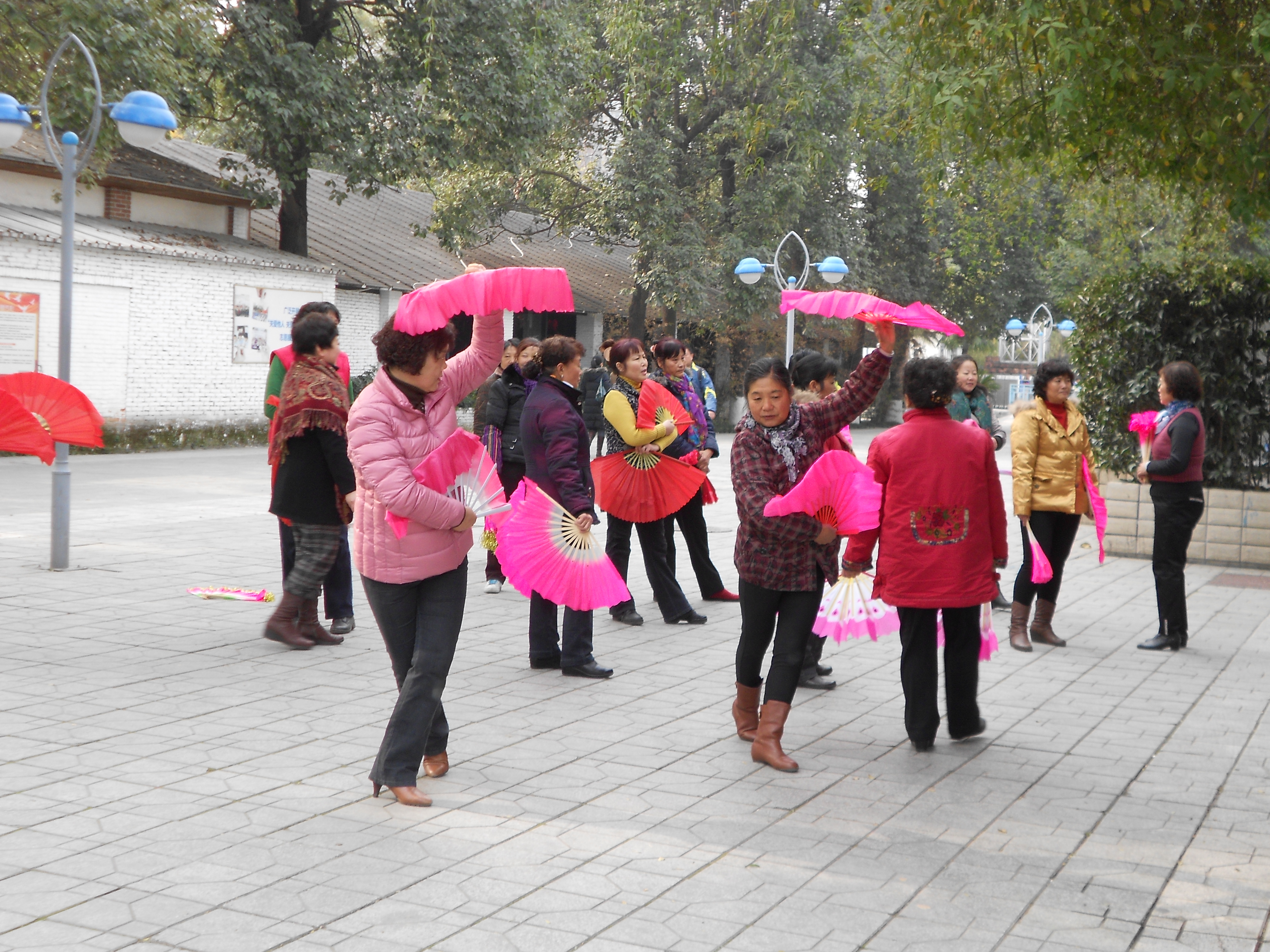
The ladies prepare for their Christmas Eve fan dance.

The ladies prepare for their Christmas Eve fan dance.

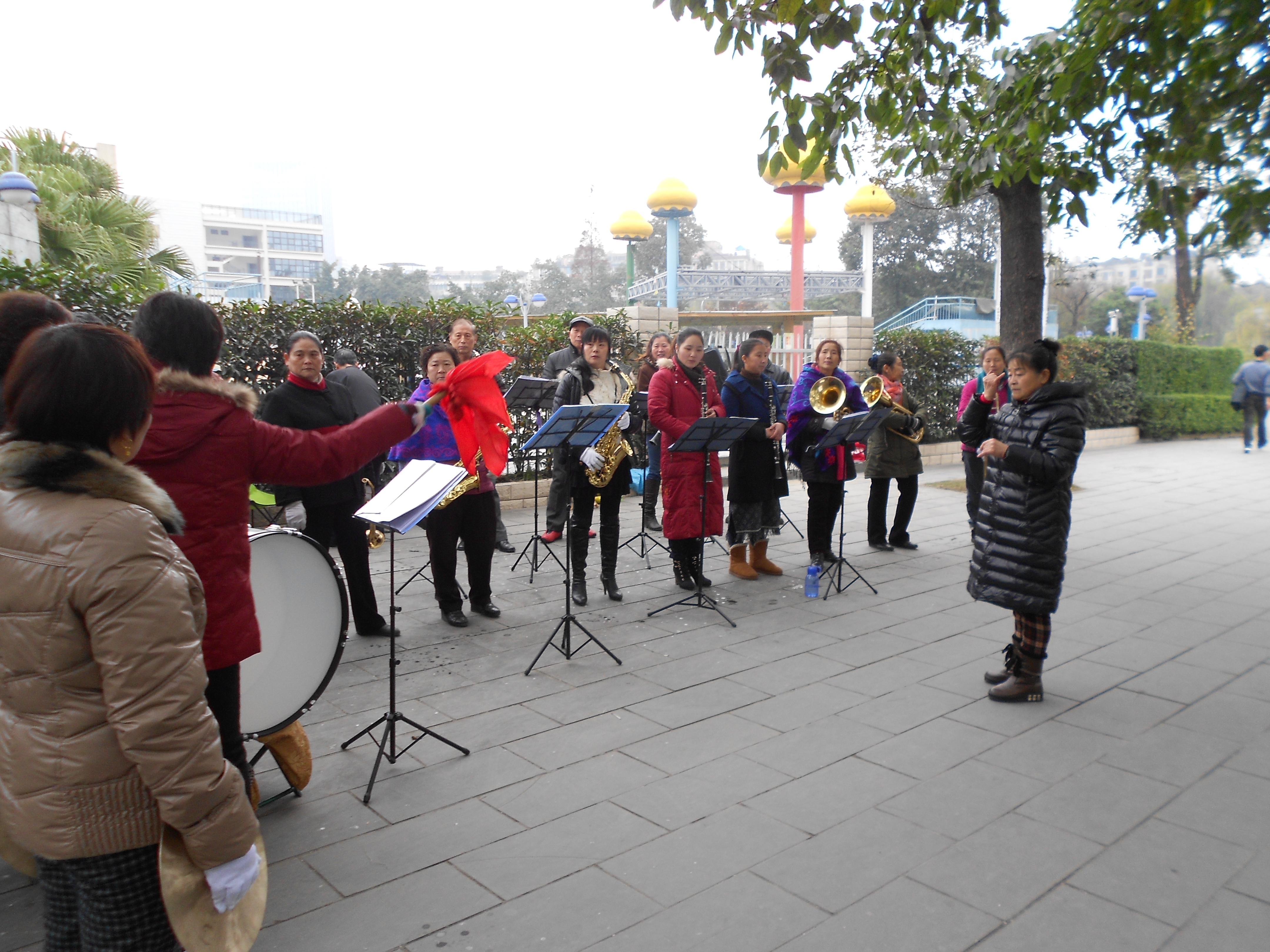
Practicing "Joy to the World"

Practicing “Joy to the World”

It started 2 months ago.

I arrived on Wednesday after class to Meng Zhui Wan park, where my swimming pool is located, to find quite a crowd.

Every day, I have been swimming as a part of my daily exercise and relaxing routine. After a 20-minute taxi ride, I step to the curbside to walk across the tiled expanse of park that surrounds the outdoor and indoor pools. Usually around noon, a small spattering of elderly are out in groups doing tai qi, ballroom dancing or swinging from the athletic equipment set up for the public use.

There aren’t usually too many but on that particular Wednesday awhile back, there were small clusters of people spread out all over. As I made my way around them, I noticed that one particular group stood in a circle, heads bowed while saying the Lord’s Prayer. Another, a small band, was in full swing playing Joy to the World. And still yet other active gatherers were working diligently on a fan dance performed to a Chinese hymn booming from their portable cassette player.

Ah, the preparations for Christmas in China were underway!

CHINESE CHRISTIANS PREPARING FOR CHURCH CELEBRATIONS

It is the custom in most Chinese churches to have performances for midnight eve services.

Last year, I was in the Luzhou church choir and we also were preparing weeks in advance for our special numbers, We Wish You a Merry Christmas (in English) and Handel’s Hallelujah Chorus (in Chinese). Our Sunday school classes (all ages), retired folks’ choir, youth and children’s choirs, instrumentalists and others were likewise getting ready for their dance, skit or musical numbers.

I remember we all met at the church at different times to practice so we had to coordinate who got the sanctuary when. Sometimes, we ran into a bit of overlap, much to the irritation of our choir director “John” Lu. I then found out that adult choir trumps all other circles in the Luzhou church. We were never the ones to move, especially when Director Lu was in charge.

Many would have met at our local city park if possible but the park was closed for the year to undergo renovations, thus it was the church we stayed at.

How nice that here in Chengdu, the church Christians could gather outside in an environment suited for such large numbers!

REACHING PERFORMANCE PERFECTION

Every Wednesday, I’ve hung back 10 minutes or so to watch everyone’s progress in their practices. I did tell a few of the ladies, during a break once, that I was also a Christian and participated in services in Luzhou last year. I’d be happy to attend their worship but I’d instead be returning on the 24th to spend time with my church family along the Yangtze.

“Oh, what a pity!” several said with great disappointment.

Yes, in many ways, it is a pity because they’ve really improved over the past 2 months. I have no doubt the Christmas Eve services at Chengdu’s main Protestant church (quite near the park, actually) will prove to be quite something special, as will all upcoming celebrations throughout the Christian communities here, Luzhou included.

Many blessings for your own Christmas celebrations, wherever you might be, and wishing you Ping An (Peace) during your Yuletide season.

Posted in Chengdu Daily Life, Travel | 2 Comments

Memories of Enjoying the Chinese Gingko Among the Chinese

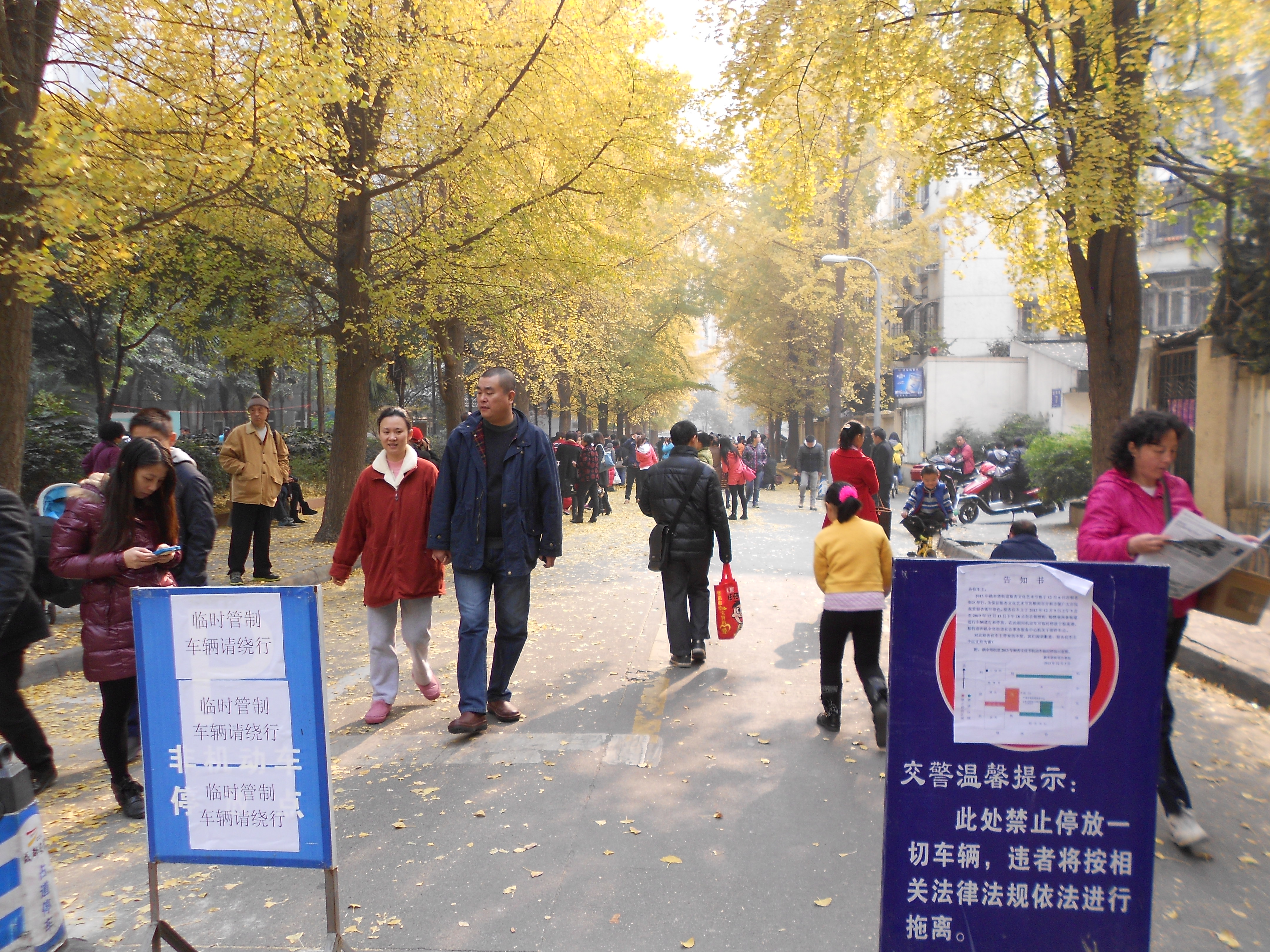
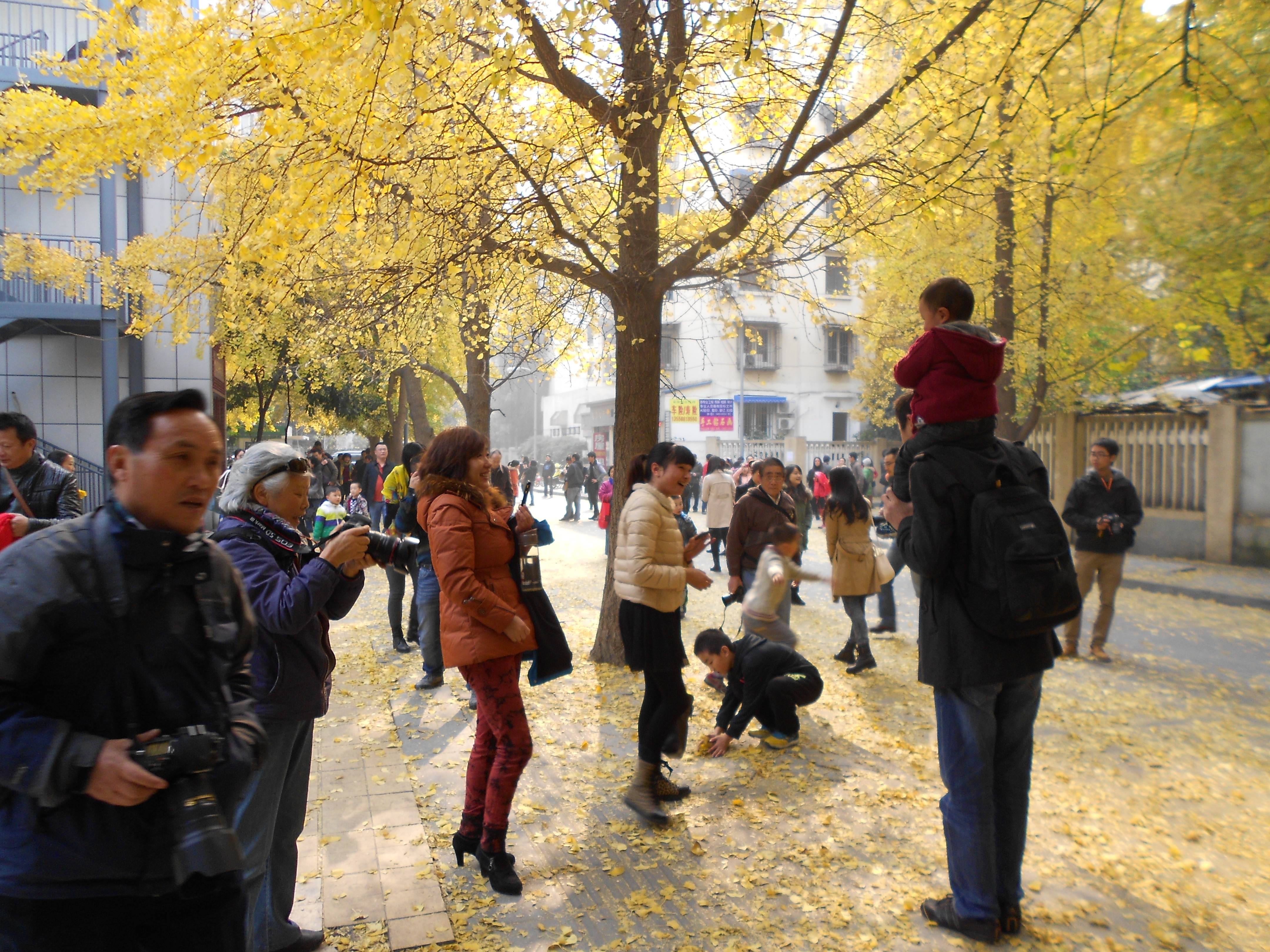
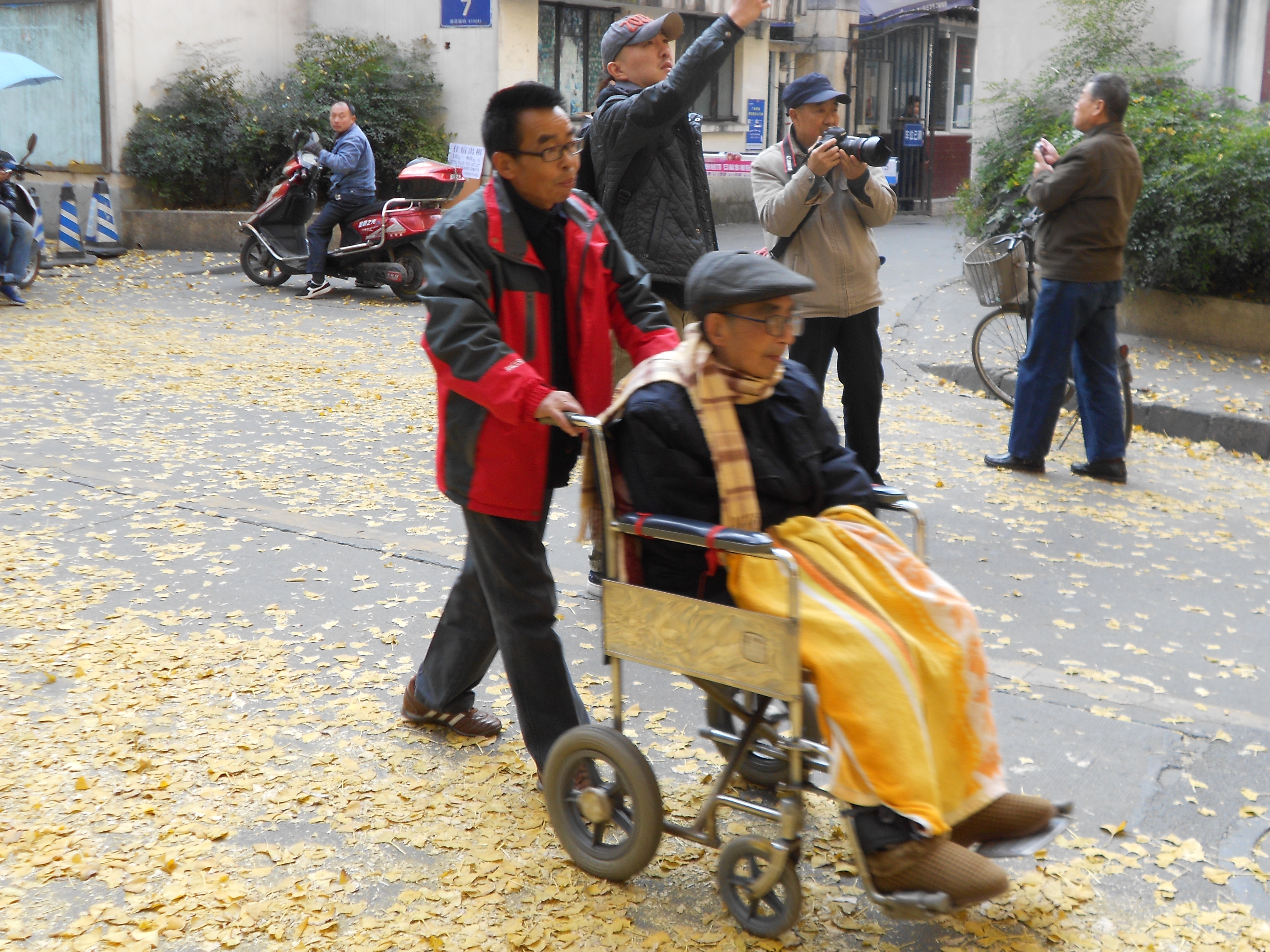
For one week, our sidestreets were closed  to vehicle traffic for safer gingko viewing by the public.

For one week, our sidestreets were closed to vehicle traffic for safer gingko viewing by the public.

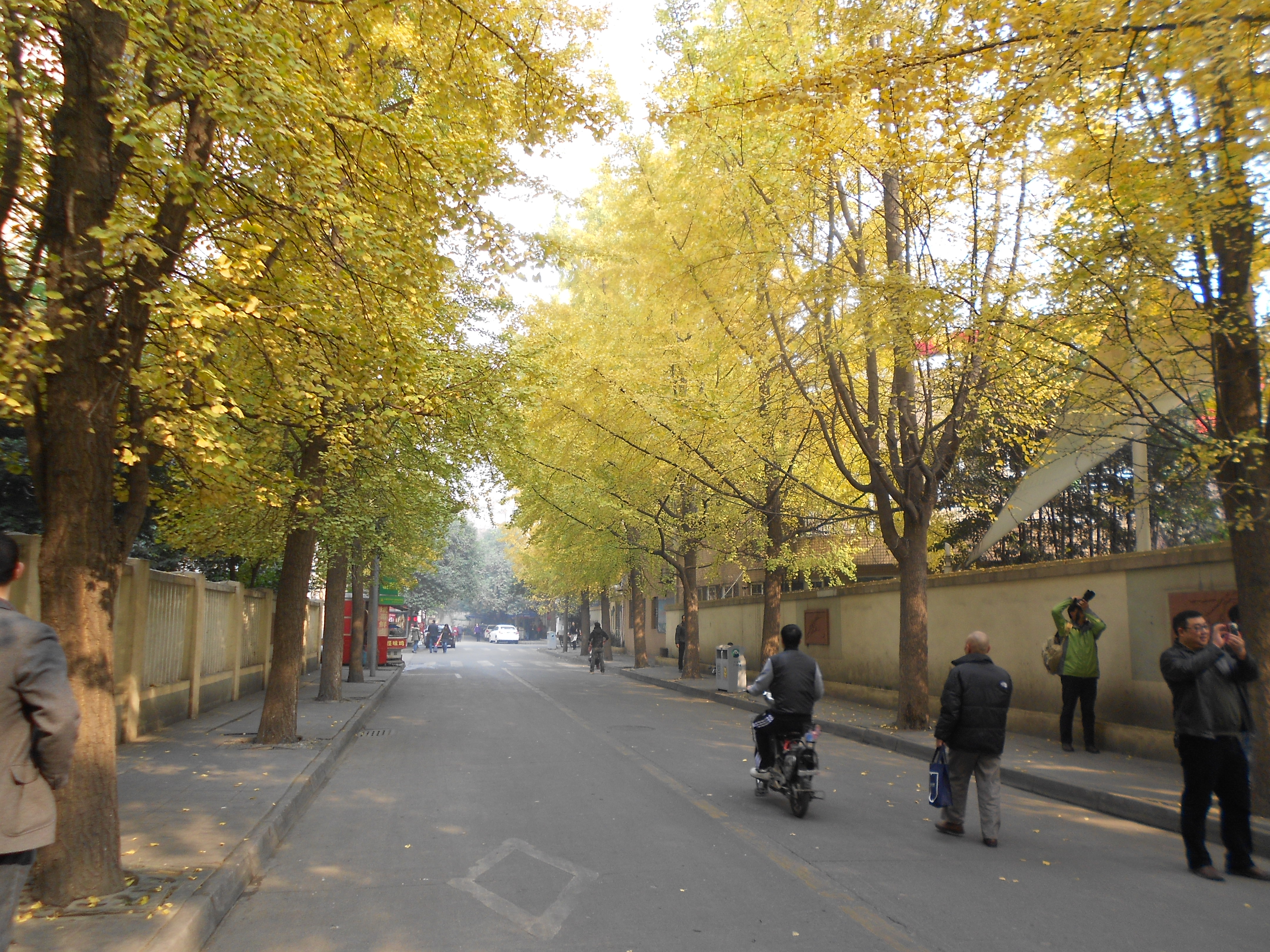
Our neighborhood ginkgo, awaiting the crowds to alight by the hundreds.

Our neighborhood ginkgo, awaiting the crowds to alight by the hundreds.

Couples out for their wedding photos during weekends are always seen in Chengdu.  The autumn leaves made posing all the more special.

Couples out for their wedding photos during weekends are always seen in Chengdu. The autumn leaves made posing all the more special.

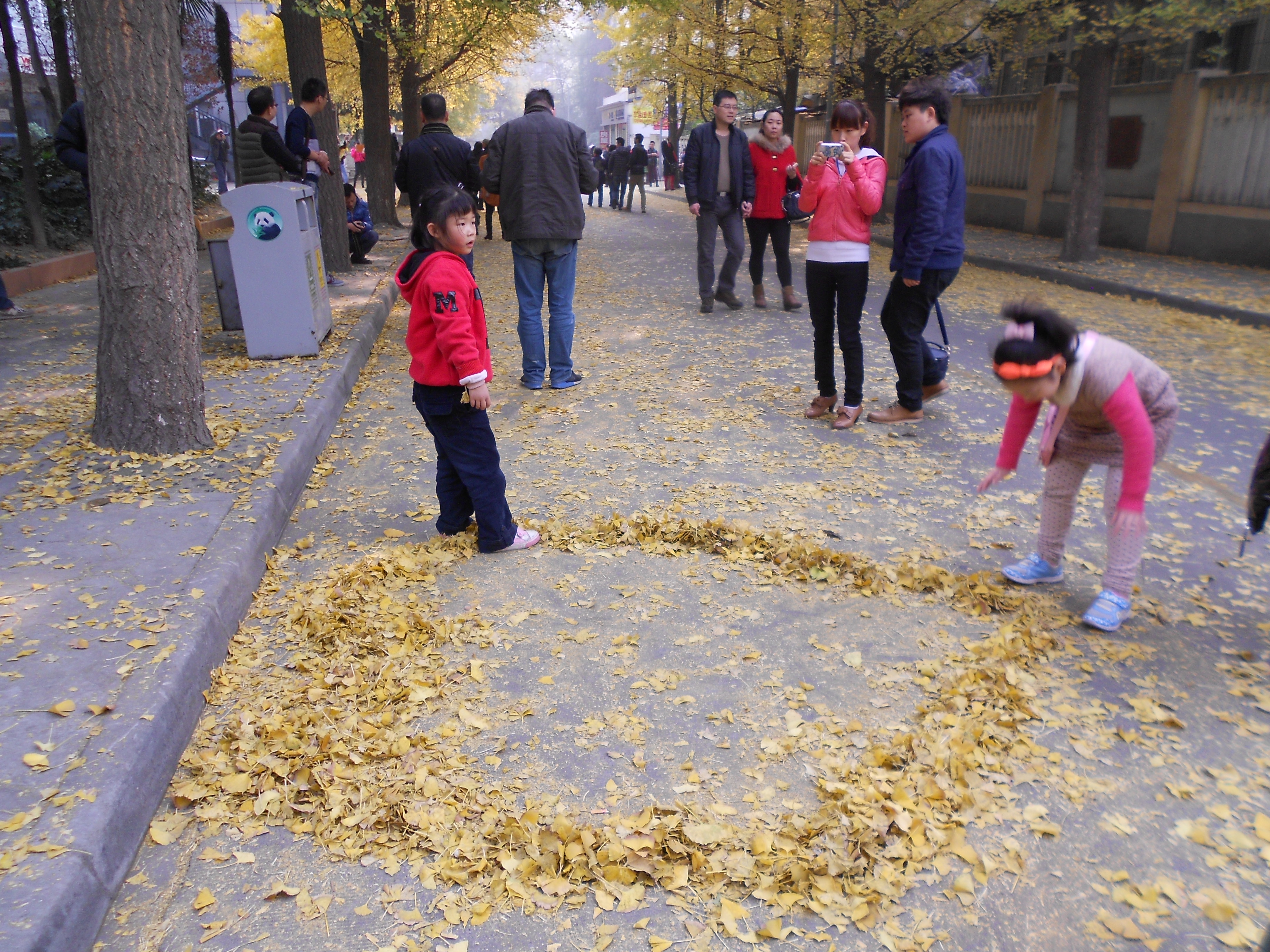
We all love to play in fall leaves.  These kids are creating a golden heart.

We all love to play in fall leaves. These kids are creating a golden heart.

Family members can't get enough of photographing the little ones.

Family members can’t get enough of photographing the little ones.

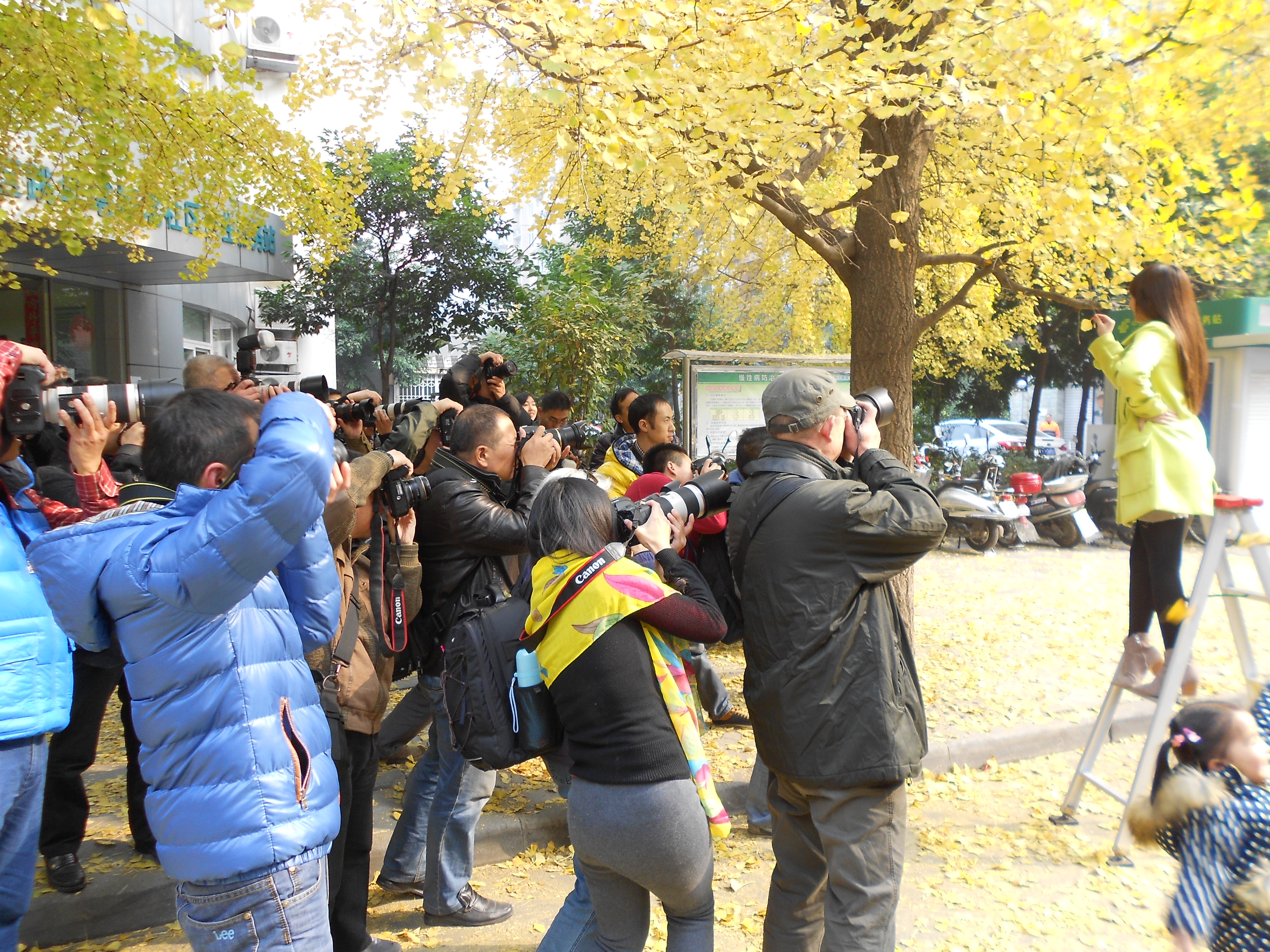
When a model appears, here positioned on a ladder, anyone with a camera takes advantage.

When a model appears, here positioned on a ladder, anyone with a camera takes advantage.

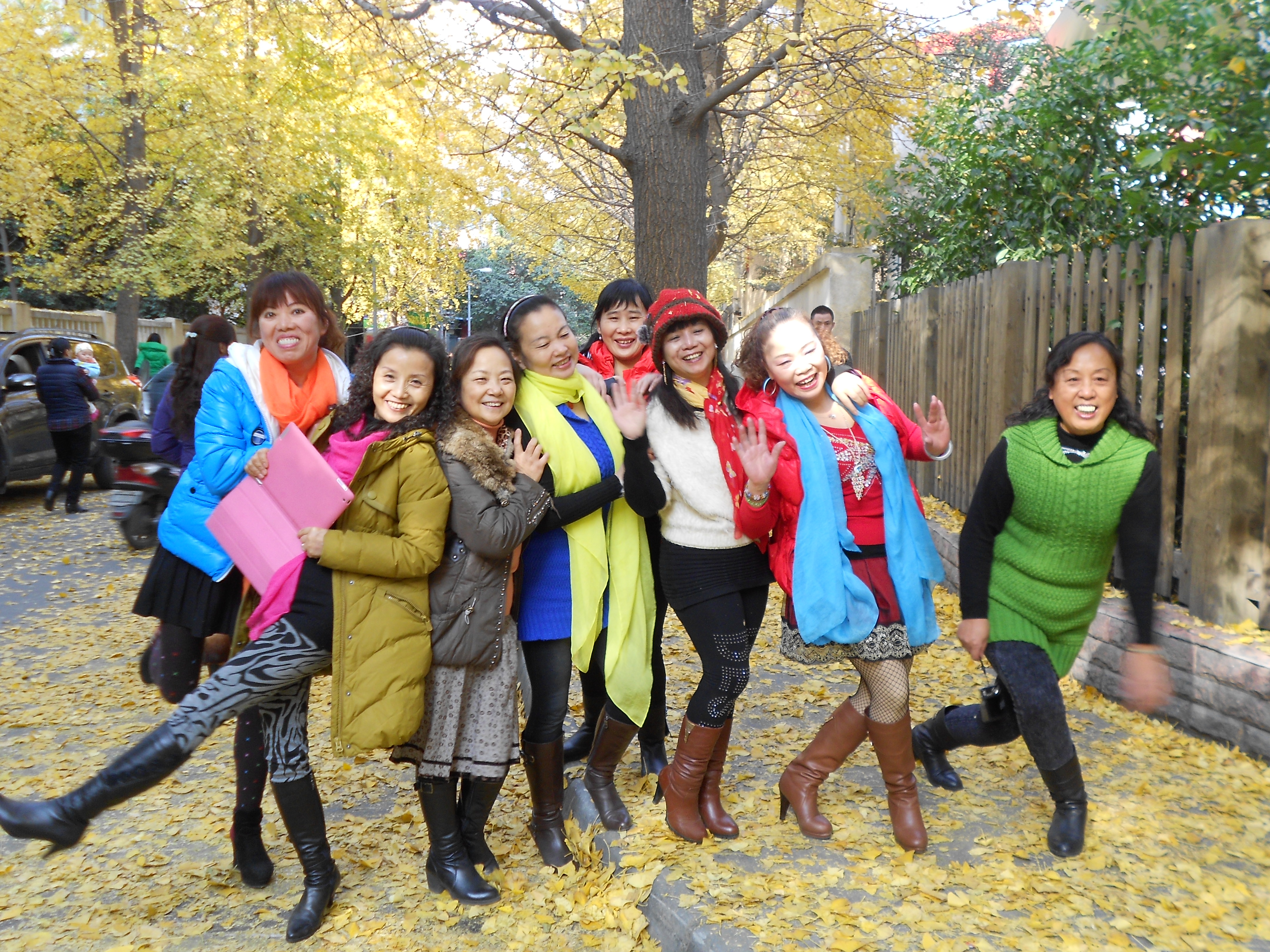
These office mates came out during their lunch hour to immortalize Autumn in a photo shoot.

These office mates came out during their lunch hour to immortalize Autumn in a photo shoot.

No one is excluded from  enjoying the sights of our neighborhood autumn.

No one is excluded from enjoying the sights of our neighborhood autumn.

Posted in Uncategorized | 1 Comment

Dressing the City in Gold: The Autumn Gingko (银杏) In Full Glory

All week, bright sunshine and 60-degree temperatures have filled the Sichuan University campus lawns with crowds of happy folk. Families, the elderly, kite flyers, dog walkers and students have been putting this amazing weather to good use. Blankets are spread to relax or sleep on, then filled with light snacks to indulge upon later. Toddlers plow gleefully through those seated on the ground while doting grandparents follow close behind. Doggies romp freely with one another as owners chit-chat among themselves. Retired men, flying kites, keep skillful hands on their string reels while watching their homemade creations sail high over our heads. College couples, entwined in each other’s arms, whisper sweet sentiments in between nuzzles and carresses.

It is a scene I have never seen on the quiet campus of Luzhou Vocational and Technical College. A small, 3-year school just doesn’t have the drawing power of a noted Chinese university whose lush grounds, majestic ancient-style buildings and central city location make it the place to patronize for a few peaceful hours.

But this entire week really brought out both locals and tourists alike by the thousands, not only to the Sichuan University campus but many small neighborhood areas throughout Chengdu.

What’s been the big fuss?

It’s peak autumnal season of the Chinese Ginkgo trees!

THE CHINESE GINKGO 银杏 (Yin Xing)

I did some research on this tree, since it’s such a popular sight along almost every street here. This is what I discovered.

The Chinese ginkgo, also spelled gingko and known as the maidenhair tree, is of the ornamental variety. It has lovely fan-like leaves and produces nuts which are used in herbal supplements. According to the website I found, an extract is made from the leaves of the ginkgo and drunk to strengthen memory and concentration. It is also used to treat numerous ailments, including tinnitus, fatigue, asthma, Alzheimer’s disease, leg pain, multiple sclerosis, cancer, bronchitis, coughs and reproductive tract problems. The World Health Organization has even approved the use of ginkgo leaves to treat Raynaud’s Disease, a condition in which blood flow to the surface tissue of the skin is temporarily reduced.

It was brought to the New World from China in the 1700’s and has been known to do quite well in our US environment. It can survive freezing temperatures, drought conditions and heavy rainfall. However, it doesn’t fair well in arid climates so those of you living in Arizona, let’s say, won’t be finding any ginkgo adorning your boulevards.

I also learned the female tree produces a small, tan-colored fruit that has an objectionable odor. Most horticulturalists and landscapers avoid planting the female ginkgo tree for this reason. Despite that set-back, it is definitely a favorite for gardeners. It requires little pruning and has strong resistance to pests and disease. It can even be grown as a bonsai, sitting in a small pot and trimmed into a desirable shape.

But among us Chengdu folk, it’s not the hardiness, the medicinal value, or the gardener’s favorite that is bringing us out in droves to gaze at these beauties. It’s their amazingly gorgeous golden autumn leaves.

DRESSING THE CITY IN GOLD

It is hard to describe the excitement of the Chinese over the autumn ginkgo.

The few blocks, small lanes and alleyways, or larger parks and school campuses that have them are currently overrun with anyone and everyone out to take advantage of this spectacle.

Professional and amatuer photographers alike make their way under the trees’ golden, leafy tresses to get just the right light. They also have their pick of shots from among young models, wedding couples in full marriage attire and little children who wander about and strike poses while those nearby toss leaves high into the air to cascade downward upon them. Friends and family are ready with their cellphone or digital cameras. After snapping away, they then huddle together, reviewing the photos again and again to agree upon the keepers and the discards.

So popular is this seasonal experience among locals that the city government has chosen certain rare gingko spots for just that: ginkgo viewing and nothing else.

All week, our neighborhood side street lined with majestic ginkgo was blocked off. A sign along the wider street and a connecting narrow road (Splendid Lane Alley) stated that no cars were allowed, either for parking or driving. From December 5 to 12th, 9 a.m. to 6 p.m., pedestrians only had access.

Ginkgo news spreads fast in this city so you can imagine what the past five days have been like in my neighborhood: tourist central!

What great fun it has been to watch those of all ages and backgrounds walking aimlessly down the middle of the street with a canopy of yellow gold above them and a carpet of the same beneath. For the only time all year, the street sweepers were off duty from cleaning away the fallen leaves. Their traditional twigged brooms lounged against trees or lay idley along the curbside while piles of leaves crunched under our feet.

It has been a nostalgic journey for me, remembering my childhood years of play when Fall overtook our yard in smalltown Marshall.

A WEEKEND CHILL; A WEEKEND CLEAN-UP

This weekend, however, brought an end to our yearly Chengdu ginkgo viewing.

Our temps dipped into the 30s at night, 50s during the day with darkening skies and light drizzle during our morning hours. The street cleaners have been busy at work, sweeping away all that crisp beauty that all week brought us frolicking folk out by the thousands. Car traffic has returned, mingling that once fragrant fall scent with dastardly fumes.

Of course, not all of the gingko have faded away. There are still trees holding desperately to their colorful covering but it’s a losing battle. Winter is fast approaching southwestern China and the gingko are proving to be the first victims.

Ah, well.

We all have steadfast memories to enjoy from last week’s gingko tree photography sessions. I know I certainly do, along with next year to look forward to.

(Note: My autumn gingko photos are soon to follow. Downloads are excruciatingly slow on this computer, thus the delay. They should be appearing in full within the next couple of days.

UPCOMING PLANS

In the meantime, it’s the anticipation of Christmas (December 25) for me, and Chinese Spring Festival (January 31) for the Chinese, that is overtaking most of the excitement at the moment.

I’ll be off to Luzhou for a few days to enjoy the holidays with our Peace Corp members and Luzhou church community. Then it’s returning to Chengdu to finish up the school year at Sichuan University before our Chinese New Year vacation days finally set in.

If I don’t get back to you before then, here’s wishing you an early Merry Christmas from China and Ping An (Peace) for the upcoming new year.

Posted in Chengdu Daily Life, Travel | 1 Comment

Photos for Previous Blog

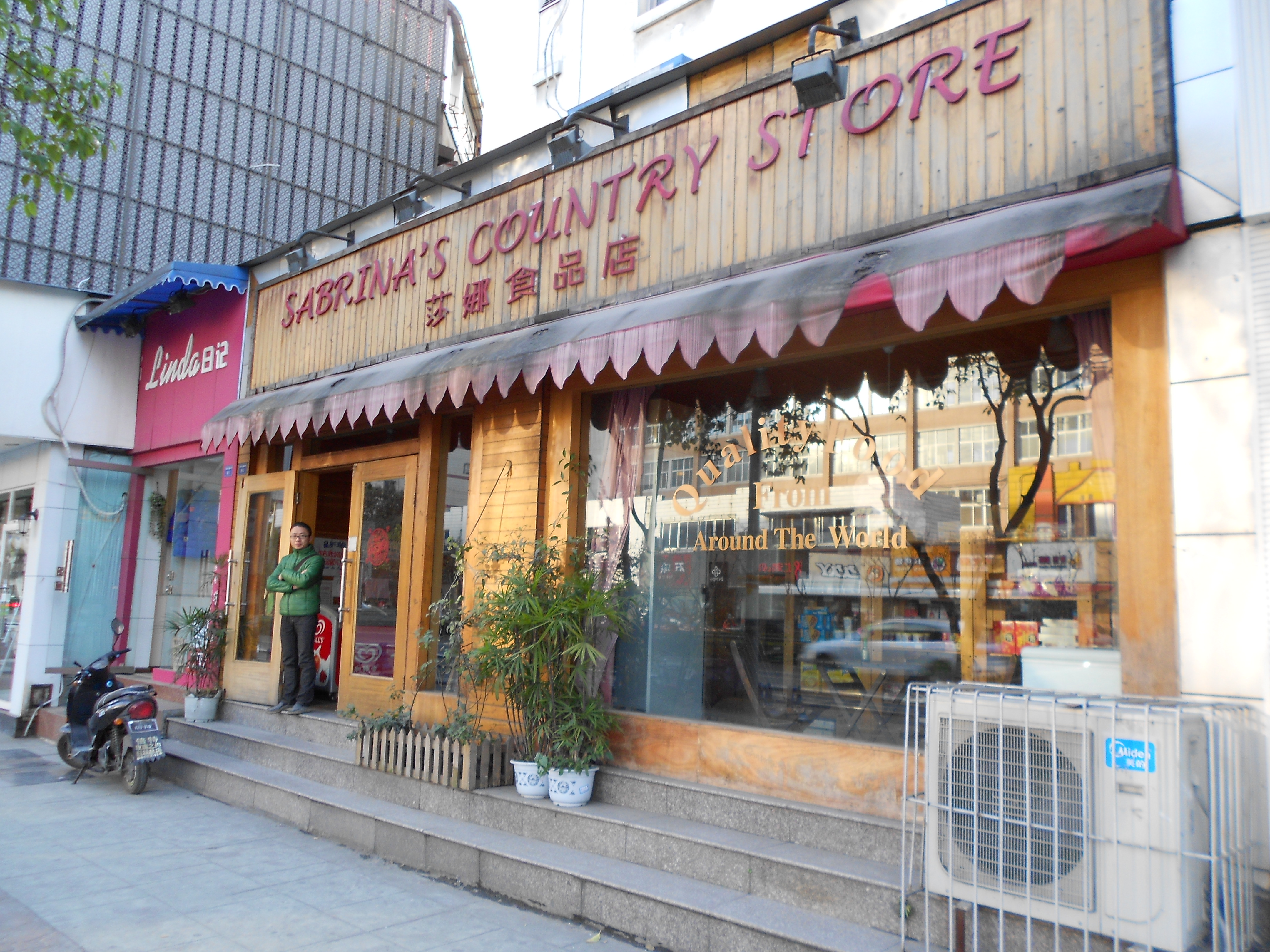
Sabrina's:  The best place for US citizens  to get their American food fix.

Sabrina’s: The best place for US citizens to get their American food fix.

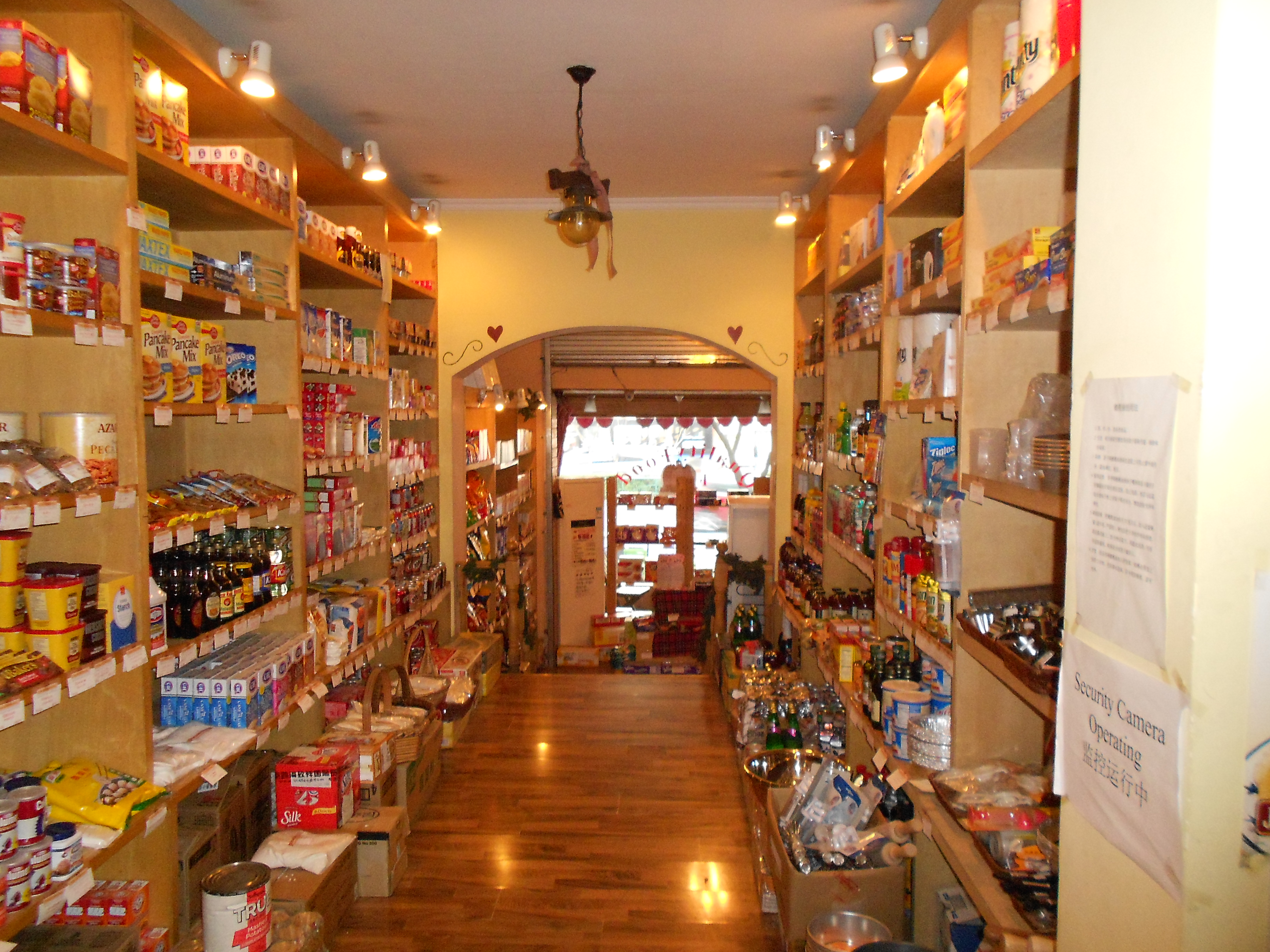
An extensive stock of American goods can be found at Sabrina's.

An extensive stock of American goods can be found at Sabrina’s.

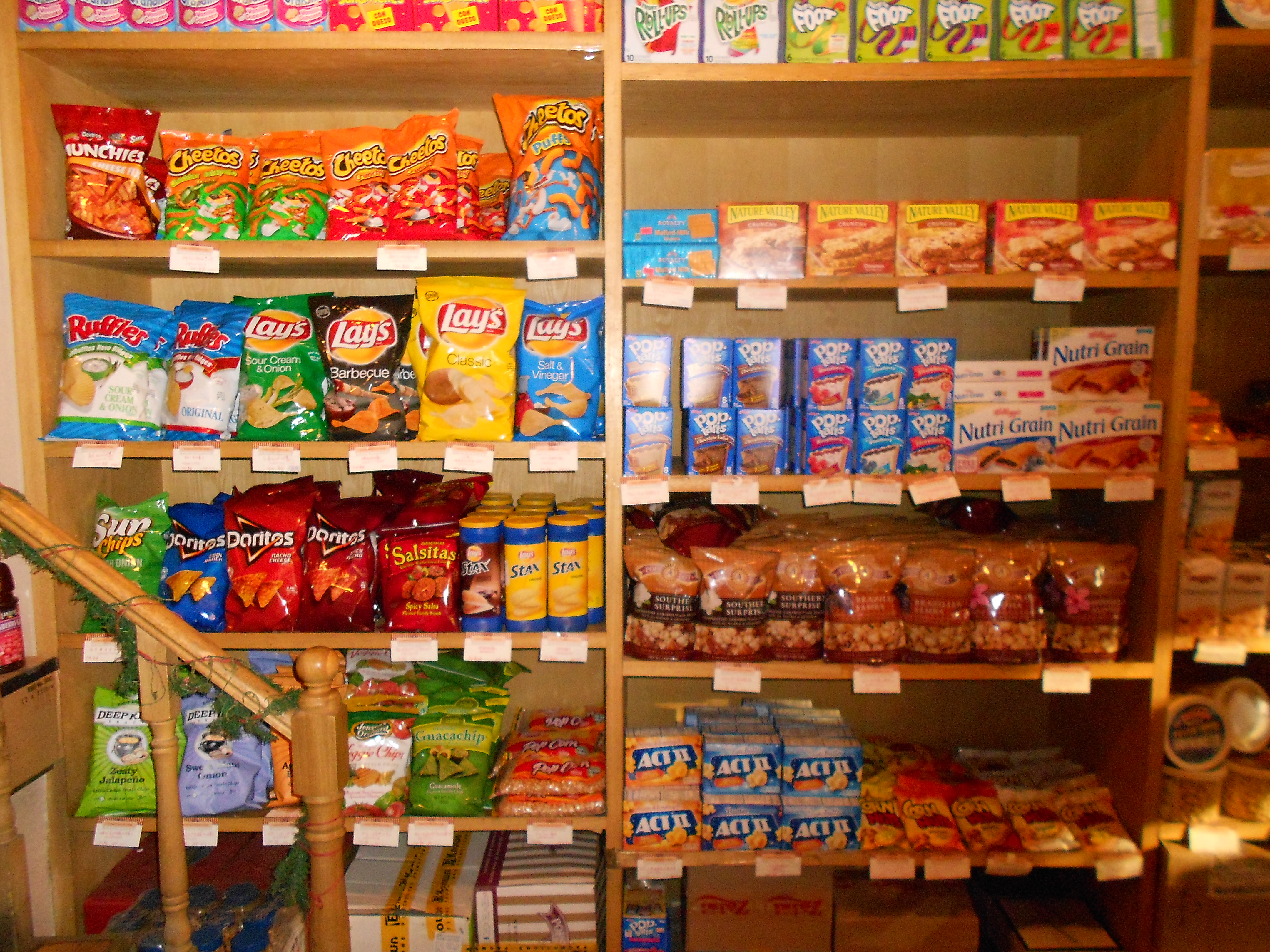
Sabrina's has a wide range of American foods, for a price.  Chips here run from $5 - 10  . . . a bag!

Sabrina’s has a wide range of American foods, for a price. Chips here run from $5 – 10 . . . a bag!

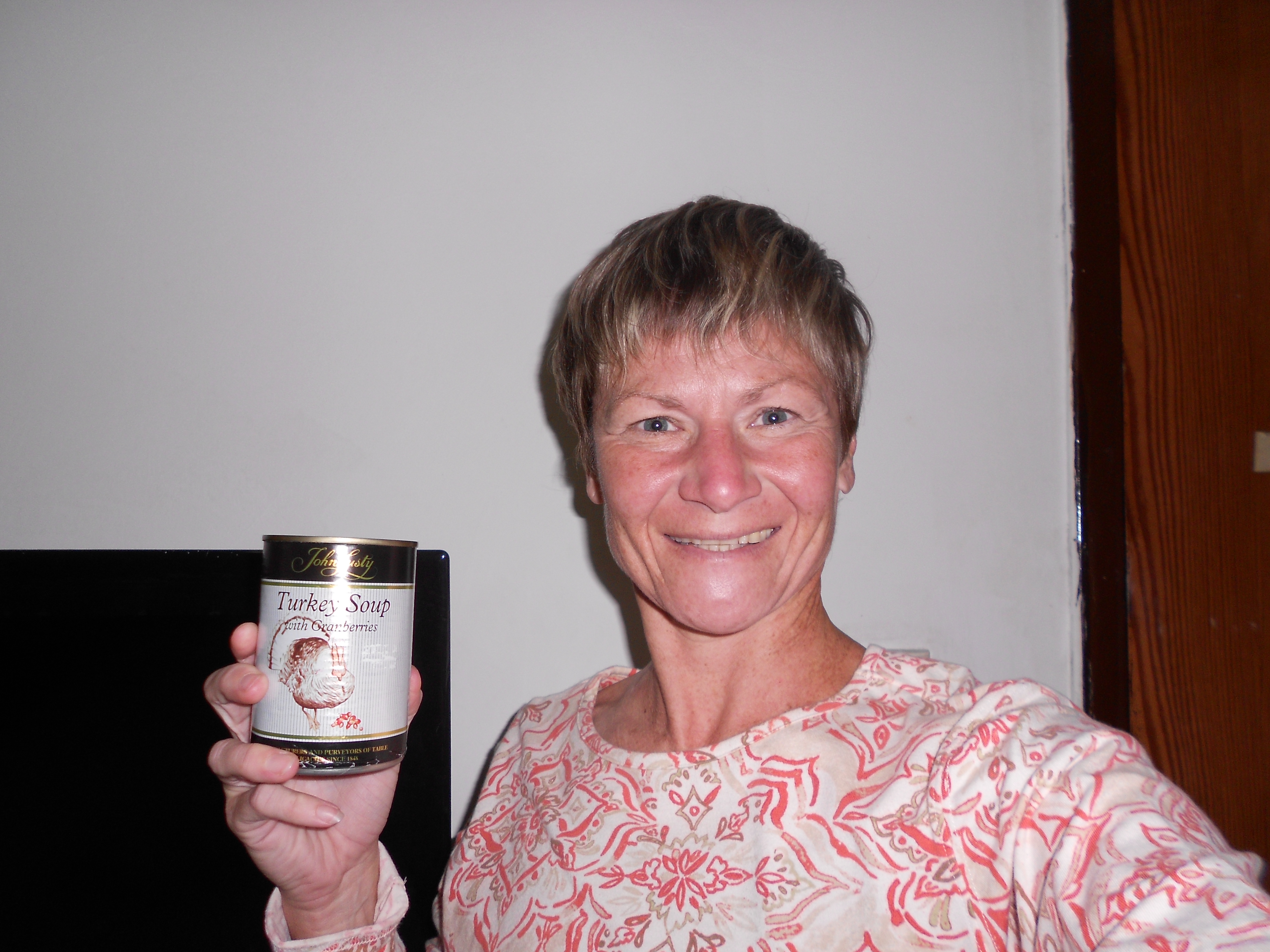
My Thanktsfiving Day dinner, Lusty's Turkey soup, courtesy of my friend at Sabrina's.

My Thanktsfiving Day dinner, Lusty’s Turkey soup, courtesy of my friend at Sabrina’s.

At Peter's, the T-day menu is impressively . . . inviting and expensive.

At Peter’s, the T-day menu is impressively . . . inviting and expensive.

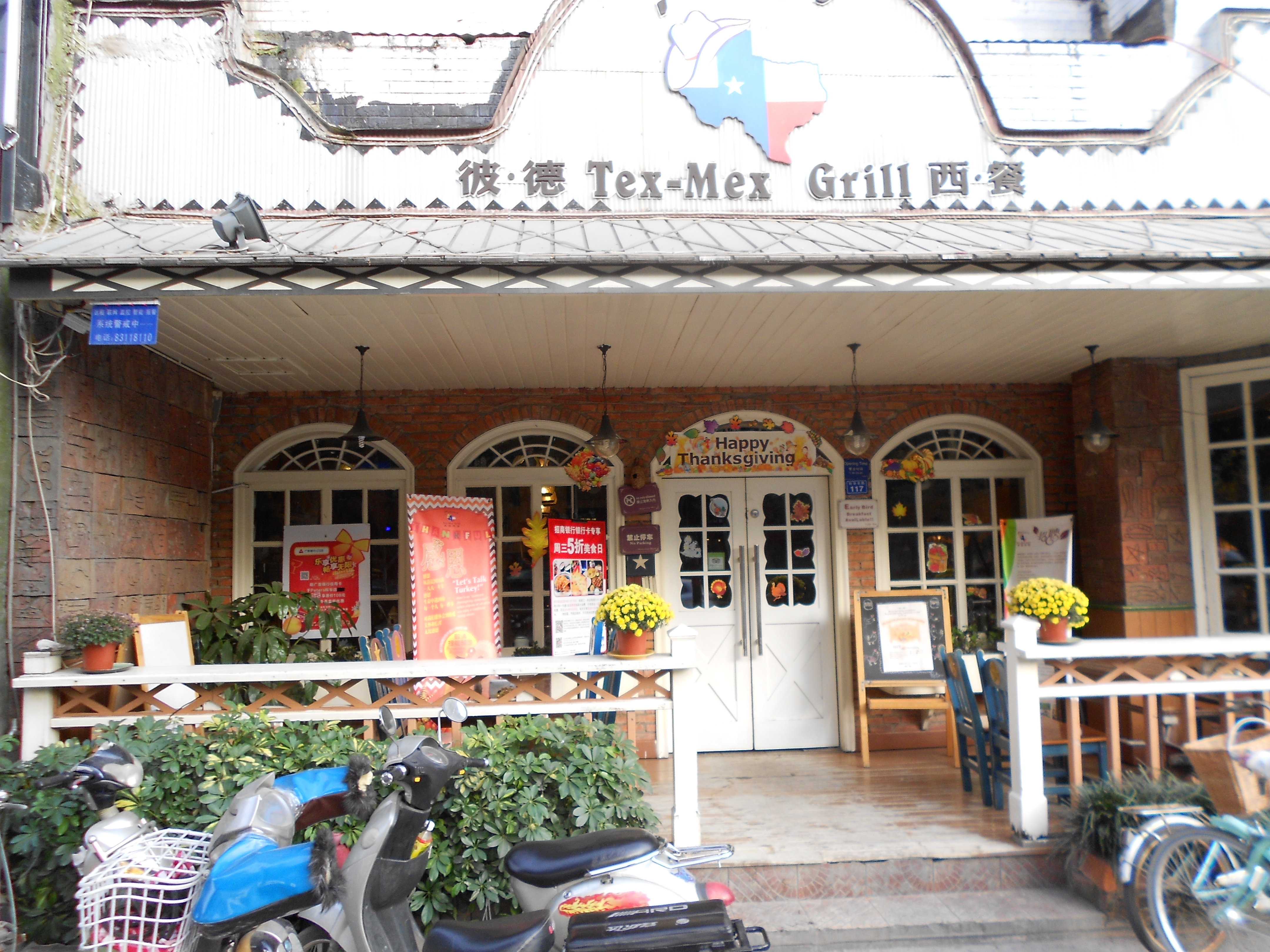
Peter's storefront invites diners to a Thanksgiving Day feast.

Peter’s storefront invites diners to a Thanksgiving Day feast.

Posted in Uncategorized | Leave a comment

“Yes, Virginia, there is turkey in China!”

I’ve found living in the big city rather than small town Luzhou has a lot of perks. One of them is turkey for Thanksgiving.

Turkey is not a bird found commonly in China nor eaten here. I have only seen turkeys once in my 20-odd years of being in this country and that was several years ago in tiny Longzhou, my former teaching placement near Vietnam. A farmer had loaded onto his motorbike cages stuffed with flapping, squawking fowl of all sorts and 3 turkeys were in the midst of the feathery mess. I remember being so excited that I ran back to my apartment and returned with my camera for a picture.

I have no idea what happened to the gobblers, if they were sold in our village town or sent off to a bigger city for purchasing, but I’ve never seen any others since.

Because there is no Thanksgiving Day holiday in China, the only place to find turkey and the fixings of our traditional dinner would be in Western restaurants in bigger cities, where we have communities of foreigners. Along the Yangtze in Luzhou, we never had food establishments offering such things, but in Chengdu, Thanksgiving Day dinner possibilities can be found in abundance.

LIVING AMIDST THE FOREIGNERS’ HAVEN

I live in Sichuan University’s West Gate area, which happens to be about a 10-minute walk from the US Consulate. So aside from the foreign college students, we also have the American employees and soldiers not far away as well. This makes us a very lucrative business district for overseas’ guests.

This is why the West Gate touts numerous restaurants catering to foreigners’ tastes. We have Casa Mia (Italian), Vanilla Sky (higher end European), Peter’s Tex-Mex (American and Mexican cuisine), St. Paddy’s (British pub with snacks), the Bookworm (cafe with light sandwiches and pastas), just to mention a few.

TURKEY DINNERS EASILY HAD . . . FOR A PRICE

Quite a few of these have special holiday meals served up to the Chengdu community. The most notable dinners are at Peter’s, which has a traditional Thanksgiving Day meal served every year for lunch the day of and dinner the day after.

7 years ago when I was studying Chinese in Chengdu, I had the day-after full course turkey dinner at Peter’s for 78 yuan (about $10) and it was well worth it. Everything was homemade, including the stuffing and mashed potatoes, not to mention the pumpkin pie.

Last week, I excitedly high-tailed it across the street to Peter’s to check up on this year’s holiday turkey meal. I found out two surprising things.

First, the meal was a more elaborate affair than in 2006, adding mulled cider, cream of pumpkin soup, waldorf salad, turkey with yams, dressing, steamed broccoli, and cranberry sauce, along with pumpkin or keylime pie for dessert. That’s a lot of food for a person such as myself and I wondered if I could even eat it all.

The second thing I discovered was the price: a wopping 128 yuan, or $21.50 per person. Over double what I had paid before.

Something else new on the menu was the alternative Thanksgiving day feast, the main entree being U.S. Angus grilled rib-eye steak.

How much does one fork over for that one? 268 yuan, or $44.70.

Needless to say, I decided this year in China, a Thanksgiving Day dinner would most likely be a miss.

DO IT YOURSELF

A homecooked holiday meal can also be had for those Americans here with a fully equipped overseas’ kitchen (i.e., a conventional style oven, which Chinese don’t use or have) and money in their pockets to purchase all the required ingredients.

The best imported food store in the city is Sabrina’s International Food Store, just around the corner from me. It is often filled with those from the American school and the consulate looking for their U.S. comfort foods or curious Chinese trying to figure out what all those bizarre, foreign items are used for or taste like.

Sabrina’s has neatly stacked shelves of foreign goods, a majority American. The owner does a booming business among the expats. Chips, cookies, soft drinks, breakfast cereals, condiments (mustard, ketchup, relish), canned soups, cake and brownie mixes, baking goods (cocoa, chocolate chips, powdered sugar, Pillsbury flour) . . . . This store has it all, albeit for a hefty price. (Usually, items are double or triple what we’d pay in the States.)

And that does, indeed, include all that’s needed for a home-cooked Thanksgiving Day dinner.

Just last week, Sabrina (the Chinese owner) had huge shipments of canned cranberry sauce, pumpkin, instant mashed potatoes and gravy mixes stacked on the floor, waiting to be shelved. Also available were American brand frozen turkeys, which had to be ordered ahead of time to be flown in from Shanghai or Hong Kong.

And how much does a frozen turkey go for at Sabrina’s? Her posted sign announced: “Frozen Turkeys: 58 yuan per kg” which roughly converts to 28 yuan ($4.70) per pound.

Ouch!

Nor were the ones I saw ordered very small. I took a peek into the freezer section to see just how big these turkeys were that Americans were purchasing for the holidays. We are talking 20-25 pounders ready to be picked up, which brings us roughly at $94 – $117 a bird.

Double ouch!

Especially as this year, the average price in the States was listed as $1.36 a pound.

In other words: “Dig down deep, oh, ye Pilgrims in China.”

GOING NATIVE . . . ALMOST

Along with the rest of the Chinese, I was just about to forego any such turkey eating luxuries when one of Sabrina’s store clerks surprised me with a special gift. While I was checking out the aisles the day before Thanksgiving, Ms. Gao dug through her bag and pulled out a can from Britain, John Lusty’s Turkey Soup.

“The owner gave this to us because it wasn’t selling,” she said. “Take it! I won’t eat it.”

Ms. Gao and I have a special relationship due to her love of my former dog, Little Flower (LF). Every time we visited, she’d give LF bits of cheese crumbs from the pantry or let her lick the tiramisu plate after all the slices had been sold.

She and I both miss LF immensely. Without my little Chi around, my visits to the store are not as joyful or uplifting for either of us.

Ms. Gao’s holiday offering was a way to bring a little of that long ago happiness back: She in the giving; me in the receiving.

I certainly am not one to turn down free food, even if John Lusty is not a brand I’m familiar with. And let’s not forget how appropriate a food it was: Turkey! Even if it was soup, I’d be getting a wee bit of my holiday bird after all.

THANKSGIVING DAY, HERE AND GONE

Classes went on as usual last Thursday but I did enjoy my little Thanksgiving Day feast of Lusty’s soup. It isn’t anything I’d like to eat again but it was still very special, especially because of who gave it to me and the reason behind it.

Hope you Thanksgiving Day was just as meaningful and thankful as mine. From China, Ping An (Peace)!

Posted in Chengdu Daily Life | 2 Comments