Kitty in Need: My First 2014 Act of Mercy

My walks to and from class take me about 20 minutes once I leave my apartment complex.

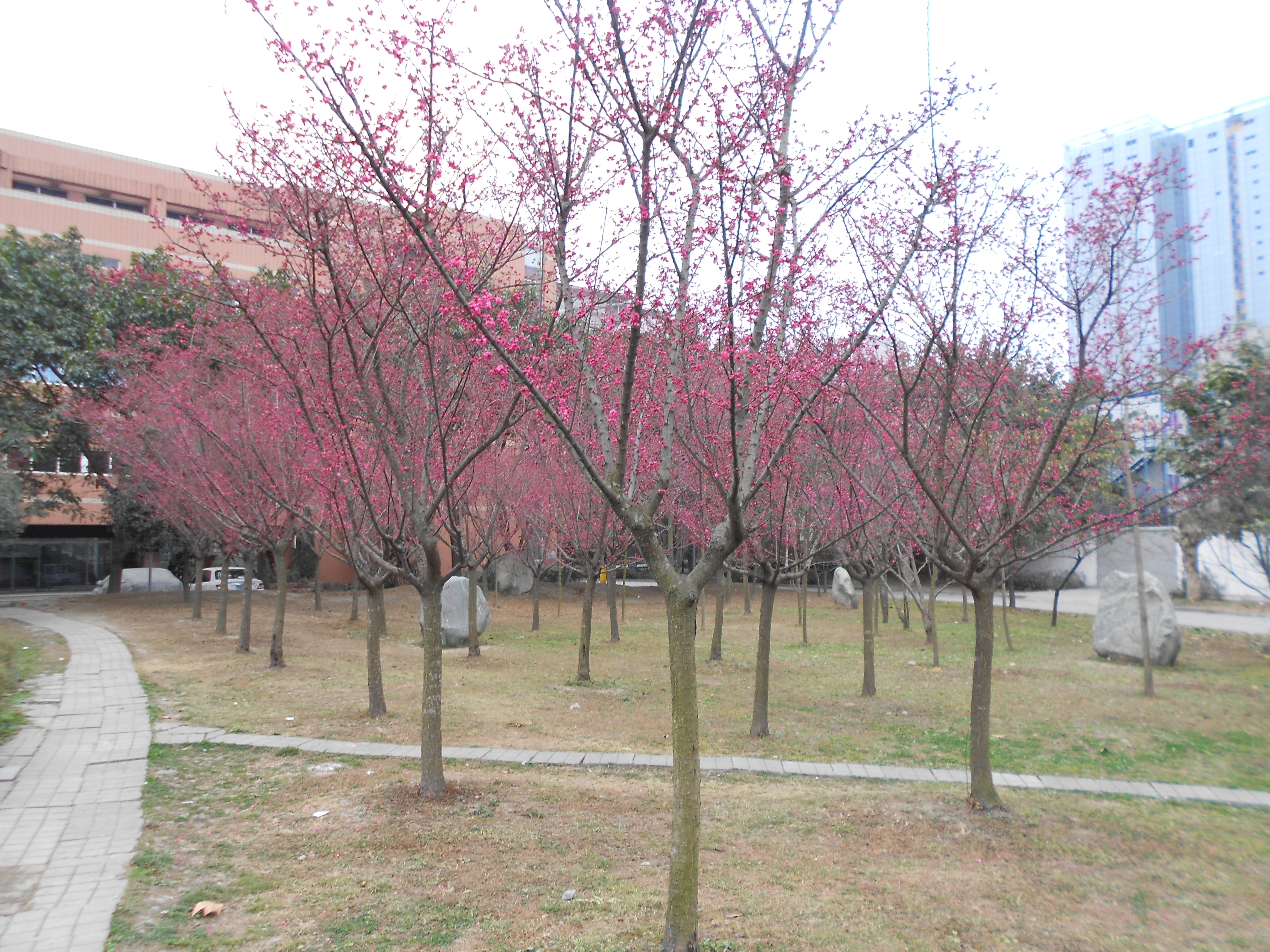
My 20-minute walk through the campus provides some lovely spring scenery.

My 20-minute walk through the campus provides some lovely spring scenery.

Last year, I quickly found the best pathways to take across the university campus that would save me a minute or two. These had me weaving my way into the dilapidated parts of the school, where crumbling 1950s staff living quarters, open trash heaps and sewage smells filled the air.

Sadly to say, families and students still live in those parts of the campus, which would certainly be condemned in the US.

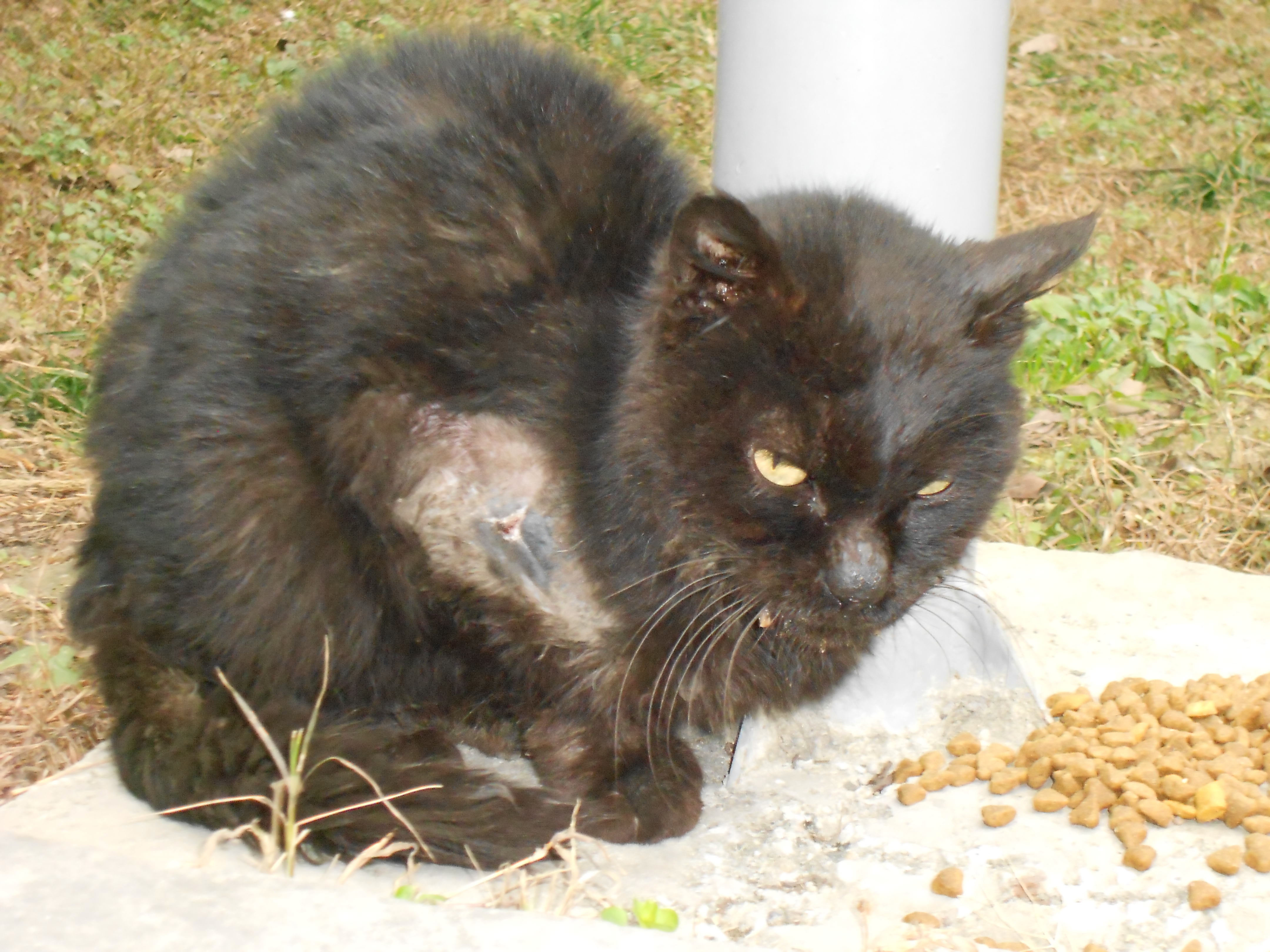
It was in October on these treks that I began seeing a boney, ratty-furred black cat, sitting near one of the classroom buildings on a manhole cover to keep warm. It became my habit after that to fix food for him and leave it there. He was quite friendly, actually, and had a lovely purr, unusual for wild, outdoor kitties in China.

When winter came, it was cold outside. I noticed some very kind person had cleverly fixed up within a bush a little cushion and shelter area for Ratty Thing, as I called him, for protection from the chilly wind and rain we were having.

Ratty Thing's little shelter, with my Chinese note to those who cared that he's receiving treatment at the veterinarian hospital.

Ratty Thing’s little shelter, with my Chinese note to those who cared that he’s receiving treatment at the veterinarian hospital.


Temperatures dipped into the 30s at night and early morning. I noticed Ratty Thing was often shivering when I’d drop off his food but still grateful for a little attention.

Illness Troubles for RT

Being an outdoor cat, without vaccinations or proper nutrition, took its toll on Ratty Thing.

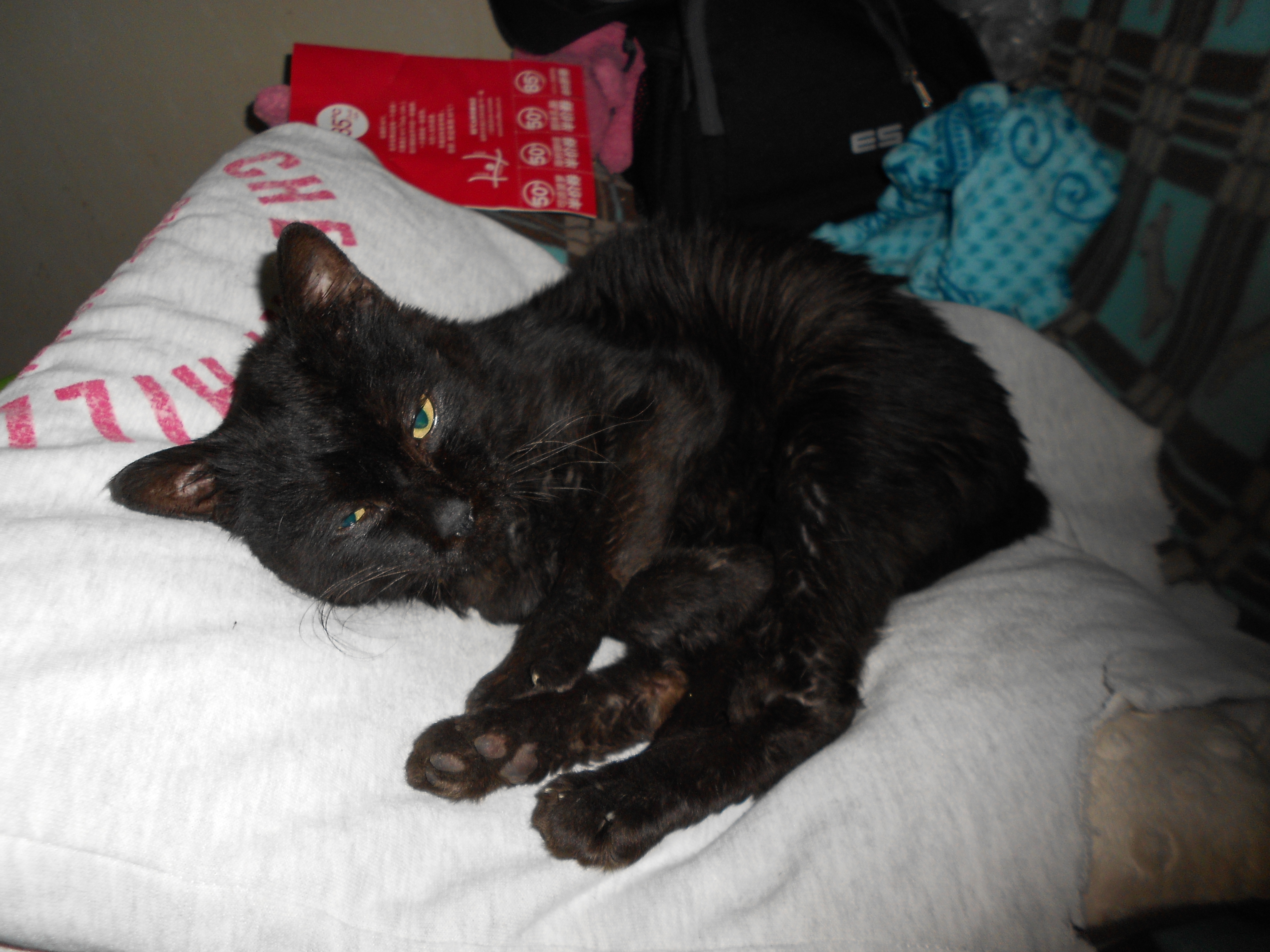
Ratty Thing: cold, hurting and in need of help.

Ratty Thing: cold, hurting and in need of help.

After being missing for a week, he returned with a huge bite on his side, which was already starting to heal.

His mouth was also showing signs of distress.

At first, it wasn’t very noticeable and he’d gobble down his food with ease. But later, foul-smelling, brown drool began dripping from his mouth. His gums were bleeding and so painful he could only stare at his food and make pitiful noises of wanting to eat but not able to do so.

My hesitation to take on such an animal responsibility finally broke down. After watching his decline day after day, I bundled a rather resistant, meowing kitty into my previous dog’s carrier and we went to the vet.

Chengdu Harmonious Animal Hospital to the Rescue

The clinic I took him to is only a 10 minutes walk from where I live. My former dog, Little Flower, had been a patient there in the past. This year in Chengdu, I would stop in from time to time just to say “hi.”

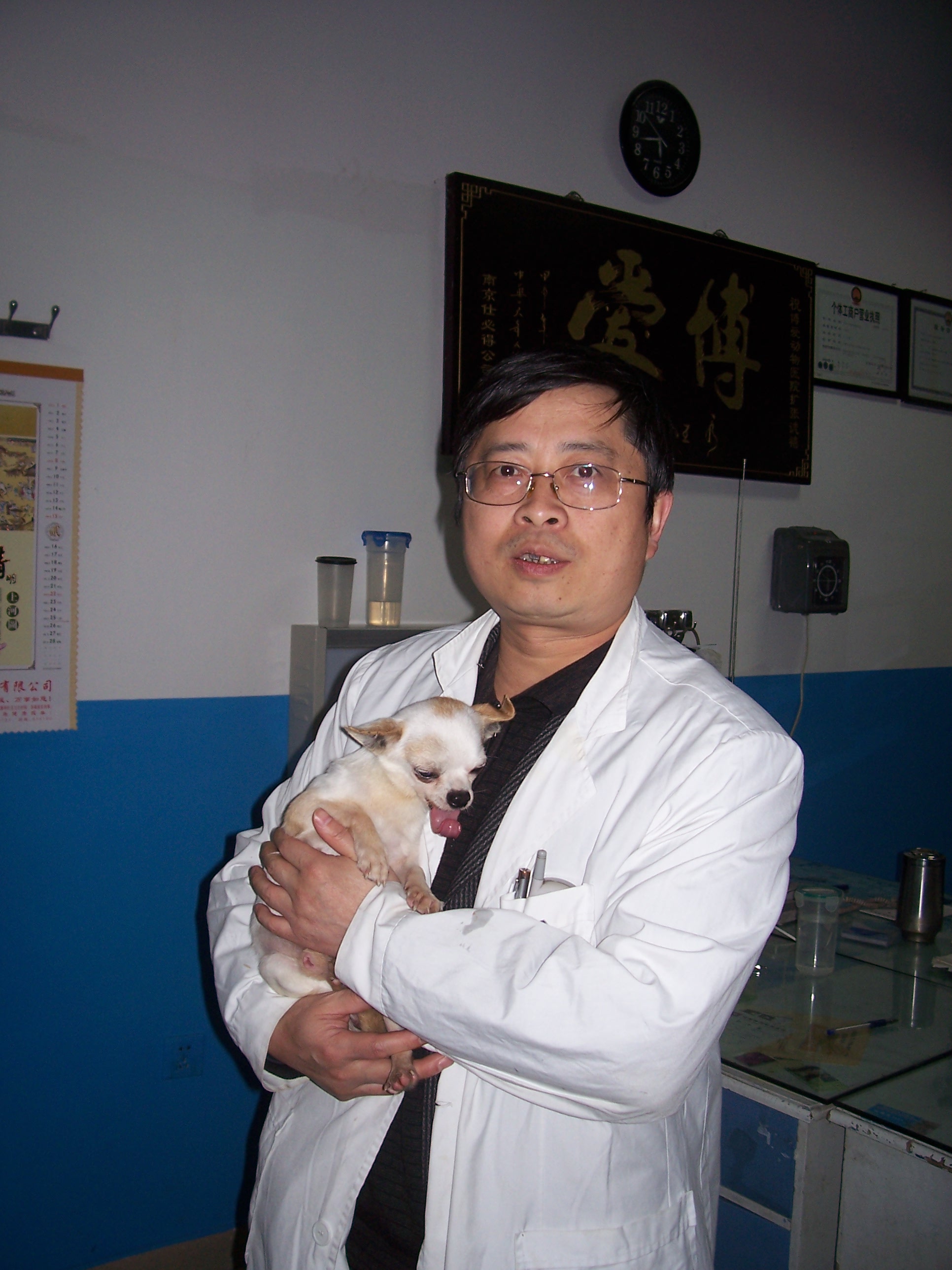
Dr. Zhang is the director and Dr. Mao his partner with a rotating staff of about 12 young people, some with training and others not, but all committed to making little pathetic animals well.

The two vets also have a relationship with a veterinarian school in Canada, I believe. Some of the overseas’ vets in training came for a week to help out and learn new skills plus have supervisors teach updated techniques to the clinic employees.

This kind of cooperation, plus their reputation as being excellent pet caregivers, bring not only Chinese as clients but foreigners as well.

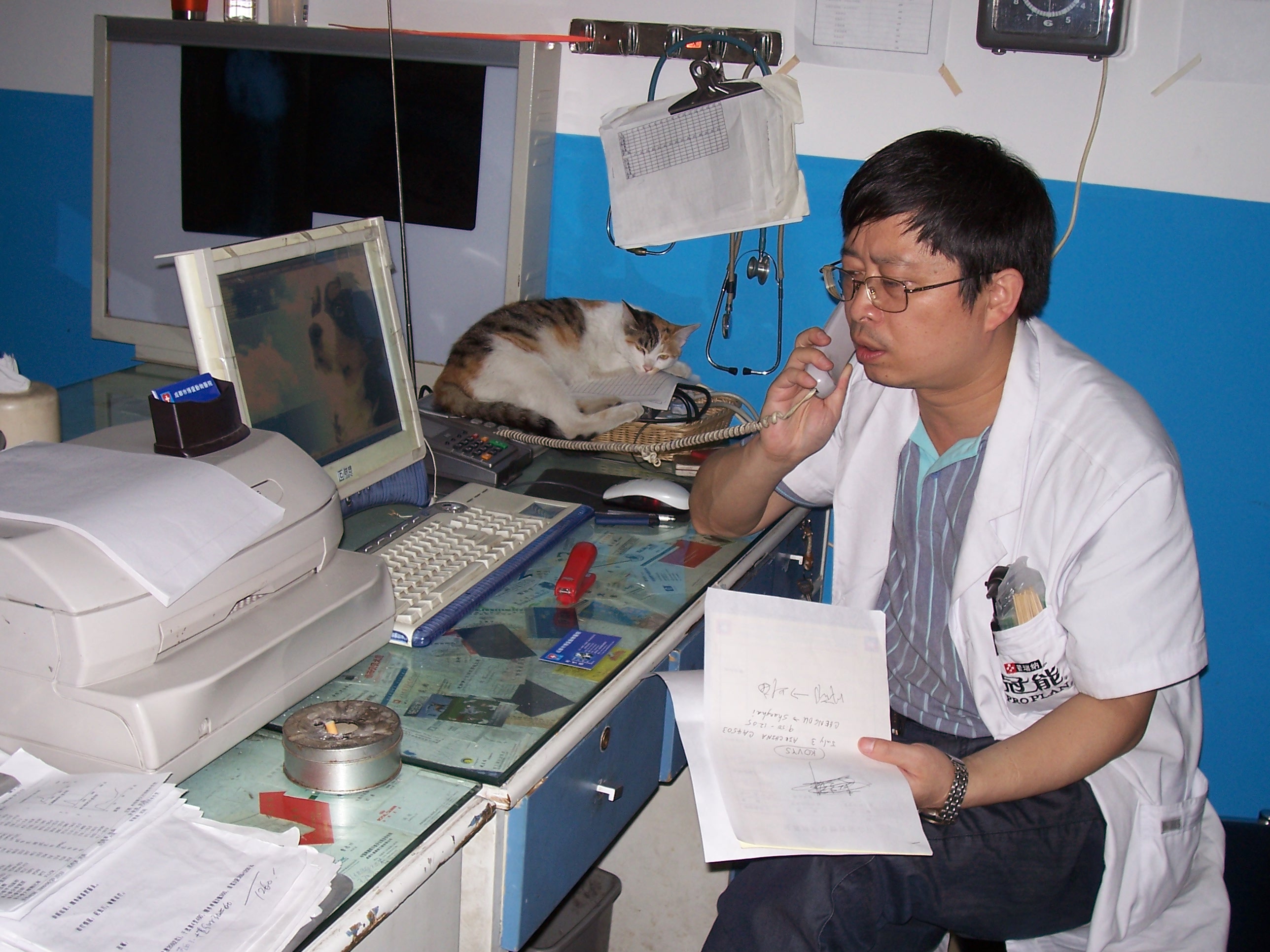
Their facility has better equipment than even my smalltown US vet. Stepping into their operating room, examining areas or even where in-patient animals are caged is like being surrounded by the best of the best on TV’s Animal Planet. They even have incubators for the little puppies who come in, needing immediate attention.

Prognosis of Ratty Thing

Dr. Zhang was on duty when I entered the clinic, my face registering exasperation.

“It’s not my cat,” I told him in Chinese. “And maybe it has to be euthanized. I don’t know if it has diseases. I just don’t want him to suffer anymore. You decide.”

I was surprised that Ratty Thing actually allowed the doctor to look into his mouth as you could tell he hurt. He gave a huge yowl at one point, with a small lunge to bite but didn’t.

After the initial exam, Dr. Zhang said it was a common illness in outside cats, periodontal disease. All that bacteria entering the mouth from eating rodents, plus bites during animal attacks, lead to such health problems.
After testing for all the dangerous feline diseases, which amazingly Ratty Thing didn’t have, he said it would take about a month of treatment (IVs, antibiotic shots, vitamin enhancers and pills) for his recovery. Even after that, he might have to have a few teeth extracted if the gums weren’t improving.

All that costs money, of course, which I was actually a little short of. My funds are all in America at present, with no means of taking out more until the summer when I return.

We agreed on an amount I could pay and the rest would be on a charity basis.

Ratty Thing Gets Top Notch Accommodations

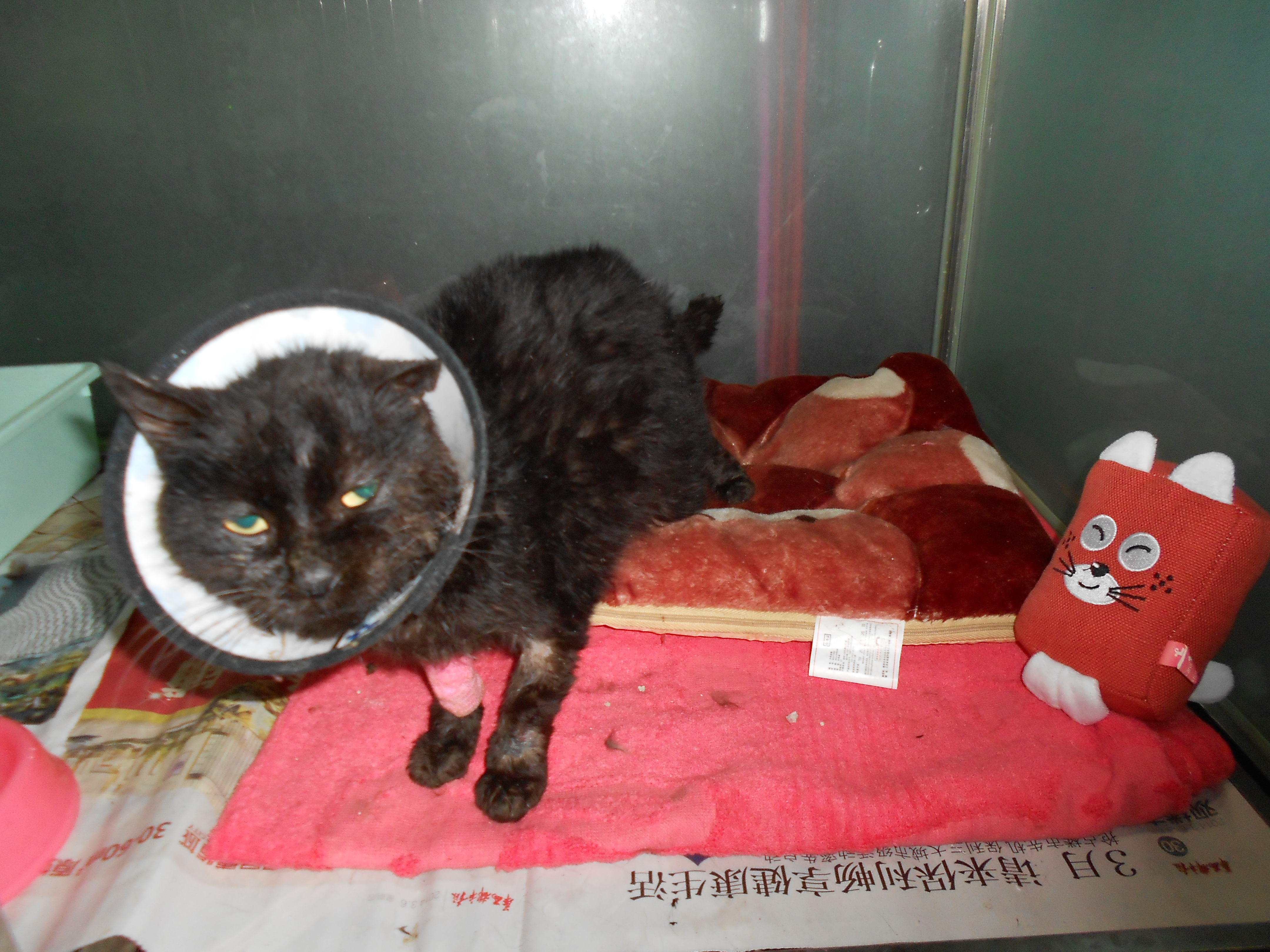
Ratty Thing in his king-like accommodations.  Not feeling too well but at least getting the meds he needs. (Notice his kitty toy, presented by the staff.)

Ratty Thing in his king-like accommodations. Not feeling too well but at least getting the meds he needs. (Notice his kitty toy, presented by the staff.)

After all those freezing nights outside, Ratty Thing was about to discover what the phrase “Living the life of a king” means. He had a clean cushion I provided to sleep on, a warm, comfortable housing unit, tasty food prepared every day (Whiskas store-bought pouches. Yum!) and he had constant attention and cleaning of his cage, including his litter box.

Every day, I stopped by for about 30 minutes in the afternoon to brush him and give him a few pets. The staff even presented him with a silly stuffed animal toy they bought from the clinic’s attached pet supply center. He wasn’t keen on playing with it, of course, but it did brighten his cage for us human visitors.

Getting To Know the Staff

At first, no one would talk to me much due to shyness but after a week, the staff began opening up, trying to use what little English they remembered from their high school days.

I in turn began learning certain illness vocabulary in Chinese which I didn’t know. This came about from me asking what all the other in-patients’ problems were that surrounded Ratty Thing. I learned all sorts of useful phrases, from broken bones and spaying/neutering to cancer and infectious diseases.

Euthanizing was one that always stuck with me. The phrase in Chinese is 安乐死 (an le si), which literally translated means “safe/peaceful, happy death.”

What a lovely way to say “put to sleep.”

Fortunately for Ratty Thing, 安乐死 was not to be his fate.

Time for Discharge

Yesterday, 15 days later, Ratty Thing was ready to be released.

No more meds or IV drips needed. All his teeth could remain intact. His gums were a lovely pink and his appetite had been exorbitant!

Yes, it was time to leave.

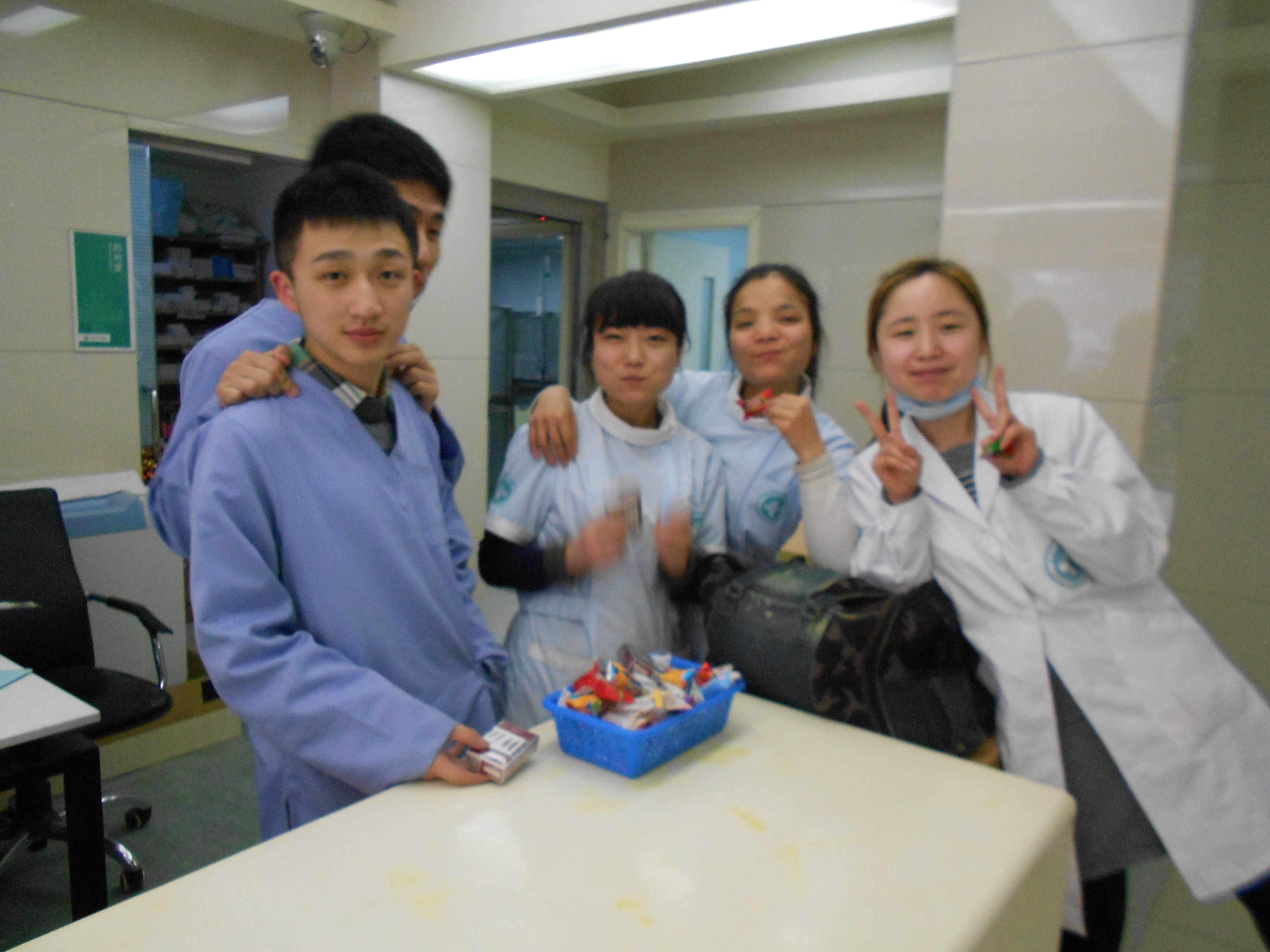
In appreciation for all their help and care, I put together a candy basket for everyone to share. When I arrived yesterday around 1:30, Dr. Zhang and Mao were out to lunch but the rest of the help were there.

Their faces lit up when they saw all the candy varieties I’d thrown into the pile. Everyone began exclaiming “Xie-xie! Xie-xie! (Thank you! Thank you!)” while digging away to find which ones they’d try first.

Of course, pictures were in order to commemorate our success, not to mention a new name for our kitty.

Harmonious Animal Hospital staff, those who were present, enjoy their "thank you" goodies.

Harmonious Animal Hospital staff, those who were present, enjoy their “thank you” goodies.

A New Name for Ratty Thing: Wesley

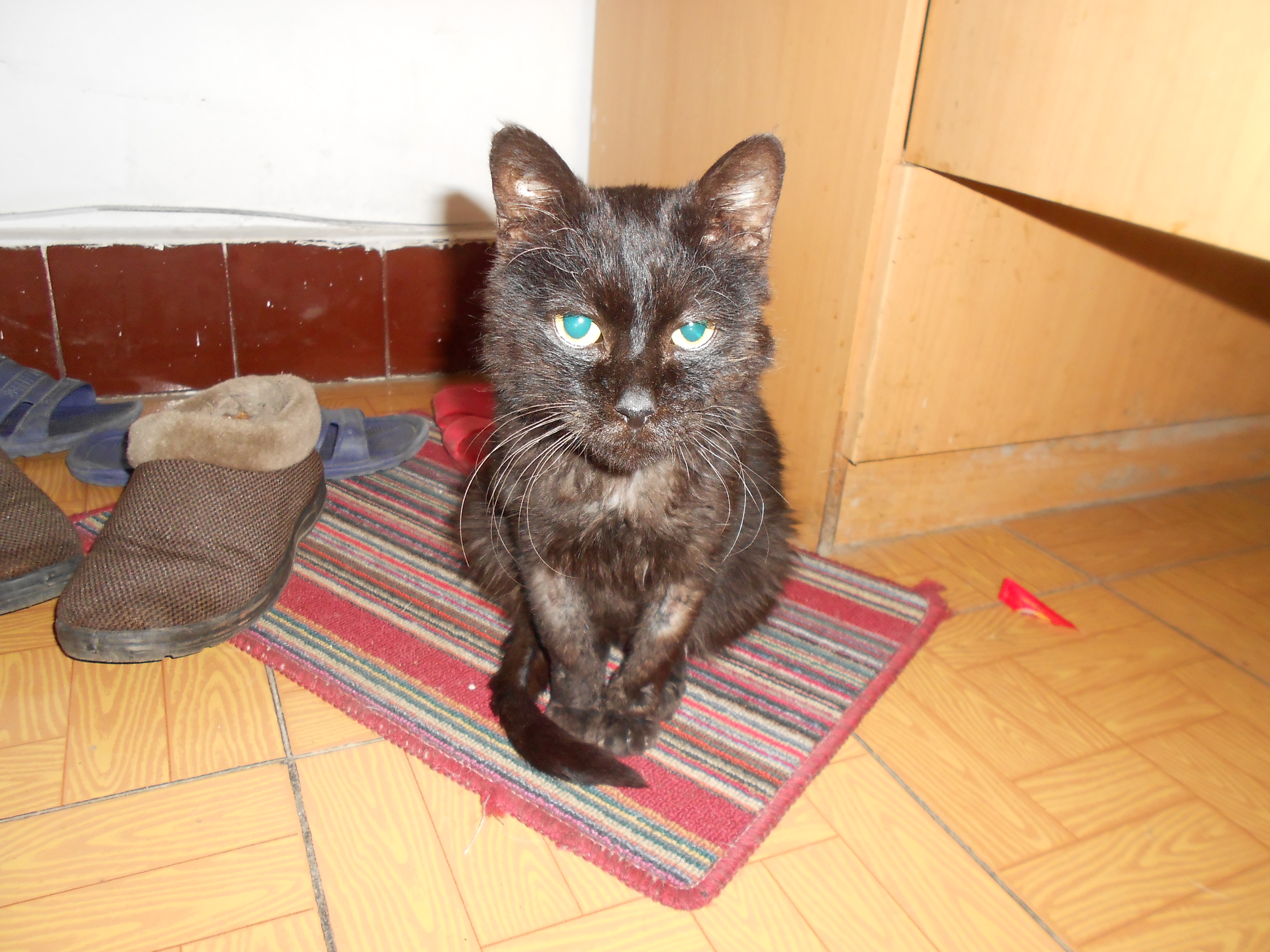
While still ratty in his appearance, there is a vast difference between our Tom cat’s look of 3 weeks ago and his look today. A bit cleaner than before, plus all those matted, gnarly, encrusted tufts of hair are gone. I’ve been cutting them off with scissors during my many clinic visits in hopes of making him look a bit more presentable to the outside world.

 After all this, a new name was in order.

Being a United Methodist (my Christian denomination), and having paid his vet fees using some Christmas gift money sent from a few faithful United Methodists in America, I decided to call him Wesley.

John Wesley (an Anglican priest in Britain, 1703-1791) is the co-founder of Methodism, a breaking away from the Church of England as a separate denomination. He was a great Christian scholar and organizer who was well-known for his relentless work ethic.

For Wesley, works of mercy (helping others in need) was a necessity to being a good Christian. His most famous quotes include this one:

“Do all the good you can, By all the means you can,
In all the ways you can, In all the places you can,
At all the times you can, To all the people you can,
As long as ever you can.”

Appropriate Name? Absolutely!

While our Wesley kitty doesn’t exactly fall into the category of John’s above “people” reference, his plight has definitely brought out the best in us humans.

There are those who carefully constructed his winter outside haven, myself who fed and carried him to the clinic, my US friends who paid for part of his treatment, Dr. Zhang and Mao who graciously covered extra medical costs and the clinic staff who so diligently and unselfishly took care of him all these weeks.

In my estimation, in the light of all our acts of mercy toward our feline in need, the name Wesley fits him perfectly.

There is still a lot of work to be done yet, including finding him a home or at least a proper place to be fostered this summer. Let’s hope his good luck holds and John Wesley’s words continue to work their special magic on his life.

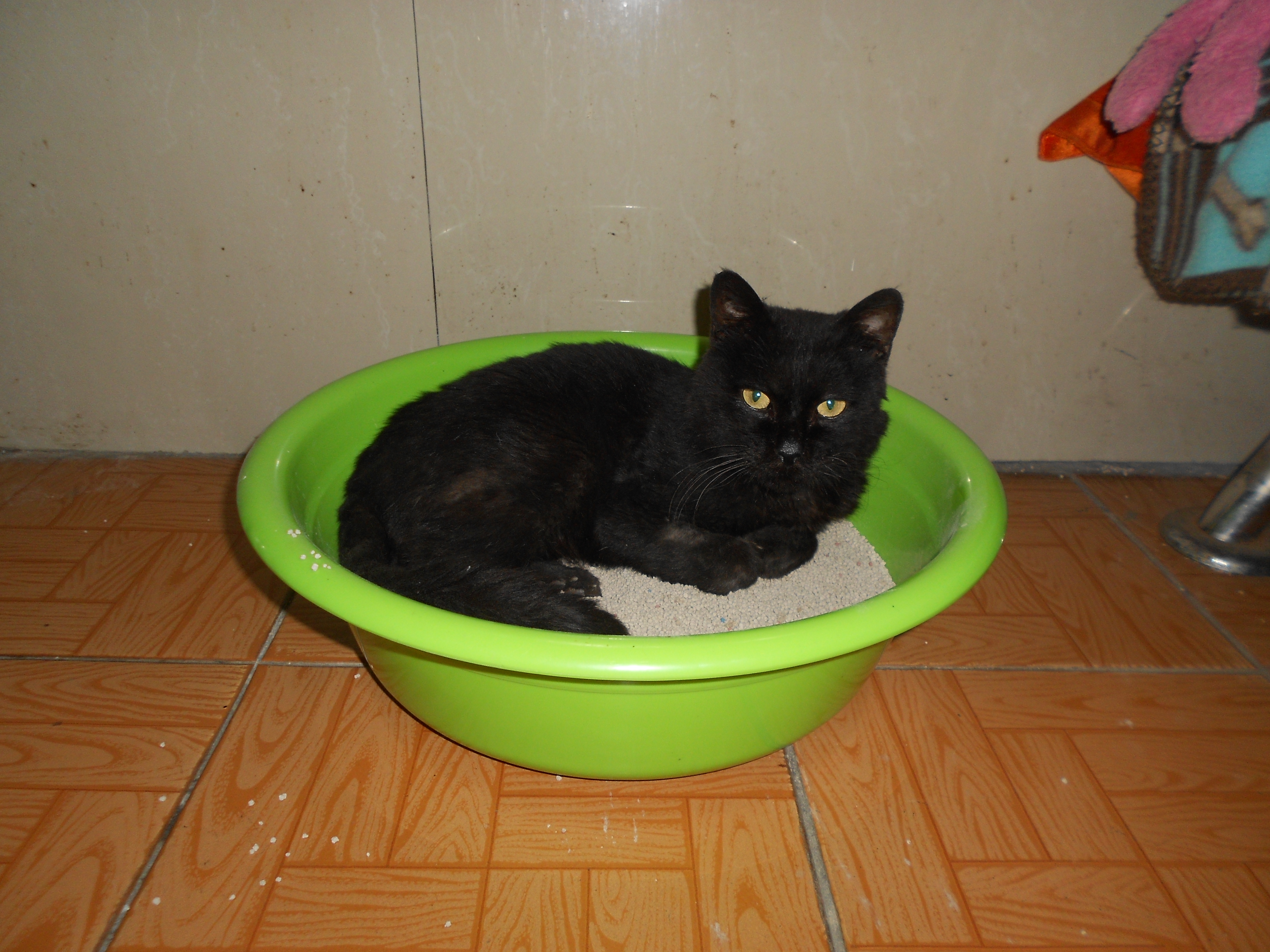
Wesley today, looking for a home.

Wesley today, looking for a home.

From Chengdu, China, Wesley and I wish you Ping An (peace) for your day.

Posted in Chengdu Daily Life, Chengdu Life: Pets in China, Tales of China, Travel | Leave a comment

Mrs. Obama: Here Today, Gone Tomorrow

Mrs. Obama spent today in Chengdu with a gathering at the elite No. 7 High School, just up the road from me. I heard the school has a distance-learning program bringing quality education to rural, impoverished areas via the Internet. Countryside students can log on and enjoy classes taught by qualified professionals.  Their treat today was listening to Mrs. Obama’s 15-minute talk to an assembly of the school’s students.   She also enjoyed a tai chi demonstration by the youth, later joining in to learn a few of these slow-moving exercise techniques still popular in the China of today.

Last week, when I stopped in at our US Consulate, I heard the Obama women would actually be in the building for a reception. I wasn’t privy to that information. And, sad to say, I wasn’t invited, either, although I tried.

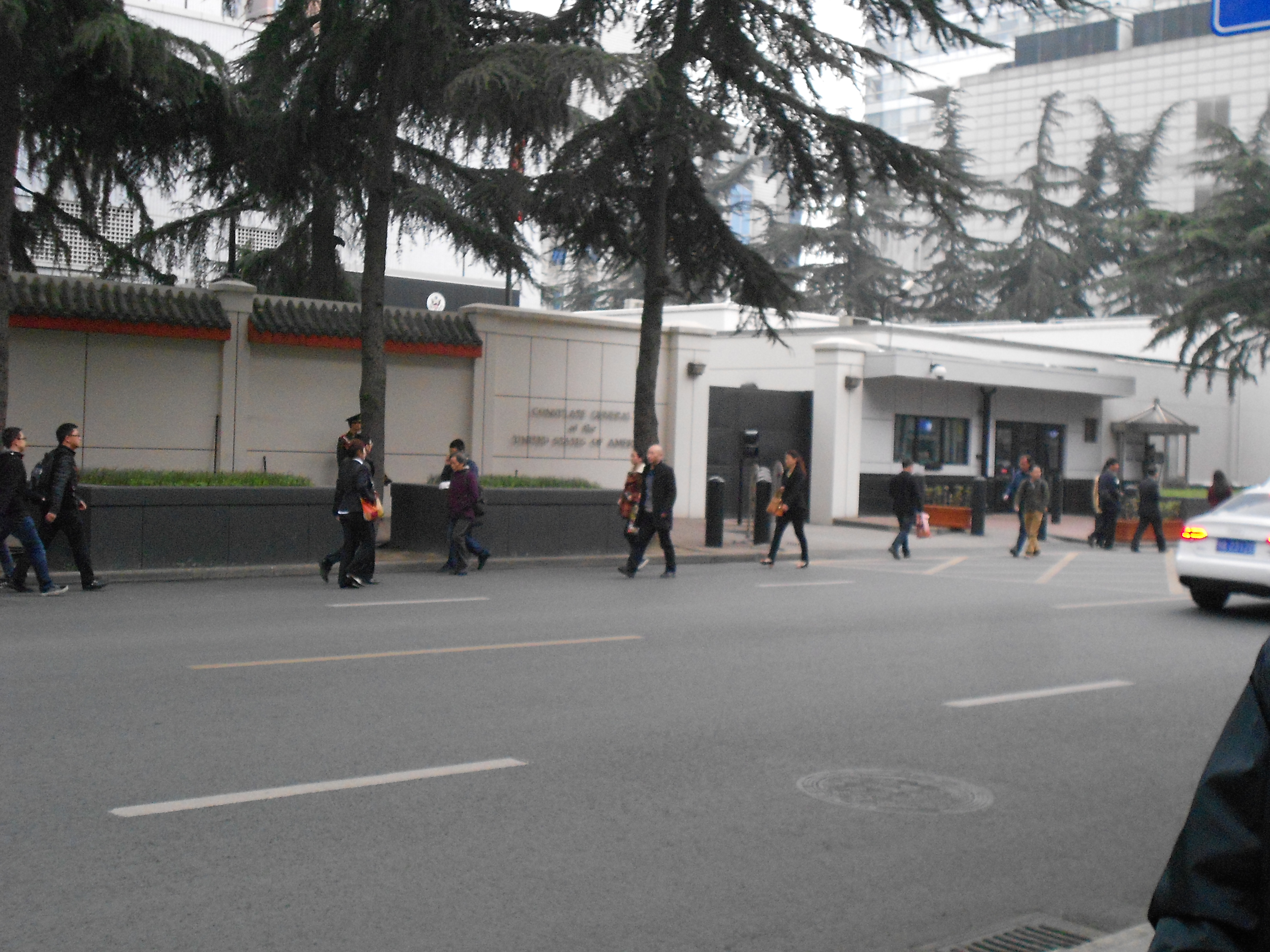
Our Chengdu US Consulate, where Mrs. Obama's reception took place.

Our Chengdu US Consulate, where Mrs. Obama’s reception took place.

What I did accomplish was to have a letter and a copy of my children’s book about our family’s Chengdu rescue Chihuahua, Xiao Lao-lao (Little Old), delivered to her personally.

Book and Letter, delivered to Mrs. Obama via the Consulate before her departure.

Book and Letter, delivered to Mrs. Obama via the Consulate before her departure.

I dropped off both last Friday and was emailed yesterday that it was passed on to Mrs. Obama’s gifts officer, the person in charge of collecting all her presents during the trip, making note of who gave what and getting addresses so thank you letters could be sent.

My mailing information was likewise taken so at some point, I’m hoping to receive a White House “thank you” from our first lady. It will be going to my parents’ home in Illinois, however.

No way was I giving my Luzhou school address as a means of contact. I remember one letter sent to me from the States was thrown into an office drawer and I didn’t see it until 2 years later!

I guess I should be grateful I even got it at all.

I certainly don’t want the same thing happening to a Mrs. Obama correspondence. Hard enough to wait 2 weeks much less 2 years when a note is sent from such a prestigious and respected individual.

Forget that program.

I want my letter now!

Tomorrow, the Obama ladies are off to the panda breeding center, 30 minutes outside of the city, and then a Tibetan restaurant for lunch before heading back to the States. I’m sure I’ll hear all about their Consulate stop-in next week when I plan to sit down with Natalie, assistant public affairs officer, to discuss my upcoming lecture.

Until next entry, here’s wishing you Ping An (Peace) for the day!


Posted in Chengdu Daily Life, Tales of China, Travel | Leave a comment

The Candy Queen’s New Year’s Give-away: Part 2

The Candy Queen!  Getting ready for my yearly New Year's give-away of treats.

The Candy Queen! Getting ready for my yearly New Year’s give-away of treats.

For me, my Year of the Horse gift-giving began at 6:30 a.m. for my morning swim at the pool. 

After grabbing the first big bag of candy, I hustled out the door to hail a taxi across town to the Meng Zhui Wan natatorium.

My taxi driver was quiet and rather gruff.  I soon found out he’d been driving all night, not able to enjoy the holiday eve festivities with his family.

“How’s business?” I asked.

“So-so,” was his bland reply. 

It’s always quiet on NY’s Eve.  Plus that morning, I figured everyone was sleeping in after watching the Chinese countdown-to-midnight galas on national TV stations.

When it came time for me to jump out of the taxi, my hand went into my bag and I pulled out a fistful of candy which I placed on the front seat next to him.

Xin nian kuai le! Happy New Year!” I gleefully said in both Chinese and English.

My driver’s tired face lit up with a huge smile.

Xie-xie, xie-xie!” he said, then added a hesitant English “Thank you!” for good measure.

I waved goodbye and off he sped, already a candy in his mouth.

New Year’s Greeting Number 1 a success!

The Meng Zhui Wan park entrance, decked for the New Year.

The Meng Zhui Wan park entrance, decked for the New Year.

 It was time to move on to my next recipients, the gate attendants at the park entrance.  These two elderly men have all-night vigils, sitting in a small cubicle next to a bicycle parking area to make sure no unsavory individuals enter the area. They take turns standing at the entrance, as is their duty.

I entered with a slight, impish jog to the desk they often sit at.  The two curiously looked on until I showered the desktop with goodies.

Xin nian kuai le! Happy New Year!”

The two beamed, and I, too, as their “xie-xie!”s followed me on my way down the walkway toward the pool.

Same went for our park cleaners, out sweeping the sidewalks and emptying trash cans into their bicycle propelled carts. Their hands were full and rather dirty so I was quick to stuff their pockets full of sweets.

Xin nian kuai le! Happy New Year!” came out my well-practiced phrase.

I had to chase down a few of them as they were spread out a bit, causing their nearby colleagues to laugh at my playful antics.

Everyone was giggling , very pleased to be remembered for their Spring Festival and adamant that I shouldn’t be filling their pockets with any more candy, which I did anyway.

“You have children?  Grand-children?” I said in Chinese. “You can treat them!”

Next stops were the entrances to our two swimming pools, one facility outdoor (the frigid unheated water for our hardy winter swimmers) and the other indoor (the comfortable heated pool, which is my preference).  The staff always greet us, helping with our card swipes across the machine and later handing out our locker keys.

You can imagine how their sleepy demeaners quickly changed once the candy came out of my bag as I approached them.

“Happy New Year!” I repeated again, adding an extra handful.

“Too much!  Too much!” the women laughed but I noticed their fingers were already picking away to see which prettily wrapped candies they’d try first.

It was obvious both groups of employees from the outdoor and indoor pools were very excited o be remembered on New Year’s Day.

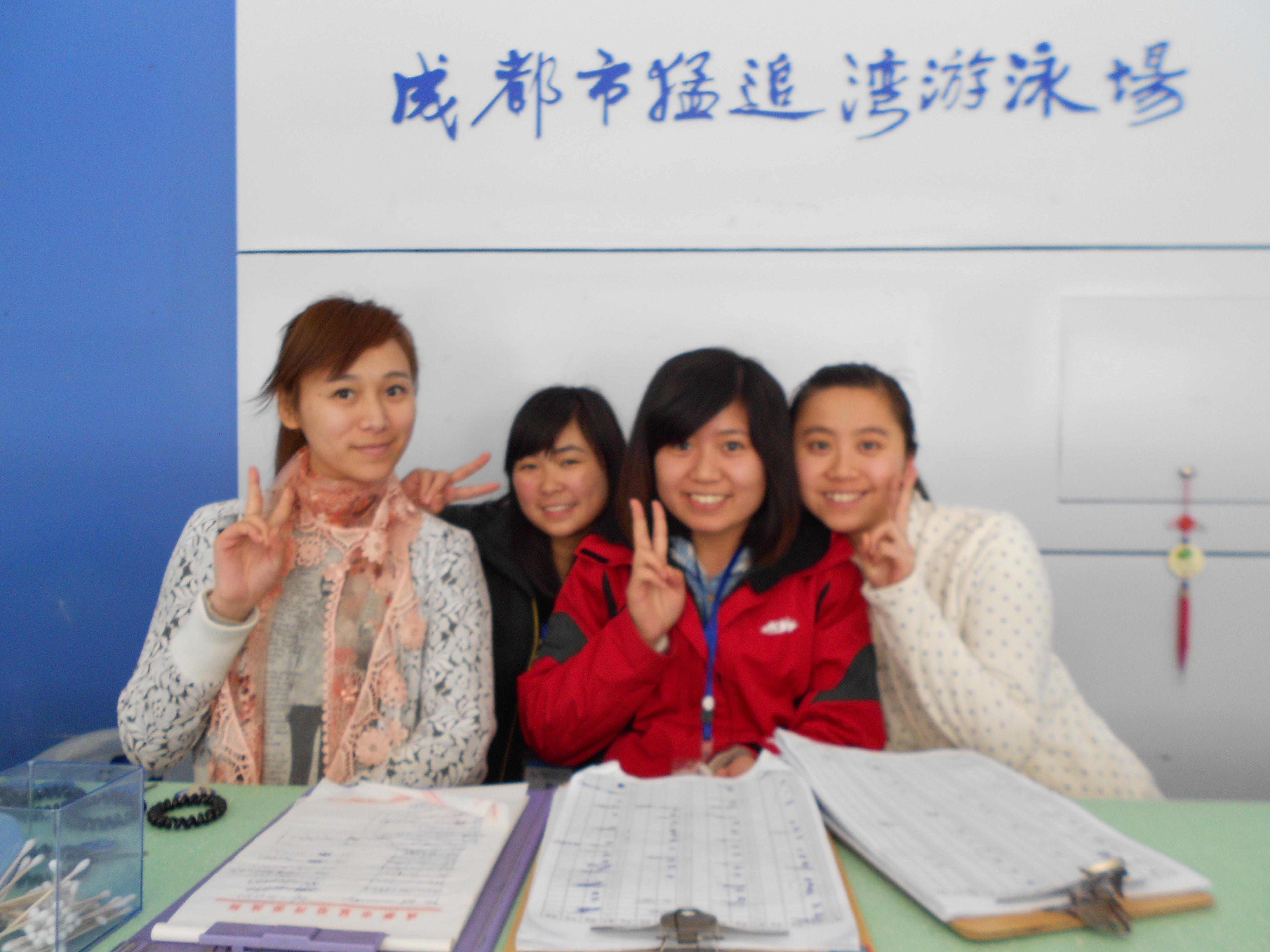
The indoor pool desk attendants:  "Happy New Year!"

The indoor pool desk attendants: “Happy New Year!”

No One To Be Left Out

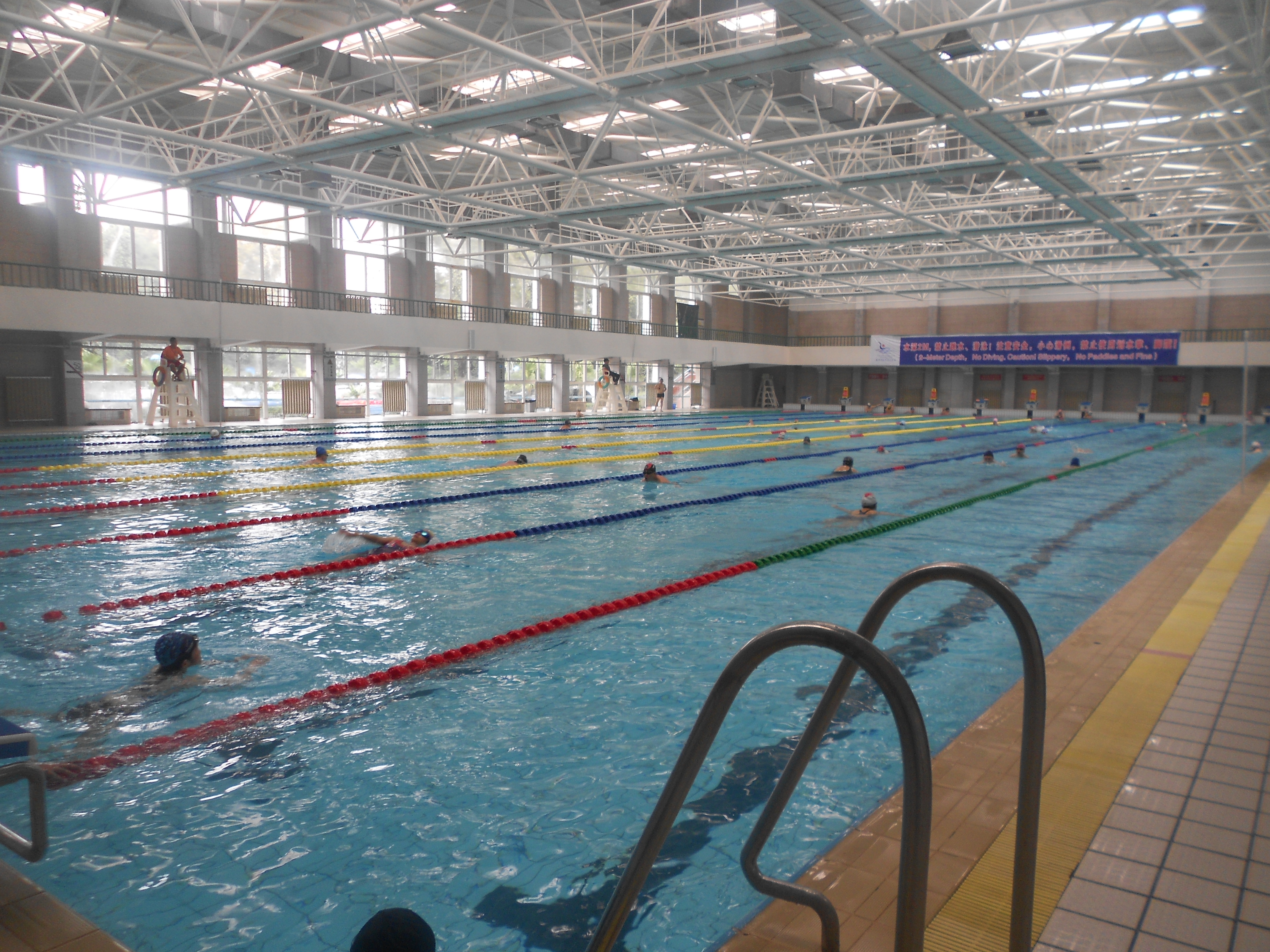
The Meng Zhui Wan 50-meter pool, the lifeguards soon to receive their New Year's goodies.

The Meng Zhui Wan 50-meter pool, the lifeguards soon to receive their New Year’s goodies.

Nor was I about to let the lifeguards go away empty-handed.

After my 2-hour work-out, I eagerly sped back to my locker to bring out the rest of my stash to bestow upon our deck hands.  We have 7 lifeguards on duty at one time, from ages 20 – 45, all male.  I quickly made my way around the 50 meter pool to each one, positioned at his station.

Food is not allowed within the pool area but this was a special occasion.  Every guard gratefully accepted my presents, with a “Xin nian kuai le!” from me and an English “Happy New Year!” from them.

I even had enough left for those in the women’s locker room.  Anyone who keeps to a rigid exercise schedule by swimming on such a prestigious holiday deserves a little extra reward.  What better reward than candy?

Good Luck for All; Bad Luck for One

According to my Chinese friend, the first day of Chinese New Year is to be full of good thoughts and a new, positive attitude toward life. All those negative feelings and unfortunate happenings of the past are to be swept away.  No one is to be angry or upset on that first day or it will follow the person throughout the next 12 months.

Being able to add to everyone’s happiness with my candy give-away was just one way to make sure everyone’s Day 1 good mood stayed intact to carry them through for the rest of the year.

Unfortunately for one, that good luck fell flat.

We had a rather harrowing incident at the pool after one male swimmer 3 lanes over from mine became irate when someone accidentally ran into him.  We had quite a crowd at the pool that New Year’s morning, some being the veterans who came every day and a few others who were fairly new to the pool scene. 

Whether our guy was a newcomer or a regular, I have no idea but his shouting and snarling words toward several in his lane took on a very nasty turn. When he started in with the slapping, gesticulating wildly and water splashing at his bewildered lane mates, the lifeguards stepped in.

It took a good 20 minutes to calm down this character who, obviously, should have stayed home that morning.  Probably a bit too much celebrating (i.e., drinking) to welcome in the Year of the Horse made him a bit overly touchy.

I’d have given him some candy to make him feel better but my goodies were in my locker and I had yet another hour before I finished.  Besides, the damage was already done. Whatever good luck he came to the pool with I figured was long gone by now.

Here was definitely one in our midst doomed to live out a year of troubles and unhappiness.

The Horse, Now Settled Into 2014

Almost 2 months have passed since my candy hand-outs ushered in the Year of the Horse.  Our chilly weather and dreary, overcast days are now beginning to brighten with sunshine and flowering oriental trees. People are already trading in their winter garb for spring attire.  Layering is still a must but I’ve noticed everyone’s layers are peeling away, bit by bit.

My candy baskets are back to their usual cheap varieties.  No sense in splurging just for me. I’ll save that for next Chinese New Year, something I’m already eagerly anticipating.

From China, here’s wishing you Ping An (Peace) for your day.


Posted in A Chengdu Chinese Spring Festival, A Grand Chinese New Year Vacation, Chengdu Daily Life, Tales of China, The Chinese New Year, Travel | Leave a comment

The Candy Queen Gallops into the Year of the Horse: Part 1

This was written awhile back but I was unable to post it.  Seemed such a waste not to so here it is now.

After a week of crowded bus and train stations, traffic jams on the main city roads, mobs at the airports, packed grocery stores filled with New Year’s specials, everything finally quieted down on January 30th for New Year’s Eve.  Most travelers were where they wanted to be, home with family members they hadn’t seen all year, with everyone busy preparing the big meal soon to follow in the evening.

       All our family run mom-and-pop stores along our alleyway closed their doors, locks on tight and holiday hour notices posted. 

The stores along our alleyway sidestreet were closed up tight during the first few days of Spring Festival.

The stores along our alleyway sidestreet were closed up tight during the first few days of Spring Festival.

Chain convenience stores, malls, and big groceries, like the Trustmart/Walmart just a block away, emptied out of shoppers and changed their hours to allow employees time with their families.  Only McDonalds was going strong with it’s “24-hour open” sign still lit and ready for non-stop, hungry patrons.

My favorite daily hang-out, the swimming pool, was about the one place that seemed to increase in business during Spring Festival.  A few times, evening hours  were canceled and morning hours shortened so many of us had to cram in our lap times as best we could.  For a majority of us, it was all a matter of getting in that daily bit of exercise to ward off the high calorie intake of the holidays.

The Candy Queen In Her Element

It has been 7 years since I was last in China during the Chinese New Year , or Spring Festival as it is known here. As a foreigner, with no family members to share my happiness with, it’s always my custom to do something special for others on New Year’s Day, which alighted this year on January 31, Friday, with 2014 being the Year of the Horse.

That something special centers around my one weakness:  candy.

It is well-known among my students that rewards in my class come in the form of wrapped candy.  Visiting my home for chit-chat times likewise brings out my baskets filled with sweets which I continually pick up at the grocery. 

 I am, indeed, the Candy Queen.

And when it comes to Chinese New Year, the Candy Queen is in her greatest element.

Spring Festival is the time when hundreds of candies fill the bins in groceries, along streets and in shopping malls across the country. 

The greatest Spring Festival treat of all:  Candy, and lots of it!

The greatest Spring Festival treat of all: Candy, and lots of it!

Assortments never seen all year and newly created varieties find themselves piled high in the sugary sections of every major consumer venue in the city.  We have the hard, crunchy kinds, such as brown sugar sour plum, butterscotch, coffee, and red bean, and the tangy, soft, gummy types, such as melon, pineapple, plum, coconut, apple and peach.  Wrappers dazzle in glistening, shiny colors jumbled together in heaps.  It’s hard not to stealthily sneak one or two into your pockets as you cruise the aisles.  (I don’t call that stealing, rather merely sampling.)

Handing Out to All:  Preparing for the Big Give-away

The day before Chinese New Year Day, I found myself filling bags of selected candy from the many bins at my favorite store, the Trustmart (a branch store of Walmart here in China).  My sole purpose in collecting as much candy as possible was to pass the assortments out on Chinese NY Day to anyone I encountered during my daily outings.  Taxi drivers, gate keepers, roadside cleaners, beggars, security guards, pool staff, store keepers, kids out playing—This was my way to give back a little happiness that so many have always bestowed on me, a guest in their country.  

In the Trustmart, my once-a-year splurge had my eyes glued to the pretty foil wrappers rather than the cost per pound of all these delicacies.  Chocolates, gummies, candied fruits – whether $2 a pound or $5, I didn’t care. Into my containers they went.

When it comes to holidays, I pay no attention to prices but more on the joy my purchases will bring to others.

In my small one-room rental, I dumped my piles onto the bed, then began filling my candy bags the night before in anticipation of showering the Chinese with sugary treats.  Sampling was a must, especially to discover which candies would be acceptable for adults and which for children.  Adults tend to like the softer, healthier kinds (candied fruit and gummies) while children go for the chocolates and crunchies.

Now that all was prepared, it was just waiting for my 6:30 a.m. alarm to go off so my Spring Festival could begin.

(To Be Continued)

Posted in A Chengdu Chinese Spring Festival, Chengdu Daily Life, Tales of China, The Chinese New Year, Travel | Leave a comment

Finally, News from Chengdu: Mrs. Obama is Coming!

After 2 months of struggling with posting updates from Chengdu on my site, I have finally managed an entry today!

Let’s hope it continues.

After a restful Chinese New Year, full of stories which I hope to report on later, university classes started up just last week. I registered for only 2 months of Chinese at Sichuan University before returning to the States from May to August where many of you will be seeing me as a presenter in your hometown areas. I’ll be speaking about the Amity Foundation and my work as a language teacher in China, as well as the Luzhou Protestant Church and all the activities taking place there.

But the really exciting news I have to report is happening not more than 3 blocks away from me, at our US Consulate here in Chengdu.

Mrs. Obama, her mother and daughters will be alighting in Chengdu during their March 19 – 26 tour of China!  The newspapers here are already abuzz with her upcoming visit and the U.S. Consulate staff is basically swamped with preparations for her arrival.

How do I know this?  Well, I’ll tell you how.

Our U.S. Consulate:  Bringing Local Chinese Closer to America

For those of you who don’t know about our U.S. Consulate in Chengdu, a nice intro is to check out the website: Chengdu.usembassy-china.org.cn.  This will give you all the updates of what the Consulate has to offer as well as articles about visiting Americans leading workshops or talks in the area.

What has always impressed me about our Consulate is its openness to the Chinese public.  There is a wonderful Information Resources Center (IRC) that is open Monday to Friday, 9 a.m. to 12 and 1 p.m. – 5 p.m.  The website describes the IRC as “a reference facility providing up-to-date information to Chinese audiences and U.S. Mission staff on U.S. policy, legislation and social issues.”  Anyone is welcome of any nationality but IDs are necessary.  As a US citizen, I show my passport at our security entrance but the Chinese have their nationalized ID cards which they are required to bring.

Aside from the IRC, there are weekly lectures on Wednesday, 2:30 – 4 p.m., given by various US citizens in the city who would like to share something of America or pertinent US issues with the Chinese audience members. Those attending are of all ages and walks of life and have fairly good English listening skills to understand the talks.  The presentations are on a wide range of topics, whichever the speaker is best versed in or familiar with. 

Seven years ago, when I was living in Chengdu, I gave 4 of these: Winter Holiday Celebrations (Christmas, Hanukkah, Kwanzaa), Pet Care in China, International Women’s Day and Halloween.  In fact, my Halloween presentation, which had us carving pumpkins and dressing in costumes, is still talked about today as being one of the best lectures at the Consulate.

Yes, I’m famous!

Last semester, I was too busy with school to volunteer my services but with just 2 months to go before leaving here, I felt I could handle it.  Last week, I contacted my old friend in the Consulate office, Li Tao, to tell her I’d be available for a Wednesday afternoon. Assistant Public Affairs Officer Natalie Wilkins was quick to get in touch with me for possible topics.  After scanning my offered list, she chose “Welcome to Marshall! Smalltown American Life.”  I will be touring our Chinese audience members via powerpoint through my Illinois hometown, followed by a fun quiz where English language pencils and stickers will be awarded as prizes and questions answered.

This will take place on April 9, plenty of time for me to put things together and get ready to wow the Chinese with my beloved American agricultural community.

“Could I Meet Mrs. Obama?!”

Of course, with my emails back and forth to Natalie, I had to ask about Mrs. Obama and if there was any possible way I could meet/shake hands with/be in the same room as our First Lady. She will be addressing a group of high school kids at some point in her time in Chengdu.  And surely she and her family would have a reception of sorts somewhere, maybe even the Consulate.  Any ability to join in any of these would be amazing!

 Natalie said they were all very busy at the moment preparing for her landing and my request would be passed on.

Will anything come of it?  Who knows, but I’ll certainly be letting you know if it does!

From Chengdu, here’s wishing you Ping An (Peace) for your day and hopes of more stories yet to come.

Posted in Chengdu Daily Life, From Along the Yangtze, Luzhou Vocational and Technical College | 3 Comments

Part 2: A Foreigner’s Glimpse at Troubled Southern China

 In yet another eye-opener, my Chinese organization (The Amity Foundation, 爱德基金会) had its foreign language teachers’ winter conference in Nanning, the capital city of Guangxi .  All the foreign teachers in our program, about 17 at that time, and their sending agency representatives from numerous countries came to attend a 1-week meeting.  We teachers shared classroom lessons, discussed our experiences and  also learned about the many Amity Foundation projects in southern China.   This meeting included  lectures and informative gatherings by locals running such Amity co-sponsored programs and then, later, visits to the project sites themselves. 

In Guangxi Province, Amity projects centered on many things.  One of their key programs was micro-loans to individuals.  A sum of 300 to 1,000 yuan ($50 – 166) was loaned to those who submitted their plans to the organization.  The money was used to  help them start up small businesses in their villages (convenience stores, bakeries, supply shops) or raise farm animals (goats, sheep, pigs, cows) to make a living.   Loans were then returned after a successful profit had been reached by those borrowing.  

These micro-loan ventures were set up by Amity throughout China but in Guangxi, some receiving this aid were AIDS’ victims.  We weren’t told how they contracted AIDS but most likely it was from sharing needles as addicts, unsanitary blood donations to disreputable groups paying money for contributions or unprotected sex with an AIDS victim.   These are all great problems in Southern China, more so than any other part of the country.

Learning First-hand of AIDS’ Prejudicism

Our project visit was to actually go to a small village where one such AIDS victim had received a micro-loan to raise goats.  We would be able to talk to him and see how the loan had completely changed his life, making him a productive citizen and able to support his family.

As it turned out, we were only able to see his animals, his small bedroom-sized home and talk to his older sister.  He was too shy and nervous to be surrounded by so many foreigners so he sent his sister instead. 

Her story was one that stunned us.

After her brother was diagnosed, his family and village  ostracized him.  AIDS awareness is still very limited in many rural parts of China.  He was shoved into a make-shift tent in the yard, away from everyone, and not allowed to enter anyone’s home or be in contact with others.  He could only eat using his own utensils and was brought food on plates that no one else would use.  She told us how the food was left outside of her brother’s tent entrance and not even handed to him, so fearful were others that they would get AIDS.  Her brother was slipping deeper and deeper into a depressive state, feeling alone and hopeless.  She worried for his safety, not only from the  villagers, who wished him to leave, but from himself as well.

 The sister was very distraught about the entire situation so when she heard there was an AIDS awareness meeting taking place in the town Chongzuo, she went.  This meeting was sponsored by the Amity Foundation, who had trained residents through informative educational sessions about AIDS.  These trusted locals then held weekly meetings in their own areas to help others understand what AIDS is and how to support loved ones or even themselves if exposed.

During the sessions that she attended, the sister learned that you can’t get AIDS from eating off of another person’s plate or using their utensils, living close to someone or hugging the person.   She discovered the fears they all had had about her brother were unfounded. 

With the help of the meeting leaders, she was able to assist her brother in applying for an Amity micro -loan so he could begin living raising livestock. 

The success of his first micro-loan allowed him to ask for another so he could build shelters for his goats and eventually a one-room brick home for himself.  While his family still hesitated to have him live with them, at his sister’s urging, they allowed him to become a more present member of the family, such as eating meals with them.  She also invited other villagers to attend the AIDS meetings with her, hoping to ease their fears about her brother being in their midst.

While this visit took place 3 years ago, today’s attitudes toward AIDS are still very much grounded in misconceptions and misinformation , much like what we heard from  the sister about her brother.  China has a  long way to go, which makes the Amity Foundation projects such as the one we saw so very important.

A Drug Users’ Support Group

Yet another Amity-sponsored project  we visited was a drug users’ support group, held on the second floor of a small hotel in Chongzuo. 

Being allowed to attend this weekly meeting for drug addicts was a very generous invitation extended to us as Amity teachers and foreign guests.  We all felt shy and uncomfortable when entering the large meeting room, where we sat behind  the 20-some Chinese drug users attending.  We were served tea as we waited for the program leader to open the meeting.  A banner above him announced this was an Amity-sponsored meeting for AIDS awareness. 

It was a slow start as he conducted the first 30 minutes with our  English language interpreter at his side.   He welcomed us, gave us a brief outline of the group present and stressed that this was not a place where blame was given but a place where addicts could talk.  The purpose was not to convince those who came to stop using drugs, mostly because they never would, but how to be safe when using them so as not to infect yourself or others with diseases such as AIDS.

Things livened up when picture cards in Chinese, produced by the US Drug Administration, were distributed. 

The colored drawings of people in various drug and sex related situations were followed by  Chinese texts explaining the facts about getting AIDS.   Every participant received a card to share with a partner.  These were passed around the room for a good 10 minutes as a review from the week before.  Then our leader quizzed everyone.

“Can you get AIDS by hugging?” he asked, to which one person raised his  illustrated card and said, “No!”  

He then read the Chinese text which stated that this was impossible. 

Everyone murmured in agreement.

“Can you get AIDS by sharing needles?” our leader continued.

There was a lot of group affirmation on that one, with another person raising his hand and reading from his card that, yes, needle sharing was definitely an at-risk action.

“Can you get AIDS by using a condom while having sex?”  was the next question.

“No!” was echoed throughout the room.

As the questions continued, we all began loosening up.  A number of us started enthusiastically chiming in our “yes” and “no” answers along with the Chinese.  Walls were starting to break down. 

Soon, some of the questions solicited a personal sharing session by the attendees.   One young man told how his family had kicked him out of the house and wouldn’t allow him to return until he gave up his habit.  He was sleeping outside, in the street.  Another said she had stolen money from her parents to buy drugs.  She just couldn’t stop.  Others voiced how ashamed their families were of them and how coming to the group was a place where no one hassled or criticized them.  

I had the impression that this afternoon gathering was the only thing in their entire week that added meaning to their lives.  The information they were given and retained made them feel educated, a tad superior to the ignorance around them.  It gave them a feeling of accomplishment and purpose, that they were still worthy of being here on this earth.

Like I mentioned before, this meeting was not to place blame, criticize or reform others for their life choices.  It was merely a place for those struggling with life problems to come together, share and learn how best to protect themselves and others from viruses such as AIDS.  I’m sure there are many who would disagree with this approach, wanting more life-changing, positive results to come about from such projects.  Amity does have other projects which focus more on drug recovery but this just wasn’t one of them.

Making Assumptions

Recently, a Chinese English teacher, who called himself Ben, told me of his visit to America for 3 weeks.  He accompanied his teenage students on a summer exchange  program to their sister junior high school in the U.S.

It was his first trip abroad and he thought himself very learned about my country after returning.  He was quite full of himself, wanting to show off all the knowledge he had discovered.  Much of his information was over-simplified and not at all accurate of a majority of the country.

 His most noted off-the-mark comment had to do with the drug situation.

“Why do all students use drugs in America?” he pointedly asked me, adding with a superior tone, “Our students never use drugs.  It is forbidden. It is against the law for anyone to use drugs. We don’t have this big a  problem in China.”

Oh, my dear, dear Ben!  How little do you know.

First of all, not all students in America use drugs. And, secondly, China’s drug problems are far more reaching than you think.  It’s just that no one hears or talks about it.

Introducing Amity

When I’m in these kind of situations, it’s always nice to bring up the Amity Foundation, a Chinese organization (not a foreign entity), that is dealing with such “nonexistent” problems in China. 

Ben had an Amity brochure in hand before he left me  and a website referral if he was interested in learning more about the organization.  He was a bright young man, not wanting to look too ignorant in the presence of other foreigners, so I’m hoping he took to heart my invitation for him to educate himself.

Whether he did so or not, I have no idea.  As I see it, I at least tried.  Perhaps next time, he will be a bit more cautious before spouting such opinionated statements.  

From China, here’s wishing you  Ping An (Peace) for your day .

Posted in Longzhou: Tiny Town on the Li River, Luzhou: Yangtze Rivertown Stories, Tales from The Yangtze River, Tales of China, Travel | Leave a comment

Part 1: A Foreigner’s Glimpse at Troubled Southern China

After reading of the major drug raid that took place in southern China (see previous post), I couldn’t help but recall my own dealings with this secretive criminal world when I lived in Longzhou, a small town located not more than one hour from the Vietnam border.

Drug trafficking is big in southern China and was especially so in my area.  Our Vietnam-China border zone was a major crossing point for drugs, women coerced or forced into the sex trade, and illegally sold, endangered  animal parts that claimed to heal or enhance certain ailments. (All a bunch of nonsense if you ask the experts).

Drug use is just as prevalent, although everyone I talked to refused to admit China even had a problem. 

The local police and border guards, on the other hand, were very well acquainted with this dilemma and trained to take care of it with caution and diligence. 

MONITORING LONG-DISTANCE BUSES

I still remember every time I took the long distance bus to the capital city, Nanning, all traffic was stopped at the toll gate before entering the freeway.  Our buses were entered by 2 soldiers, politely checking our IDs and even our bags if someone looked suspicious. 

After 5 minutes or so, we were released to continue onward. Those who forgot their ID cards had to disembark, write down all their information on a clipboard, and return to their seats.  A few times, I remember some who were not allowed to climb back aboard because something was amiss.  One person had his bags of loose-leaf tea confiscated, which he  handed over without too much fuss.  

Once,  I was the person under suspicion when I brought Little Flower (my dog) with me.  She was in her carrier, covered by a towel, which is how we traveled in Sichuan.  What I didn’t realize was that in the south, in-coach dog travel is not permitted.  All animals must go under the bus, with the luggage.

Everything would have been fine if LF hadn’t started moving about in her carrier as the soldier walked by us for inspection.  Her wiggling caused the young man to ask what was inside, to which I showed the dog.  He then frowned, exited the bus and brought back his commander.

Everyone was staring at us and I was panicking the dog would be confiscated.  Luckily, I had her vaccination records with me.  After peering over the documents carefully, the two finally allowed us to travel onward.  This was not, however, before having a brief talk to the driver, most likely criticizing him for allowing us on the bus.

While we did manage  to make it to Nanning and back again that weekend, it was the last time I ever took my dog on a public bus in southern China.

A RUN-IN WITH A DRUG BUST

In another incident, I was at our police headquarters in my small town to register as an overseas’ resident.  This is a standard procedure in China for any foreign teacher.  We go to the local police station with our school representative to legally establish our residency for a year. 

While there, I witnessed a drug bust of sorts which made me realize how serious a situation it was to work the border areas.

A disheveled, young man in dirty clothes was hustled out of a police van in his bare feet.  (Most likely his shoes were taken so he wouldn’t run away). His hands were cuffed behind him and he was told to kneel on the tile floor in the main room where I was waiting.  Three officers then brought in his medium-sized duffle bag and began to unpack it, lining up the contents neatly on the floor for photographing.

This is the first time I had ever seen a criminal in China captured other than TV.  I had no idea what he was being held for until his bag was unpacked. The contents of that bag astounded me, not so much for what was inside but how much of it had been stuffed in.

There were 2 shot guns, divided into pieces for assembly, hundreds of bullets, a few packs of cigarettes (personal use?),  packets of what I assumed were drugs, his own private tools for shooting drugs and then a few other paraphernalia items I wasn’t familiar with.  (Definitely not my world.)

During the time it took to spread all this out on the floor, the prisoner remained kneeling, waiting for the documentation to finally take place.  He was not ill-treated or harassed in any way.  At times, he was asked questions if these things were his.  He merely answered by nodding or saying “yes” but it was clear he was not completely all there.  Whatever he had been taking or using made him extremely groggy.

While I was curious to know more about the guy, my business was completed within the hour so I had to leave.  I do remember it gave me a deep impression about what many of us living in Longzhou, my students, colleagues and even myself, never saw but was going on right under our noses, so to speak. 

(To be continued)

Posted in Along China's Li River: Longzhou, Guangxi, From Along the Yangtze, Luzhou: Yangtze Rivertown, Luzhou: Yangtze Rivertown Stories | 1 Comment

A Drug Bust in Southern China Recently Reported Across the Country

 I’m including this newspaper article to later follow up with my own experiences concerning drug-related issues in the south.  I also include it because I am currently watching Breaking Bad (a US TV series) and have seen the very disturbing Brazilian movie, City of God, both of which were referred to in the article.   

Be looking for my next two eye-opening entries after reading  the below. 

============================================================================ 

January 7, 2014:  From the UK’s The Telegraph,   “Inside China’s ‘Breaking Bad’ village” by Tom Phillips

Boshe, Guagdong province, CHINA — A smashed lock and a scuffed red doormat reading, “Stay safe!” adorn the entrance to the unusually opulent three-story villa.

It was here that Cai Dongjia, surrounded by expensive redwood furniture and gaudy faux Corinthian columns, ruled as Communist Party chief of Boshe, a farming community in China’s southern Guangdong province that has existed since at least the 13th century.

Yet in an extraordinary reversal of fortune, 51-year-old Mr. Cai was unmasked last week as one of the most wanted drug capos in the People’s Republic: a crystal meth mafioso who allegedly corrupted young and old in his attempt to make a fortune from drugs.

Mr. Cai’s kingdom began to crumble at just after dawn on Dec 29 when about 3,000 heavily armed operatives swept into Boshe’s dust-swept alleyways with support from helicopters, speedboats and canine units.

During an operation that was reported only last Friday, police claim to have closed 77 clandestine meth laboratories, seized three tons of methamphetamine worth an estimated $250-million and made 182 arrests, including Mr. Cai and 13 other Communist Party officials.

Methamphetamine or crystal meth is now the second most used drug in China after heroin.

Major anti-drug operations are nothing new, but the scale of the accusations against Mr Cai and his fellow villagers were staggering.

Chinese police labeled Boshe (population 14,000) “China’s number one drug village” and claimed it had provided a third of the country’s total meth supply.

Twenty per cent of villagers – among them pensioners, housewives and children – had been involved in the drug trade in some way, according to Qiu Wei, a senior anti-narcotics officer.

Mr. Cai was the “back stage boss” of a massive criminal network engaged in “drug making and selling, suspected corruption, abuse of power [and] dereliction of duty”, Xinhua, China’s official news agency, claimed.

 When Boshe’s secret leaked out on Friday it immediately drew comparisons to Breaking Bad, the television series that charts the improbable descent of Walter White, a school chemistry teacher, into a life of meth cooking and gangsterism.

But local reports suggest a better comparison might be City of God, a Brazilian film that accompanied increasingly youthful drug traffickers as they used weapons, bribes and violence to seize control of a Rio slum.

For in recent years Boshe had become a “fortress” that was effectively off limits to outsiders, police claimed. Lookouts warned local criminals of suspect activity around the village and gang members used “machine guns and hand grenades” to intimidate their enemies.

A local journalist who visited the village in 2012 reported being cautioned against photographing the luxury cars parked outside a growing number of houses.

Police vehicles were used to transport drugs in and out of the village, giving the gang “an almost cast-iron guarantee of protection”, the China Daily newspaper reported yesterday. Even local children were lured into the trade, it was claimed, spending their school holidays pulling apart prescription cough medicine capsules, the contents of which were used to produce the meth.

As Boshe’s meth racket expanded, the mounds of drug-related debris being dumped on its streets and fields grew ever higher, irreparably contaminating the village’s soil and river. The legacy of that period of lawlessness could be seen on Boshe’s rubbish-strewn streets this week.

Not a soul dared to speak openly about Cai Dongjia’s arrest or the plight of the 13 other government officials or policemen in custody because of the scandal.

Asked about the recent events, house-owners, shopkeepers and government officials were united in their amnesia. “I don’t know,” said one. “I can’t remember,” claimed another.

“I really can’t talk. If I said anything, I might be hanged,” admitted a third, whispering that at least one local person had been mysteriously found dead following the recent operation.

Police had plastered many of the community’s walls with A3 posters declaring drugs “the source of all evil” and calling on traffickers to turn themselves in by Feb 15. But in many places the posters had already been torn down or defaced.

While local newspapers claimed that 400 officers had been deployed to keep order in Boshe’s winding back alleys, in fact there was hardly a policeman to be seen this week.

A 20-year-old man who appeared to be trailing reporters on a moped rejected the charges against Mr. Cai and said claims that 20% of villagers had reinvented themselves as basement chemists were an exaggeration. “The party chief is not the kind of person the media is reporting,” he said, blaming the accusations on political enemies.

Yet the suspiciously large number of luxurious villas in this largely squalid seaside village suggested something was seriously amiss.

Stray dogs and unwashed toddlers could be seen wandering many of the shanty’s filthy backstreets and raw sewage ran under many of Boshe’s elegant but dilapidated Cantonese-style homes.

But the neighbourhood around Mr. Cai’s former home was from another world. CCTV cameras sprouted from the exteriors of sumptuous three and four-storey villas. House facades glistened with gold paint. Metal bars sealed spacious verandas from the outside world. A new BMW sat outside one address.

“The houses around here are really nice and luxurious,” said a 68-year-old visitor from Sichuan province who gave his name as Mr. Wu.

“You don’t see that much in rural areas. I guess it is the result of the [economic] opening up.”

Last month, Xi Jinping, China’s president, banned government officials from smoking in public in an attempt to clean up the Communist Party reputation.

But on Monday Cai Shuibao, the interim party chief who has been sent to Boshe following his namesake’s downfall, appeared in no mood to surrender his drug of choice.

He puffed furiously on Chinese cigarettes as reporters pressed him to discuss the allegations against his predecessor or show them to one of his village’s former drugs factories.

“I have only been here three days,” Mr. Cai said. “I know nothing, nothing.”

Visibly angry, the new party chief of China’s “number one drug village” turned away and stalked back towards the shelter of Cai Dongjia’s former office, past a newly erected propaganda billboard. “Good manners, discipline and hard work will get you ahead,” it read.


Posted in Uncategorized | Leave a comment

“It’s here! It’s here! It’s here!”: A Christmas Tradition Continues Along the Yangtze

My greatest purpose in returning to Luzhou for Christmas and New Year’s was to reconnect with teachers, college administrators, friends from around the city and my church community.

But a tad more on the selfish side, I wanted to pick up my Christmas presents which family and friends had mailed to the Luzhou address. I have no mailing address in Chengdu so the school’s address was it.  If I wanted all those little gifties from Santa to open, I’d have to travel back to Luzhou to get them. 

 So travel I did!

HEAPS TO OPEN

All packages for the foreign teachers  land in the English office.  I had already informed Angela, one of the Peace Corp volunteers, that boxes would be coming and she had permission to use my apartment key I had given her to put them in my home.  

 When I alighted, not only were packages waiting for me on my apartment table but also in the office.  There had been too many  for Angela to carry back with her on treks to and from the classroom so she’d left them for me to deal with.

As it turned out, a majority  were stickers and holiday pencils I’d been asking for all year.  I keep an ongoing supply of these to use for the students, plus share with the Chinese teachers or give away to friends with kids.  This year, a giant, abundant mound has accumulated since I haven’t been around to use them so I’ve been storing all of those Stateside generous mailings away for my return after the summer.

 But the one box I had been waiting anxiously to appear was my Christmas stocking, sent every year by my mother, filled with goodies and little what-nots that always bring my Christmas morning great surprise and fun.

 THE CHRISTMAS STOCKING TRADITION

 This tradition has been ongoing during the past 25 years whenever I am overseas.  My mother’s stockings have followed me around the world, from Japan to throughout Mainland China.  Never has a Christmas box gone missing, all arriving on time for December 25th and even some  the day of.

 So when my arrival here on December 22 had yet to produce my stocking, mailed December 3rd, I was a bit concerned.  As the days ticked by in Luzhou, Christmas coming and going, then New Year’s passing us by, I was losing hope.

Still no stocking.

 WHERE COULD IT BE?

 My mother and I had an ongoing email dialogue about its whereabouts. 

 She had sent it in a bright red holiday box, perhaps signaling the postal authorities that something dangerous was inside.  Did the Chinese hold onto it, or even ditch it, with worries that it carried explosives?  Did the cardboard rip open, scattering its contents of chocolates, cocoa mixes, and festive knick-knacks   throughout the country?    Did the English address cause confusion, sending the box to another Luzhou city in another province?

 My mom’s theory was that it was hibernating somewhere and would appear in the spring, perhaps along with Angela’s box full of cosmetics which her mother sent in September.  It hadn’t  landed yet, either.  

 Could be the two were huddled together in an unheated, dank,  frigid corner of a Beijing post office, counting the days to Spring Festival when both would finally, joyfully, find their way onto a truck headed south to our Yangtze river town and into our eager little hands.

 Oh, say it would be so!

 (As you can see, in China, when it comes to missing parcels from the States, our imaginations do run wild.)

 OH, YE OF LITTLE FAITH

As it turned out, no need to await Spring Festival’s  Year of the Horse (Feb. 1st) to gallop its way into my life, my Christmas stocking box bouncing against a stag’s flowing mane before dropping at my feet.

Right before I planned to return to Chengdu, January 4th brought it straight to my doorstep.

 Yes, even at age 48, I will never, ever outgrow  the excitement and delight of receiving my holiday present from my mother. 

 Oh, happy day!

LEAVING SOON

 Now that Christmas is officially over, having received my stocking and all, it’s about time to head back to the big city, Chengdu.  I’ve been trying to post photos but for some reason, they are refusing to upload onto my site.  This has happened before, mostly due to Internet traffic.  When the Net is extremely busy, photos either take forever or just never attach to the blog.    I’ll keep trying, though, because they are worthy of sharing.

 Until next time, here’s wishing you Ping An (Peace) from China!  


Posted in From Along the Yangtze, Luzhou Vocational and Technical College, Luzhou: Yangtze Rivertown, Travel | 1 Comment

The Yearly Blog Summary Report is In!

Happy New Year, 2014!
To start us all off, I’d like to share Word Press’ posted report of my website activities throughout the year. Thank you so much for following me in 2013. I look forward to your readership in 2014!
Ping An (Peace), everyone!

The WordPress.com stats helper monkeys prepared a 2013 annual report for this blog.

Here’s an excerpt:

A New York City subway train holds 1,200 people. This blog was viewed about 6,300 times in 2013. If it were a NYC subway train, it would take about 5 trips to carry that many people.

Click here to see the complete report.

Posted in Tales of China, Travel | Leave a comment