Earth Day, April 22, has passed but not the sentiment

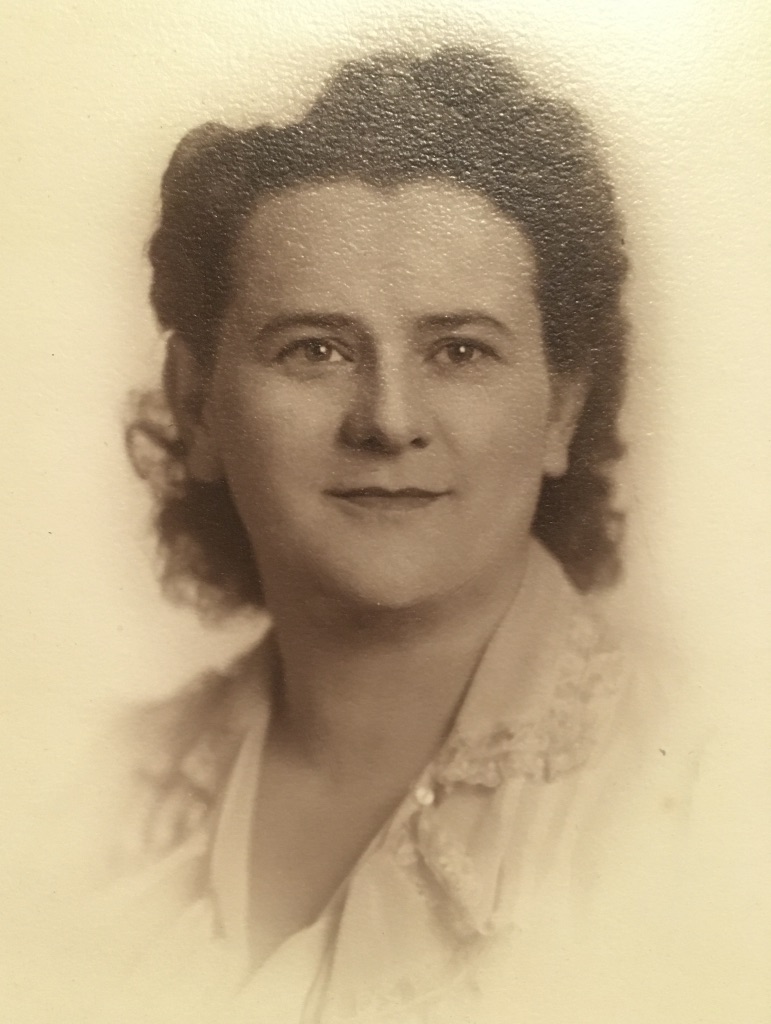
My mom’s column in today’s newspaper, The Marshall Advocate, is a reminder not to forget the 50th anniversary of Earth Day.  Remember to follow through with your plans on how to make the world a better place for ourselves and future generations

Walk with Me 

by Priscilla Wieck

Last year in one of my columns I wrote about a theory of the passage of time that some scientists had put forward. I recall that the main thrust of the theory was that, for humans, time seems to have passed slowly when we were learning or doing new things. We remembered past activities in greater detail if they were different from our daily routine experiences.

Now that we are all sequestered in our own little spaces, most of us are following the same routines day after day. These days seem to blur together and often we lose track of time. We have little re-call of what we did the day before and the day before that! To me, right now, time seems to be passing rather quickly. “What day is it really?”  Connie and I often ask each other. Time for the weekly trash pick-up already? Whatever happened yesterday, or the day before that, or even last week, we wonder.

Earth Day, April 22

To my chagrin, that is my excuse for forgetting about Earth Day. It was Tuesday, April 22nd,  just two days ago as I write this. The 50th anniversary, no less!

First celebrated in 1970, Earth Day events are now coordinated globally by the Earth Day Network in more than 193 countries. Many communities extend Earth Day activities to last for an entire “Earth Week.” The emphasis for all Earth Days is to show support and to take action for environmental protection. However, this year’s celebrations were more subdued and held mostly by Internet transmissions.

The theme for the 2020 Earth Day was Climate Action. This is a particularly apt theme because of the unexpected impact of the coronavirus outbreak. In cities around the globe, blue skies and clear water are appearing where only weeks ago pollution was clouding the atmosphere and seeping into open and ground waters. In Los Angeles, residents are observing the lovely blue skies that we here in Marshall see often. Fewer people are driving cars and trucks and that is reducing noxious air emissions.

Although our environment may be getting cleaner during this time of COVID-19 , lives of many people are disrupted and getting worse due to loss of jobs and isolation. Environmentalists have learned that any sustainable change in emissions and pollution will need to happen in a way that will not put workers’ livelihoods in jeopardy. Those who live in polluted areas of the world have had an opportunity to experience living with cleaner air and water. Hopefully they will demand that their countries find ways to balance their working opportunities with cleaner, healthier living spaces in the future.

It’s not too late to put some Earth Day ideas into practice. They may seem small but really , everyday is earth day, isn’t it? Many of these suggestions you have heard before, but it is good to be reminded of them. For starters, you can walk or ride a bike instead of driving your car, if possible. Be sure to take a trash bag and pick up litter as you go. You can plant a shade tree that will be enjoyed by future generations. Refill your water bottle, fix that leaky faucet and consider getting a rain barrel to collect water for yard plantings. Shorten your shower time to conserve water usage.

Using earth friendly cleaning products such as baking soda and vinegar keeps pollutants from our ground water. Dear Abbey is a strong promoter of that hint. Don’t use insecticide on your garden flowers. This will encourage visits from the native bee population; they are the world’s pollinators. Treat them with care.

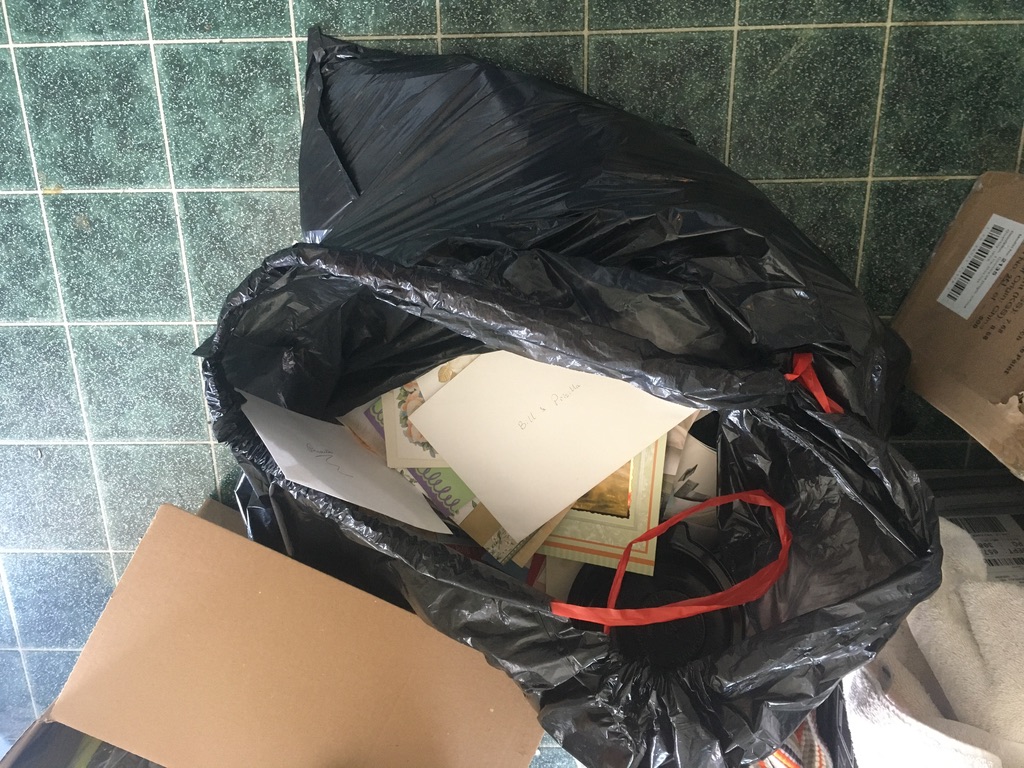
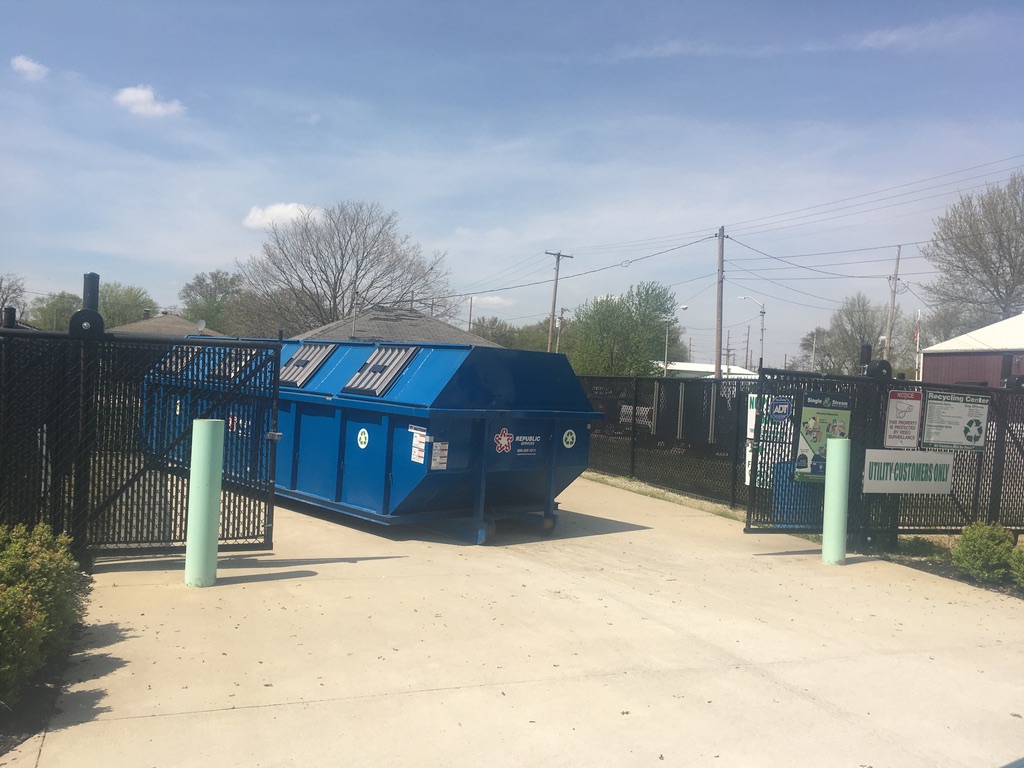
Reduce your use of plastics and recycle, recycle, recycle. Reuse, reuse, reuse. Think before you throw away items as trash that could be used by someone else. It only takes a few minutes to break down those boxes and take them to the recycling bin. Landfills are not the most environmentally friendly places with their methane gas emissions.

And most importantly, help your children and grandchildren understand how wonderful our world is and how we must work to care for it. So many Marshallonians have taken advantage of this virus isolation and been enjoying the spring weather outside. We all should appreciate and enjoy our beautiful yards and blooming trees. Soon flower and veggie gardens will materialize. Watch for them –maybe plant one.

Most of all, take care of yourself. Whether time is passing quickly or slowly for you, eventually a new normal will emerge. Whatever happens, we will deal with it together.

Bridget knows how to take good care of herself: Flop in the lovely sunshine on the front porch!

“I cannot do all the good that the earth needs—but the earth needs all the good I can do.–Anon

Happy late Earth Day!  Peace


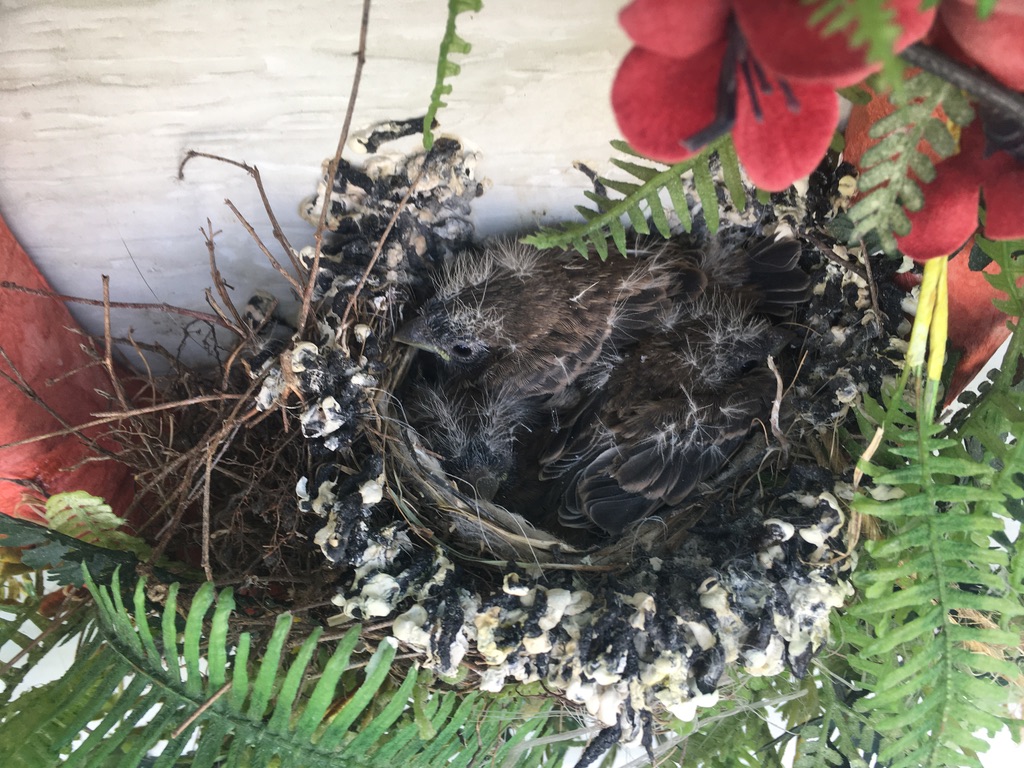
Our Finch of Faith has 3 little ones carefully tucked away on our front porch wreath. They’ll be fluttering away soon where adventures await them in our big, wide world.

Posted in A Message of Faith, A Visit Home to America, A Visit Home to Marshall, coronavirus, Illinois, Smalltown American Life, Springtime in small town Marshall | 1 Comment

What is V-mail?

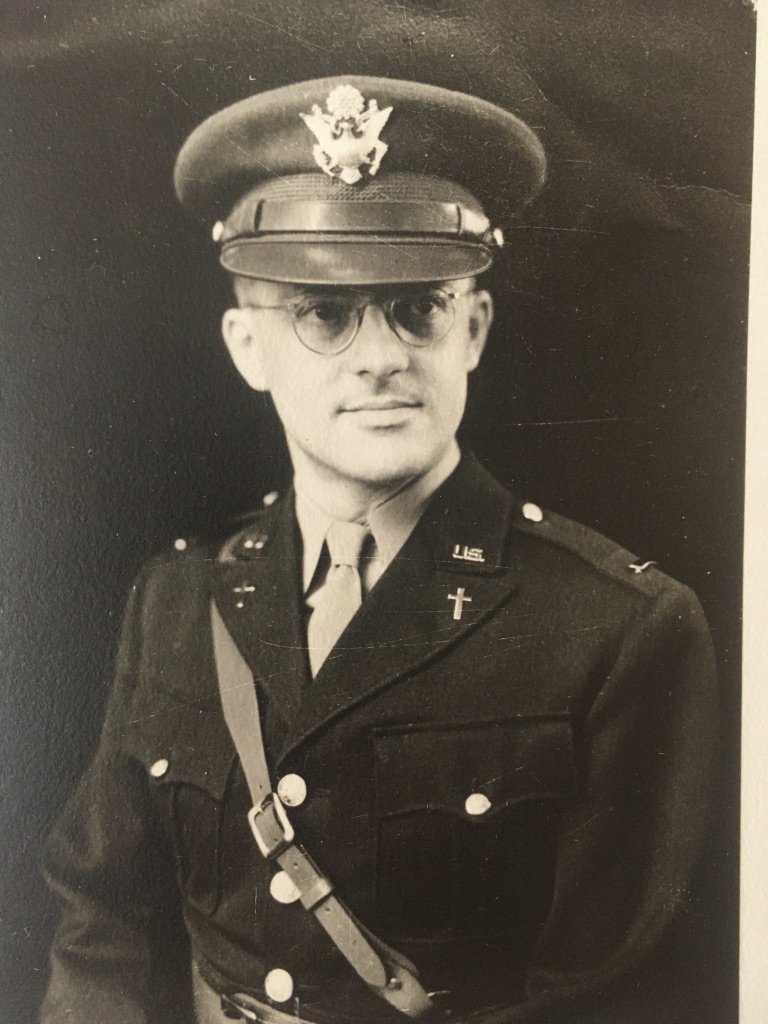
As mentioned previously, I’ve been reading over my grandparents’ WW 2 letter correspondence.  My grandfather, Marvin Maris, was a chaplain in the US Army and was stationed in New Guinea.  My grandmother, Connie Maris, was living in Holland, Michigan where Marvin’s parents lived.  She was renting the 1st floor of a bungalow with her two children (my mom and uncle).

Note:  For the full story and pictures, see my April 17th post, “A wartime era revealed”.

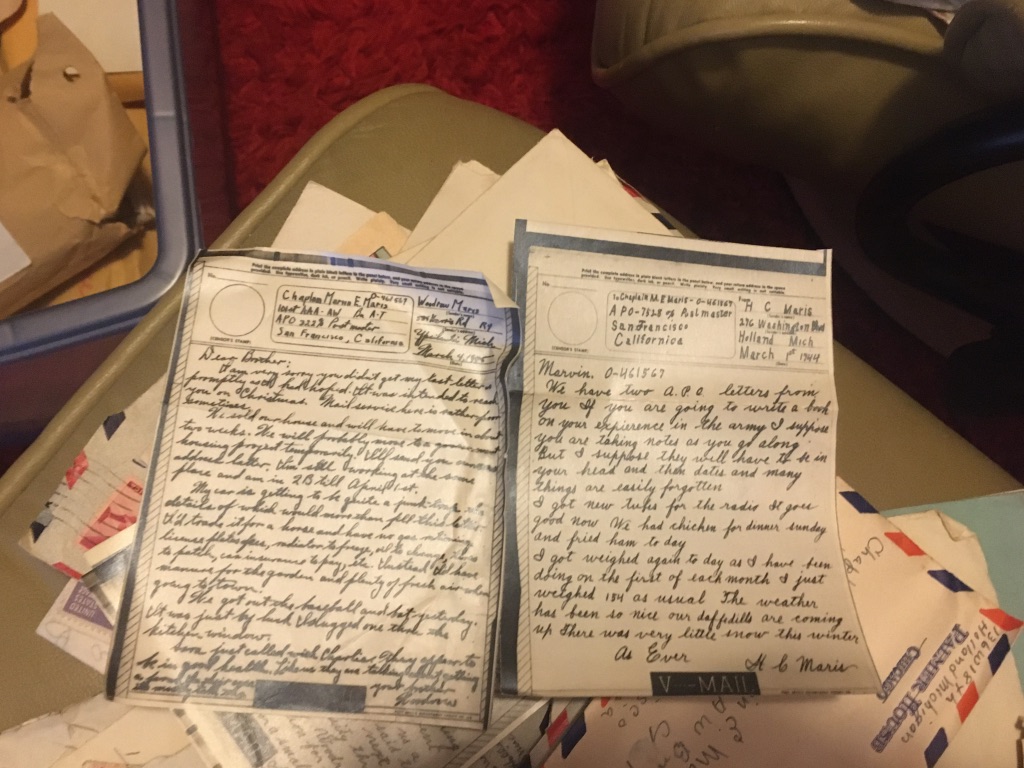
Mixed in with the letters is what is referred to as V-mail.  I had heard of V-mail but had no idea what it was until I found these miniature folded, photo-copied letters thrown in with the large-sized versions.

Ah-ha!  Must be V-mail

What is V-mail?

Two V-mail letters, written by my grandfather’s father to him while he was in New Guinea. You need to use a magnifying glass to read them! They are really tiny.

Aside from the usual written letters, included were V-mail letters, which I had never seen before until I came across them among the correspondence piles.  This was short for Victory Mail, a hybrid mail process used by the United States during the Second World War as the primary and secure method to correspond with soldiers stationed abroad.  It was created by the war department for the following reasons:

“The savings of this system were enormous; 2500 pounds of paper letters in 37 mail sacks could be condensed into only 45 pounds of film in one mail sack.  In turn, this freed up room for more materiel to supply the war effort.  The US further reduced waste by only printing the letters at 60% scale.  The use of V-mail also inadvertently deterred espionage; as only photocopies of letters were being sent, invisible ink and microdots were rendered useless.  In addition, letters could not be “lost” in transit; every letter carried a serial number and new copies could be printed if necessary.  After being introduced in mid 1942, V-Mail became the primary method of communication for US soldiers stationed abroad until the end of the war in 1945 with over a billion letters going through the system.  As such, it was a staple not just of a soldier’s life, but of Americans back home as well.”

That sentiment of letters being a lifeline between family and soldier was certainly true for the Maris family. The testament to this being the writings I’ve been pouring over, mostly written on thin, fragile airmail paper.  That’s a good thing, too, because for the few V-mails included in the bin, I’ve needed to use a magnifying glass to make out whatever was being written.  Help!

I’m fortunate that not too many V-mail letters are included in the piles.  It would be quite a chore to go through them line by line.  My eyesight is not what it used to be, nor is my patience in having to magnify each one so I can make out what anyone is talking about.

I also have found that V-mail, limited to one page, doesn’t give much room for my grandparents to expand upon their  thoughts, feelings or their daily routines.  Those are in the regular-sized notebook or airmail paper which both use to share their lives, one in the States (my grandmother) and one overseas (my grandfather).

At present, I have almost finished with 1945.  The war’s end is at hand and my grandfather is waiting to return to the States, a process which seems to be taking months.

Next, I’ll be going backwards to the 1943 letters and finally to 1944.  Can’t wait to see what the two are up to!

From Illinois, here’s wishing you 平安 (ping ahn), Peace, for your weekend


Posted in Uncategorized | Leave a comment

活出愛 : Live Out Love — One of my favorite Chinese praise songs

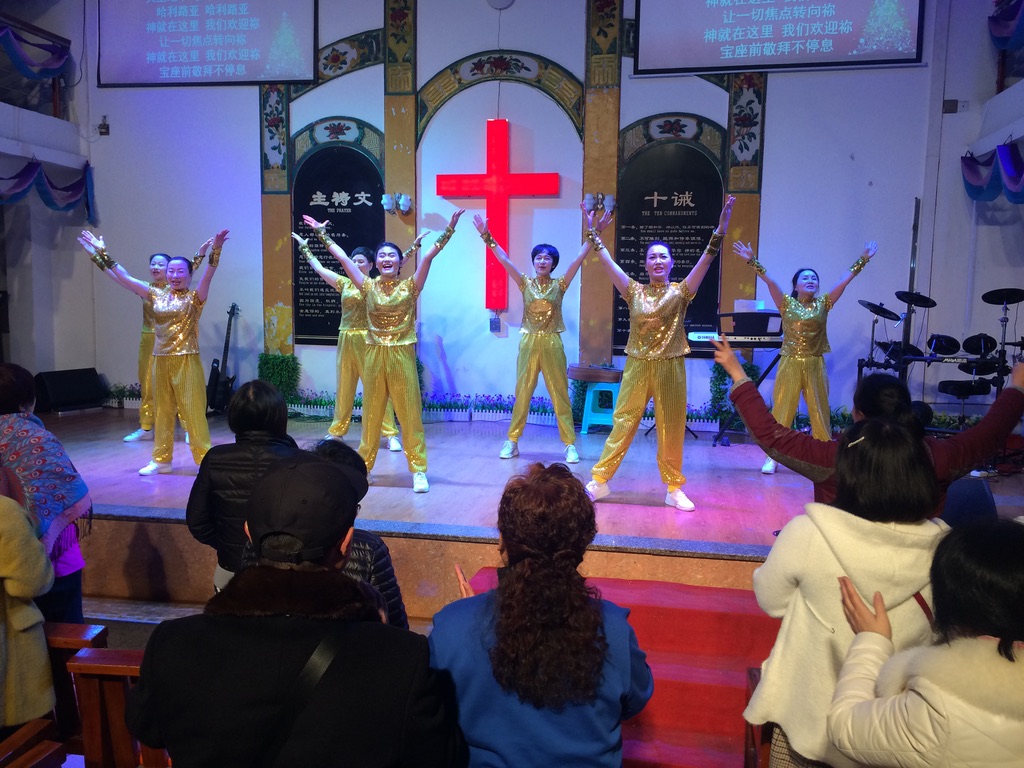
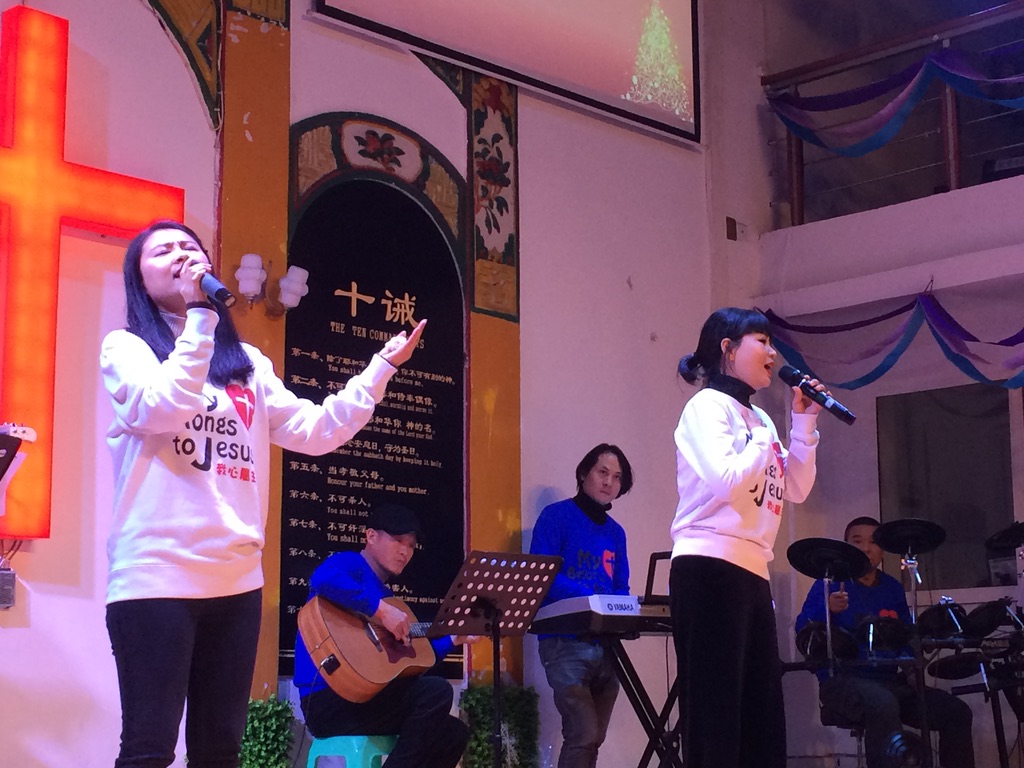
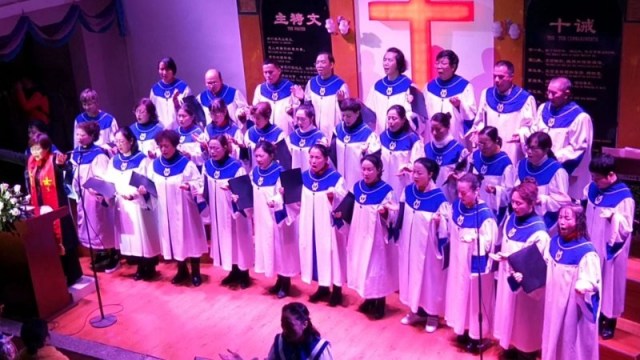
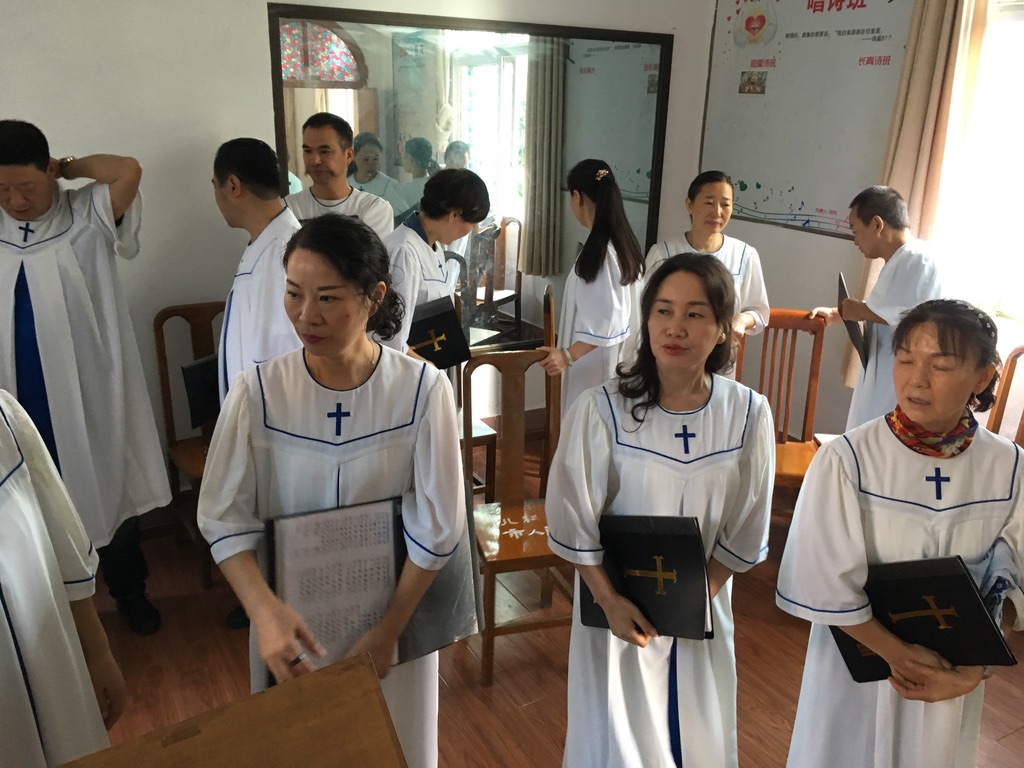
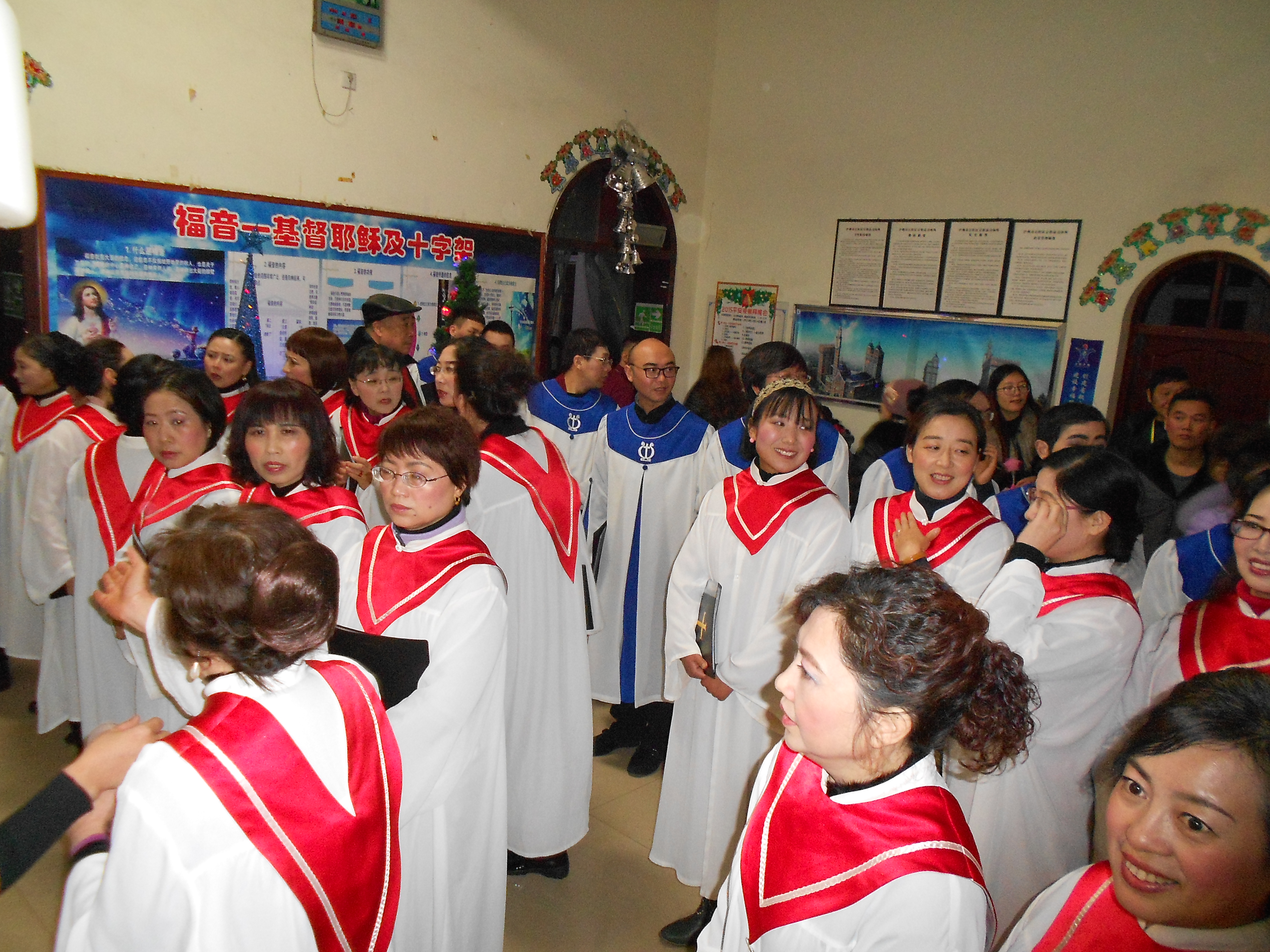
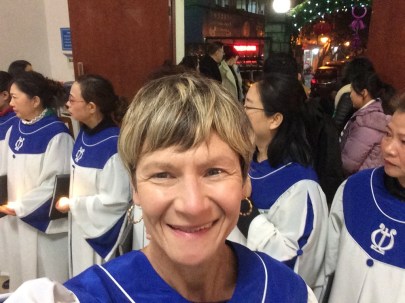
There are so many uplifting praise songs used in the Chinese church today.  Here is one of my favorites I found to share with my choir members in Luzhou.  Perhaps when I return, our praise team (seen below, last year) will have taken this one to heart, preparing it for our weekly Sunday morning and evening services, the latter of which has a wide range of attendees,  young and old alike.

I look forward  to joining them in the future, after virus fears have long since faded and we meet together once again in worship.

I’ve included an captioned English version below for those whose Chinese language skills might need brushing up … or are non-existent.

Here’s wishing you 平安 (ping ahn), Peace, for your day. Enjoy!


Posted in A Message of Faith, A Visit Home to America, China, coronavirus, Luzhou, Tales from Sichuan's Yangtze Rivertown, The Chinese Church, Travel | 1 Comment

Dealing with Slippage: My Mom’s April 21st “Walk with Me” Column

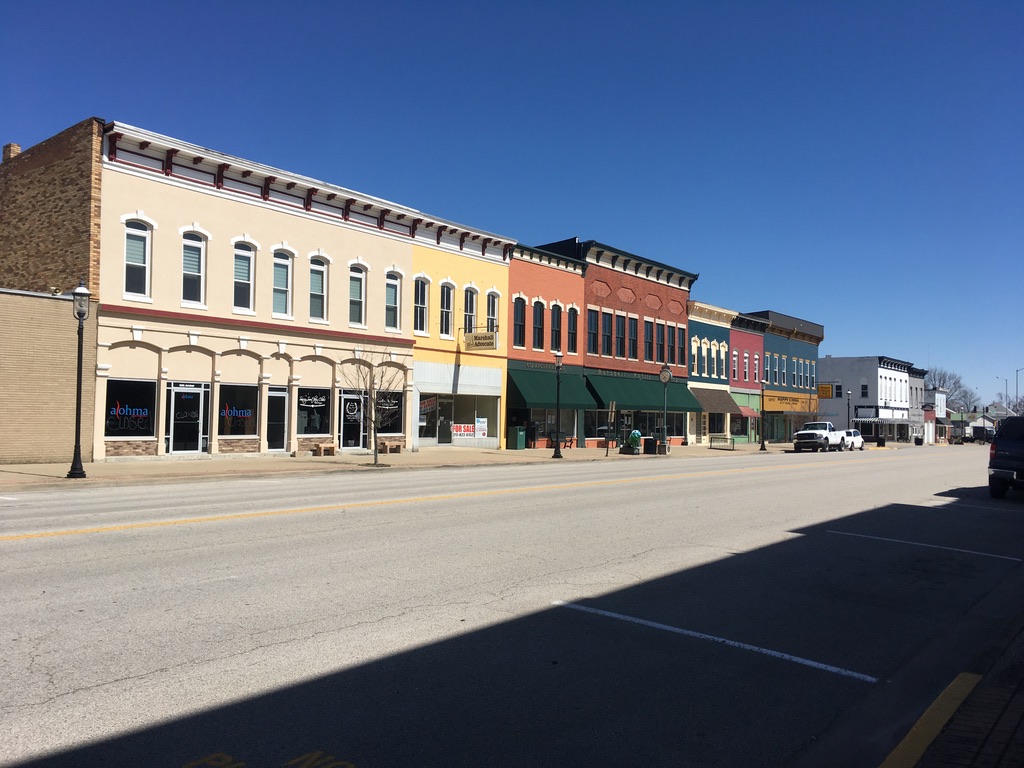
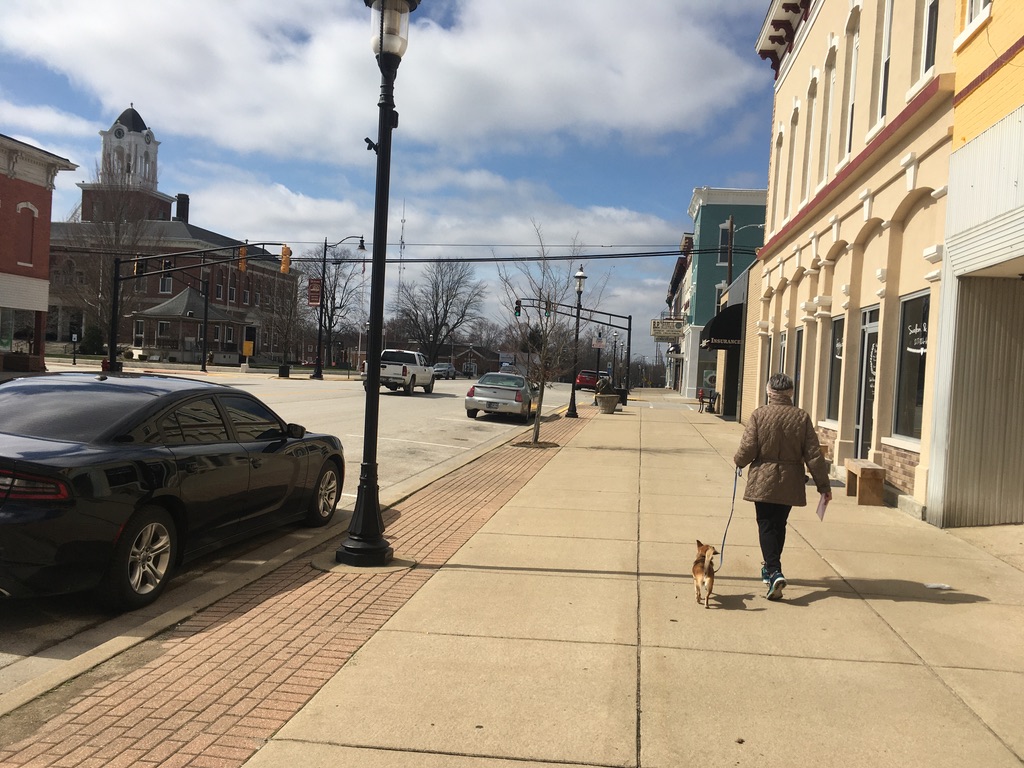
My mom has a weekly column in my hometown paper entitled “Walk with Me.”  Her columns are insightful, touching upon topics she thinks about as she walks the dog around our small-town community.

Here is her latest, involving the term “slippage.”

Walk with Me

by Priscilla Wieck

How are you doing after living through several weeks of social isolation?  Have you experienced any slippage yet?  You may be as unfamiliar with that word as I was when daughter Connie asked me a few weeks ago, “Have you had any slippage lately?”  I thought she meant had I recently taken a tumble. I did trip over the dog’s leash last week and sprained my naughty finger, but that’s another story and not what she meant. She explained that she first heard of slippage from the director of the Amity Foundation in the organization’s Hong Kong office when she was one of several English teachers newly arrived in China to teach under the auspices of that particular NGO.

The Amity director, a proper Canadian, occasionally visited the recruits to see how they were getting along in their various postings and to offer advice about living and working in a foreign country. One of the things he would caution them against was slippage. He had discovered through the years that sometimes when the teachers, old and young, were in unfamiliar situations, they didn’t behave the same as they would in their home environments. This occasionally caused a problem for the teacher as well as bad press for the Amity organization. In other words, keep up your standards of behavior to avoid slippage.

There are several meanings of slippage.  One pertains to the stock market, as in stock values slipping below what the purchase worth was. I think that is happening now although I am far from an expert. Very far!

Other meanings can be “failure to to maintain an expected level or standard, a decline or delay, a falling off.”  Connie and I have been entertaining ourselves by trying to figure out if our isolation behavior has morphed into slippage or if it is just plain old adjusting to unusual circumstances.

An example: Is it slippage to wear the same pair of jeans and sweatshirt for a week? After all, who is going to see me? It has been so cold this week that I have had to wear my winter coat for our daily walks. I am saving a bit on the water bill, am I not?

How about hair washing? Again, no one sees my hair under those ear warmers. Why shampoo every day?  Years ago when we all went to the beauticians for our weekly wash and set, we got along OK. Granted our hair didn’t look so good at the end of the week, but now, who’s to see me?

Has slippage occured when, at 10:30 a.m.,  I take the daily yard tour wearing Bill’s old sweatshirt and PJ bottoms?  Good thing I have the dog to walk or I might not bother getting dressed for the entire day.  Again, saving washing water. Except for Sunday a.m. when Pastor Bob is hosting a “Coffee with Bob” on Zoom. Be sure to  be suitably clothed, he advises. If we join in, we may be seen.

Our binge watching of “Call the Midwives” on Netflix until the wee hours of the night, and not getting the advised 6-8 hours of sleep, might qualify as slippage . However, I have watched so many babies being born I think I could supervise a birth in an emergency. Surely that is educational!

Roasting a turkey breast and dining on it for several suppers in a row, shopping on QVC for clothes I may not get to wear outside of the house for some time, checking out celebrities’ scandals on the computer and just messing around the house may also be judged as suspicious activities that could be called a slipping of standards.

But who sets the standards and who is judging? As many signs around town have proclaimed,”We Are All In This together.” Whatever helps get us all get through these trying times is acceptable as far as I am concerned. Just observe these two things: 1.  Pick up your dog poop in others’ yards  2.  And, please, don’t throw your trash into the street!

“Before you judge a man, walk a mile in his shoes. After that, who cares?  He’s a mile away and you’ve got his shoes.”

Peace

Posted in A Visit Home to America, A Visit Home to Marshall, coronavirus, Coronovirus Situation, Illinois, Smalltown American Life, Springtime in small town Marshall, Travel, Visit To The States | 2 Comments

My Chinese Choir in Luzhou: Supportive and Concerned


UNADJUSTEDNONRAW_thumb_1900

As mentioned before, I am in touch with my Chinese church choir on my cell phone via WeChat, China’s equivalent of Facebook. As in America, Churches and large gathering places still continue to be closed due to COVID-19.

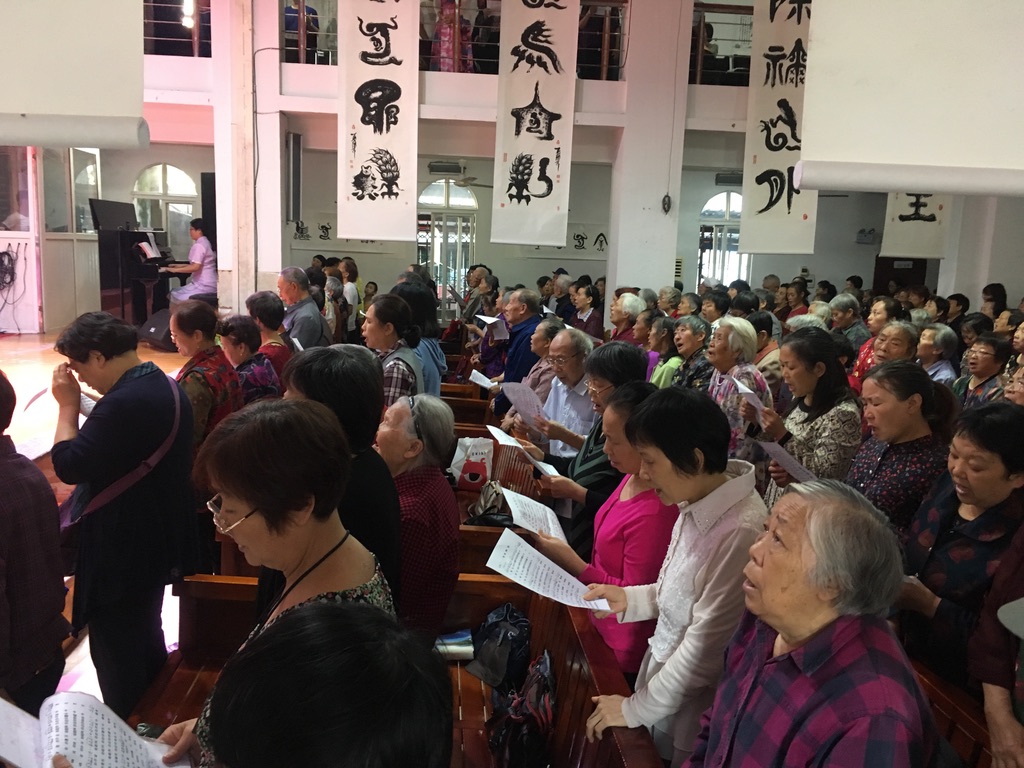
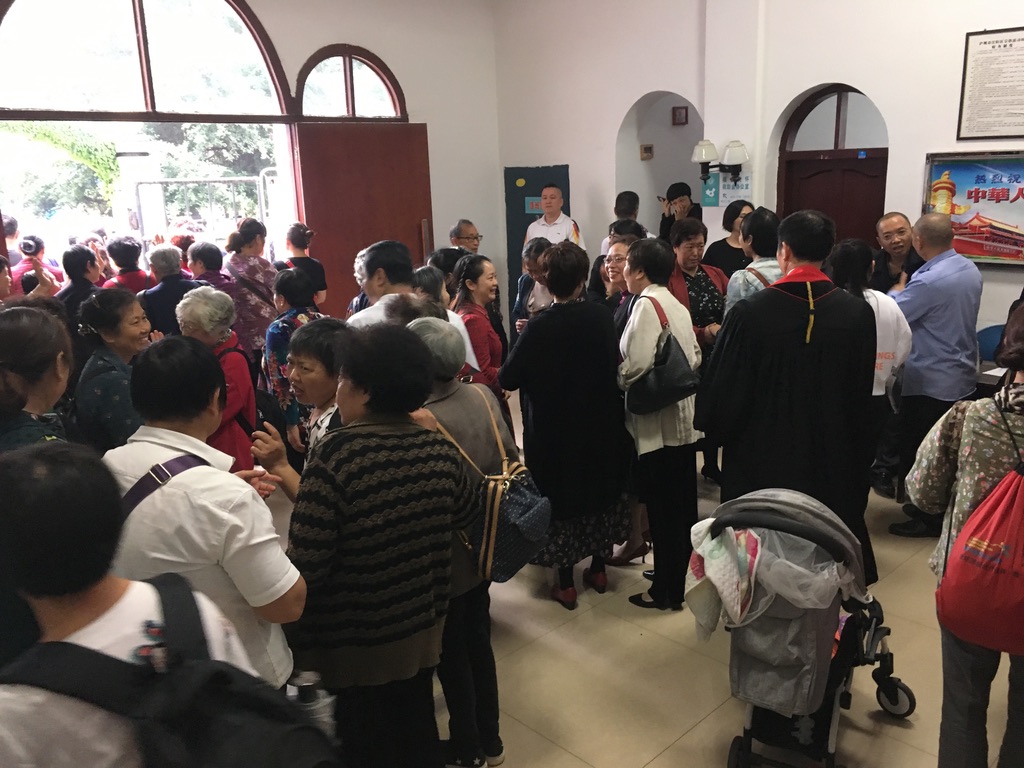
While the Chinese Christians have always been very active in WeChat, it has become even more so due to the absence of meeting together for worship.  Where once hundreds met in our 1913 sanctuary, . . . .

now, it is empty.

Doors once open, now closed at the Luzhou Protestant Church due to virus precautions

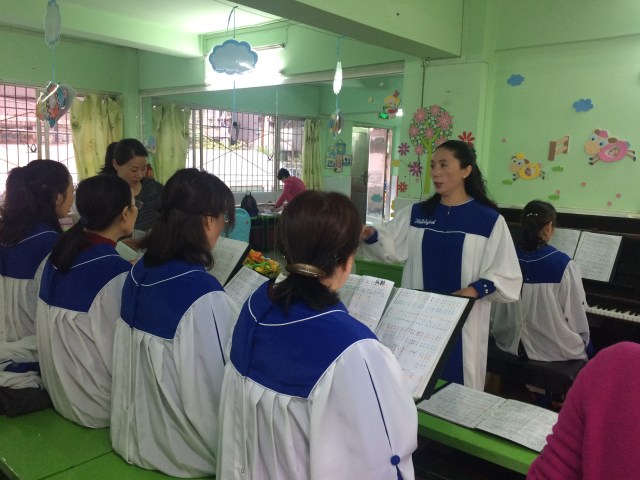
In the case of the choir, practices and taking a physically active part in the services are still on hold. (Below, see us last year preparing for worship)

IMG_6804

 

I currently belong to 3 church texting groups:  The daily scripture reading group, my daily English prayer group (that is my duty, to post a short prayer in English and record it) and the Constant Love choir sopranos’ group, soprano being my vocal range.

In all three, we are full of Christian love and support.  No matter what is happening in the world, no matter how our countries are warring with one another in the media or what the headlines screech concerning opposite or controversial viewpoints, we remain Christ-like to one another.

Whenever I post prayers, notes of concern, share songs that I find uplifting or add pictures of my current situation, I receive the most lovely replies (mostly in Chinese) from my soprano choir community:

“Connie,  Jesus loves you.  We love you!”

“I also love this song, Connie.  Is the American church still closed?”

“Connie, we miss you.  May God bless you and all your brothers and sisters in church.”

“The Lord take care of everyone’s body and bring peace.”

It is a given that no one posts controversial news reports or launches into words of discord which will stir up hard feelings among others.  As Christians, we steer clear of all that might hurt, attack and upset.  It can be a challenge, especially when our countries’ leaders launch into rhetoric that puts both our nation’s people and governments at odds with one another.  The blame game of  COVID-19’s spread is a particularly sore spot at the moment.  It seems an impossible task:  How can world Christians maintain strong faith values of love for our neighbors and compassion during such a time when outside forces continuously stir up trouble and dissent?

I take my cue from my Luzhou church choir members.

Personal Prayers Sent

Yesterday, one of the group members worriedly texted, “Connie, the US epidemic is very serious now. You and your family should take precautions.  God bless your country, and peace be with you.”

Quickly following came an embedded English music video, posted by another member, to reassure, calm and encourage.

What a thoughtful gesture, to include something for me in my own language with such an appropriate sentiment relayed through song and unity.

What was sent to me? The lyrics and the embedded performance as posted on the choir WeChat I leave below. Sound familiar?   I think it resonates for all of us.

When I am down and, oh my soul, so weary;
When troubles come and my heart burdened be;
Then, I am still and wait here in the silence,
Until you come and sit awhile with me.
Refrain:
You raise me up, so I can stand on mountains;
You raise me up, to walk on stormy seas;
I am strong, when I am on your shoulders;
You raise me up: To more than I can be.
There is no life – no life without its hunger;
Each restless heart beats so imperfectly;
But when you come and I am filled with wonder,
Sometimes, I think I glimpse eternity.
Refrain
.

My Posted English Prayer for Today

Today’s Prayer: Dear Lord, Help me be fully alive in your presence.  Use me to do good in the world and let my heart become one with yours.  In your name I pray, Amen.

UNADJUSTEDNONRAW_thumb_18e2

I am anxiously awaiting my return to Luzhou, where I hope to don my robe once again and join in song with my faithful brothers and sisters.

Posted in A Message of Faith, A Visit Home to America, A Visit Home to Marshall, China, coronavirus, Illinois, Luzhou, The Chinese Church, Travel | Leave a comment

A Wartime Era Revealed: Digging through my grandparents’ World War II correspondence

During my extended stay in Illinois, my mom and I have continued  to prepare for her upcoming move to her smaller home, a move now delayed due to the pandemic.  We’ve been digging through rats’ nests around the house and came across the above:  a bin full of over 500 letters saved by my mother’s parents during World War II.

ABiL7eE6TzeXry2ASwuByA_thumb_2c7e

My grandparents, Connie and Marvin, as I knew them in the 1970s and 80s.

I always wondered where my love of writing came from. With this letter discovery, now I know that I received the itch to record from my maternal grandmother, whose name was also Cornelia (or Connie), and my grandfather, Rev. Marvin Maris, a Congregationalist minister.

Before the war, Marvin served as a pastor. Here he stands on the church steps with a children’s Bible school class in Lawrence, Massachusetts.  Connie, his young wife (before my mother was born),  is in the back row to the far right.

In 1942, he joined the US Army as a chaplain.

He was shipped out to New Guinea in 1943 and served in the South Pacific for over a year. During this time,  the two sent letters back and forth.

Cornelia (Connie) Maris, seen here in an her 20s.  During the war years, she was in her 30’s.

Sometimes, my Grandma Connie wrote 2 to 3  letters a day to her husband, whom she often chastised when a week or longer would go by with no news from him. Many times, his letters were delayed, lost or censored due to security reasons and landed all at once on her doorstep, helter-skelter amid week-long lapses, or not at all.  This she understood but it didn’t stop her from criticizing him from time to time in her own correspondence:   “I know you must be busy, but …”, “It’s been 10 days since we’ve gotten a letter from you.  Maybe it’s in today’s mail ….”, “Your last letter gave very little details of what you are doing to occupy your time.  I suppose you think it’s boring and we wouldn’t be interested but, I assure you, we would find it very interesting.”

My grandfather did write in detail about so many of his daily routines, problems among the soldiers, the mothers who wrote to him about their sons, the food, the jungle environment (incessant mosquitoes and rats were a problem),  encounters with “the natives” (New Guineans and, later when he went to Manila, the Philippinos), the “Jap” POWs and the list goes on.   However, I will admit that he didn’t write as much as Connie did.  From the letters I am going through, all saved by my grandfather, she obviously was the more verbose of the two.

What I am Learning 

ebv8pi9lSm+VcI7jicA_thumb_2cc0

Snapshots here show a new pastor, Marvin, and his wife in 1933. My mom is the baby. Who would have thought the two would be separated by war, 10 years later?

Every night, before bed, I’ve been reading a few letters at a time.

I first tried to match the replies from both to give a better picture of their two separate worlds, so distant and different from one another yet so connected through their shared friends, acquaintances, family relationships, church congregation dynamics, Biblical knowledge, and Christian theological thought and philosophy.  While I managed to pair a few responses with dates, I finally gave up due to the large volume of letters.  Their haphazard ordering was just taking too long, plus I was impatient.  I wanted to get to their stories without spending hours organizing them all. I came up with a system of my own.  I’ve been concentrating first on Connie’s letters to Marvin by year, month and date.  Later, I’ll go back and do the same for my grandfather’s replies in which  he recounted his life happenings to her.  Another time, I’ll deal with coupling reply to response.  For now, it’s delving deep into the past lives of both, beginning with Grandma Connie.

Connie (Cornelia) Maris

Revealed in all my late-night reads is quite a woman.  In the current timeline I’m going over, Connie Maris is in her late 30s, with 2 children (ages 5, my uncle Rolf, and 10, my mother Priscilla), living in Holland, Michigan in a rented downstairs house.

pIVGtpGwQUGS+w7Eg9hTug_thumb_2f68

Priscilla, my mom, and her younger brother, Rolf, during the war years.

UNADJUSTEDNONRAW_thumb_20ce

The house today in Holland which my grandmother rented. She and the children lived on the 1st floor; the owner (a school teacher) lived on the second floor.

The move to Holland, Michigan from the base in California was due to her husband’s deployment.  She no longer had an officer’s house to live in but was required to leave.  She ended up moving to Holland, her husband’s hometown and where his  parents lived, Harvey and Ebba Maris.

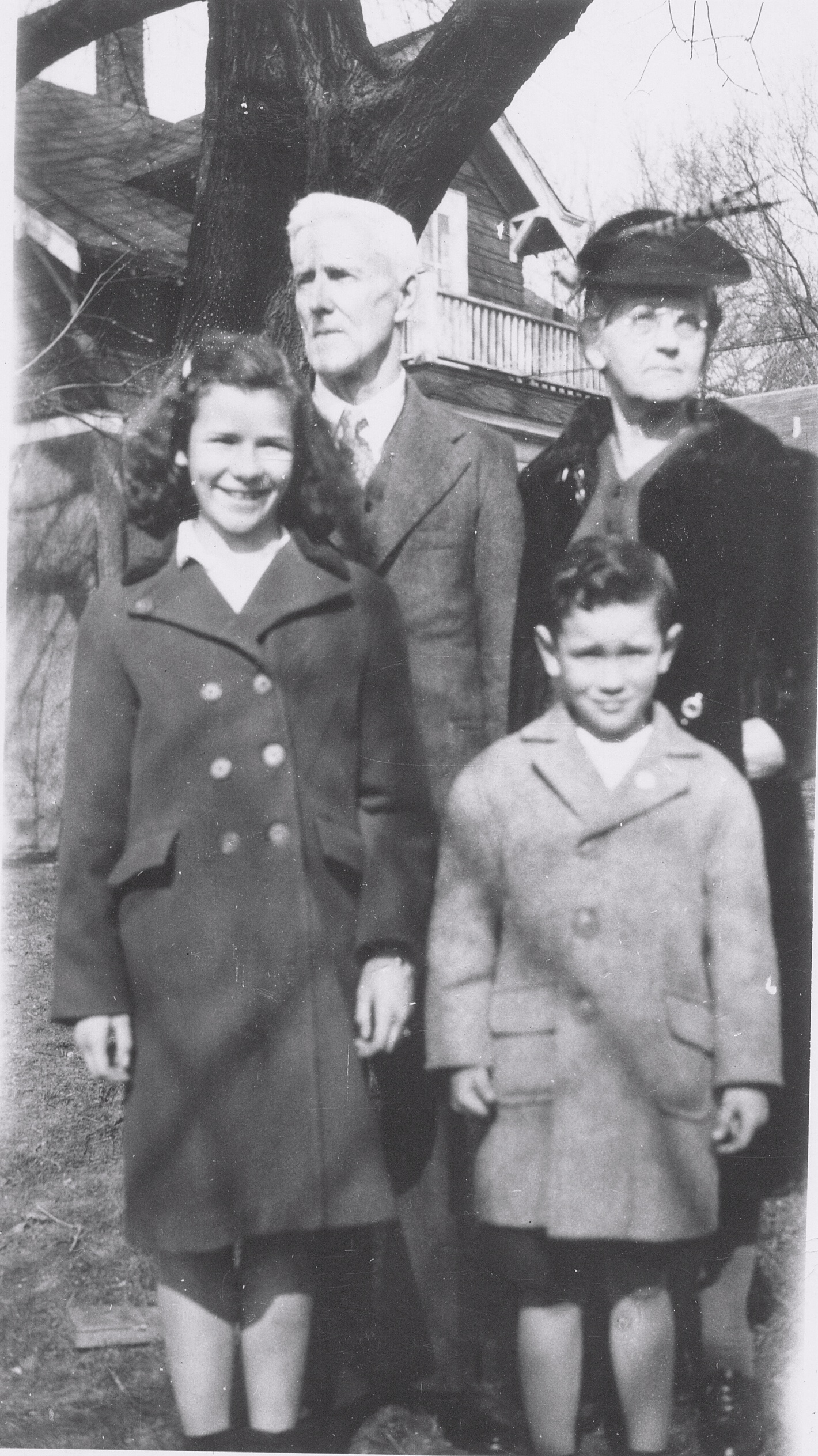
Pictured here in Holland, Michigan: Harvey and Ebba Maris with my mother, Priscilla, and her brother, Rolf, during the years Connie wrote her letters.

Harvey, in his late 70’s, was the local barber and had a shop downtown.  Ebba was a  housewife, a very religious, devout, and conservative Methodist.  Their home (below) is still standing today on Washington Street.

My mom and I visited Holland last summer. All that my grandmother writes about  in her letters about Holland, I am able to understand even better having been there.

We also attended the Holland United Methodist Church, where my great-grandma Ebba was a member and where Connie was quite active.  It is a new church building, not the one my mother remembers, but is located on the same site.

My mom and I attended church on Sunday morning, in the hopes that my mom would meet some elderly members who might have remembered her or her mother. Sad to say, my mom didn’t find anyone.

Although a new church building, the former having burned, my mother (from her childhood) did recognize this stained glass window which survived the fire. We had our picture taken beside it before we left.

Religious Conflicts:  The younger generation vs. the older generation

As opposed to Ebba, Connie, on the other hand, was of a more progressive nature in her religious thought and upbringing.  This caused some rift between mother-in-law and daughter-in-law and definitely got Connie into trouble, especially among the  elderly ladies of the Holland Methodist Church.

For example, attending dances or playing frivolous games was considered an unworthy pastime, especially for a pastor’s wife. One of her stories involved the latter.  When my grandmother joined the young adult bridge club, many of whom were Methodist parishioners, she was chastised by the elderly Dutch women when her name appeared in the paper for having won a bridge prize.  After retelling this story in a letter to Marvin, she continued with: “If I want to play bridge, I’ll darn well play bridge! I like to play bridge, and I enjoy the company of the others.   I don’t care what anyone else thinks.  Your mother will just have to put up with it.”

An Active Church Member

My grandmother was the youth choir director at the Holland Methodist Church. My uncle, her son Rolf, is the the child standing off to the side on the far right.

Being a pastor’s wife, and a woman of strong Christian faith, she was extremely active in the Methodist church.  She was the youth choir director, attended all church functions (speaking engagements of missionaries, visiting pastors, inspirational faith-centered talks), attended Bible studies, participated in religious educational seminars and weekend adult church camps, hosted Army chaplain wives’ luncheons (there were 7 in her area), led religious-based workshops and organized many special activities.  One included the church’s Mother – Daughter banquet, which my grandmother proudly wrote about in various stages of preparation and then the final results. My mom recalls helping my grandma pull an all-nighter to make 167 favors and programs, a sleepless night due to her mom’s infamous last-minute tendencies.  Connie did mention this, saying daughter Priscilla helped her with the hand-done stenciling and program compiling:  2 hours in one stretch, 5 hours in another and the final 6 hours which completed them all right before she headed off to the church to set things up.  Talk about down to the wire!

Aside from reporting upon her activities, she often launched into deep theological thoughts, sharing what she’d read through her books on religion and asking Marvin’s opinions on the matter. She outlined sermons she’d heard and suggested, in his upcoming messages to the men, he might want to include such-and-such an anecdote or use a particular illustration which she found appropriate for certain situations.  Of course, all these suggestions she couched with: “I am not doing the speaker justice in any of these re-tellings. I am not as eloquent a speaker as they or you are.  I am sure you can use these ideas much better than I and would be able to develop them cleverly into any of your sermons to the troops.”

Ah, Connie!  How well you know how to build up the fragile ego of your spouse!

Forging Onward 

With this extra time available to me, I continue to plow through these WW 2  letters. I am piecing together more and more what kind of person this Connie Maris was:  her personal secrets, unspoken thoughts, hidden qualities, young motherhood burdens, worries and fears, inadequacies, disappointments, as well as her triumphs, joys and proud accomplishments.  Not even my mother was aware of the depth to which these letters are revealing a woman she thought she knew but perhaps did not.

Connie Maris’s itch to write, incessantly scratched during these war years, is for me, fast becoming a treasured family heirloom which I never would have had time for in the past. This delayed return to China, even in the midst of so much anxiety and upheaval, helps me remember that blessings can still be found even in the worst of times.

From Illinois, here’s wishing you平安 (ping ahn), Peace, for your day.


Posted in A Visit Home to Marshall, Smalltown American Life, Visit To The States, World War 2 Letters | Leave a comment

Ruminations, past and present, on my Jelly Bean Contest

Yes, the contest is over and I have already posted the results on Facebook as well as my WeChat moments.

I apologize for being a few days late on this one.  The contest was divided among USA and China.  From my USA end, I had 31 entries but in China, I had 56!

Among the China participants, I had several categories: current students, teachers in my department, a few teachers outside of my department, their children’s guesses and then the alums along with their children’s entries.

Some guesses were low, some were high;  some took a stab in the dark, others haphazardly came up with a number while a few went about it in a more scientific way.

One of my current students, Bill, gave his choice after 5 full days of careful thought and calculation.

“I guess there are 512,” he texted.  “I think it’s gonna be between 450 and 540 if you look at the density of the jar.”

As you can see, he wasn’t far off!  Too bad he didn’t give a tad higher number or he’d have had it.

Learning from mistakes

As I carefully scanned down the list on Easter Sunday, I couldn’t help but feel a nervous pressure upon me.  This has to do with my beginning teacher mistake which I’m sure many first-year teachers can sympathize with.

Years ago, in one particular class, I remember my dramatic, drawn-out, build up to the winning announcement.  I had everyone on the edge of their seats.  I slowly went down the list of numbers every student had written down.  I theatrically opened the envelope with the jelly bean count inside, pulled out the contest paper, looked up with a sly, knowing smile and surveyed my eagerly awaiting college freshmen.

“This is so much fun,” I  thought to myself.  “I love teaching!”

After a long pause, I took a deep breath and, with ring-master authority, proclaimed the winning number and name.  There was a chorus of groans before a sole student popped up with a scream while jumping up and down in victory.  After I had handed over the jelly bean jar, which was the prize, I made sure to have a picture taken to record our Easter lesson moment.  The bell then rang and everyone filed out after attacking the winner, who had opened the jar and was giving out handfuls of jelly beans to anyone who wanted them.

As I picked up my things, a few disappointed students hovered around my desk to check the list, displayed openly before going into my bag.

In a split second, my self-satisfaction took a back seat to humiliation as the two immediately pointed out, with triumphant righteousness and indignation,  that I had made a mistake.

Wrong winner.

Since then, I have always enlisted help from the class monitors and others to do the announcing for me.  If a mistake was made, it wasn’t on me!!

A mistake made twice?!

But this year’s contest from afar was all on me.  Knowing how competitive Chinese can be, I made sure to double and triple check the entries before announcing the winner.

I worked hard on getting everything just right, including scrutinizing every entry.

Some students did make more than one guess during the week. I cornered them, saying, “Remember!  Only one guess per person.  Which entry do you want?”

There were also a few who chose the same numbers as others.  After pointing out that all numbers must be different, please check again, those affected were allowed to change their number.

To further alleviate my concerns of a repeat blunder, I continuously checked all WeChat groups involved to make sure no one was left out.  With the time difference, entries popped up at all sorts of times during the day and night.  Keeping track of them all was no easy task.

In the end, I felt confident I had our winner. And just to make sure all felt I wasn’t showing favoritism, I photographed the entry list for all to see along with the contest envelope’s contents.

UNADJUSTEDNONRAW_thumb_3202

It was a former student, Luo, and her family who came up with the closest number to 541 which was 520. After announcing the winner, I explained that when I return to China, I’d bring a special prize for Luo and her children, Maria and Max.

“Congratulations to Luo!”,  “Good guess!” and “Lucky dog!” filled all the WeChat groups . . . until it came to alum Jamie.

“I am very sad,” she texted with tearful emojis, one after another . “You did not give my child’s number, Wilson. No prize for Wilson. Poor Wilson. Perhaps you have forgotten.”

In a panic, I checked the list again and, with growing relief, found him.

“Hey, Jamie!” I texted back.  “Wilson is Number 45; his guess is 429.”

“Oh,” was her embarrassed reply.  “I see. My mistake.”

Yep!  Better yours than mine, Jamie.  Better yours than mine.

From Illinois, here’s wishing you 平安 (ping ahn) for your day.

Morty, winner of last year’s English Center Jelly Bean Contest, stands holding his bottle of jelly beans, his prize.


Posted in A Visit Home to America, coronavirus, Easter Jelly Bean Contest, Illinois, Luzhou, Luzhou Vocational and Technical College, Smalltown American Life, Travel | Leave a comment

Easter Sunday at the Luzhou Protestant Church: A Year Ago Today (reposted)

I remember, awhile back, promising pictures of the Luzhou Protestant Church’s Easter services on April 21.  Let me make sure I post those here, along with a short explanation of what usually happens at Protestant churches in China.

Changes to the Easter Worship in China

I have been attending Chinese church services since 1991 in various parts of the country. It used to be worship as usual, without any special messages or decor added to the sanctuary, but in the past 15 years (I would say), that has changed.

Fresh, white lilies adorn altars and pulpits.   Palm-Passion Sunday, the Sunday before Easter, is now taking place with dramatic liturgical dance and heartfelt renderings of Christ’s death (including movie film videos or graphic artwork displayed on power points).  Easter Sunday includes special music by adult choirs and youth, a full sermon about Christ’s resurrection, baptism of new members (in the Luzhou church, between 40 – 50 are baptized), and communion with our new brothers and sisters in Christ.  At the Luzhou Protestant Church, Easter is a 3-hour service due to all the extra happenings of the morning:  9 a.m. – 12:00 noon.

And a majority of churches throughout China has begun to adopt the custom of giving out hard-boiled Easter eggs with Christian symbols on them as well as packages of  sweet bread buns with crosses on top.  Everyone who attends church receives these as he or she leaves the sanctuary.

New Tradition:  Serving a Meal

I have received my fair share of bread buns and eggs over the years for Easter Sunday, which has always been a treat, but now an added tradition is likewise making its way into the Christian community:  Serving a full meal to everyone.

Because Easter services tend to be longer than other worship times, by noontime (when we are dismissed), people are hungry.  Sharing a meal together is a very important part of this culture, especially so when noontime comes.  Sending people home hungry, where they must then prepare a meal on their own or are obligated to eat out in a restaurant, is not a very hospitable thing to do for newly-baptized church members.  Nor is it considered very celebratory for such a special day of the year for Christians.

So for many churches, it has become a tradition to prepare a full meal for all who attend services, and even invite those in nearby shops or in the church neighborhood to come to eat with us.

Feeding the Masses

If there is one thing Chinese know how to do, and do well, it’s to wok up and serve vast numbers of people quickly and easily.

At the Luzhou Protestant Church, those in charge of the meal, which must feed about 1,000 (church members and others), have it down to an art form.  We usually have disposable paper bowls overflowing with rice, 2 different stir-fried dishes (those with meat and those with only vegetables), a hard-boiled Easter egg and a light soup.  (Soup is a standard add-on for any Chinese meal.).

I truly admire the food committee, which I’ve heard have boiled and decorated 1,000 eggs each Easter as well as manned the back kitchens where massive vats of rice are prepared along with all the other dishes.

The prep work needed to cook Chinese is a huge effort.  I imagine those involved spend their entire Easter weekend buying fresh vegetables and meat, slicing/dicing/cubing everything, and early Easter morning, continuously wok up all that is needed to give us a hearty lunch.  I do know those manning the food stations take a quick break for communion but other than that, they miss out on most of the worship.  They spend their energies making sure all congregation members (around 700) are served, placing individual meal bowls on trays which are distributed throughout the church as we sit in our pews and wait for our meals to arrive.

Well-oiled Machine

The assembly line to feed so many as quickly as possible is quite something to behold.  I am always in awe of how fast we all get our food, even those in the balcony and others from outside the church.  As soon as our pastors (there are 4)  give the closing prayers, food begins to be distributed.  Within 50 minutes, most of us are eating and some are even going back for seconds.

In Closing

We in the choir are usually the last to get our meals, but there is always plenty to go around so no fears we’ll go home hungry.

Participating in such celebrations (Christmas, Easter, Palm-Passion Sunday), including weekly singing practices and weekly worship, is such a joy.  I belong to so many Luzhou and Chengdu communities:  my school (students and faculty),  the swimming pool (I swim daily and even give stroke advice to those who ask),  visits to my countryside farming friends, pet rescue groups and also church. It makes for a well-rounded experience of all China has to offer, and I feel so very blessed to be a part of it all.

Ping An, (Peace) for your Easter Sunday, everyone.  Be thankful and rejoice!!

Easter Display

This was my Easter display in my home in Luzhou last year. The lilies were so fragrant! I can’t wait until next year to set these out again.

Posted in From Along the Yangtze, Luzhou: Yangtze Rivertown Stories, Tales from Sichuan's Yangtze Rivertown, Luzhou, Tales from The Yangtze River, Tales of China, Travel | Leave a comment

The Story of the WeChat group, 大学同学, University Classmates

The Jelly Bean contest continues!!

Deadlines are:  Midnight today (Saturday) for USA; Noon on Easter Sunday for those in China.

The Most Active Contestants: 大学同学, University Classmates

q2nPcQO6RKi1iWD4n+WjFw_thumb_31ed

Things have been slowing down from the USA end with 28 entries but my Chinese contest entries have been exploding.  You would think this would be among my English Association group, which is composed of 300 + students who are interested in English. But surprisingly enough, that is not the case.

The most active and enthusiastic are among  大学同学, University Classmates. This is an alum group of my college, some who were my students years ago and others from different majors.  They now have teaching positions, have taken on other jobs, have husbands and wives, and children of their own.

Joining this group:  A bus ride that nearly wasn’t connects us together

How I joined this group is one of those “nearly wasn’t” stories.

Two years ago, I had just finished swimming at the new natatorium which is located clear across town. It was 4:30 p.m. and I was very tired.  After a full morning of teaching, then a 2-hour work-out in the pool, I just wanted to get home in a hurry, which meant a $3.00 (19 yuan) 10-minute  taxi ride back to my campus.

But after waiting 20 minutes for an empty taxi, I gave up and decided to take the long way home, a cheap 40-cents by public bus but a full 50-minute ride.

As I settled into my bus seat, I was in no mood to chat with anyone.  The last thing I wanted was to engage in small talk with curious Chinese who wanted to either practice their English with the foreigner or ask me questions in Chinese about my life in Luzhou.

This is probably why I ignored the strange person sitting directly in front of me, with a little boy next to him, who kept looking back at me numerous times.  I say “strange” because he was wearing a mask to cover what obviously was a noticeable disfigurement.  I could see, peeking out from beneath his facial cover, the obvious aftermath of a horrific burn. His neck was also scarred as were parts of his exposed arm and a half-eaten-away ear.

I continued to ignore him, even when he spoke to me.  I couldn’t quite understand what he was saying so I just smiled wanly and continued to look out the window.

But then came my name:  “Connie!”

At first, I thought I misunderstood but he repeated it again.  At that point, I knew this must be someone I knew, even though I was certain I’d have remembered a disfigured friend or student from years ago. Who could this be?

“Yes, I’m Connie,” I replied, rather shamefully because I’d been so distant before.  “Do I know you?”

The little boy sitting next to him perked up as the masked man turned completely around to engage me in conversation.

“I’m Chuck!  You were my teacher,” he enthusiastically said.  I could tell there was a huge smile under that mask he was wearing.

“Perhaps you don’t remember me,” he added.

Are you kidding?!  I have so very few boys in my classes of hundreds of girls. Did I remember Chuck from over 10 years ago?  Short, scrawny, skinny Chuck whose English was deplorable and who always had this mischievous grin on his face?  Who never did his homework?  Who always hung in the back of the room with his two best male buds, poking at one another from time to time when the lesson didn’t interest them?  The one who failed his final oral exam twice before I finally, exasperated and with a compassionate heart, passed him with a 60?

“Of course I remember you, Chuck!  It has been many years,” I said.

Chuck went on sheepishly.

“I was a very bad student.  My English was so poor.  But you were always very kind.  You never got angry with me.  I wish I studied harder.”

“I know English was hard for you,” I laughed. “It is not easy for everyone but you tried your best.  I’m so glad I was nice to you!  Sometimes I’m not.”

Chuck pushed his son toward me.

“This is my son, Jack,” he said.

Chuck was very aware of people sitting near us, leaning in and admiring him for speaking to the foreigner. Might as well show off his son as well.

“Say something to my teacher, Jack.  This is Teacher Connie.”

His son, like Dad, showed no restraint when it came to talking to the foreigner.

“Hello!  My name is Jack. I’m 7 years old. I’m from China.  How are you?” he blurted out.

Talk about a proud papa!  I could tell Chuck was gloriously beaming under that mask.

As the bus careened onward over the Yangtze River bridge, heading toward the downtown district, Chuck shared with me that he didn’t have a job now.  I was wondering about the burns and how he sustained those.  He certainly didn’t have them 10 years ago, and from the look of them, they were not recently obtained.  But Chuck didn’t volunteer any other information and I didn’t ask.

Before he got off the bus, he announced that there was a special alum group that he belonged to. Did I want to join?

Eagerly, I pulled out my phone and he sent me the link to join the WeChat  大学同学. I did so immediately, right before Chuck and Jack stepped off the bus.  We waved good-bye, with plenty of promises for future contact and maybe a reunion dinner, before the bus continued onward.

For the next 30 minutes, my phone was receiving numerous “Ding!”s as more and more of my former classmates began sending me notes.  Chuck had already mentioned, in a post in Chinese, that he saw me on the bus and was connecting me with everyone.  My  exhaustion and desire to be left alone immediately disappeared as I watched all those names pop up, one after the other, with photos of my first students in Luzhou along with their families.  It was the absolute best public bus ride I have ever had.

Reunions Are Treasured

Since that time, I have invited all the group members to bring their children to any campus event we’ve had. The English Association’s campus Halloween Activity Night and Christmas Activity Night are always times when my former students descend upon me, accompanied by their kids, to participate in all we have to offer.  Chuck always brings Jack along with the other alums, if they have time.  Other former students, who are now teachers themselves, bring their own students to enjoy the fun as well.

At every gathering, we take pictures together and these are posted in the 大学同学 (University Classmate) group.  Comments, silly remarks, and joking asides take place in every posting.

Even during the seriousness of the virus situation in China, the humorous bantering, along with concern and worries,  never stopped.  It is obvious this close-knit group of alums have strong feelings for one another and their time together at Luzhou Vocational and Technical College.

How very lucky, and honored,  I feel that I was invited to join them as a beloved member of their alum family.  And how very, very grateful I am to Chuck, who overcame the shame of his poor English study in my class to talk to me not as a lackadaisical college kid but as a confident, bold young father and adult.

Here’s to you, Chuck!

From Illinois, here’s wishing you 平安 (ping ahn) for your day.


Posted in A Visit Home to Marshall, China, Easter Jelly Bean Contest, Illinois, Luzhou Vocational and Technical College, Smalltown American Life, Travel, Wuhan coronavirus | 1 Comment

A Good Friday Post

My USA hometown church has the most beautiful reminder of my faith. Jesus praying in the Garden of Gethsemane

Jesus was accompanied by three Apostles: Peter, John and James, whom he asked to stay awake and pray . He moved “a stone’s throw away” from them, where he felt overwhelming sadness and anguish, and said “My Father, if it is possible, let this cup pass me by. Nevertheless, let it be as You, not I, would have it.”  From Matthew 26: 36 – 38.


Posted in Uncategorized | Leave a comment