Phone calls from Friends: Interesting Updates

I’ve just had a very enlightening conversation on the phone with Australian Geoff, concerning several issues of interest to me. I continue to troll the Internet to learn more details about the lift of the ban for returning teachers, but my most accurate information comes from those on the ground, in China itself. Geoff is one of them.

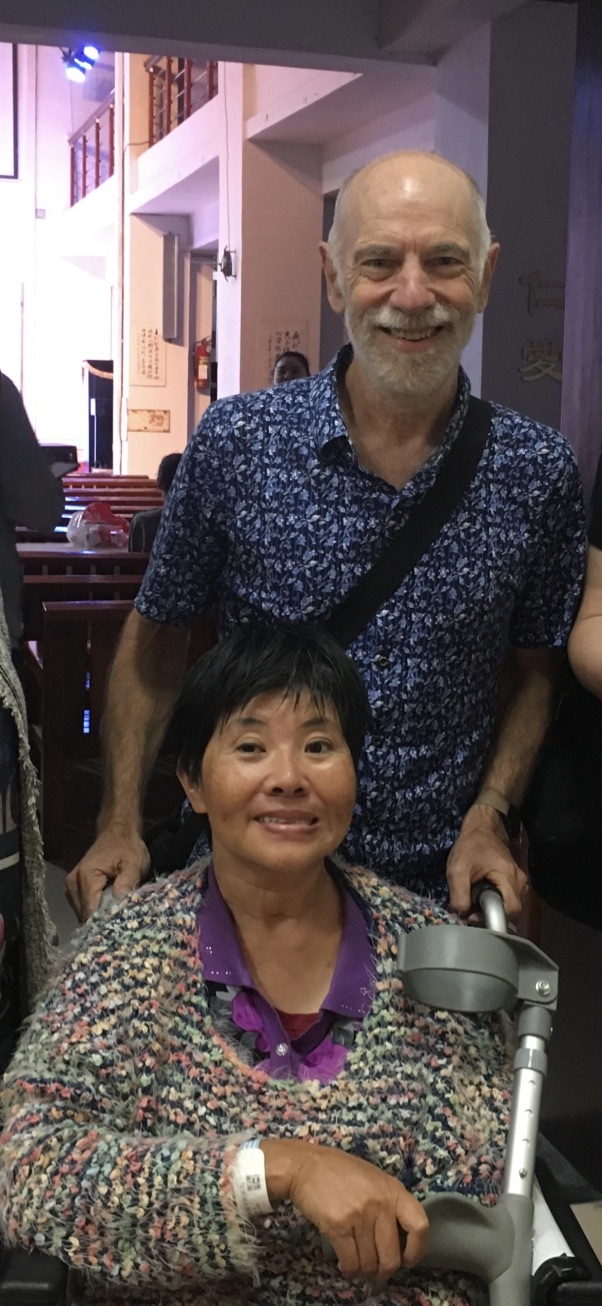
If you haven’t been following my site, here’s a brief introduction to this 70-year-old gentleman and his wife, Teacher Xue.
PWlkE0oNSOWBa3nhaxc7qw_thumb_1f24

In his late 50’s, Geoff came to Luzhou to be a teacher at a junior high school. He fell in love with a Chinese English teacher there (“Snow”, Ms. Xue), the two married (second marriage for both) with Snow’s daughter at that time being 16. The two planned their future, eventually wanting to spend Snow’s retirement years traveling the world. Retirement age in China is 55 for women; 60 for men. She was in good health, although she didn’t pay attention to her doctor’s warnings that her blood pressure was very high. That was her greatest regret. She was only 51 when she suffered a major stroke while the two were traveling in Africa, where they’d spent 2 years with the VSO (Volunteer Service Organization), considered the UK’s equivalent of the Peace Corps.

After 2 years of extensive re-habilitation in Australia, Geoff managed to get her back to Luzhou 2 years ago, right before Covid struck. They have a small apartment in the city and don’t plan on leaving China anytime soon. Snow is confined to a wheelchair with some assisted walking mobility but not much. Geoff is her sole caretaker with Snow being the translator since Geoff speaks no Chinese.

Fortunately for both, Snow retained her English language skills despite the stroke that left her in a coma for 14 days. There was little hope she’d wake up or even be able to communicate, so this is a miracle of sorts that she can function as well as she does. It’s obvious the credit of her recovery must be given to Geoff’s excellent care of her, and the doctors in Uganda, where she was hospitalized until leaving for Australia.

Vaccinations Completing for Chinese Citizens; Foreigners are next

The goal of 20 million vaccinations a day continues and seems to be moving along at a very strong pace to reach the 70% vaccination goal by September. Most of my Chinese friends in Luzhou, a smaller Tier 4 city of 5 million, told me they’d had their vaccinations already. A few months ago, I read that schools can expect to have invitation letters approved more and more with a majority being authorized from October to December. However, what was holding me back on hope was the fact that the foreigners had not yet been offered the vaccine. Once the foreigners begin to be vaccinated, that would signal the tail end of the ban.

Geoff’s call the other day was somewhat uplifting.

He and Snow flew to the far north, the city of Qingdao, to visit friends this past week. While there, he was called by local Luzhou health officials wanting to know detailed information for what Geoff assumes will be vaccinations. He mentioned that in Qingdao, there is a large foreigner enclave and they had all been vaccinated.

He was expecting upon his Luzhou return to have more news about when his vaccination would take place, as well as that of his wife. Due to her disability, her doctors recommended she wait before being given her shots.

A Rather Hectic Arrival Experience

Interestingly enough, when the two landed at the Luzhou Airport in a plane of 200+ people, Geoff was immediately targeted as the one and only foreigner who might be bringing the virus into the city. The worried officials speedily shot onto the plane, beelined down the aisle toward Geoff and quickly took him off while others waited to disembark. The dilemma came when they discovered he was traveling with his disabled wife and they had no way of getting her off the plane in a hurry. Eventually, one of the health officials hoisted her onto his back and carried her down the steep stairs outside of the plane to get the two to a mini-van. The van shot them off to an isolated room where Geoff had to show his phone QR “Green” code, necessary for travel during Covid, and fill out numerous papers in English to show that he hadn’t been outside of the country, was a resident of Luzhou, and all the dates involved for his travel as well as his physical health.

Geoff mentioned this was the first time he’d been through such a thorough and panicked landing in Luzhou. According to later rumors, there had been a Covid case in Luzhou 2 weeks before and that was the reason for the strict monitoring system which the city government put into place.

The Chinese passengers, however, had no such interrogation and were able to disembark without any fanfare.His story is helpful to me, especially as I am certain such an experience is awaiting me upon my own entry into Luzhou City. However, mine will be more of a production. Although I will have a mandatory 2-3 week hotel quarantine upon entry into the country, there most likely will be another 2 weeks added onto that once I get to Luzhou. Hopefully, I ca do that in my school apartment but I honestly don’t know that for certain.

I will prepare myself. I’m sure there will be moments of anxiety on my part, perhaps even tears, when officials tag me as a threat and might want to send me back.

Noooo!!!!!!!

News from Shannon

Another phone call , immediately after Geoff’s, came from my Canadian friend, Shannon.

Shannon is the one who rescued Bridget (our dog) 2 years ago in Chengdu and contacted me about adoption. She found her under a park bridge near her apartment, thus the name Bridget. She had mange, was skin and bones, tied by a shoestring to a rock and living in her own feces. No food or water. Shanon said she looked both ways over her shoulders, no one in sight, and basically, stole the dog. I was put in touch with her by a rescue group after I said I was looking for a dog to replace the one who had just passed away, Little Lao-lao, that I brought from China 9 years ago. Thus it happened that Bridget came into my care.

Ever since, we’ve been in touch so I could share the wonderful life Bridget now has in America.

This slideshow requires JavaScript.

Shannon’s call was one checking up on Bridget but it also was quite informative, about her situation the capital city of Sichuan.

Shannon teaches at a prestigious private junior and senior high school in Chengdu. This school enrolls those from wealthy families who are looking to send their children abroad to study at the high school and college level. All instruction is in English and follows the British system, which Shannon (being a Canadian teacher) is quite familiar with.

Since she didn’t leave for winter holidays, as some of us did, she’d been able to continue with her work at the school and live through all the China Covid lockdowns, virtual teaching stints and then the final opening up again.

Her report: Covid has wrecked havoc on the faculty and the enrollment. All those students who graduated last year and this year were not able to get visas to study overseas because a majority of UK, Australian, US and Canadian schools are not accepting them. At both the high school and college level, payment was asked for online coursework, something which was not desirable for the parents. Why pay all that money to have the child study in China, with online courses and no interaction with others?

Enrollment has gone down, according to Shannon, as wealthy Chinese parents try to navigate the effects of Covid on their children’s education.

The pressure of Covid has also caused quite a few of the foreign teachers to decide to end their service at the school. Shannon considered leaving herself but she’d already signed a 2-year contract. Also, her students will be graduating next year and she didn’t want to leave them after she’d been their homeroom teacher for 2 full years. Leaving them now would be heartbreaking!

Her news of vaccinating the foreigners in Chengdu had yet another positive report: They’d be getting their vaccinations in July, or so the administration had told them. I’m sure she’ll inform me next month if that happens or not.

What to do about the foreign teacher’s apartment?

Another call revealed great concern over the long wait our schools have had to have us back in our classrooms. Like me, we left our apartments full of things, with the thought we’d return in February, ready to start up the new school year after a month of vacation.

That was 19 months ago.

For myself, I live in the school’s faculty housing apartment building where no rent is needed. Leaving my belongings costs the school nothing. (See views of my China home below, on the 9th floor.)

This slideshow requires JavaScript.

But for other schools, swanky apartments had been rented for the foreign teacher. Most leases are for a year, with schools paying $300 – 400 per month. Breaking the contract leads to fines. Ending the contract at the end of the lease obviously means vacating the premises

But since so many foreign teachers haven’t been able to return, meaning all their things are still in those rented apartments, this has created a huge dilemma. Some schools signed another lease for yet another year, not knowing how to handle a foreigner’s things and not wanting the hassles of dealing with another person’s stuff. Other schools canceled the lease and required the Chinese teachers to box up the foreign teacher’s things and store at the school. The greatest headache has been for those foreign teachers who rented apartments on their own with stipends from their schools. No more stipends as they aren’t working in country. Do they continue to pay for their apartment while waiting overseas? And if not, who is responsible for moving their things, storing their things, collecting their key money (money returned at the end of a lease if no repairs are needed) and signing the papers to close off their rental obligations?

If you have a really close and kind Chinese friend to do that, you’ve got it made. But if you don’t, what do you do?

Just Being Thankful

How fortunate for me that my school is so willing to keep me on, despite the fact I am not there at the moment. I am also sure there will be much paperwork, extra registration protocol, and many other headaches to deal with which is needed for someone overseas to work in the city. China is very strict concerning Covid.

My apartment continues to remain empty, locked up tight since I left it January 6, 2020. I did ask one of my colleagues to empty out the freezer of the chicken breasts I left there. I still remember one of my Chinese neighbors who left for 5 weeks on summer vacation and when she returned, the refrigerator had broken on her. The stench of what was in her defrosted freezer was unbelievable!! That smell lingered in the hallway and the elevator for a full day when she emptied the rotten contents into plastic bags to carry to the outside dumpsters.

That is one thing I do NOT want to greet me when I finally walk through my door, especially if I am required to quarantine for 2 weeks in my home. Living in stench for 2 weeks would certainly put a damper on any joy I had in getting back to my school.

Closing off for now. Here’s wishing you a peaceful weekend and a very happy upcoming July 4th.

Posted in Uncategorized | Leave a comment

The Luzhou Protestant Church: Changes to the Sanctuary

Most of my connection with the Luzhou church is that of joining: joining in worship, joining in song, joining in prayer . . . Even while being stuck in America, through my WeChat phone App (China’s equivalent of Facebook), I’ve been frequently communicating with the choir members or Pastor Liao for over a year now.

Aside from posting the daily English prayer for the choir, my expertise as an English language teacher doesn’t usually come into play within my Chinese religious community. But that changed recently when I received an English voice message from one of the Luzhou choir members, Miss Yi.

“Connie, I am worried. We are directing many new things and there will be many changes in our building (i.e., sanctuary), many words posted. It is the history of the church. Our preacher wanted it translated into English. They sent the Chinese to me and I translated it into English, but not all my (own) words. First, I translated it into the tools of Google translation and then, according to the translation of Google, I changed it. But I think the translation of this history of the church is not perfect. So I send it to you. I need your help. Please help me to check it. If you want to change or find some errors, please tell me or you can also translate it yourself.”

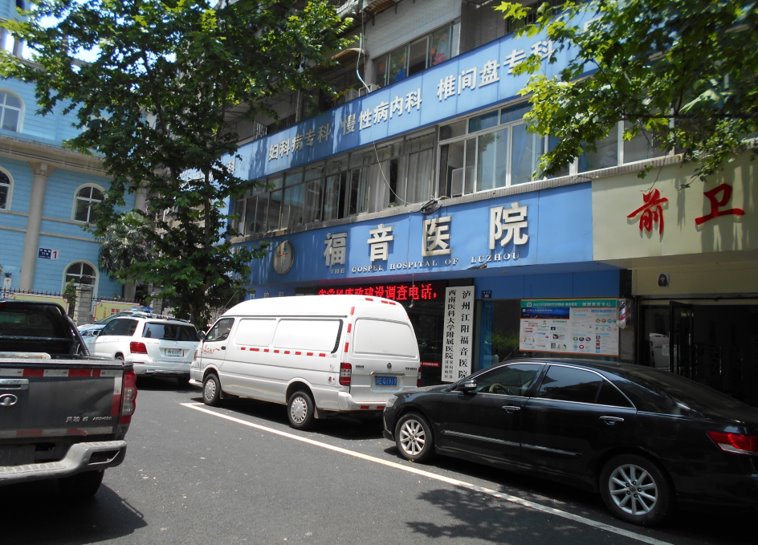
In the Luzhou Gospel Hospital, similar introduction panels were displayed but those were all in Chinese (See below). The church, however, had no such information posted, in Chinese or in English.

My first thoughts? “Wow!! I feel so honored. The church needs me!! I have something special to give.”

Within an hour, the text was in my inbox and I got down to business, scanning Ms. Yi’s email content.

Most likely, this is a way for the church to commemorate the founding of the Communist Party, 100 years ago. Many institutions, companies, schools, and religious bodies are currently celebrating this monumental occasion through patriotic events, contests, and performances. These are to take place in July and continue onward to the end of the year.

According to what was sent, there will be 3 panel sections posted in Chinese and English: Church history, Service to the Country, Service to the People.

The Luzhou Church is planning an addition to the church, thus the 3 panels.

Why Translated into English?

Before you read the below, you might be wondering why Pastor Liao is so  keen on having an English version included with the Chinese.  There are several reasons for this.

First, Luzhou has the prominent Southwest Medical University located in the city.  For over 10 years, overseas’ students have been accepted to study both Chinese and Western medicine here.  There are about 200 students from Nepal, Pakistan, India, some African countries, and other  developing nations who are enrolled in the medical program.  Their instruction is in English but they do take Chinese language classes so they can complete their internships in China, if they wish to do so.  Those who are Christians have attended the church worship in the past but most didn’t understand enough Chinese to participate.  Usually, they came only for Christmas Eve services.    I have been the only regular foreigner church goer, something which has concerned Pastor Liao for many years.  My opinion is that Pastor Liao wants the English to at least make those who don’t understand Chinese to feel more at home and at least understand a little about the church history and involvement in the community.

Secondly, it doesn’t happen often but we do have a few foreign visitors come to church who don’t speak much Chinese.  Some are passing through, others have jobs in Luzhou as teachers or company workers.  And every year, Luzhou has a huge liquor exhibition where representatives from all over the world arrive for a week to set up wine and whiskey displays.  Luzhou is famous for a certain type of whiskey, thus the reason Luzhou city hosts the 1-week yearly event.  World liquor producers come to the city to highlight their alcoholic wares.  In fact, some of my students in the past have been selected to work in the exhibition hall itself, in hotels or placed at the airport or train station to translate for their overseas guests.   The relationships they build with their guests from abroad have been very strong and have lasted for years.  

And lastly, we have had groups or individuals come with Amity staff  to my college and city.  Due to the many years of partnership Amity has had with the school, Luzhou is sometimes on the site list for visiting overseas guests who have relationships with Amity.  Since these guests are Christians, there is always a visit to the church where Pastor Liao leads everyone through the sanctuary, the hospital and explains the importance of Christian outreach.   I imagine the Chinese-English  panels will be much appreciated by such visitors.  (See Pastor Liao below, leading Amity visitors through the hospital and new church building site in 2019)

The Finished Product

So now that I’ve gone on quite some time about what I was asked to translate, I’ll post it here, the first in Chinese and the second in English.  

泸州基督教堂需要翻译成英语的中文资料 (Luzhou Church needs these materials translated into English)

内容一: 

泸州基督教会史 

1890年1月,基督教传入泸州,从最初的民众对“洋教”的反感,到“民教冲突”、到后来赢得信徒及其他民众的好感与支持,经历了漫长而艰辛的过程。教会加强对本土传道人的培养,通过巡回布道与本土同工的帮助,将福音传播至叙永、古蔺等地,尤其是在苗族地区,福音得到快速传播,并与贵州苗族教会的发展形成合力,共同推动福音在川黔交界一带的传播与发展。 

如今的泸州教会,在中华民族优秀传统文化的浸润下,已发展成为中国本土化、坚持独立自主自办的爱国宗教团体。 

History of The Luzhou Christian Church 

In January 1890, Christianity was introduced to Luzhou.  It went through a long and arduous process, from the initial public dislike of a “foreign religion” to the “conflict between people and religion.” Yet later, it won the favor and support of believers and other people. The church strengthened the training of local preachers by spreading the gospel to Xuyong, Gulin and other places.  This was done through itinerant evangelism with the help of local Christian partners, especially those in the Miao ethnic minority regions. The gospel quickly spread and helped to establish the Miao church in Guizhou Province. This cooperative effort of itinerant evangelists and local Christians furthered the reach and expansion of the gospel to the borders between Sichuan and Guizhou. 

Today’s Luzhou church, through influence of the distinguished traditional culture of the Chinese nation, has evolved into a patriotic religious organization that is grounded in China and continues to function as an independent and self-governing entity. 

内容二: 

爱国主义精神百年传承 

据《泸州史志》2011年第2期(36)第41页,对泸州教会在历史上所承担的社会责任,做出如此评价:“泸州基督教会对泸州社会的发展做出了一定的贡献:‘兴办医院,解除军队伤员和平民疾病;兴办教育培养人才;对解放泸州也提供过共产党聚会场所,对人民政府提供过捐赠,对高校初期发展给予过有力支持’…… 

回顾百年历史,我们看到泸州教会高举爱国主义旗帜,与党同心同行,与祖国同心同行,以“作盐作光”的精神为社会做贡献! 

A Century of Patriotic Inheritance 

According to a published 2011 document entitled “Luzhou History,” No. 2 (36), page 41, the following note was made on the social responsibilities of the Luzhou Church: “Luzhou Christianity has made positive contributions to the development of Luzhou society:  During wartime, it set up hospitals to relieve both the wounded in the army and those who were civilians, it enhanced education and training skills among citizens, it provided a place for the Communist Party to liberate Luzhou, it donated to the People’s government, and it gave strong support to the initial  advancement of area colleges and universities.” 

Looking back on a hundred years of history, we can see that the Luzhou Church holds high the banner of patriotism, walks side by side with the Party, champions the motherland, and contributes to society with the spirit of “making salt and light.” (Matthew 5: 13) 

内容三: 

社会服务,实践所爱 

《圣经》可以用一个字来概括——“爱”,这“爱”是上帝牺牲独生爱子为世人舍命、流血的“爱”是无条件的,因此,基督徒的服侍也当以“爱”为出发点,不仅关注教会信徒,也关怀这个世界上其他有需要的人……《圣经》中“爱”的教导需要实际行动来实践,基督教作为社会团体,基督徒作为社会成员,通过“社会服务”来传递基督的爱,“众人以为美的事,要留心去做”“爱人如己”,这与我国传统文化提倡“仁者爱人”“乐善好施”,公益慈善理念有着完美的契合。“社会服务”是构成现代文明最重要的要素之一。积极开展慈善事业和社会公益服务,是泸州教会通过实践来探索基督教中国化的重要途径。 

Social Service:  Practice Love 

The Bible, our Christian guidebook for living, can be summed up in one word:  Love.   This love among Christians is explained in this way: God, out of love for us humans, sacrificed his only beloved Son (Jesus Christ) for the world.  His son’s blood was shed not for a few, but for the entire world, for all people.  We believe God’s love is unconditional. Therefore, Christian service should also be unconditional, all about love.  

As a starting point, we Christians not only pay attention to church members, but also care for other people in the world.  The teaching of love in the Bible requires us to perform actions through our love for others. Christianity is a societal group of believers. Christians, as members of society who work through communal service, convey not evil but love.  The Bible states: “Repay no one evil for evil, but give thought to do what is honorable in the sight of all.”  (Romans 12: 17 ESV.)  

Everyone contemplates beautiful things. We Christians must be careful to consider doing beautiful things through action. We believe: “Love your neighbor as yourself.” (Matthew 19:19) This is in perfect harmony with China’s traditional culture which advocates the benevolent to love others and to promote goodness.  This is the concept of public welfare and charity. Through social service, considered the most important element of modern civilization, we can provide such welfare and charity to those in greatest need.  Through actively carrying out such humanitarian works, the Luzhou Church implements the sinicization of Christianity through practice. 

This slideshow requires JavaScript.

In Closing Today’s Entry

My proof-checking efforts were sent 2 weeks ago.  I have already told Ms. Yi that when the panels are completed, please take pictures and let me see how they turned out.  I am so sorry I won’t be there for the grand unveiling.  However, I’m excited to know I had a small part of making sure visiting overseas Christians will have a better understanding of the Luzhou church, from the missionary founders who came before to the current Chinese Christian involvement today.      I can’t wait to return and see the new  addition in person!

Until the next entry, here’s wishing you Ping An (Peace) for your day.  

Posted in Uncategorized | 1 Comment

Surprising Announcement from China: The 3-child policy

The sudden news out of China came last week, while my mom and I were listening to an NPR report: Want three kids? Go ahead!

I’ve taken bits and pieces from an online BBC article, “China allows three children in major policy shift,” to outline the following:

“The Chinese Communist Party’s top leadership made the decision to permit couples to have up to three children at a meeting Monday, though state media reports did not say when the policy change would be implemented. It comes just three weeks after Beijing published its 2020 census, which showed China’s population was growing at its slowest rate in decades.”

“The census, released in May, showed that around 12 million babies were born last year – a significant decrease from the 18 million in 2016, and the lowest number of births recorded since the 1960s.”

“That’s putting major pressure on an economy that relies on a young workforce to support an aging population and keep up high levels of growth. China’s one-child policy, first in effect in 1979, was in place for more than 35 years as Beijing tried to address overpopulation and alleviate poverty.  This loosened in 2016 to 2 children and now, 3 children per family is being officially sanctioned.”

Do Chinese Young people Really Want More than One Child?

According to a majority of articles I’ve read, the answer is a resounding “no.”

The reasons are numerous: no time, a busy work schedule, financial burdens of medical care (healthcare is NOT free and insurance polices can be limited depending on employment), basic necessities (clothing, food) with the highest costs being education, from pre-school to the university.

How true is this?

Well, I couldn’t help but text message a few of my Chinese friends and colleagues I know who have one child and ask. I received a lot of responses but I’ll showcase only one.

Remember Bruce Li, the English teacher in charge of translation at my school and who holds my bank card to help pay my bills? I’ll use him and his wife as an example of why a young couple would be content with one child.

Bruce’s little boy is now 5 years old. Bruce’s mother lives with them and has been taking care of the little one since he was born.

Bruce and family

When I texted Bruce about this policy and asked if he’d consider having another child, or maybe even a 3rd, he echoed almost all of the above points the article mentioned mentioned.

  1. We are too busy”

Bruce and his wife, whose English name is Summer, are both educators in the School for International Studies (the glorified name for our college’s language department).

The duties of teaching at a Chinese college are surprisingly exhausting. No one is immune from just teaching. Everyone has office assignments, either assigned by the department or by the college’s administrators. It’s usually the younger teachers, those who are single or newly married couples, who are tasked with the most work. Those closer to retirement ( 55 for women; 60 for men) have an easier schedule as they slide into the end of their teaching career. Of course, they’ve already put in their many years of hard work so it’s only fair they get a rest.

Bruce especially has been given a heavy load. This past year, he’s been teaching the core classes to the English Education majors and the Business English majors. This is 6 hours a week, with assigned homework to check. “Six hours a week?! Hardly anything,” you say. Read on!

Next, Bruce (as mentioned before) deals with all the official Chinese-English translations for the college. This is a rather nerve-racking duty as it requires everything to be exact and correct. The pressure is on not to make mistakes and have the leaders (or your college) lose face over inaccurate or odd English translations. This is where I can be of help and why Bruce contacts me whenever he is in doubt of his abilities. He also is involved with writing English letters to our partner schools overseas, of which we currently have 5: Germany, South Africa, the US, India and the UK. Germany is the most active, with visiting teachers coming to teach mechanical skills or give German language tests to the German majors. Covid has stopped this now for 1 1/2 years but it will be active once more when bans are lifted. The other schools are merely partners on paper wit no exchanges yet.

Aside from dealing with all school Chinese-English translations, Bruce is also assigned as Student Club manager. What does this entail? He is in charge of: club application by students (all paperwork must be in order to officially register as a club, which includes having a faculty sponsor), getting all the official stamps for approval of registration, handling permission applications for club events, keeping registration of all student names and majors who sign up for clubs, processing club fund application requests, meeting with club presidents to discuss campus rules regarding holding events, and writing reports of each club to be handed in to the extra-curricular activities office. How many clubs do we have? A lot! Here are a few: English reading, English Association, Chinese calligraphy, guitar, skateboarding, rollerblading, hip-hop dancing, ballroom dancing, singing (today’s most recent pop artists), art (Chinese classical and modern), student volunteers (serving the community), basketball, soccer, badminton . . . . Every year, more are added according to the desire of the students. The more clubs, the more work for Bruce.

He also updates the school website for the English department. Every week, he adds photos and write-ups of departmental activities (contests, student achievements, special events, faculty accomplishments). It is Bruce’s job to make the department shine so the administrators are impressed. One more burden to his position working for the college.

And once a semester, he must spend a week sleeping in a dormitory room with the male students to keep an eye on them. Every Chinese teacher has this duty, with every floor having one monitoring teacher once a month at night. (I can tell you that the teachers get VERY little sleep that week. No one looks forward to it.)

Bruce’s wife, Summer, is also an English teacher but her responsibilities are not quite as time-consuming as Bruce’s. She can sometimes manage her 8 a.m. to 5 p.m. office hours, Monday to Friday, but then she has a week of evenings (7 – 9 p.m.) once a month to monitor mandatory evening study hours. Evening study hours, every night except Friday, are a requirement for every department and students must stay in the classroom to do these unless permission slips are signed to allow them to be free that evening.

Bruce often doesn’t get home until 9 p.m. He also has Saturday and Sunday evenings as well.

How fortunate that Bruce and Summer live on campus. A majority of the teachers do not and have to commute to and from their apartment complexes across town. Some take busses while others drive their private cars. Either way, heavy traffic in Luzhou adds an extra hour or two to their day.

All college teachers know how busy they will be at our school, especially those who are parents. Thus the need for Grandma or Grandpa to live with them and help raise the child. This is why Bruce’s mom stays with them.

2). “It is very expensive to raise a child”

Bruce in the past has commented to me on his little boy’s many common ailments which often plague all little kids: colds, stomach aches, sore throats, fevers, vaccinations, check-ups, rashes . . . . His little boy is covered under his insurance policy but the cost of visiting the doctor and getting the medicine needed is still not cheap nor 100% covered.

Unlike in America, where children are given an aspirin or nursed through simple childhood illnesses, the Chinese parent takes the child immediately to see the doctor in the hospital. There are very few small clinics and those are usually not very reliable. In China, hospitals serve as both clinics for the masses and as specialty healthcare for more serious physical problems.

Luzhou has many hospitals, some larger than others, some more prestigious than others, some more expensive than others. Of course, Bruce takes his child to the most prestigious and most expensive hospital so his little boy will receive the best care.

If he has yet another child or even a third child, imagine how many hospital trips that will entail throughout his children’s dependency years. Then imagine how much that will cost.

Bruce and Summer have steady jobs and healthcare under the college’s family insurance policies. Imagine migrant workers, small shop owners, or farmers who do not have adequate coverage (or any coverage) to help with such costs. I can’t image them wanting a third child.

3). “Our pre-school costs are very high.”

Education is free under the government system but there is a choice of the best education possible as opposed to so-so. The best is expensive.

Bruce sends his little boy to an all-day pre-school (8 – 5 p.m. 5 days a week), which is not free. At the pre-school he chose, his little boy receives numerous classes in math, art, music, science, PE, English, Chinese reading and writing. His son has homework to do when he comes home. The yearly fees for this pre-school, which began at age 3, is 20,000 yuan (roughly $3,170) a year. This includes the child’s education, uniform, books, materials, field trips, morning and afternoon snacks and lunch (I believe).

Could Bruce enroll his child in a cheaper daycare center, or opt not to bother at all? Sure, but this well-educated young man and his wife are looking to give their boy as great a head start as possible for his future. A smart child, able to pass exams with high marks, is destined for a high-ranking college and a great career. What parent doesn’t want that for his/her only child?

I’m fairly certain at age 6, when elementary school begins, Bruce will send his son to the most prestigious public school in the city that’s available. Public schools require all the usual fees: tuition (small or large, depending on the type of school), books, and uniform. Some schools are less than others. Some can range as little as $100 US each semester to $3,000 or more. It will be interesting to see where Bruce’s little boy ends up after a year.

In Closing

I could continue onward with more stories of the same but I’ll end with Bruce.

 I will say I received a few comments from some of my women friends who are single. They told me they had no desire to get married, nor jeopardize their career with employers who didn’t want to pay for maternity leave.  Under Chinese law, women can ask for maternity leave up to 98 days and in some provinces, 128 days to a full year. The company is required to pay maternity insurance as well which will give a monthly allotment of government funds to the mother.  However, if the monthly company salary of the woman exceeds  what the government   pays in maternity insurance, then the employer has to make up the difference.  In other words, the mother is supposed to receive her full monthly pay although she’s not working.

Company interviewers are very pointed about asking, “Are you married?  How many children do you have?  Are you planning on having more?  How can you have time for the duties of our company and raise a child as well?”  There seems to be no law regarding asking such personal questions.  Those women who refuse to answer have no call-backs, or those that appear to possibly having a future child (or children)  are never even considered.  

So while the 3rd child policy sounds great, it might be presenting even more problems  than before, not only for couples but also for women of any marital status trying to enter the workforce.  The next year will present more on this subject, I’m sure.  When I get back to China, I’ll let you know my findings.

Here’s wishing you 平安 (Ping An),  Peace, for your day

Posted in China, Luzhou, Tales from The Yangtze River, Tales of China, Travel | 1 Comment

My wait to return to China continues, but with hope!!

As some of you may know (or may not know), I have spent 29 years as an English teacher overseas, with a majority of that time spent in China with the Amity Foundation. A brief visit home in Jan. 2020 to help my mom move ended in a matter of weeks when Covid struck. China closed its borders to incoming foreigners as they worked diligently to control the virus outbreak which originated in Wuhan. The Chinese government was in no hurry to allow foreigners stuck overseas back again for fear that the virus would come with them, which it did on numerous occasions.

At present, there are limited numbers of foreigners allowed into the country (selected businessmen/women , diplomats, foreign nationals) but as of yet, foreign language teachers such as myself and overseas students studying in China are still not being given visas.

My Stateside Position

After 6 months of waiting, my sending agency (United Methodist Global Ministries), which partners with China’s Amity Foundation to send teachers through its program, followed procedures to re-evaluate my service. It was decided for me to continue in America as a Mission Advocate for my jurisdiction (that’s the Midwest area) until China’s bans lifted. From my home, I have been keeping busy within Global Ministries’ assigned obligations. Due to Global Ministries’ Covid policies, staff members and those such as myself are not allowed to travel. That policy is slowly lifting, which means those in the Atlanta office might return by August. I, however, will remain in Illinois and not be joining them. This makes sense since I can stay with my mom for free and not cost the United Methodists any extra money with apartment rentals or flights to Georgia. And since my current job description is not a permanent one, but contingent on a China return, best to stay in Illinois.

Staying in Touch with China

Aside from my Stateside duties, I’ve been in constant contact with my students, my colleagues, my friends and my Chinese church community in Luzhou. I do this through my cell phone, using WeChat, which is China’s equivalent of America’s Facebook or Whats App. On a daily basis, we connect with one another. It might be me asking “Bruce” Li, the teacher who lives on the 4th floor, to check my apartment from time to time or pay my bills using my Chinese bank card which I wisely left in China.

UNADJUSTEDNONRAW_thumb_c83

His most recent payment was for my Chinese cell phone account so my phone number will stay activated for use as soon as I land in China. I have already been told by Chinese government websites that I must have a working phone before I am allowed to step off the airplane and into the airport. While waiting to disembark, passengers are to be patient while in downloading the official health App onto our phones, completing numerous documents, uploading required documents: our in-America Covid tests, our in-China Covid tests, quarantine hotel payments, addresses of residence, responsible Chinese employers and contact people, etc. I heard the wait off the plane is between 5-6 hours, which gives us plenty of time to get all those requirements filled out.

I have no idea what happens to people who don’t have a Chinese telephone number to replace their their USA number. Will we be sent back to America? Will someone onboard sell us a Chinese phone plan so we can be contacted within the country ? I don’t want to find out so Bruce has paid my 500 yuan (about $79) to hold my number for me for a full year.

In other words, I’m good to go!

Connecting with my School and Chinese Church

From my college, anything that is asked of me, I assist with. It might be checking English translations to be used for the school’s website, helping with English speech contests, posting personal videos for classroom use by those teachers taking over my classes, or recording the daily English prayer for my church choir members.

I also make sure the English Center remains clean and open during the week. This task has been given to the student’s English Association (English Club) President, a student elected by her peers to lead English activities on our campus. Her name is Wang Wenji and she’s been making sure things run smoothly on her end. I’m usually the one to instigate our campus English programs and work with the president and the members during the school year. The English Center is a part of that. Wenji has done her best to keep the Center open but I fear due to the students being very busy, this might not have happened on as regular a basis as it would under my guidance.

UNADJUSTEDNONRAW_thumb_169

A June 4 Covid-19 Information Release

Naturally, I have my Chinese websites I check on a daily basis, one in particular that seems to be more trustworthy than others. It’s a challenge as government regulations change on a constant basis as the virus continues it’s varied trek across the world. One week, all is well in one country and victory proclaimed; next week that same country is in dire straights and fighting to survive (Look at India!)

America, at the moment, seems to be doing well and this also fares well for me.

Here is the latest, posted today, which gives me a very good feeling:

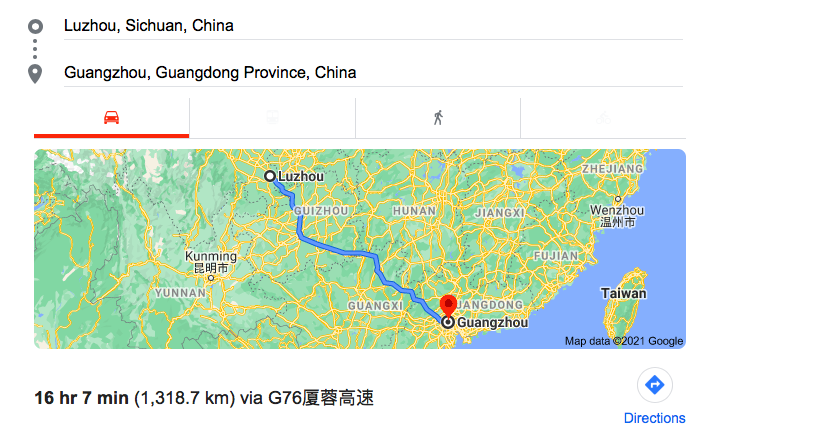
Guangdong Partial Restrictions and PU Letter Issuance 4 June 2021

Guangdong Province, FYI, is located next to Hong Kong. My province in Sichuan, in Southwest China. See below map.

Screen Shot 2021-06-05 at 2.22.45 PM

Various districts and neighbourhoods throughout some cities in Guangdong (predominantly Foshan and Guangzhou) are taking action following a small outbreak of COVID19. Movement restrictions have been put in place with several domestic and international flights cancelled or re-routed from Guangzhou Airport.” 

“Several Opportunity China partner schools, in certain select cities, are now able to issue PU letters for teachers from native speaking countries (with the exception of South Africa). There is an expectation that these letters will continue to be issued over the next 3 months provided no major outbreaks occur in the relevant countries. “

Things Looking Up

From the above, you can see there is optimism!

Yes, it’s been nice learning new tech skills, connecting with USA church conferences and congregation members, helping my mom with her house move and setting up her new home, but it’s time. China is calling, and after such a long time, it does seem promising and possible that I’ll be able to return just in time for the new semester, either starting in September or October.

From Marshall, here’s wishing you Ping An (peace) for your weekend.

This slideshow requires JavaScript.

Posted in Uncategorized | 1 Comment

Service to the People: The Luzhou Gospel Hospital

Whenever I do presentations on the Chinese church I belong to in Luzhou, people are astounded. The church’s two community service projects are one of a kind in China: The first is the Gospel Kindergarten (70 children taught by 7 Christian teachers), with most children attending belonging to church members.

This slideshow requires JavaScript.

The second is the Gospel Hospital , located adjacent to the church.

From a Tiny Mustard Seed into a Far-reaching Tree

The hospital, founded in 2011 under the leadership of Pastor Liao, actually began as a small 2-room clinic. Here are the photos I took in 2007 when it first opened.

This slideshow requires JavaScript.

But with a huge effort on the part of Pastor Liao, this small church-run clinic blossomed into a 3-story medical facility run by the church in cooperation with the local Luzhou government. Volunteer professionals (doctors and nurses) take care of patients in the 100-bed infirmary. There is a small surgery area, a rehabilitation room in the basement and an adjacent Western and Chinese medicine dispensary.

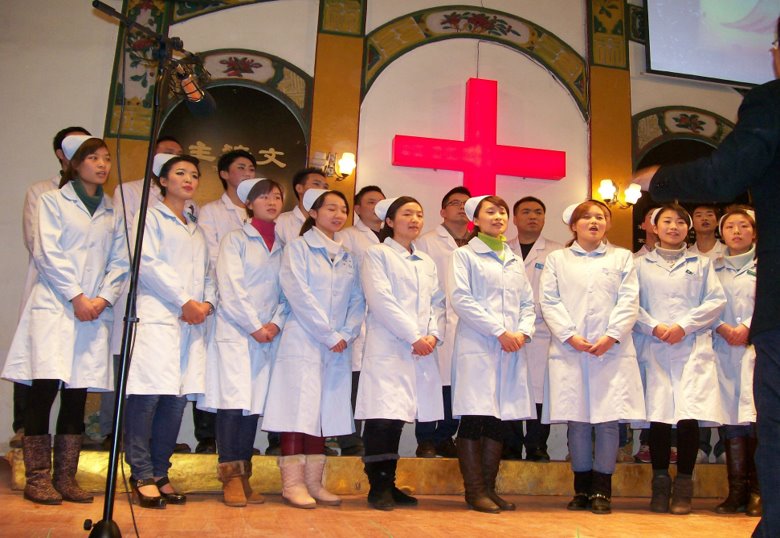
The volunteer doctors and nurses, performing here in Church for Christmas celebrations. This was taken almost 10 years a
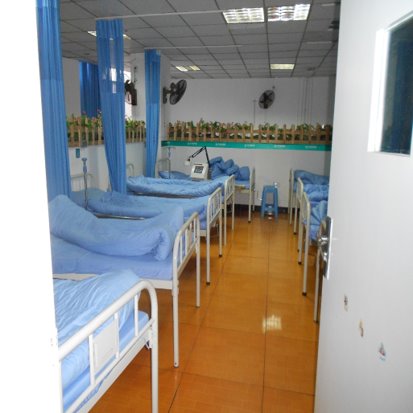
One of the rooms in the newly opened hospital, taken in 2017. Now the hospital is often full, with no beds available.

This slideshow requires JavaScript.

Contrary to what many believe, healthcare in China is not free. Insurance can be received through companies, public and government jobs but that only covers a small percentage of the costs. Farmers from the countryside have very little insurance, and migrants have none. It is customary to pay upfront for any medical help given, which includes seeing the doctor, testing, all medical procedures, medicines, medical supplies (syringes, wheelchairs, crutches, canes), and rehabilitation facilities and therapists. If you do not have the money to pay before treatment, you are not taken care of.

But the Luzhou Gospel Hospital is different. It caters to the needs of the poor. With church funding, through grants and Christian donations, and also the provincial and local city government departments in charge of poverty alleviation efforts, money is used to provide what is needed to help others.

An Example of The Hospital’s Impact on The Poor

Just recently, a farming family I’ve visited often throughout the years was able to receive medical treatment for Grandma at the hospital.

Mrs. Chen’s mother, age 85, fell and broke her ankle. The family lives 2-hours from Luzhou, deep in the Sichuan countryside. To get to the city requires a 15 minute walk along rice field pathways, a 5-minute ferry ride (waiting 30 minutes to be taken across), a steep hike from the river into their small town (20-30 minutes), a wait for the public countryside bus to arrive (another 30-40 minutes), then a 40-minute ride along narrow, winding roads to reach the city of Luzhou. (See below the Chen and Che farm, including the journey needed to get to Luzhou. This is seen backwards, however: From their small town Tong Tan, 40 minutes by bus from Luzhou, to Mrs. Chen’s home.)

This slideshow requires JavaScript.

While there are numerous public hospitals in the city of 5 million, none were affordable enough to examine Grandma, set the bone or keep her in a bed while she healed.

Mrs. Chen knew the Gospel Hospital might be able to help. Using a relative who lived in town, she was able to get her mom registered and apply for medical help through the government using her farmer’s status as proof of need. From what she told me on the phone a few weeks ago, she paid about $120 US through the standard government farm insurance policy and the church plus the Luzhou poverty alleviation bureau paid the remaining $780 US required for her full recovery. Mrs. Chen’s mom stayed in the hospital for 10 days, with her daughter sleeping in the bed beside her in the evenings. She was treated very well by the Christian community volunteers who came to make sure she was comfortable, had her meals served, changed her bedding, sponged her off, had clean clothes and received adequate exercise. She was also prayed over. Even though a majority of those in the hospital are not Christians, this is a practice by the volunteers. Their actions witness to others the meaning of Christianity by openly showing their commitment to their faith.

Everyone in Luzhou knows at the Gospel Hospital, you are not just another body in a sea of thousands receiving medical assistance. You are a person in need of compassion and help. You are a person of worth. You are a person who is loved and cared for. (Below: Mrs. Chen in the pink spent the evenings with her mom who is in the bed next to her. My other friend, Teacher Snow, in a wheelchair due to a debilitating stroke, visited the two. Her husband took the picture.)

UNADJUSTEDNONRAW_thumb_3dcf

Closing Off

Mrs. Chen and her mom are home now.  I heard her mom is still a bit wobbly but will be as well as she can be in the next few months.  

2021 marks the 10th anniversary of the hospital’s opening.  To commemorate this milestone, in another entry I’ll give a bit of the Luzhou Protestant Church history which will explain why Pastor Liao chose medical care as a service outreach to others.  

Until the next time, here’s wishing you Ping An (Peace) for your day.


Posted in Uncategorized | Leave a comment

Helping My Students in China: An English Language Contest Approaches

The Communist Party of China will commemorate its 100th anniversary in July, as the country largely succeeds in containing the coronavirus and experiences a robust economic recovery.

It’s a little disappointing that I won’t be returning in time for this momentous occasion. There are numerous events planned until the end of 2021, most of those starting in July and ballooning onward until the year ends.

In Sichuan Province, which is where my city is located, I’ve just been asked to help our college students with an English language speech contest, the topic of which is in praise of the Communist party: “100 Years of Glory: The World Listens to Me.”

I do think it rather strange that the contest is in English, mostly because within the past 5 years, the Communist Party has not been a great fan of overseas’ influences on their young people. “Foreign” holidays that once were incorporated into culture classes in elementary and secondary schools were recently frowned upon as being unpatriotic and detrimental to China’s youth. Christmas, Halloween, and Thanksgiving were among those. The education bureau instead told teachers to concentrate on traditional Chinese celebrations. At the college level, such restrictions were never an issue since my students were considered adults but the younger generations were a different story.

Contest details, as explained to me

The contest is sponsored by Sichuan and Chongqing Provincial Library Society in cooperation with the Committee of Sichuan Provincial Higher Education. According to the competition’s website, the 3-minute speeches are to “focus on the great achievements made by the Communist Party of China in its 100th anniversary. The topics spoken are to promote the spirit of the Communist Party of China and convey China’s strength to the world. The activities will be carried online and on-site.”

April 1-20th, participants were to register and post their recordings online for preliminary rounds. Those who pass the first selection process will move on to a second round of eliminations before entering the finals in June. The June participants will be required to attend the live contest with the location and time yet to be determined.

From what I understand, the contest is open to anyone, not just college students. I know this is a daunting task for many English majors at my school, especially as we are a 3-year college (similar a junior college). We don’t have the high English standards required by a 4-year university. A majority of those in the English Department struggle to even put together a decent sentence.

My College’s English Association: “Let’s give it a try!”

UNADJUSTEDNONRAW_thumb_1dc

The English Association, which is a club composed of 200 + students of all majors, is usually the one to host any language contest on my campus. School-sponsored contests, however, are very different than the one Bruce was advocating. That competition encompasses the entire province as well as Chongqing municipality. The competition will be extensive due to the wide range of individuals able to enter. Chonqing is a city of 31 million; Sichuan has a population of 81 million; Luzhou, the city of my school, is 5 million. Among the populations are university students from the best schools, business individuals whose overseas contacts heighten their needed English language skills, dedicated English hobby enthusiasts and language teachers whose daily use of English gives them a leg up in taking away such contest prizes.

Speaking of prizes, the ones being offered are quite substantial. Grand prize is 3,000 Yuan ($500), 3 1st prizes follow (1,000 yuan, $175), 5 second place prizes (500 yuan, $80) and other numerous honorable mentions at 100 yuan ($16) were listed in the announcements.

Giving my Expertise: The Before

Once again, it was Bruce (our school translation expert) who contacted me with a request for help. He sent me what a student had given him for entry, which I felt was a worthy and valiant effort.

This book shows the strength and bravery of Comrade Wu Yunduo! I believe that every reader will be deeply moved by his hardworking and tenacious spirit. No matter what age or job we are, we must fight it. This book shows the growth of a soldier and the ideological development of a Party member. Give everything to the Party represents the true thought of a Party member who fought bloody battles. Give everything to the party, whether in war years or in peace times, represents the determination of every real member of Communist Party!

And the After

The foundation was spot-on. This was a well-constructed, nicely laid out, strongly emotional speech. It was merely a matter of tidying up a few grammatical errors, pulling in a couple of more accurate word choices and nailing home an impassioned patriotic plea which would send it sailing into a national level competition category. Thus here is what I came up with:

This book shows the strength and bravery of Comrade Wu Yunduo.  I believe every reader will be deeply moved by his hardworking, tenacious spirit.  No matter what age we are or what job we have, we must strive to uphold the high ideals of Wu Yunduo.  This book reveals the evolution of a great soldier and the ideological development of a Party member.  His steadfast patriotism represents the true essence of a Party member, one who gives his everything, even while fighting in appalling, grisly battles. Wu Yunduo offers us an iconic model to follow:   Whether in war years or in peace time, giving your all must represent the determination of every real member of the Communist Party.  Let us follow in our hero’s footsteps and unite as one for the well-being of all!  

 The results:  Still yet to be revealed

The last I heard, the student had sent in her recording during the designated time period and passed the preliminaries.  The second round is to take place at the end May, which is coming up.  Cross your fingers  that she sails through to the finals, bringing glory and honor to our school.  One can always hope!

Posted in Uncategorized | Leave a comment

Updates of My China Return, and a Special Belated Happy Mother’s Day!

During this long wait to return to China, I’ve been in continuous contact with my students, friends, colleagues and others in Luzhou via WeChat, similar to our US Facebook. One of the highlights of my extended time here has been spending it with my mom. I’ve mentioned before her patience in joining me for numerous educational videos for my students, or helping me record fun sharing moments to make their day while we wait to re-unite.

I share the latest with you, a Mother’s Day greeting sent out last Sunday. I’ve already had many comments of surprise, delight and astonishment at how much we look alike, or how wonderful my mom looks for 87. (Yep! She certainly does!). Hope you enjoy it as well.

News of my China Return

I’m still waiting for my college’s invitation letter to be authorized by the local government in Luzhou. Every province in China has its own regulations concerning teachers coming back from overseas. Some are less strict than others, especially those teaching in the Tier 1 cities, such as Beijing, Shanghai, and Guangzhou. Many of those teachers have already been allowed back to their schools and have been enjoying their teaching placements for the past year. Luzhou is a Tier 4 city, one that is about 5 million people, so it’s farther down on the list of opening up. Also, I work for a Chinese school, not an international school, so this also makes a huge difference in who can receive their visa and who can’t. International schools and well-known universities have a bit more influence with local government offices than my 3-year vocational college.

I have heard, however, that with our US Covid numbers under control and so many of us having received the vaccine, China is re-evaluating the restrictions. New measures will be put into place for us to register for a Vaccine Passport, with our certified vaccination records and test results uploaded onto a required phone health App. Once that takes place, we can apply for our visas and hopefully be accepted for entry into the country. We might still have that 2-3 week quarantine in the designated airport hotel but as long as we can finally be released into the public, I’ll be happy to oblige. Nothing has been fully explained yet but the rumor was this procedure will be rolling out from June to October.

So, folks, I might very well be on my way to start up the new semester in September or October! Cross your fingers and send lots of good thoughts my way.

In the meantime, I leave you this note: To all the mothers out there, or those who are like mothers to someone, here’s wishing you a belated Happy Mother’s Day.

Posted in Uncategorized | 1 Comment

An encounter in China changes forever how I regard others

The following essay was published in The Christian Science Monitor’s (CSM) Home Forum section in November (I believe) of 2008. I’ve sent it to the Nanjing Amity office as a contribution to the Amity Foundation’s English Teacher program, celebrating its 35th anniversary this summer. The Amity staff asked if current and former teachers would send writings of any thoughts, reflections, or stories we’d like to share for a booklet. I’ve had over 20 articles published in CSM’s The Home Forum but I’m choosing this one because the experience shared here changed forever how I viewed and interacted with those around me. I hope, after you finish reading, you also will be encouraged to open your heart to others you might have ignored before and be blessed with many unexpected friendships, just like me. 

I Owe it all to Chairman Mao

May Day Holiday Visit 017

Several years ago, I landed in the Chinese city of Chengdu on my way back to the smaller town where I was teaching English. Laden with a heavy suitcase, a huge backpack, and a small dog, I arrived exhausted at Chengdu’s bus station. I wasn’t looking forward to the four-hour bus ride to the Yangtze River city Luzhou.

On most of my bus trips between the two cities, I had paid no attention to the ragtag group of luggage carriers huddled in the taxi zones.

They were poor farmers from the countryside trying to supplement their income by carrying luggage.

Armed with bare muscle and a thick rope for tying bags together, they jogged after approaching taxis and tried to make eye contact with passengers who might need help. One haul was 3 yuan (45 cents). For a Chinese farmer, several hauls a day was a gold mine.

I never hired carriers. But on this occasion, I was so overburdened that I decided that the first carrier to reach my taxi was going to have my business.

That was “Chairman Mao.”

He was a small, thin man with leathery skin and had beaten his heftier competitors by sprinting agilely to the taxi door.

My luggage was heavy, and I remember thinking what a struggle it would be for this tiny man to manage it. However, he easily pulled out my suitcase with one hand and threw my backpack over his shoulder with the other.

“You’re fast!” I told him in Chinese. He smiled and led me to the ticket line.

Eventually, we made our way down the escalators and through the security check. My personal hauler hustled along, waiting for me to catch up when I fell behind. He waited for me outside the restroom, waited for me to buy travel snacks, and then gently placed my things on the floor.

My departure wasn’t for another 30 minutes so he took a seat beside me. Little Flower, my dog, came out of her carrier to position herself on my lap. The other Chinese passengers eyed our curious group: the foreigner, her big-eared Chihuahua, and a weathered Chinese man in shabby clothes. His frayed jacket had holes, and the seams of his worn sneakers were unraveling, exposing a toe.

He and I sat quietly, awkwardly. Under the scrutiny of so many eyes, we both felt very uncomfortable.

“What’s your surname?” I finally asked.

He brightened. “Mao,” he replied.

“Mao? Like Chairman Mao?” I asked for clarification.

He nodded.

During the next half-hour we chatted. He was 50 years old. He and his wife were farmers on the outskirts of the city. They had three children, one grown son who was a taxi driver and a teenage son and daughter. He had a sister in Luzhou. He came to the bus station every day to carry luggage. On a good day, he could make up to 50 yuan ($6) but mostly, it was less than that. Some days, it was nothing. There were too many other haulers, and many Chinese carried their own things.

When the bus bound for Luzhou pulled into the station, Chairman Mao grabbed my things and made sure they were safely tucked away in the luggage compartment underneath the bus. I handed him a 10 yuan note, the equivalent of $1.50. He adamantly shook his head and thrust it back into my hands.

“Too much! Too much!,” he insisted.

“No,” I told him firmly. “My luggage is very heavy. You waited 30 minutes. You must take it.”

After a bit more fuss, I won.

He gratefully accepted my offering, then waved goodbye as I climbed aboard with my dog.

I have taken many weekend trips to Chengdu since that first meeting. Rain or shine, there is Chairman Mao to greet me. I can easily manage my small suitcase by myself, but my friend is too quick to grab it from my hands. And I am quite happy to have his company and to talk, even if it is a struggle to get him to accept my money.

My friendship with Chairman Mao has encouraged me to form relationships with others I once ignored. I now include among my friends the homeless lady in the city square, the beggar in front of my bank, the migrant workers on my campus, and many others. Every friendship opens new doors of cultural understanding for each of us.

And I owe it all to Chairman Mao.

Posted in From Along the Yangtze, Luzhou Vocational and Technical College, Luzhou: Yangtze Rivertown, Luzhou: Yangtze Rivertown Stories, Tales from Sichuan's Yangtze Rivertown, Luzhou, Tales from The Yangtze River, Travel, Uncategorized | 3 Comments

From China: Another Translation Request

“Ping!”

There it was, another heads-up notice that my WeChat message box was in need of checking.

Glancing down, I saw it was from Bruce, yet a twelfth time in the last 3 days.

“We have another translation needs your advice,” he wrote, using the plural “we” in reference to the school.

Oh, joy. Here we go again!

Recap

From the previous post, you know that I was asked for help from Bruce Lu, one of our English teachers who has been assigned by administrators as the school’s official translation expert. The former reported translation task was for a special Wall of Honor where student and teacher accomplishments would be displayed. For our college’s overseas partner representatives, whose visits will hopefully be resuming next year, the school officials are requesting all prominent Chinese signs around campus to have corresponding English translations.

After numerous back-and-forths between myself and Bruce, headings were finally agreed upon. The following were chosen with faculty and leader approval: Wall of Distinction; Student Honors; Faculty Honors and Student Work Display.

I was pleased that Bruce had felt my small offerings were do-able and acceptable, although it took us awhile to get to that point. I will say there was a huge sigh of relief on my part when Bruce took my suggestions and agreed with them. No more “back to the drawing board” for either of us. Whew!

New Request

This next ask was a bit more challenging, not to mention daunting.

Bruce was wanting the new school motto to be translated.

“We have different versions,” Bruce wrote. “Which do you like?”

He included the motto in Chinese ( 崇 德, 博学, 尚 俭, 笃行 ) and the English counterparts. His 3 choices were:

a). Morality, Erudition, Frugality and Action

b). Advocating morality and frugality , and Pursue erudition and action

c). Be moral, be erudite, be frugal, and be scrupulous

“Which do I like” he asked me? Hmmm. Well, none of them.

Numerous Hours Later

I am by no means a Chinese language scholar. Despite all my years in China, my language skills are limited to your average daily transactional use, not so much to academia. After several hours of consulting with Bruce, using various Internet translation tools, plugging into synonym mechanisms for better vocabulary choices, and re-arranging, re-thinking English structures to reach a better couplet format to match the Chinese, this is what I came up with:

  1. Championing Morality and Prudence; Pursuing Knowledge and Diligence
  2. Upholding Morality and Frugality; Pursuing Knowledge and Effort
  3. Upholding High Principles through Prudence; Pursuing Knowledge through Effort
  4. Achieving High Morals through Prudence; Pursuing Knowledge through Active Effort

Requesting Assistance

As of yesterday morning, I was still waiting to hear from several of my Chinese friends who are fluent in both English and Chinese, with the hope that they could add their 2-cents worth. After all, we’re talking about a world-wide audience here, not merely something contained to the campus.

This motto will be placed on letterheads and seen throughout the college’s website. It will hold a place of honor in campus buildings or be lettered on announcement boards. It will be printed on diplomas, embossed on faculty and student awards, and be featured on powerpoint presentations. It will be seen by English speaking scholars from other educational institutions who have a relationship with our school, and I can guarantee, despite others’ cultural tolerance, our college will be judged by what that motto says. Misspellings, odd word choices, grammatical errors . . .. The Chinese administrators want to present an impressive image, not just through the visual improvements of the campus but through a high standard of intellectual presence being portrayed as well.

Correct English translations are imperative to reach that holistic stately image goal.

The Finalized Head-nod

While I’d like to take credit for the final translation, which both Bruce and I are raving over, I must turn over that honor to Rev. Franklin Wu and his wife, Jean. Both worked many, many years in the China Program through the Presbyterian Church and were my orientation leaders and supervisors during my early years with Amity, 1991 – 94. Their dedication to their denomination, and to the China Amity Program, were a monumental blessing to all of us who went through their loving, tolerant and wise expertise when it came to us newbies living, working and engaging in our Chinese communities. I, and others, are eternally grateful for their guidance and advice given those many years ago.

While now retired, in their 90s, both are still very active in US church circles as Chinese-American scholars. Who better than Jean and Frank to add their two-cents worth to what Bruce and I were struggling with for several days?

Here is the note from Jean Wu, sent to me and forwarded on to Bruce:

Dear Connie,
Sorry for the delay in answering your emails!  These mottos are Confucian values and need much pondering!  The following are Frank’s translation:


崇德 – Embracing Virtue

博學 – Broadening Knowledge

尚儉 – Honoring Frugality

篤行 – Practicing Diligence 


If you do not like Frugality, how about Simplicity?
Frank likes the idea of adding “ing” to the verbs to make them more dynamic.  It is in the spirit of Confucius “The Great Learning” that said “止於至善,ending at the utmost goodness.”  In other words, it is a process that we keep working on, never stopping.
Take care! Jean

Bruce’s Pitch to the Administrators

Bruce and I both agreed “Simplicity” best met the needs of a foreigner’s understanding. Thus the Luzhou Vocational and Technical School’s motto will read as:

Embracing Virtue; Broadening Knowledge; Honoring Simplicity; Practicing Diligence

Below find my college’s website. Although in Chinese, there are so many pictures of our fairly new 5-year-old campus, including new additions since I was there over a year ago. Be looking for that motto to spring up in the next month or so. And know that Bruce and I had a hand in it all.

http://www.lzy.edu.cn

Here’s wishing you Peace ( 平安, Ping-An) for your day, everyone!


Posted in Uncategorized | 1 Comment

My Favorite WeChat Messages: “Connie, can you help me?”

Being stuck in America for so long is hard, especially for me, a teacher who spent 27 years in China and now finds herself no longer in the classroom or in China due to Covid. (Yes, I’m still waiting for the ban to lift!)

At Luzhou Vocational and Technical College, as the only foreign teacher on the campus, I was always busy: creating fun, interactive lessons for my students, monitoring our English Language Resource Center, hosting English Corner activities, organizing holiday events with the English Association members, arranging extra lessons for those who were struggling in my classes, working with students for language competitions, judging our yearly school contests (English speech, drama and singing contest), participating in faculty events and adding my expertise concerning language questions my colleagues had.

This slideshow requires JavaScript.

While I’m not physically present, I still have the ability to connect and give advice through WeChat, China’s equivalent of Facebook. Every day, my phone is constantly dinging with messages from Luzhou, either from the church choir members, or my students, colleagues and friends. My favorite phrase is: “Connie, can you help me?”

Yeah!! I can once again be useful!

A Message from “Bruce” Lu

“Bruce” Lu is one of our English department’s better vocabulary experts.  While his teaching skills need some adjusting, his language ability is quite impressive.  He graduated with an English translation degree, which spurred the administrators to put him in charge of translating all campus Chinese signs into English.  Three years ago, when we moved to the new campus, Bruce and I worked together to make sure the Chinese had appropriate English counterpart translations.  Such placards on doors (such as President’s Office, Vice-President’s Office, Office of Finances) or important signage (Handicapped Facilities, Cafeteria, Sports Field), made our campus look quite impressive for our overseas partner school reps who came to tour the college.

Of course, there were always a few that escaped my eye when Bruce felt he had it translated correctly and didn’t consult with me.  We still have a couple questionable ones spread throughout our classroom buildings, such as  “Teacher Resting Room” (a direct translation of 教师休息室).   A better fit would be “Faculty Work Room.”   My all-time favorite, however, is the one door that is announced as  “The Secret Room.”   I’ve forgotten what the Chinese was but I do remember that door was always locked, which I guess would definitely make it a “secret room” since none of us were privy to what was inside.

Moving on, Bruce’s message this morning began as follows:

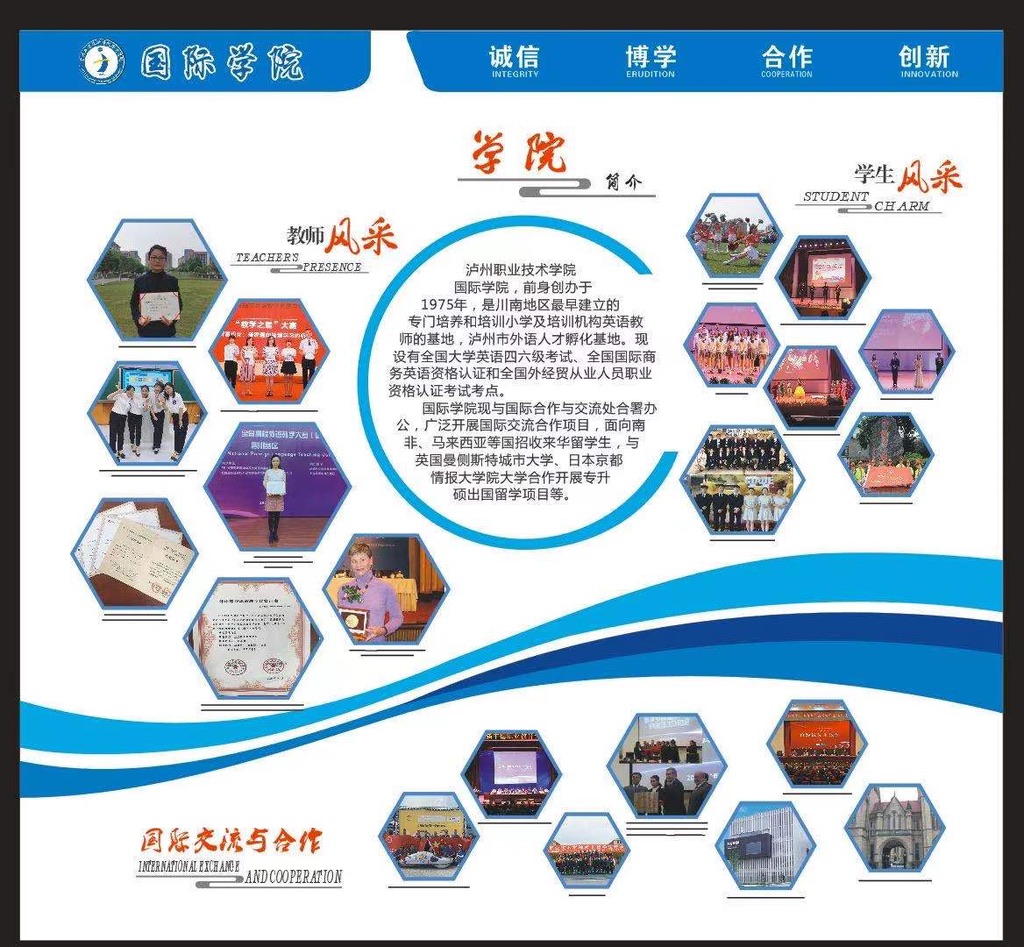
“Connie, I need your help. How to translate ‘荣誉墙, 学生风采, 老师风采, 学生作品欣赏.’ The first phrase is  a wall to display the awards our teachers and students got.  We mean to display the excellent students and teachers, put their photos on the wall.  The photos are mainly about their participation in all kinds of contests and activities. The original translation are as follows:  Wall of Honor, Student Charm, Teachers Presence and Students Work Display. How do you think?”

He next included his computer skills at work, the below which will be posted on the school’s website with a printed version displayed on a campus billboard along our walkways or inside one of the buildings. (Notice my photo in there as well, when I received Sichuan Province’s highest honor for foreigners, The Jin Ding Award, in 2008.)

UNADJUSTEDNONRAW_thumb_3d7f

A Cooperative Effort

All morning, my mom and I have been discussing how to convey the meaning of the Chinese without using the direct translation, which sounds a little off. This is what happens when you directly plug Chinese characters into translation Apps or websites. You often get something that makes little or no sense, plus doesn’t convey the meaning of what’s needed.

So here’s what my mom and I came up with:

  1. Celebration of Excellence; Wall of Distinction
  2. Faculty Honors
  3. Student Honors
  4. Student Extracurricular Activities; Student Activities

Next Step

It’s 2 a.m. in China so Bruce won’t be checking his messages until China’s Sunday morning. My guess is that he’ll most likely “but” me on several of these, insisting that the translation doesn’t fit the meaning of what he wants. Bruce does have a tendency to get his back up when it comes to advice: He asks for it sincerely but when it comes down to it, he sometimes goes rogue and ignores my sound suggestions.

We’ll see what he comes up with. When I return, I might very well be walking by my “Wall of Distinction” only to find it touting something else, right alongside that mysterious, enigmatic Secret Room.

When it comes to Bruce, one never knows.

Posted in Uncategorized | 3 Comments